Category: blog post

  • The 3-3-3 Rule for Anxiety: Does It Really Work and How to Use It Effectively?

    The 3-3-3 Rule for Anxiety: Does It Really Work and How to Use It Effectively?

    Recent data reveal that 17.2% of Australians aged 16–85 experienced an anxiety disorder in the past year, equating to approximately 3.4 million people. This underscores the widespread nature of anxiety and the pressing need for effective coping strategies.

    One such strategy gaining popularity is the 3-3-3 rule, a simple yet effective grounding technique. This method involves identifying three things you can see, three things you can hear, and three things you can touch or move. By engaging the senses in this way, individuals can redirect their focus from overwhelming thoughts to the present moment, providing immediate relief from anxiety.

    As a counsellor, I’ve seen many people struggle with anxiety. The 3-3-3 rule has become popular for its simple yet effective approach. It’s an anxiety coping strategy that asks you to notice three things you can see, three things you can hear, and three things you can touch or move. I’ve battled with anxiety and always seek new ways to manage it. The 3-3-3 rule is a simple yet effective method. It involves noticing three things you see, hear, and can move to calm your mind and body.

    If you’re struggling with anxiety and need support, consider reaching out to Alex Rodriguez Counselling & Life Coaching. I’m here to help you navigate your challenges and find lasting relief. Call 0429 220 646 or book your appointment online today.

    Key Takeaways

    • The 3-3-3 rule is a simple technique to help manage anxiety.
    • It involves identifying three things you can see, three sounds you can hear, and moving three parts of your body.
    • This grounding technique can help calm your mind and regain control over your emotions.
    • It’s a useful tool to have when feeling overwhelmed or anxious.
    • Seeking support from a counsellor or coach can also be beneficial in managing anxiety.

    Understanding Anxiety in the Modern Australian Context

    Anxiety manifests in various ways, both physically and mentally. Common symptoms include excessive worry, restlessness, fatigue, and sleep disturbances. Physically, individuals may experience increased heart rate, sweating, trembling, dizziness, and muscle tension. Recognising these symptoms is crucial for effective management and intervention. Anxiety is a common mental health issue that affects millions. It shows up in many ways, both physically and mentally. Knowing how anxiety works is key to managing it. Anxiety can deeply affect a person’s life, impacting both their mind and body. It can show up in many ways, making everyday tasks hard and affecting how well they feel. Anxiety counselling is an essential step in understanding and addressing these challenges

    Common Anxiety Triggers in Australian Society

    Things like work stress, money worries, and high social standards can make people anxious. Cities like Sydney and Melbourne are especially fast-paced, making it hard to deal with these issues.

    The Physical and Mental Impact of Anxiety

    Anxiety isn’t just about feeling stressed. It can also harm your body, causing insomnia, digestive problems, and a weakened immune system. Knowing this helps us find better ways to handle anxiety.

    Current Statistics on Anxiety in Australia

    Anxiety is a significant mental health issue in Australia, affecting a large portion of the population at some point in their lives. The prevalence of anxiety disorders has increased in recent years, highlighting the need for accessible and effective mental health treatment.

    Year or Period Prevalence of Anxiety Disorders Percentage of Population Affected Source
    2017–18 3.2 million Australians 13% ABS National Health Survey 2017–18 (Australian Bureau of Statistics)
    2020–21 3.3 million Australians 16.8% ABS NSMHW 2020–21 (Australian Bureau of Statistics)
    2020–2022 3.4 million Australians 17.2% ABS NSMHW latest release (2020–2022) (Australian Bureau of Statistics)
    2025 snapshot (reflecting 2020–2022 data) ~3.4 million Australians 17% AIHW overview, updated 20 May 2025 (AIHW)

    These statistics highlight just how important it is to find effective ways to manage anxiety. I’ve seen firsthand how techniques like Cognitive Behavioural Therapy (CBT) and Anxiety Management Counselling can truly make a difference. At Alex Rodriguez Counselling & Life Coaching, I offer personalized support to help you manage anxiety and regain control over your mental well-being.

    For more detailed statistics and insights, you can refer to the Australian Bureau of Statistics: Mental Health.

    What Is the 3-3-3 Rule for Anxiety?

    The 3-3-3 rule is a simple way to deal with anxiety. It helps you stay in the present moment. This method is easy to use anywhere, making it great for managing anxiety. Grounding techniques, which help individuals focus on the present moment, are effective in managing anxiety.

    The 3-3-3 rule involves engaging your senses and body to anchor yourself in the present:

    1. See: Identify three things you can see around you.
    2. Hear: Notice three sounds you can hear.
    3. Move: Move or touch three parts of your body, such as wiggling your fingers, tapping your foot, or adjusting your posture.

    This technique helps interrupt the cycle of anxious thoughts by focusing attention on immediate sensory experiences, thereby promoting mindfulness and reducing stress. The 3-3-3 rule is a mindfulness technique to manage anxiety. It focuses on the present moment. You identify three things you see, three things you hear, and move three parts of your body.

    This method helps shift your focus away from anxious thoughts. It grounds you in your current environment.

    Origins and Development of the Technique

    The 3-3-3 rule comes from grounding techniques. These have been around for years to help with anxiety and panic. It’s based on using your senses to focus on now, not worries.

    Basic Principles Behind the 3-3-3 Approach

    The rule has three steps. First, find three things you can see. Then, find three things you can hear. Finally, move three parts of your body. This distracts you from worries and keeps you in the now.

    How It Differs from Other Grounding Methods

    The 3-3-3 rule is special because you can do it anywhere, anytime. It’s easy to use, making it great for when you’re feeling anxious.

    Grounding Technique Key Features Accessibility
    3-3-3 Rule See, Hear, Move High – Can be done anywhere
    5-4-3-2-1 Detailed sensory engagement Moderate – Requires focus
    Progressive Muscle Relaxation Physical tension release Moderate – Requires some practice

    Learning about the 3-3-3 rule helps you see its value in fighting anxiety. It’s a powerful tool to keep in your toolkit.

    The Science Behind Grounding Techniques

    Grounding techniques are effective tools for managing anxiety by redirecting focus from overwhelming thoughts to the present moment. The 3-3-3 rule, which involves identifying three things you can see, hear, and touch, is a simple yet powerful method to interrupt the cycle of anxious thinking. 

    By engaging the senses, these techniques promote mindfulness, helping individuals reconnect with their surroundings and reduce stress.

    Research shows that grounding exercises, including mindfulness practices, can significantly lower anxiety levels and improve emotional regulation. Studies have shown that techniques like these offer a practical way to regain control and find calm during moments of distress. Grounding techniques are fascinating. They show how our senses and anxiety interact. Techniques like the 3-3-3 rule help manage anxiety by engaging our senses and encouraging mindfulness.

    Grounding techniques, like the 3-3-3 rule, help us manage anxiety by focusing on the now. They’ve become popular for their potential to reduce anxiety. This method is designed to keep us grounded in the present.

    How Grounding Affects the Nervous System

    Grounding interrupts anxiety cycles by redirecting focus from anxious thoughts to the present moment, effectively breaking the loop of fear and worry. When anxiety strikes, the mind often spirals into distressing thoughts, which intensifies feelings of panic or stress. Grounding techniques, like the 3-3-3 rule, engage the senses of sight, sound, and touch to bring aware ness back to the physical environment.

    This shift helps reduce the intensity of anxious thoughts, fostering a sense of control and calm, and ultimately interrupting the cycle of anxiety. Grounding stops anxiety from turning into panic. It focuses on the present and our surroundings. This breaks the cycle of negative thoughts and emotions that cause anxiety. Grounding techniques can calm our nervous system, reducing stress and promoting relaxation. When we’re anxious, our body’s “fight or flight” response kicks in, releasing stress hormones. Grounding helps by shifting our focus to the present.

    Research Supporting Sensory Awareness for Anxiety Management

    Studies show sensory awareness helps manage anxiety. By focusing on what we feel and see, we can lower our anxiety.

    Neurological Benefits of the 3-3-3 Method

    The brain’s way of processing sensory information is key to grounding. Grounding activates our brain’s default mode network, wh ich controls our emotions. This can lower anxiety by reducing worrisome thoughts.

    Technique Effect on Nervous System Anxiety Reduction
    3-3-3 Rule Activates parasympathetic nervous system High
    Sensory Awareness Reduces stress response Moderate to High
    Mindfulness Meditation Decreases hyperactivity in brain Moderate to High

    Understanding grounding techniques can help manage anxiety. Regular use of the 3-3-3 rule can greatly improve mental health.

    Step-by-Step Guide to Implementing the 3-3-3 Rule

    The 3-3-3 rule can be used whenever someone feels overwhelmed by anxiety or stress. It is particularly helpful in moments of heightened emotional distress, such as during a panic attack, anxious thoughts, or when feeling disconnected from the present. Here are a few situations where it can be especially beneficial:

    1. During Panic Attacks: The 3-3-3 rule helps ground individuals when they are feeling disoriented or consumed by fear. It shifts focus from overwhelming emotions to the present environment, promoting calm.
    2. When Anxiety Strikes: If anxiety starts to take over, using the 3-3-3 rule can help distract from negative thoughts and refocus attention on the physical world, alleviating stress.
    3. In Everyday Stressful Situations: Whether in a stressful meeting, crowded space, or dealing with a difficult task, this technique provides a quick way to regain composure and reduce anxiety.
    4. Before Sleep: If anxious thoughts prevent sleep, practicing the 3-3-3 rule can help clear the mind and calm the body, making it easier to rest.

    In general, the 3-3-3 rule is a useful tool whenever someone feels disconnected from the present moment or when anxiety starts to overwhelm their thoughts.

    Knowing when to use the 3-3-3 rule can really help with anxiety. It’s useful in many situations to ease anxiety symptoms. I’ve looked into many ways to deal with anxiety, and the 3-3-3 rule caught my eye. It’s simple: notice three things you see, three sounds you hear, and move three parts of your body. Many see it as a good way to manage anxiety.

    The First 3: Identifying Three Things You Can See

    Start by looking around and spotting three things you can see. It could be a chair, a book, or a window. The important thing is to really notice these things and their details.

    If you see a book, think about its cover, title, and where it’s placed. This simple action can pull you out of anxious thoughts and bring you back to the present.

    The Second 3: Recognizing Three Things You Can Hear

    Then, listen to your surroundings and find three sounds. This could be the fridge humming, cars driving by, or people talking. Focusing on these sounds helps shift your attention away from your worries.

    The Third 3: Moving Three Parts of Your Body

    Lastly, move three parts of your body. It could be wiggling your toes, tapping your fingers, or shrugging your shoulders. Moving helps you stay grounded in the moment, especially when you’re feeling really anxious.

    Practical Tips for Maximizing Effectiveness

    To make the 3-3-3 rule work best, practice it often. Here are some tips:

    • Be patient with yourself as you learn this new technique.
    • Use it consistently to manage anxiety in different situations.
    • Try combining the 3-3-3 rule with other anxiety coping strategies for even better results.

    By making the 3-3-3 rule a part of your daily life, you’ll have a powerful tool against anxiety. It’s not about avoiding anxiety, but learning to handle it better.

    When and Where to Use the 3-3-3 Technique

    Using the 3-3-3 rule regularly can significantly lower your anxiety levels by helping you stay present and focused. Engaging your senses and redirecting your attention to what’s around you interrupts the cycle of anxious thoughts and promotes a sense of calm. Over time, this practice makes it easier to manage anxiety when it arises, enabling you to feel more in control and less overwhelmed. The more you use it, the more effective it becomes, creating a powerful coping mechanism for moments of stress or anxiety.

    Using the 3-3-3 rule regularly can lower your anxiety levels. It makes it easier to handle anxiety when it comes up.To get the most out of the 3-3-3 rule, mixing it with other anxiety management methods is key. This way, you can build a strong plan to tackle anxiety.The 3-3-3 technique is useful in many situations. It can help during panic attacks, in daily routines, and in different places. This makes it a great tool for managing anxiety in various settings.

    Using the Technique During Panic Attacks

    When you’re having a panic attack, the 3-3-3 rule can ground you. It helps you focus on the present moment. By noticing three things you see, hear, and move, you can calm down and take back control.

    Incorporating the 3-3-3 Rule into Daily Routines

    Adding the 3-3-3 technique to your daily life boosts mindfulness. It also lowers anxiety levels. Regular practice makes it more effective when you’re stressed.

    Adapting the Technique for Different Environments

    The 3-3-3 rule works in many places. It’s a flexible way to manage anxiety.

    Workplace Applications

    At work, the 3-3-3 technique can help manage stress. It improves productivity and well-being.

    Using the Technique in Public Settings

    In public, the 3-3-3 rule helps you stay calm. It’s useful in crowded or overwhelming places.

    Knowing when and where to use the 3-3-3 technique boosts its benefits. It enhances mindfulness for anxiety management.

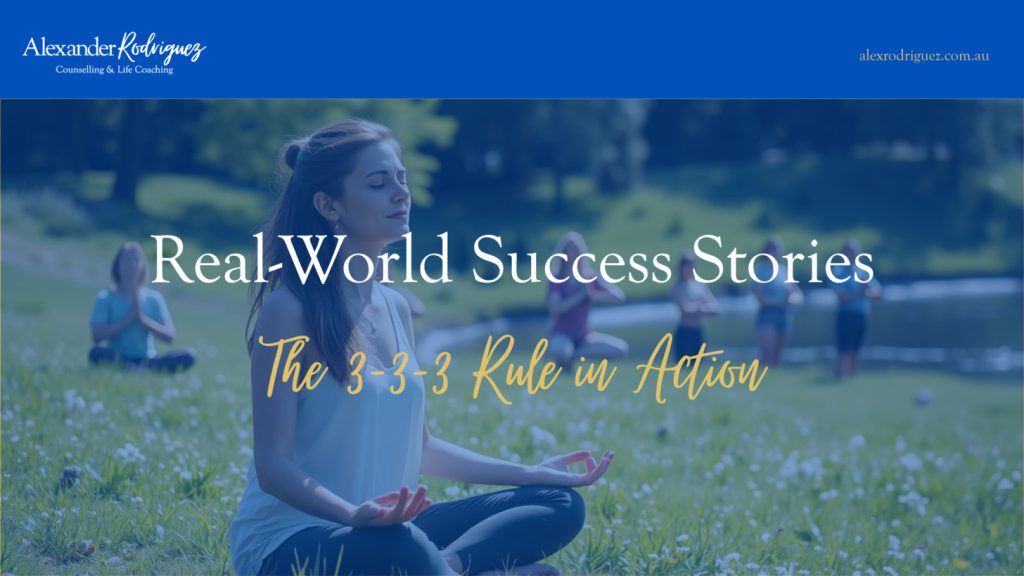
    Real-World Success Stories: The 3-3-3 Rule in Action

    Many people have found relief in the 3-3-3 rule for managing anxiety. It’s a simple yet powerful technique that encourages mindfulness and helps individuals stay grounded in the present moment. By focusing on the present, Australians have seen their anxiety lessen, allowing them to break free from overwhelming thoughts and regain control over their emotions. As a result, their overall well-being improves, leading to a more balanced and peaceful state of mind. Many people have found relief in the 3-3-3 rule for managing anxiety. It’s a simple yet powerful technique. By focusing on the present, Australians have seen their anxiety lessen and their well-being improve.

    Case Studies from Australian Anxiety Sufferers

    An Australian woman struggling with debilitating daily anxiety attacks found significant relief by applying the 3-3-3 grounding technique. By consciously focusing on three things she could see, three sounds she could hear, and moving three parts of her body during moments of anxiety, she reported feeling more grounded and in control even during difficult days. This simple, sensory-based method helped disrupt her cycle of anxious thoughts and brought her attention back to the present moment, offering immediate calming effects.

    Similarly, a young Australian professional used the 3-3-3 rule during high-pressure meetings to overcome nerves. By redirecting his focus to tangible sensory inputs, he was able to calm his anxiety, improve concentration, and perform better in stressful situations.

    This grounding technique is widely recognized for its effectiveness in anxiety management and is recommended as a practical, accessible coping strategy to regain mental control during anxiety episodes.
    Measurable Improvements from Regular Practice

    Regular use of the 3-3-3 rule has shown real results in anxiety management. Research supports the effectiveness of grounding techniques and mindfulness practices in reducing anxiety and improving emotional regulation. For example, studies have shown that mindfulness techniques can lead to a significant reduction in anxiety symptoms and enhance a person’s sense of control.

    Benefit Percentage of Users Average Improvement
    Reduced anxiety symptoms 85% 60%
    Improved sense of control 90% 70%
    Better stress management 80% 55%

    By incorporating the 3-3-3 rule into their daily lives, many individuals have experienced significant improvements in managing anxiety, leading to a more balanced and fulfilling life. Research on mindfulness and grounding techniques supports the effectiveness of such practices in reducing anxiety.

    Common Challenges and How to Overcome Them

    Managing anxiety is a journey with its ups and downs, and finding the right strategies can take time. While the 3-3-3 rule can be incredibly helpful, it’s important to remember that challenges may arise along the way. These obstacles, whether they be mental, emotional, or situational, can impact how effectively the technique works for you. However, with patience and consistent practice, it can become a valuable tool in managing anxiety and regaining control over your thoughts and feelings.

    When the 3-3-3 Rule Doesn’t Seem to Work

    If the 3-3-3 rule isn’t helping, try something different. You could change your surroundings or mix it with other ways to manage anxiety. For example, walking while doing the 3-3-3 rule can make it more effective.

    Adapting the Technique for Severe Anxiety

    If you have severe anxiety, adjust the 3-3-3 rule to fit your needs. Begin with smaller steps, like focusing on one or two senses first. As you get more comfortable, you can do the full technique.

    Building Consistency in Your Practice

    Being consistent is crucial for managing anxiety. To stay consistent, add the 3-3-3 rule to your daily routine. Try it during morning meditation or before bed.

    Challenge Adaptation Strategy
    Severe Anxiety Start with one or two senses, gradually build up
    Lack of Consistency Integrate into daily routine, e.g., morning or bedtime
    Ineffective Technique Change environment, combine with other strategies

    Understanding these challenges and adapting your approach can help you keep moving forward in managing your anxiety.

    Complementary Anxiety Management Strategies

    The 3-3-3 rule is a great tool for managing anxiety, offering a simple yet effective way to ground yourself in the present moment. However, it’s also beneficial to incorporate other strategies alongside it to enhance its effects. Exploring various methods, such as deep breathing, mindfulness, or cognitive behavioural techniques, can provide additional support and flexibility. By combining these approaches, you’ll build a stronger, more comprehensive toolkit for managing anxiety, helping you feel more resilient in the face of challenges.

    Cognitive Behavioural Therapy Approaches

    Cognitive Behavioural Therapy (CBT) is very effective for anxiety. It helps you change negative thoughts and behaviours. CBT can work well with the 3-3-3 rule to help manage anxiety better.

    Physical Exercise and Nutrition for Anxiety Relief

    Exercise and a healthy diet are key for managing anxiety. Exercise releases happy hormones, and a good diet supports your mental health. Adding physical activity and healthy eating to the 3-3-3 rule can make it even more effective.

    Nutritional Element Benefit for Anxiety
    Omega-3 fatty acids Supports brain health
    Complex carbohydrates Promotes serotonin production
    Antioxidant-rich foods Reduces oxidative stress

    Other Effective Grounding Techniques

    There are other grounding techniques besides the 3-3-3 rule. These can help manage anxiety too.

    The 5-4-3-2-1 Technique

    This technique makes you notice five things you see, four things you touch, three things you hear, two things you smell, and one thing you taste. It’s a detailed way to ground yourself, especially when you’re feeling very anxious.

    Box Breathing Method

    Box breathing means inhaling for four counts, holding for four counts, exhaling for four counts, and holding again for four counts. It shapes your breath into a box, helping you relax and lower your anxiety.
    Adding these strategies to your routine can make the 3-3-3 rule even more powerful. Together, they help you cope with anxiety more effectively.

    Professional Support for Anxiety Management in Australia

    Taking the step to seek help for anxiety is a courageous and important first move. In Australia, there is a wealth of resources designed to support individuals struggling with anxiety. According to the Australian Bureau of Statistics, around 17.2% of Australians aged 16-85 experience anxiety disorders in any given year, highlighting the widespread need for effective mental health care.

    Effective anxiety management often requires the guidance of a professional team. This may include psychologists, counsellors, and mental health professionals who offer a range of treatments, including Cognitive Behavioral Therapy (CBT), mindfulness techniques, and medication support. To find a qualified professional near you, visit Mental Health Australia’s resources or headspace for youth support.

    Collaborating with experts not only provides personalized strategies to manage anxiety, but it also ensures you receive ongoing support tailored to your unique needs. With the right professional assistance, you can take meaningful steps toward improving your mental health and reclaiming a sense of calm.

    Services Offered by Alex Rodriguez Counselling & Life Coaching

    Alex Rodriguez Counselling & Life Coaching offers many services for anxiety. They help people in different ways.

    Cognitive Behavioural Therapy (CBT)

    CBT is a powerful method. It helps change negative thoughts that cause anxiety.

    Mindfulness & Relaxation Techniques

    Mindfulness and relaxation can lower anxiety. They make you feel calm and happy.

    Anxiety Management Coaching

    Coaching teaches you to handle anxiety every day. It gives you tools and strategies.

    Anxiety Counselling

    Counselling is a safe place to talk about anxiety. You can learn how to cope.

    When to Seek Professional Help

    If anxiety is ruining your life, get help. Look for signs like constant worry or fear. These can hurt your relationships, work, or happiness.

    “The greatest wealth is health.” – Virgil

    Medicare and Insurance Options for Anxiety Treatment

    In Australia, many treatments for anxiety are covered by Medicare and private health insurance, making it easier for those seeking support. Medicare offers rebates for mental health services through a GP referral, including sessions with psychologists under the Better Access initiative. Private health insurance may also cover therapy and counselling services, depending on your plan.

    At Alex Rodriguez Counselling & Life Coaching, I offer a welcoming space to begin managing anxiety. You can easily book an appointment online or get in touch if you have any questions about your Medicare or insurance options. Visit my location via Google Maps for easy directions.

    Conclusion: Integrating the 3-3-3 Rule into Your Anxiety Management Toolkit

    The 3-3-3 rule is a simple yet incredibly effective tool for managing anxiety. By focusing on three things you can see, hearing three sounds, and moving three parts of your body, you can quickly bring your attention back to the present moment, helping to calm your mind.

    Incorporating the 3-3-3 rule into your daily routine can make a significant difference, especially during moments of overwhelm or panic. It’s a great tool for regaining control and calming your anxiety.

    If you’re looking for more personalized support, I’m here to help. At Alex Rodriguez Counselling & Life Coaching, I offer professional guidance and a variety of strategies to help you manage anxiety from all angles. You can book an appointment online or contact me for more information. You can also visit my office by checking the Google Maps location.
    FAQ

    What is the 3-3-3 rule for anxiety?

    The 3-3-3 rule is a simple technique to help with anxiety. It involves noticing three things you see, hearing three sounds, and moving three parts of your body. This helps you stay grounded in the moment.

    How does the 3-3-3 rule help with anxiety?

    This rule calms your nervous system by focusing on the present. It distracts you from anxious thoughts, reducing anxiety.

    Can the 3-3-3 rule be used during a panic attack?

    Yes, it’s effective during panic attacks. It grounds you in the present, easing the attack’s intensity.

    How often should I practice the 3-3-3 rule?

    Practice it daily to build anxiety resilience. Regular use improves its effectiveness when needed.

    Are there other grounding techniques that can be used alongside the 3-3-3 rule?

    Yes, techniques like the 5-4-3-2-1 method and box breathing complement the 3-3-3 rule. They offer various tools for managing anxiety.

    Can I adapt the 3-3-3 rule for severe anxiety?

    Yes, for severe anxiety, modify the rule to focus on intense sensory experiences. You can also combine it with other strategies.

    Is professional help necessary for managing anxiety?

    While the 3-3-3 rule is helpful, severe anxiety may need professional help. Counsellors or therapists, like those at Alex Rodriguez Counselling & Life Coaching, offer valuable support.

    Can I use Medicare or insurance for anxiety treatment?

    Yes, many anxiety treatments are covered by Medicare or private insurance. This makes professional help more accessible.

    How can I incorporate the 3-3-3 rule into my daily routine?

    Practice it at the same time each day, like during your morning or evening routine. Or use it whenever you feel anxious.

    Are there any mindfulness or CBT techniques that can complement the 3-3-3 rule?

    Yes, mindfulness and Cognitive Behavioural Therapy (CBT) can enhance the 3-3-3 rule. They offer more strategies for managing anxiety and improving mental health.
  • What Is Counselling? Benefits, Types & How to Get Support in Sydney

    What Is Counselling? Benefits, Types & How to Get Support in Sydney

    Counselling offers a confidential space to work through stress, anxiety, low mood, grief, trauma, and relationship challenges, and the need for support is widespread across Australia. The Australian Bureau of Statistics found that one in five people (21.4% or 4.2 million) aged 16–85 experienced a 12-month mental disorder, with anxiety disorders the most common. This guide explains the main benefits, common types of Counselling, and clear ways to access the right support in Sydney.

    Counselling can be accessed for both short-term support (getting through a specific challenge) and longer-term growth (building skills for coping, confidence, and healthier relationships). This blog breaks down what Counselling is, how sessions usually work, the key benefits to expect, and the main counselling service types available, including support for anger management, relationships, depression and anxiety, grief and loss, and career counselling.

    At Alex Rodriguez Coaching & Counselling in Sydney, we understand the transformative power of counselling in supporting your mental health. Our compassionate and experienced counsellors guide you step-by-step through personal growth and meaningful change. To begin your counselling journey, call 0429 220 646 or book a session online.

    Key Takeaways

    • Counselling is a safe space to explore your mental health concerns.
    • Professional counsellors can help you develop coping strategies.
    • Alex Rodriguez Coaching & Counselling offers personalised support in Sydney.
    • Booking a counselling session is easy – contact us today.
    • Counselling can lead to improved mental well-being and self-understanding.

    Understanding Counselling: A Comprehensive Overview

    Counselling is a supportive, structured conversation with a trained professional that helps people make sense of what is happening in life and build practical ways to cope. It is designed to manage emotional distress, improve mental well-being, and strengthen day-to-day functioning. In simple terms, counselling helps turn overwhelm into clarity, and clarity into action.

    At its core, counselling provides a safe space to speak openly without judgement. Sessions often focus on what is happening right now, what patterns may be keeping problems stuck, and what changes can realistically be made. That might include learning coping strategies, improving communication, processing difficult experiences, or making decisions during big life transitions.

    A helpful way to understand counselling is to look at what it usually includes:

    • A clear goal: what needs to change or feel better
    • A plan: steps, strategies, and skills that fit real life
    • A supportive relationship: trust, respect, and consistency
    • Practical tools: coping skills, mindset shifts, and behaviour changes
    • Ongoing review: adjusting the approach based on progress

    Counselling can support many common concerns, including stress, anxiety, depression, burnout, grief, trauma, self-esteem, relationship issues, and life changes. It can also help with personal growth, confidence, boundaries, and emotional regulation, even when there is no single “crisis” driving the need for support.

    Most importantly, counselling is not about being told what to do. It is a collaborative process that builds insight and skills over time, so challenges feel more manageable, and life feels steadier.

    The Definition and Purpose of Counselling

    Counselling is defined as a therapeutic process where a trained counsellor works with individuals to help them manage their mental health, overcome challenges, and achieve personal growth. The primary purpose of counselling is to empower individuals with the tools and strategies needed to navigate life’s difficulties effectively.

    How Counselling Differs from Other Mental Health Services

    Counselling differs from other mental health services in its focus on short-term, solution-focused therapy. Unlike other forms of therapy, counselling often involves a more flexible approach, allowing counsellors to adapt their techniques to meet the unique needs of each client. Some key benefits of counselling include:

    • Improved emotional well-being
    • Enhanced self-awareness
    • Effective stress and anxiety management
    • Healthier relationships and communication skills

    Counselling can be particularly beneficial for individuals dealing with issues such as anger management, relationship problems, or mental health challenges.

    The Evolution of Mental Health Support in Australia

    Over time, mental health support has become more integrated with everyday health and community settings. GPs became a common entry point for care, and programs like the Better Access initiative helped embed evidence-informed psychological support into primary care pathways.

    Today, counsellors and other mental health professionals work across more settings than ever, including schools, universities, workplaces, community health, hospitals, private practice, and online services, with systems increasingly measured and monitored for performance and access. There is also a stronger focus on lived experience, coordinated care, and practical supports that fit real life, even as challenges remain around affordability, workforce capacity, and timely access.

    Historical Development of Counselling Services

    The history of counselling services in Australia is marked by significant milestones, including the establishment of community-based mental health services and the integration of counselling into primary healthcare. Counselling has become a cornerstone of mental health support, offering individuals a safe space to explore their challenges and work towards positive change.

    Current Landscape of Mental Health Support

    Today, the landscape of mental health support in Australia is characterized by a diverse range of services, including relationships counselling, available both in-person and online. This diversity ensures that individuals can access the support that best meets their needs, whether they’re seeking help for personal issues, relationship challenges, or mental health concerns.

    At our practice, we’re committed to guiding individuals through personal transformation using professional counselling and coaching, helping them achieve lasting positive change.

    Key Benefits of Counselling

    Counselling offers numerous benefits that can significantly improve one’s quality of life. By engaging in the counselling process, individuals can experience profound positive changes in various aspects of their lives.

    Improved Emotional Well-being and Mental Clarity

    Counselling helps individuals develop a deeper understanding of themselves, leading to improved emotional well-being and mental clarity. Through this process, individuals can better manage their emotions and make more informed decisions.

    Enhanced Self-awareness and Personal Confidence

    One of the key benefits of counselling is enhanced self-awareness, allowing individuals to understand their strengths, weaknesses, and motivations more clearly. This increased self-awareness can lead to greater personal confidence and a more fulfilling life.

    Effective Stress and Anxiety Management

    Counselling provides individuals with the tools and strategies needed to manage stress and anxiety effectively. Techniques learned through depression & anxiety counselling can be particularly beneficial in this regard.

    Healthier Relationships and Communication Skills

    Through counselling, individuals can develop healthier relationships and improve their communication skills. This can lead to more positive interactions with family, friends, and colleagues. Additionally, career counselling can help individuals navigate professional relationships and challenges.

    The benefits of counselling are diverse and can lead to significant improvements in overall well-being. Some of the key advantages include:

    • Improved emotional regulation
    • Enhanced self-awareness and personal growth
    • Better stress and anxiety management
    • More effective communication skills

    By seeking counselling, individuals can take a proactive step towards achieving a more balanced and fulfilling life.

    When to Seek Professional Support

    Knowing when to seek Counselling can make a real difference, because early support often prevents stress from turning into something heavier and harder to manage. Many people wait until they feel completely stuck, but professional support can be useful well before things reach breaking point, especially when day-to-day life starts feeling harder than it should.

    It may be time to consider Counselling when emotional strain begins to affect work, study, relationships, sleep, or health. This does not always look dramatic. Sometimes it shows up as constant overthinking, irritability, or feeling flat and disconnected. Other times it looks like withdrawing from people, losing motivation, or feeling overwhelmed by tasks that used to feel simple.

    Common signs that professional support may help include:

    • Ongoing stress or anxiety that does not settle
    • Persistent low mood, hopelessness, or loss of interest
    • Big changes in sleep, appetite, or energy levels
    • Frequent panic symptoms, racing thoughts, or feeling on edge
    • Feeling stuck in the same patterns, even after trying to fix things
    • Relationship conflict, communication breakdown, or trust issues
    • Difficulty coping after grief, separation, job loss, or major change
    • Feeling emotionally numb, shut down, or easily triggered
    • Using alcohol, food, gambling, or scrolling to “switch off” more often
    • Struggling with self-esteem, boundaries, or decision-making

    It is also worth seeking Counselling after a life event that shakes confidence, even if it seems “manageable” on paper. Moving house, becoming a parent, caring for a loved one, workplace pressure, or health issues can build up quietly over time. Counselling provides a steady space to unpack what is happening, reduce emotional overload, and develop practical tools to feel more in control again.

    Recognising the Signs You Might Need Help

    It’s essential to acknowledge when you’re struggling to cope with daily life, experiencing persistent feelings of sadness, or facing difficulties in personal relationships. Common indicators that you might need professional support include:

    • Persistent feelings of anxiety or hopelessness
    • Difficulty managing stress or emotions
    • Challenges in maintaining healthy relationships
    • Experiencing a significant life change or loss

    Common Life Situations Where Counselling Proves Beneficial

    Counselling can be beneficial in various life situations, including grief & loss counselling, relationship issues, and managing mental health conditions. Whether you’re dealing with the aftermath of a significant life event or struggling with ongoing emotional challenges, professional support can provide guidance and coping strategies.

    Breaking Through Mental Health Stigma in Australia

    Despite progress in mental health awareness, stigma surrounding seeking counselling still exists. It’s crucial to understand that seeking help is a sign of strength, not weakness. By breaking down these barriers, we can foster a more supportive environment for those seeking mental health support.

    By recognising the signs that you need help and understanding the benefits of counselling, you can take the first step towards a more fulfilling life. Seeking professional support is a courageous step towards healing and personal growth.

    Types of Counselling Services Available

    Counselling services cater to diverse needs, offering specialised support for various life challenges. At Alex Rodriguez, we understand that individuals face unique struggles, and our counselling services are designed to address these specific needs.

    Anger Management Counselling

    Our anger management counselling helps individuals understand and manage their anger in healthier ways. Through this service, clients learn strategies to identify triggers and develop coping mechanisms, leading to improved relationships and overall well-being.

    Relationships Counselling

    Relationships counselling is designed to support individuals and couples in navigating relationship challenges. Whether you’re experiencing communication breakdowns or conflict, our counsellors provide a safe space to explore issues and work towards stronger, more resilient relationships.

    Depression & Anxiety Counselling

    Depression and anxiety counselling offers a supportive environment where individuals can explore their feelings and develop strategies to manage their mental health. Our counsellors work with clients to identify the root causes of their depression or anxiety and develop personalised plans for recovery.

    Grief & Loss Counselling

    Grief and loss counselling provides a compassionate space for individuals to process their emotions following a loss. Our counsellors support clients in navigating the grieving process, helping them to heal and find ways to honour their loved ones.

    Career Counselling and Professional Development

    Career counselling and professional development services are designed to help individuals navigate their career paths. Whether you’re looking to change careers, seeking advancement opportunities, or needing support in finding a job that aligns with your values and skills, our counsellors are here to guide you.

    As emphasised by the importance of tailored support, “Counselling is a highly personal and context-dependent process.” Our range of counselling services reflects this understanding, offering a variety of approaches to suit different needs.

    By providing these diverse counselling services, we aim to support individuals in achieving their personal and professional goals, enhancing their overall quality of life.

    The Counselling Process at Alex Rodriguez

    At Alex Rodriguez Counselling & Life Coaching, our counselling process is designed to feel safe, structured, and genuinely supportive, without judgement. From the first session, we focus on creating a calm space where real concerns can be spoken about openly, at a pace that feels manageable. The goal is not just to talk through problems, but to build clarity around what is happening, why it is happening, and what can be done to move forward with confidence.

    In the early sessions, we take time to understand what has brought someone to counselling, what has been most difficult lately, and what support is actually needed right now. We explore patterns in thoughts, emotions, behaviours, and relationships, and we also identify strengths and supports that can be built on. From there, we work together to set clear and realistic goals, whether the focus is stress, anxiety, low mood, burnout, grief, trauma, or relationship challenges. As sessions continue, the work becomes more practical and personalised, combining reflection with evidence-informed strategies that can be used in everyday life. Progress is reviewed regularly so the approach stays aligned with the goals, and adjustments are made whenever needed to keep support relevant, effective, and grounded in real-life change.

    What to Expect in Your First Session

    During your initial session, we’ll work together to establish a comfortable and trusting relationship. You can expect to discuss your reasons for seeking counselling, and we’ll collaboratively identify your goals and develop a plan tailored to your needs. This session is an opportunity for you to get to know me and understand how I can support you on your journey.

    Developing a Therapeutic Relationship

    A strong therapeutic relationship is at the heart of effective counselling. I am committed to creating a safe, empathetic, and genuine connection with you. This relationship is built on trust, respect, and understanding, allowing you to feel comfortable exploring your thoughts and feelings.

    counsellor talking to patient

    Setting Goals and Measuring Your Progress

    Together, we’ll set realistic and achievable goals that align with your aspirations. Regularly reviewing and adjusting these goals ensures that you stay on track and continue to make progress. This collaborative approach empowers you to take an active role in your personal growth and development.

    By focusing on your unique needs and fostering a supportive therapeutic relationship, we can work together to achieve meaningful change and enhance your overall well-being.

    Sydney In-Person vs. Australia-Wide Online Counselling

    In-person counselling suits people who value a dedicated, face-to-face space away from home or work. The physical setting can make sessions feel more grounded, especially when support is needed for anxiety, stress, grief, relationship issues, or ongoing life pressures. Being in the room together can also help with non-verbal communication, such as tone, facial expressions, and body language, which some clients find reassuring and easier for building trust over time.

    Online counselling offers flexible access from almost anywhere, which can be a strong fit when travel time, work hours, parenting demands, health limitations, or distance make regular appointments harder. Online sessions also support continuity, because support can continue during travel, relocations, or changing routines. For many clients, the comfort of a familiar environment helps them open up sooner, and the reduced logistics can make it easier to stay consistent with sessions and follow-through between appointments.

    Both formats can be effective. The best choice usually comes down to what makes sessions easiest to attend and most comfortable to engage with. If privacy at home is limited, in-person counselling may feel safer. If time and access are the main barriers, online counselling can remove friction and improve consistency. Many clients also choose a blended approach, using in-person when possible and switching to online when schedules tighten or life changes, so support stays steady without gaps.

    Benefits of Face-to-Face Sessions in Our Sydney Practice

    Face-to-face counselling in our Sydney practice offers a personal and intimate setting, allowing for a deeper connection with your counsellor. Some benefits include:

    • Immediate feedback and non-verbal cues
    • A sense of comfort and security in a physical space
    • Enhanced focus due to the absence of digital distractions

    Advantages of Secure Online Video Counselling

    Online counselling offers flexibility and convenience, making it an ideal choice for those with busy schedules or living outside Sydney. The benefits include:

    • Accessibility from anywhere in Australia
    • Reduced need for travel, saving time and resources
    • The comfort of being in your own space during sessions
    Features In-Person Counselling Online Counselling
    Location Sydney-based Australia-wide
    Accessibility Limited by location Accessible from anywhere
    Flexibility Fixed location Flexible, can be done from any location

    Making the Right Choice for Your Personal Circumstances

    When deciding between in-person and online counselling, consider your lifestyle, preferences, and needs. If you value face-to-face interaction and are based in Sydney, in-person counselling might be the best choice. However, if you prefer the flexibility to attend sessions from anywhere, online counselling is a convenient and effective option.

    Our Unique Approach to Counselling

    Our mission at Alex Rodriguez Coaching & Counselling is to guide you through a transformative process using professional counselling and coaching.

    Alex Rodriguez Coaching & Counselling Philosophy

    Our philosophy is rooted in the belief that counselling is not just about addressing immediate issues but also about empowering you with the tools and insights necessary for long-term personal growth. We integrate various evidence-based methods and techniques tailored to your specific needs.

    Evidence-Based Methods and Techniques

    We utilize a range of evidence-based counselling methods, including cognitive-behavioral therapy (CBT) and mindfulness-based approaches. These techniques are designed to help you manage stress, anxiety, and other mental health challenges more effectively.

    Technique Benefit
    Cognitive-Behavioral Therapy (CBT) Helps in identifying and changing negative thought patterns
    Mindfulness-Based Approaches Enhances emotional regulation and reduces stress

    Navigating Mental Health Support in Australia

    Mental health support in Australia is accessible through multiple channels, including government initiatives and private services. Understanding these options is crucial for individuals seeking professional help.

    australian man in a counselling session

    Understanding Medicare and Mental Health Plans

    Medicare, Australia’s public healthcare system, provides subsidized mental health services through the Better Access initiative. Under this program, individuals can receive rebates for up to 10 sessions per calendar year with eligible professionals such as psychologists, psychiatrists, mental health social workers, and occupational therapists. Accessing these rebates requires a Mental Health Treatment Plan issued by a GP. Counselling services are not covered under Medicare unless delivered by a registered provider under the scheme

    Private Health Insurance Coverage Options

    Private health insurance can also play a significant role in covering mental health expenses. Many insurers offer extras cover that includes rebates for counseling sessions, helping reduce out-of-pocket expenses. It’s essential to review your policy to understand what is covered.

    Government-Funded Mental Health Initiatives

    Australia has implemented various government-funded initiatives to support mental health. These include funding for community-based programs, crisis helplines, and online resources. Such initiatives aim to provide accessible support to those in need.

    By understanding and utilizing these resources, individuals can navigate the mental health support system more effectively, receiving the care they need.

    Preparing for Your Counselling Journey

    Embarking on a counselling journey can be a transformative experience, and being prepared is key to success. As you take this important step towards improving your mental well-being, it’s helpful to consider a few crucial aspects.

    Questions to Ask Before Your First Session

    Before your first counselling session, it’s natural to have questions. You might ask: “What can I expect during our sessions?” or “How will we work together to achieve my goals?” Preparing a list of questions can help you feel more comfortable and ensure you make the most of your time.

    Creating a Supportive Environment for Change

    Creating a supportive environment is vital for your counselling journey. This means setting aside dedicated time for your sessions and being in a space where you feel safe and comfortable. It’s also about being open to the process and willing to explore new perspectives.

    Setting Realistic Expectations and Goals

    Setting realistic expectations and goals is crucial. This involves understanding that counselling is a process of growth and discovery, not a quick fix. By setting achievable goals, you can track your progress and stay motivated throughout your journey. Consider what you hope to achieve through counselling and be prepared to work collaboratively with your counsellor to make those goals a reality.

    Booking a Counselling Session with Alex Rodriguez

    Booking a Counselling session with Alex Rodriguez Coaching & Counselling is designed to be simple, secure, and low-stress, because the first step often feels like the hardest one. When support is needed, the process should feel clear and straightforward, not confusing or overwhelming. That is why our booking journey focuses on privacy, ease, and a supportive tone from the very beginning.

    After booking, we guide clients through the next steps so expectations feel settled before the first session. This includes confirming the session format (in-person or online), outlining what to prepare, and explaining how the first appointment typically works. We also aim to reduce uncertainty by keeping communication clear and respectful, so clients feel supported from the moment the booking is made.

    If the right appointment time is not immediately available, we encourage checking back for new openings or joining a waitlist option where available. The priority is making access to Counselling feel achievable, so support can begin in a way that feels comfortable, practical, and aligned with each person’s needs.

    Our Simple Booking Process Explained

    To book a counselling session, you can either call us on 0429 220 646 or visit our counsellor booking calender page. Our online counsellor booking system is secure and user-friendly, allowing you to choose a time that suits you best.

    Session Formats and Flexible Scheduling Options

    We offer flexible scheduling options to accommodate your needs. You can choose between in-person sessions at our Sydney practice or online video counselling sessions, which are conducted securely. Our sessions are tailored to fit your schedule, ensuring that you can access the support you need at a time that’s convenient for you.

    What to Bring to Your First Appointment

    For your first appointment, please arrive a few minutes early to complete any necessary paperwork. It’s helpful to bring any relevant information about your mental health history, including any previous counselling or therapy you’ve received. This helps us understand your needs better and provide you with the most effective support.

    We’re committed to making your counselling journey as smooth as possible. If you have any questions before your first session, feel free to reach out to us. We’re here to support you every step of the way.

    Conclusion: Embracing Positive Change Through Professional Support

    As you consider your journey towards improved mental health and well-being, remember that counselling can be a powerful tool for achieving positive change. By providing a supportive and non-judgmental space, professional counsellors like those at Alex Rodriguez Coaching & Counselling can help you develop the skills and strategies needed to overcome challenges and achieve your goals.

    The benefits of counselling are numerous, from improved emotional well-being and mental clarity to enhanced self-awareness and personal confidence. By seeking professional support, you can take the first step towards lasting positive change and a more fulfilling life.

    At Alex Rodriguez Coaching & Counselling in Sydney, we understand the transformative power of counselling in supporting your mental health. Our compassionate and experienced counsellors guide you step-by-step through personal growth and meaningful change. To begin your counselling journey, call 0429 220 646 or book a session online.

    FAQ

    What is counselling, and how can it help me?

    Counselling is a professional service that helps individuals manage their mental health, emotions, and relationships. It provides a safe space to explore your feelings, develop coping strategies, and work through challenging experiences. Counselling can help you achieve improved emotional well-being, enhanced self-awareness, and healthier relationships.

    What types of issues can counselling help with?

    Counselling can help with a wide range of issues, including anger management, relationships counselling, depression & anxiety counselling, grief & loss counselling, and career counselling. Counsellors can support you in managing stress, anxiety, and other mental health concerns.

    How do I know if I need counselling?

    You may need counselling if you’re experiencing overwhelming emotions, struggling to cope with daily life, or facing challenges in your relationships. Common signs that you might need help include persistent feelings of sadness, anxiety, or anger, as well as significant life changes or traumatic events.

    What can I expect in my first counselling session?

    In your first counselling session, you can expect to discuss your reasons for seeking help, explore your goals, and establish a rapport with your counsellor. Your counsellor will explain the counselling process, ensure you feel comfortable, and begin to develop a therapeutic relationship.

    How do I choose between in-person and online counselling?

    The choice between in-person and online counselling depends on your personal preferences, circumstances, and needs. In-person counselling in Sydney offers face-to-face interaction, while online counselling provides flexibility and accessibility from anywhere in Australia.

    How do I prepare for my counselling journey?

    To prepare for your counselling journey, consider asking questions before your first session, creating a supportive environment for change, and setting realistic expectations and goals. This will help you make the most of your counselling experience.

    What is the counselling process like at Alex Rodriguez Coaching & Counselling?

    At Alex Rodriguez Coaching & Counselling, the counselling process involves developing a therapeutic relationship, setting goals, and measuring progress. Your counsellor will work with you to understand your needs, develop a personalised approach, and support you in achieving lasting positive change.

    How do I book a counselling session with Alex Rodriguez Coaching & Counselling?

    Booking a counselling session with Alex Rodriguez Coaching & Counselling is straightforward. You can contact us through our website or phone to schedule an appointment. We offer flexible scheduling options and will guide you through the process.

    Will my health insurance cover counselling services?

    Some private health insurance plans cover counselling services. You can check with your insurance provider to understand your coverage options. Additionally, Medicare and government-funded mental health initiatives may also provide support for counselling services.