Blog

  • 5 Time Management Strategies That Actually Work

    5 Time Management Strategies That Actually Work

    Time management is one of the biggest challenges for working professionals in Australia today. According to the Australian Bureau of Statistics, around 36% of women and 30% of men report often feeling rushed or pressed for time in their daily lives, highlighting how common time pressure has become across the country.

    If you feel like your schedule is running your life instead of the other way around, you are not alone. With the right mix of productivity tips, efficient scheduling, and effective time allocation, you can take back control. A structured approach, supported by clear goal-setting and practical prioritisation techniques, helps you focus on what truly matters each day. With guidance from a skilled life coach, you can start building habits that bring real, lasting change to your routine.

    When you begin to apply simple yet proven time-saving strategies, your day becomes easier to manage and less overwhelming. Strong task organisation and efficient planning allow you to break large workloads into manageable steps, making your goals feel more achievable. Instead of reacting to every demand, you learn to plan and stay focused on your priorities. This guide will walk you through practical methods designed to improve how you work and live. By using these strategies, you can increase your output, reduce stress, and create a better balance between your professional and personal life.

    Take control of your time with Alex Rodriguez and build simple habits to stay organised and focused. Call 0429 220 646, email info@alexrodriguez.com.au, or book online to get started today.

    Key Takeaways

    • Time management starts with understanding how you use your time.
    • Prioritise the right tasks to reduce stress and stay focused.
    • Use tools like time blocking to stay organised.
    • Simple habits help prevent procrastination and burnout.
    • A life coach helps you stay consistent and improve faster.

    Understanding Your Relationship with Time

    Your relationship with time is the foundation of how you work, think, and live each day. When you feel like there is never enough time, it often leads to stress, missed opportunities, and a lack of direction. However, the way you see and use your time plays a major role in shaping your outcomes. Strong time management starts with awareness. When you understand how you spend your hours, you can begin to apply simple productivity tips and build habits that support long-term success. Instead of reacting to tasks as they come, you learn to take control through efficient scheduling and smart task organisation, which helps reduce pressure and improve focus.

    A healthy approach to time also depends on clear thinking and structure. By using effective time allocation, you can ensure that your energy goes towards tasks that matter most. This is where prioritisation techniques and clear goal setting become essential, helping you stay aligned with your personal and professional goals. With the right mindset and consistent use of time-saving strategies, your daily routine becomes more organised and less overwhelming. Guided support from a life coach can further strengthen your habits by helping you apply efficient planning methods that fit your lifestyle. When you start to view time as something you can manage and shape, you move from feeling rushed to feeling in control of your day.

    Identifying Your Personal Productivity Killers

    We all face obstacles that drain our energy and slow us down. These killers often seem urgent or necessary. Identifying these patterns is key to taking back control of your time.

    Common obstacles include constant email alerts, messy workspaces, or trying to do too much at once. Knowing what distracts you lets you tackle it head-on. Good time management means being honest about what steals your focus.

    The Psychological Impact of Poor Time Management

    Feeling like you’re always racing against time can be tough on your mind. Bad time management raises stress and makes you feel overwhelmed. This can lead to job dissatisfaction and burnout, making it hard to do your best.

    It’s crucial to understand how your habits affect your mind. Recognising this link lets you work towards a more balanced life. Here’s a table showing common problems and how to solve them.

    Productivity Killer Psychological Effect Recommended Solution
    Constant Notifications Fragmented Focus Use Do Not Disturb mode
    Multitasking Mental Fatigue Single-tasking approach
    Lack of Planning Increased Anxiety Daily goal setting
    Procrastination Guilt and Stress Break tasks into steps

    Mastering Prioritisation Techniques for Daily Success

    Learning to prioritise is a key part of building strong time management skills, especially when life feels fast and demanding. When everything feels urgent, it becomes easy to lose focus and waste energy on tasks that do not truly matter. By using simple prioritisation techniques, you can bring structure to your day and make better decisions about where your time goes. This is not just about doing more work. It is about doing the right work at the right time. With the help of practical productivity tips and clear goal setting, you can stay aligned with your long-term career and personal goals while keeping daily stress under control.

    Strong prioritisation also supports better, more efficient scheduling and smarter task organisation, helping you avoid last-minute pressure and missed deadlines. When you practise effective time allocation, you give more attention to high-impact tasks and reduce time spent on distractions. Over time, this creates a routine built on efficient planning and reliable time-saving strategies, allowing you to work with more confidence and clarity. With the right mindset and, if needed, support from a life coach, you can develop habits that turn a busy day into a productive and balanced one.

    Distinguishing Between Urgent and Important Tasks

    Many think every email is urgent. But urgent and important are different. Urgent tasks need quick action, while important ones help you grow and achieve your goals.

    To manage your time well, remember:

    • Urgent tasks: These have deadlines or interrupt you.
    • Important tasks: These help you plan, learn, and build relationships.
    • The balance: Focusing only on urgent tasks can lead to burnout.

    The Art of Saying No to Non-Essential Commitments

    Saying no is a powerful productivity tip. It’s tempting to say yes to everything, but it can distract you. Saving your time for what’s truly important is crucial.

    Declining non-essential tasks shows you’re focused. Before agreeing, check if it fits your priorities. This way, you keep your daily work aligned with your life and career goals.

    Implementing the Eisenhower Matrix for Task Organisation

    When your to-do list feels messy and overwhelming, it becomes hard to focus on what truly matters. The Eisenhower Matrix is a simple but powerful method that helps you improve time management by sorting tasks based on urgency and importance. Instead of trying to do everything at once, you learn to separate high-value tasks from distractions. This approach allows you to take control of your day and work with more clarity. By organising tasks into clear categories, you reduce confusion and make faster, better decisions about what needs your attention first.

    Using this method also strengthens your task organisation and supports better time allocation throughout the day. Important tasks are handled with purpose, while less critical ones can be planned through efficient scheduling or removed altogether. This creates a more balanced routine and helps you stay focused on long-term goals. With consistent use, the Eisenhower Matrix becomes a reliable system that supports smarter planning and reduces stress, allowing you to stay productive without feeling overwhelmed.

    Categorising Your To-Do List

    Start by splitting your tasks into four areas. This task organisation helps you tell urgent from important tasks. It’s about what really helps you reach your goals.

    Tasks that are urgent and important should be your top priority. On the other hand, tasks that are neither should be cut from your list. This frees up your mind from small distractions.

    Executing High-Impact Tasks First

    After sorting, tackle your biggest tasks first. Doing so ensures you put your best effort into what’s most important.

    These time-saving strategies clear your schedule and keep you moving. By focusing on what’s truly important, you boost your productivity. Staying disciplined with this method leads to a better work week.

    Utilising Time Blocking for Efficient Scheduling

    Imagine a day when you take full control of every hour instead of reacting to tasks as they come. Time blocking is a simple yet powerful method that helps you improve time management by assigning specific time slots to each task. This approach creates a clear structure for your day, allowing you to focus on one task at a time instead of switching between multiple activities. By reducing distractions and limiting multitasking, you can apply better, more efficient scheduling and stay fully engaged with what you are doing. This not only boosts your focus but also helps you complete tasks more effectively.

    Time blocking also supports better time allocation, ensuring you give enough attention to high-priority tasks while still making room for breaks and personal time. When you combine this method with clear planning, it becomes easier to stay organised and avoid last-minute stress. Over time, this habit strengthens your daily routine and improves consistency. With the help of simple productivity tips, time blocking allows you to create a balanced schedule that supports both your work goals and personal life, helping you feel more in control of your day.

    Creating Dedicated Focus Blocks

    To get more done, protect your deep work time from distractions. Find your best hours and use them for tough tasks. Turn off notifications and close tabs to stay focused.

    Being consistent is key to making this work. Treat your focus time as important as any meeting. This discipline will make your work better and faster.

    Managing Interruptions During Scheduled Time

    Even with the best plans, things can still go off track. The trick is to have a plan for when this happens. Use the table below to handle distractions well.

    Distraction Type Impact Level Recommended Action
    Urgent Client Call High Address immediately, then reset the block.
    Non-Urgent Email Low Defer to your next scheduled break.
    Colleague Query Medium Schedule a brief chat for later.

    If a distraction comes up, check if it’s urgent. If not, tell the person you’re busy and will talk later. This keeps your focus and shows others you mean business.

    Applying the Pomodoro Technique to Enhance Focus

    The Pomodoro Technique is a simple yet highly effective method to improve time management and stay focused throughout your day. Instead of working for long, exhausting hours, this technique breaks your tasks into short, focused intervals, usually 25 minutes, followed by a brief break. This structure helps you stay engaged without feeling overwhelmed. By working in small, manageable chunks, you can maintain steady progress and avoid burnout. It also encourages better time allocation, allowing you to give full attention to one task at a time rather than juggling multiple responsibilities.

    Over time, the Pomodoro Technique builds stronger focus and discipline in your daily routine. Each session trains your mind to concentrate deeply, while the regular breaks help you recharge and stay motivated. This creates a balanced rhythm that supports long-term productivity. When combined with simple productivity tips, this approach helps you manage your workload with greater clarity and control. By using this method consistently, you can turn a stressful day into a structured and productive one, making it easier to stay on track and achieve your goals.

    Structuring Your Work Intervals

    Start by setting a timer for twenty-five minutes of focused work on one task. Avoid distractions like emails or social media during this time. This dedicated focus helps you make real progress on important tasks.

    When the timer goes off, take a five-minute break. This break is part of a “Pomodoro” cycle. It helps keep your concentration high all day. By repeating this cycle, you can keep your energy up and tackle complex projects easily.

    The Importance of Intentional Breaks

    Many think working longer hours means better results. But true productivity needs balance. Intentional breaks are crucial for your brain to recharge and process information.

    By taking breaks, you avoid mental fatigue. This ensures your effective time allocation stays consistent.

    During breaks, try to move your body or stretch. These small actions help you come back to work with a fresh mind. Embracing this rhythm prevents burnout and builds a sustainable work approach.

    Developing Effective Planning Habits to Avoid Procrastination

    Procrastination often starts when your tasks feel unclear or overwhelming, making it difficult to take the first step. Strong time management begins with building clear and consistent planning habits that remove this uncertainty. When you use efficient planning, you create a simple roadmap for your day, helping you understand what needs to be done and when. This clarity reduces mental pressure and allows you to move forward with confidence. By breaking larger tasks into smaller, manageable steps and applying smart goal setting, you can avoid the common habit of delay and stay on track with your priorities.

    Good planning also improves your ability to stay organised and focused throughout the day. With better task organisation and thoughtful, effective time allocation, you can manage your workload without feeling rushed or stuck. Simple productivity tips, such as planning your day or setting clear deadlines, can make a big difference in how you approach tasks. Over time, these habits develop into reliabletime-saving strategies that help you work more efficiently and with less stress. By taking control of your planning process, you remove the barriers that cause procrastination and create a steady, productive routine.

    Setting Realistic Daily Goals

    Staying motivated comes from setting achievable daily goals. When you set goals, make them specific and with a deadline. Trying to do too much in one day can lead to frustration and quitting.

    Try to pick three main tasks that will help you reach your goals. Focusing on these tasks gives you a sense of achievement. This boosts your motivation for the next day. Consistency is key in building a routine for success.

    Breaking Large Projects into Manageable Steps

    Big projects seem less daunting when broken into smaller steps. This method stops you from getting stuck with a huge task list. Knowing the next small step makes starting easier.

    These time-saving strategies help you stay focused without feeling exhausted. Break down big projects into tasks that can be done in under an hour. This way, you always have a clear path ahead.

    Strategies for Burnout Prevention and Work Rest Balance

    Preventing burnout is not just about taking time off; it is about building a healthier approach to time management and how you use your energy each day. When your schedule is packed without breaks or balance, both your focus and motivation begin to drop. Creating a clear structure with effective time allocation allows you to divide your day between work, rest, and personal time. This helps you stay productive without feeling constantly drained. Small changes, like setting limits on work hours and adding regular breaks, can act as simple time-saving strategies that protect your mental and physical well-being.

    A strong work–rest balance is built through consistent habits and mindful choices. By using efficient planning, you can avoid overloading your day and make space for recovery, family, and self-care. This improves your overall performance and keeps your routine sustainable in the long run. Applying basic productivity tips, such as switching off after work or planning your next day, helps reduce stress and improve clarity. With proper balance, you not only work better but also maintain a positive mindset, allowing you to stay energised, focused, and in control of your daily life.

    Recognising the Signs of Overwork

    Your body and mind send signals before you’re totally exhausted. You might feel tired all the time, lack motivation, or get easily irritated. Ignoring these early signs can hurt your productivity and health in the long run.

    Using efficient planning helps you catch these signs early. By tracking your energy and tasks, you understand your limits better. If you’re struggling, our Burnout Prevention and Work Rest Balance Coaching can help you stay healthy.

    Establishing Boundaries Between Professional and Personal Life

    It’s important to separate your work and personal life. You must disconnect from work once your day is over. This allows your brain to recharge fully. It’s not just about time; it’s about protecting your peace of mind.

    Setting clear goals helps you know when work ends and personal time starts. By setting boundaries with colleagues and yourself, you support recovery. Remember, true success is measured by your ability to thrive in both your career and personal life.

    Leveraging Professional Time Management and Focus Coaching

    If you feel stuck in a cycle of constant activity without real progress, it may be time to rethink your approach to time management. Many people stay busy but struggle to move forward because they lack clear direction and structure. This is where professional support can make a real difference. With guidance from a life coach, you gain a fresh perspective on your habits, challenges, and goals. By applying proven productivity tips and personalised strategies, you can start to manage your time more effectively and focus on what truly matters.

    Professional coaching also helps you build stronger systems through efficient planning and clear goal setting, making it easier to turn ideas into action. With better time allocation, you stop wasting energy on low-value tasks and direct your efforts toward meaningful outcomes. Over time, these changes create lasting time-saving strategies that improve both your productivity and confidence. With the right support, you can break out of unproductive patterns, stay focused, and create a routine that supports long-term success and balance.

    Benefits of Personalised Productivity Coaching

    Personalised productivity coaching gives you the tools and support you need. It’s not just generic advice. Our approach focuses on your habits and challenges. You’ll get actionable strategies that match your lifestyle, leading to lasting results in time management.

    What to Expect from Online Time Management Coaching Sessions

    Time Management Coaching sessions are flexible and designed to fit around the busy schedules of professionals in Australia. You will work in a supportive environment where we identify productivity blockers and build practical solutions together. With a clear, structured approach, you will learn how to take control of your day, improve focus, and stay aligned with what truly matters in both your work and personal life.

    Feature Self-Study Professional Coaching
    Customisation Low High
    Accountability None Consistent
    Time Management Trial & Error Proven Methods
    Support Level Independent Guided

    Need Focus and Productivity Coaching or help with your daily habits? Alex Rodriguez’s Life Coach service is here to support you. By choosing professional guidance, you’re making a commitment to your future. Start your transformation today and see how expert guidance can change your professional life.

    How Alex Rodriguez Life Coach Can Support Your Productivity Journey

    Changing your habits takes more than motivation; it requires the right structure and guidance to make progress that lasts. At Alex Rodriguez Life Coach, you receive personalised support to build stronger time management skills that fit your daily life. With the help of practical productivity tips, tailored prioritisation techniques, and clear goal setting, you can start focusing on what truly matters. This approach helps you move away from feeling stuck and towards a more organised routine, supported by efficient planning and better task organisation.

    With ongoing guidance, you will learn to improve scheduling efficiency and make smarter decisions by allocating your time effectively, ensuring your energy is used where it creates the most value. These methods develop into reliable time-saving strategies that reduce stress and improve your overall productivity. Working with a life coach gives you the accountability and clarity needed to stay consistent, helping you build a balanced routine that supports both your professional success and personal well-being.

    Getting Started with Procrastination and Focus Support

    Stopping delay is key to growth. Our Procrastination and Focus Support helps find and fix distractions. You’ll learn to manage your energy and improve task organisation skills.

    Contacting Us for Your Initial Consultation

    Starting is the toughest part. Call our team at 0429 220 646 to talk about your needs and goals. We’re ready to listen and support your success in life and work.

    Booking Your Session Online

    Book online if you prefer. Visit our website at https://www.alexrodriguez.com.au/booking/ to book your session online. We’re excited to help you manage your time and find balance.

    Conclusion

    Improving your time management is a continuous journey that takes patience, consistency, and the right approach. With the help of practical productivity tips, clear goal setting, and simple prioritisation techniques, you can start making meaningful changes to how you organise your day. By focusing on efficient scheduling, better task organisation, and smart, effective time allocation, you can reduce overwhelm and create a more balanced routine that supports both your work and personal life.

    Small, consistent actions often lead to the biggest results. By applying proven time-saving strategies and building habits through efficient planning, you can steadily improve your productivity and mental clarity. With support from a life coach, you gain the guidance and accountability needed to stay on track and overcome challenges. Start taking control of your time today and experience how a well-structured routine can bring greater focus, balance, and long-term success.

    Take control of your time with Alex Rodriguez and build simple habits to stay organised and focused. Call 0429 220 646, email info@alexrodriguez.com.au, or book online to get started today.

    FAQ

    How can working with Alex Rodriguez Life Coach help me manage my daily routine?

    Working with a life coach means getting expert advice on planning and productivity. We help you find what slows you down and teach you to save time. This way, you can focus better and balance work and life in Australia.

    What are the most effective prioritisation techniques for managing a heavy workload?

    To manage your day well, learn to tell urgent from important tasks. This helps you say no to things that don’t matter. So, you can focus on work that really counts for your goals.

    How does task organisation through the Eisenhower Matrix work?

    The Eisenhower Matrix sorts tasks into four groups: urgent and important, urgent but not important, important but not urgent, and not urgent or important. This helps you use your time wisely. You do the most important tasks first and avoid getting stuck on less important ones.

    What is the benefit of using time blocking for efficient scheduling?

    Time blocking means setting aside specific times for important work. It keeps distractions away and helps you focus on what’s most important. This way, you can achieve your professional goals more easily.

    How do intentional breaks and the Pomodoro Technique improve focus?

    The Pomodoro Technique breaks work into short, focused periods. Taking breaks helps you stay sharp and avoid burnout. This is key to staying productive over time.

    How do I start with efficient planning to avoid feeling overwhelmed by large projects?

    Start by setting goals and breaking big projects into smaller steps. This makes them easier to handle. With our help, you can build a routine that leads to success without stress.

    What should I expect from Online Time Management Coaching Sessions?

    Our online sessions offer flexible, personalised coaching. You’ll get tips on organising tasks, handling distractions, and setting boundaries. This helps you find a healthy balance between work and rest.

    How can I book a session with Alex Rodriguez Life Coach?

    You can easily book a session by calling 0429 220 646 or using the online booking system on the official website. It is quick and convenient, allowing you to choose a time that fits your schedule and start improving your focus and prioritisation.

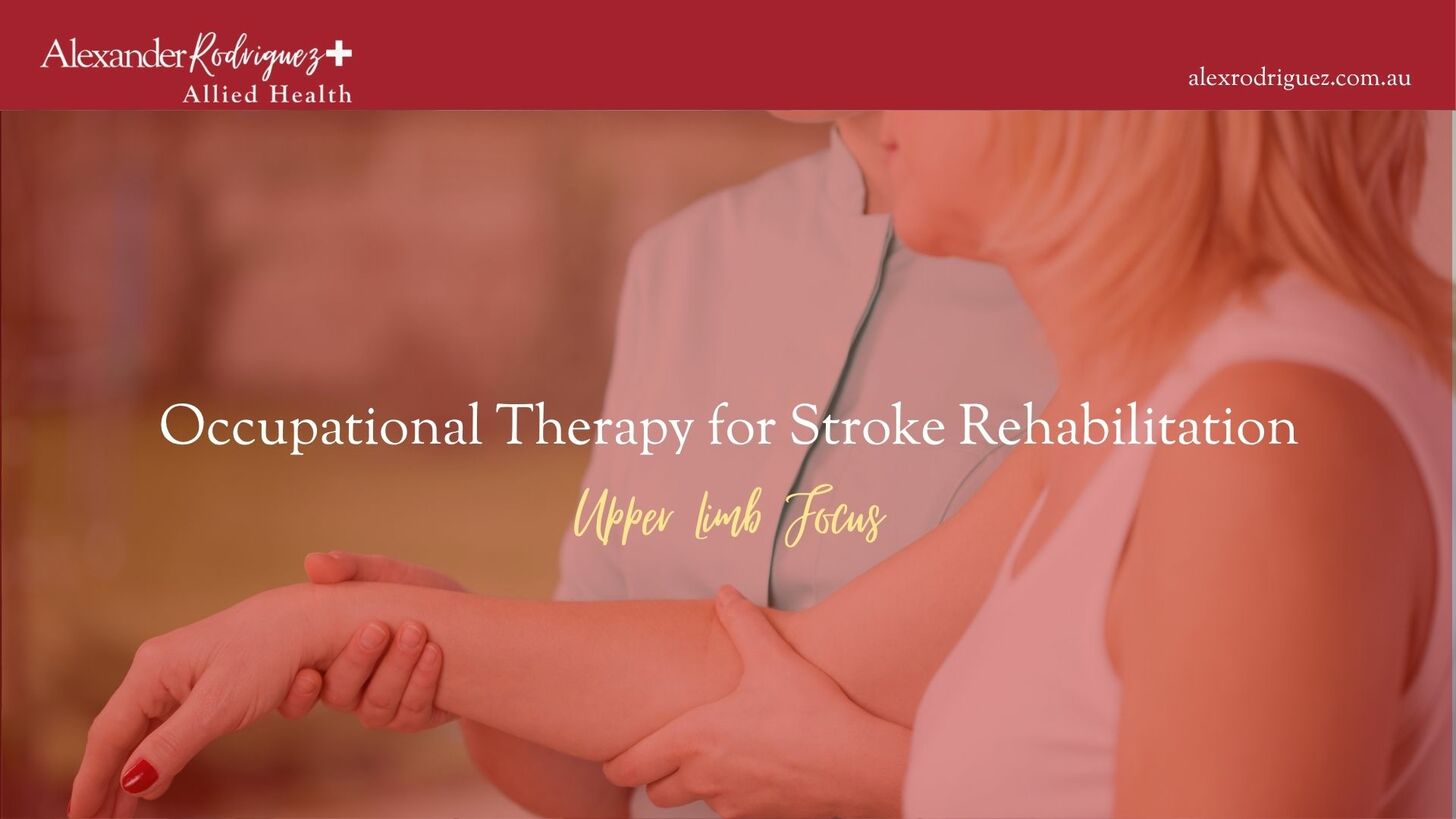
  • Occupational Therapy for Stroke Rehabilitation: Upper Limb Focus

    Occupational Therapy for Stroke Rehabilitation: Upper Limb Focus

    Occupational therapy plays a vital role in your stroke recovery, especially when your upper limb has been affected. In Australia, stroke is one of the leading causes of long-term disability, with around 425,000 Australians living with the effects of stroke and more than 41,000 stroke events occurring each year. Many people experience weakness in the arm or hand, making everyday activities like eating, dressing, or writing difficult.

    Through Stroke Rehabilitation, occupational therapy supports you to relearn these tasks by improving movement, coordination, and independence. As part of an Allied Health Service, your therapist works with you to build practical skills that fit into your daily life, helping you regain control and confidence during stroke treatment.

    After a stroke, regaining upper limb function is often one of your biggest goals. Difficulties with grip, coordination, and hand use can affect your fine motor skills, which are essential for work, home tasks, and social activities. Australian research shows that ongoing rehabilitation significantly reduces long-term disability and improves quality of life for stroke survivors. With the guidance of occupational therapy, you practise targeted movements and meaningful activities that support real-life recovery. By staying engaged in Stroke Rehabilitation and working closely with your Allied Health Service, you give yourself the best chance to improve arm function and move forward with greater independence after stroke treatment.

    At Alex Rodriguez, we understand how challenging living after a stroke can be. If you are noticing changes in your arm or hand movement, daily routines, or confidence, support is available to help you feel safer and more in control. Call us on 0429 220 646 or email nfo@alexrodriguez.com.au or book online to take the first step. We know how vital a positive outlook is, and our occupational therapy services are designed to support your stroke rehabilitation and help you see life in a brighter light.

    Key Takeaways

    • Occupational therapy is vital for improving upper limb function after a stroke.
    • Personalised stroke treatment supports safe recovery and daily independence.
    • Targeted Stroke Rehabilitation helps rebuild strength, movement, and coordination.
    • Improving fine motor skills makes everyday tasks easier and more manageable.
    • Support from an Allied Health Service addresses physical, emotional, and functional needs.

    Understanding the Role of Occupational Therapy in Stroke Recovery

    Your recovery journey is unique, and having the right support can make a meaningful difference. Occupational therapy plays an essential role in Stroke Rehabilitation by helping you move from hospital-based care into everyday life. After a stroke, simple tasks like dressing, cooking, or using your hands can feel challenging. Occupational therapists focus on practical stroke treatment approaches that help you adapt, rebuild skills, and regain independence in activities that matter most to you.

    Through guided practice and tailored strategies, occupational therapy helps improve movement, coordination, and confidence, especially in daily routines that rely on your upper limb and fine motor skills. As part of an Allied Health Service, your therapist works alongside you to overcome barriers, build problem-solving skills, and support a smoother return to meaningful roles at home, work, and in the community.

    Why your upper limb needs targeted rehabilitation

    The upper limb is a main focus in your recovery. It’s vital for almost all daily tasks. Without specific care, regaining arm and hand function after a stroke can be tough.

    Specialised stroke rehabilitation aims to retrain your brain and muscles. It improves coordination and strength by focusing on specific movements. This ensures you move with purpose and control.

    Assessing Your Current Upper Limb Function

    Your recovery journey begins with understanding what your arm and hand are able to do right now. After a stroke, changes in strength, movement, and coordination are common, and these can affect everyday tasks such as reaching, gripping, or using tools. Taking the time to assess your current upper limb function helps you and your therapist identify which movements are working well and which areas need extra support. This process forms a clear starting point for effective stroke treatment and ongoing Stroke Rehabilitation.

    By setting a realistic baseline, occupational therapy can be tailored to your specific needs and goals. Your therapist may look at your range of movement, muscle control, and how your arm and hand perform during daily activities. This personalised approach allows your Allied Health Service team to design therapy that builds on your strengths while safely addressing limitations. With a clear plan in place, you can track progress over time, stay motivated, and work towards improving upper limb use and fine motor skills in a way that fits your lifestyle.

    Identifying your baseline capabilities

    Your therapist will do some gentle movements to see how your muscles and joints react. This helps find out which areas need the most injury recovery support. You might find some movements easy, while others need more effort and patience.

    This is like taking a photo of your current health. Your therapist will check your range of motion, grip strength, and how you do simple tasks. This info helps create rehabilitation services that target your specific challenges.

    Tracking progress through functional assessments

    After setting your baseline, you’ll use functional assessments to track your progress. These assessments show how far you’ve come since your first session. Seeing these improvements can really motivate you during your stroke treatment.

    Your therapist will regularly check these results to make sure your rehabilitation services are working. If an exercise gets too easy, they’ll change your routine to keep you moving towards your goals. This structured approach keeps your recovery focused on what matters most for your daily life.

    Assessment Metric Purpose Frequency
    Range of Motion Measure joint flexibility Every 2 weeks
    Grip Strength Track muscle power Monthly
    Task Completion Evaluate daily function Every 4 weeks
    Coordination Test Assess motor control Every 6 weeks

    Setting Realistic Goals for Functional Skill Practice

    Breaking your recovery goals into small, manageable steps helps make the process clearer and less overwhelming. After a stroke, large goals can feel out of reach, but daily practice focused on simple, meaningful tasks allows steady progress. With guidance from occupational therapy, you can set goals that match your current ability and gradually build toward more complex movements using your arm and hand.

    Achievable milestones play an important role in keeping you motivated throughout your stroke treatment journey. Focusing on what you can work on today, such as improving grip, reach, or coordination, helps you see progress more clearly. Each success builds confidence and supports long-term improvement during Stroke Rehabilitation, making it easier to stay engaged and work towards greater independence in everyday life.

    Defining your personal recovery milestones

    Big recovery goals can feel too much, but breaking them down makes them doable. Think of these as stepping stones to greater independence. Every small victory counts, like holding a cup or buttoning a shirt.

    Working with rehabilitation services helps you focus on key skills for your lifestyle. Prioritising these skills means your efforts improve your life at home.

    Creating a structured routine for daily practice

    Consistency is key in recovery. By adding your practice to your daily routine, you make progress without it taking over your day.

    Try to do your exercises at the same time each day. This builds a reliable rhythm. Whether it’s during your morning coffee or while watching the evening news, routine building helps your brain create new pathways.

    Remember, your stroke treatment plan should change as you get better. Regularly check in with your therapist to make sure your rehabilitation services match your goals for independence.

    Step-by-Step Guide to Daily Living Skills Support

    Daily living skills support is a key part of occupational therapy and plays an important role in your Stroke Rehabilitation journey towards regaining independence at home. After a stroke, everyday tasks such as dressing, preparing meals, or personal care can be harder, especially when upper limb movement and fine motor skills are affected. Through personalised stroke treatment, occupational therapists focus on practical strategies that help you safely practise daily activities, build strength, and relearn movements that support real-life function.

    You might think some movement-based strategies are only used with children, but these approaches are just as effective for adults recovering from neurological events. By focusing on small, consistent wins, occupational therapy helps your brain and body adapt over time. With support from an Allied Health Service, step-by-step practice strengthens your confidence, improves upper limb use, and allows you to manage your household with greater ease as you progress through Stroke Rehabilitation.

    Breaking down complex tasks into manageable steps

    Complex activities often feel overwhelming when your upper limb function is limited. The secret lies in task analysis, which involves breaking a single activity into smaller, bite-sized actions. By focusing on one movement at a time, you reduce cognitive load and physical strain.

    For example, instead of trying to prepare an entire meal at once, focus solely on gathering your ingredients. Once that is complete, move to the next step of chopping or mixing. This structured approach ensures you remain safe while building the stamina needed for longer tasks.

    Using adaptive equipment for independence

    Adaptive equipment acts as a bridge between your current abilities and your goals. These tools are designed to compensate for reduced grip strength or a limited range of motion. Investing in the right gear allows you to maintain your dignity and privacy during daily routines.

    Selecting the right tools for your kitchen

    Your kitchen should be a space of creativity, not frustration. Consider using rocker knives, which allow you to cut food with a simple rocking motion rather than a sawing action. Non-slip mats are also essential to keep your bowls and plates stable while you work with one hand.

    Modifying personal grooming routines

    Grooming is a deeply personal experience that contributes to your overall well-being. Much like the developmental focus found in pediatric occupational therapy, we encourage you to use long-handled brushes or electric toothbrushes to reduce the need for complex wrist movements. Simplifying your setup by placing items at waist height can also prevent unnecessary reaching and fatigue.

    Implementing Strengthening and Mobility Support Exercises

    Getting your upper limbs moving again is a key part of regaining independence after a stroke. Occupational therapy plays an important role in Stroke Rehabilitation by helping you rebuild strength and improve mobility in your shoulder, elbow, wrist, and hand. After a stroke, weakness or stiffness can limit everyday actions like reaching, lifting, or holding objects. Targeted strengthening and mobility exercises support safe movement and help restore control as part of a structured stroke treatment plan.

    With guidance from an Allied Health Service, these exercises are introduced gradually and adjusted to suit your ability and goals. Occupational therapy focuses not only on muscle strength but also on coordination and fine motor skills needed for daily tasks. By practising consistent, purposeful movements, you can improve upper limb function, build confidence, and take meaningful steps forward in your recovery journey through Stroke Rehabilitation.

    Safe range-of-motion exercises for the shoulder and elbow

    Stiffness is common after a stroke, but gentle movement can prevent it. Start with slow, controlled stretches to improve your movement. Always stop if you feel sharp pain.

    Your therapist might recommend shoulder rolls or elbow extensions. These exercises keep your joints flexible, which is crucial for supporting your chronic condition. Sticking to these exercises is important for progress.

    Building grip strength for everyday objects

    Building grip strength lets you easily handle items like cups or door handles. Use tools like stress balls or therapy putty to strengthen your hand muscles. These methods, similar to those used in pediatric occupational therapy, are effective for adults too.

    The table below shows how different exercises help with daily tasks:

    Exercise Type Primary Benefit Daily Application
    Shoulder Pendulums Reduces joint stiffness Reaching for high shelves
    Elbow Flexion Improves arm control Bringing food to your mouth
    Grip Squeezes Increases hand power Holding a coffee mug
    Wrist Rotations Enhances dexterity Turning a door handle

    By adding these exercises to your daily routine, you’re on the path to better health. Remember, every small step forward is a big win for your long-term success.

    Refining Fine Motor Skills Through Therapeutic Activities

    Regaining precise hand and finger movement is an important step in your recovery after a stroke. Fine motor skills allow your hands and fingers to work together smoothly, which is essential for tasks like writing, using cutlery, managing buttons, or handling small objects. During Stroke Rehabilitation, occupational therapy focuses on retraining these detailed movements so you can return to daily activities with greater ease and confidence as part of your overall stroke treatment.

    Therapeutic activities are highly effective for improving coordination and control in a safe, structured way. Through occupational therapy, you practise task-based activities that challenge grip strength, dexterity, and hand-eye coordination without overwhelming your recovery. As part of an Allied Health Service, these activities are tailored to your current ability and progressed gradually, helping you rebuild fine motor control, improve upper limb function, and support meaningful independence throughout your Stroke Rehabilitation journey.

    Exercises to improve dexterity and coordination

    Improving hand function needs regular practice. Start with simple tasks that get harder as you get better.

    Try these therapeutic activities every day to improve your dexterity:

    • Coin sorting: Pick up coins of different sizes and put them into a narrow slot.
    • Pegboard puzzles: Use your thumb and index finger to place small pegs into holes.
    • Therapy putty: Squeeze, stretch, and roll soft putty to build finger strength and flexibility.
    • Buttoning practice: Use a practice board with various button sizes to improve coordination.

    Using repetitive task training for neural plasticity

    Your brain can change and adapt, a process called neural plasticity. Doing the same movement over and over helps your brain make new pathways.

    Repetitive task training is key to better fine motor skills. It’s not just about muscle exercise. It’s about training your nervous system to regain control.

    Be patient with your progress. Small, repeated efforts lead to big gains over time. Every time you do therapeutic activities, you’re strengthening the connection between your mind and body.

    Integrating Cognitive and Behavioural Strategy Support

    The mental side of recovery is just as important as the physical, especially during Stroke Rehabilitation. While your hands and arms work to regain movement, your mind is adjusting to changes in memory, attention, and confidence. Occupational therapy recognises that improving fine motor skills is not only about exercise, but also about staying motivated, focused, and emotionally supported throughout your stroke treatment journey.

    By integrating cognitive and behavioural strategies, occupational therapy helps you build a positive mindset and stronger self-belief. Techniques such as goal-setting, routine-building, and problem-solving support your ability to practise fine motor tasks consistently. As part of a holistic Allied Health Service, these strategies help you manage frustration, stay engaged in therapy, and maintain focus on progress. Supporting both mind and body allows you to achieve more meaningful and lasting improvements in fine motor skills during your Stroke Rehabilitation.

    Managing fatigue during your rehabilitation sessions

    Fatigue can make it hard to do therapeutic activities. It’s key to know your limits and listen to your body. Break tasks into smaller parts to manage your energy better.

    Do your hardest exercises when you’re most awake. Short breaks help you keep going without getting too tired. Remember, pacing yourself is a sign of getting better, not failing.

    Developing strategies to overcome frustration

    Feeling frustrated is normal when progress is slow or when tasks are hard. Good behavioural strategies can help manage these feelings. Celebrate small victories to keep your focus on the journey, not just the end.

    Positive self-talk can also help a lot. If you’re stuck, ask your support team for help. Being flexible in your routine lets you adjust to your changing needs while continuing your stroke rehabilitation.

    Strategy Benefit Implementation
    Energy Pacing Reduces burnout Rest every 20 minutes
    Goal Reframing Boosts morale Focus on daily wins
    Mindful Breathing Lowers frustration Use during rest breaks

    Managing Sensory Integration Support for Better Control

    Improving your sensory awareness can make a meaningful difference to how you move and function each day after a stroke. If the brain has difficulty interpreting signals from your arm or hand, tasks like gripping objects or judging pressure can become challenging. As part of occupational therapy, sensory integration support is used during Stroke Rehabilitation to help reconnect how your brain processes touch, movement, and position. This awareness is a key foundation for better control and more effective stroke treatment outcomes.

    By focusing on sensory integration, occupational therapy helps your brain and upper limb work more smoothly together. Activities may involve texture feedback, guided movement, or task-based practice that supports coordination and fine motor skills. Delivered through an Allied Health Service, this approach helps you feel more confident using your arm and hand in daily routines. Over time, improved sensory processing supports safer movement, stronger control, and greater independence throughout your Stroke Rehabilitation journey.

    Techniques for desensitisation and sensory re-education

    After a stroke, you might feel too sensitive or numb in your hand and arm. We use special therapeutic activities to make these feelings normal again. Desensitisation involves touching your skin with different textures, like soft fabrics or brushes, to lessen discomfort.

    Sensory re-education then teaches your brain to identify objects just by touch. For example, you might reach into a bag to find something without looking. This helps your nervous system get better at understanding touch signals.

    Improving proprioception for safer movement

    Proprioception is knowing where your body is without looking. If this sense is off, your movements might feel awkward. Getting better at this is crucial for staying safe while doing everyday things.

    There are specific therapeutic activities to boost your proprioception. These exercises challenge your sense of where your joints are. They include:

    • Weight-bearing activities help give feedback to your joints.
    • Mirror therapy helps your brain see the right limb position.
    • Guided reaching tasks that focus on getting the right spot.

    By doing these exercises regularly, you’ll see a big boost in your fine motor skills. This increased control lets you move with more confidence and precision all day long.

    Adapting Your Home and Work Function Support

    Recovery goes beyond the clinic and into your everyday environments. Occupational therapy plays an important role in Stroke Rehabilitation by helping you adapt your home and work spaces to better support your current abilities. After a stroke, small barriers such as furniture layout, lighting, or work setup can affect safety and independence. Making practical adjustments allows you to use your upper limb more confidently and apply what you are learning through stroke treatment in real life.

    Simple changes can make a big difference to how you function each day. With guidance from an Allied Health Service, occupational therapy focuses on modifying tasks, tools, and environments to support movement, comfort, and fine motor skills. These adaptations help reduce fatigue, lower the risk of injury, and improve confidence at home and work. By creating supportive spaces, you are better able to practise daily activities, maintain progress, and strengthen independence throughout your Stroke Rehabilitation journey.

    Modifying your environment for safety and efficiency

    Think about how you use objects at home. Improving fine motor skills can start with simple things. For example, using non-slip mats or ergonomic handles on kitchen tools can help.

    These changes make it easier to do everyday tasks without straining your body. It’s like the tips given in pediatric occupational therapy for kids. Making your home more accessible helps you save energy and avoid getting tired easily.

    Returning to work with professional guidance

    Going back to work is a big step. You need to plan carefully. Work with your therapist to figure out tasks that are hard for you. They can help you find ways to do them better.

    Here’s a table to help you plan changes for different places:

    Setting Primary Goal Example Modification
    Home Kitchen Safety & Ease Installing lever-style taps
    Home Office Efficiency Using a vertical mouse
    Workplace Sustainability Adjusting desk height
    Commute Independence Using adaptive travel aids

    Your therapist can also help you talk to your boss about making your job easier. Working together, you can make your workplace better for you. Remember, sticking to your routine is key to doing well at work and in life.

    Prioritising Occupational Therapy Support at Alex Rodriguez

    After a stroke, the emotional side of recovery can feel overwhelming and may affect your motivation, confidence, and day-to-day life. Alongside physical changes, it is common to experience frustration, anxiety, or low mood during Stroke Rehabilitation. Alex Rodriguez Occupational Therapy Service recognises that emotional regulation and mental well-being are essential parts of effective stroke treatment, not something to be left until later.

    Through a supportive and person-centred approach, occupational therapy provides a safe space to work through your feelings, rebuild routines, and strengthen coping strategies. As part of a trusted Allied Health Service, our therapists support you to manage stress, adjust to change, and stay engaged in your recovery. By prioritising emotional well-being, you also support progress in physical goals such as upper limb recovery and fine motor skills, helping you move forward with greater confidence and resilience throughout your Stroke Rehabilitation journey.

    Coping with the emotional impact of a stroke

    It’s normal to feel many emotions after a stroke. You might feel frustrated, sad, or anxious as you adapt to new daily challenges. Alex Rodriguez Allied Health helps you find ways to manage your emotions and regain balance.

    We help you create personalised coping strategies that suit you. By tackling these emotions early, you can maintain a positive outlook and stay motivated in your recovery.

    How to book your session with Alex Rodriguez

    Starting your mental wellness journey is a big step. We make it easy to get our occupational therapy support when you’re ready. Our team is dedicated to offering an allied health service that meets your needs.

    Speak with Our Occupational Therapy Team

    If you’d like to talk directly, call us on 0429 220 646. Our friendly staff are ready to answer your questions and book an appointment that fits your schedule.

    Book an Appointment Using Our Online Booking Portal

    Or, book online at https://www.alexrodriguez.com.au/booking. This easy digital tool lets you see available times and book your first session with Alex Rodriguez Allied Health at your convenience.

    Conclusion

    Your journey to regain upper limb function is unique, and receiving the right professional support can make recovery more effective and rewarding. With occupational therapy, your stroke treatment is designed around your individual needs, goals, and daily routines, helping you build confidence and practical ability over time.

    Working closely with a dedicated Allied Health Service supports consistent progress through Stroke Rehabilitation, from improving upper limb strength to restoring important fine motor skills. Every small step you take contributes to greater independence and comfort in everyday life. With the right guidance and persistence, meaningful change is achievable. Celebrate your progress, stay committed to your recovery, and look forward to a more confident and fulfilling future.

    At Alex Rodriguez, we understand how challenging living after a stroke can be. If you are noticing changes in your arm or hand movement, daily routines, or confidence, support is available to help you feel safer and more in control. Call us on 0429 220 646 or email nfo@alexrodriguez.com.au or book online to take the first step. We know how vital a positive outlook is, and our occupational therapy services are designed to support your stroke rehabilitation and help you see life in a brighter light.

    FAQ

    Why is an allied health service like occupational therapy so important for stroke rehabilitation?

    After a stroke, occupational therapy is key to getting you back on your feet. At Alex Rodriguez Allied Health, we focus on improving your upper limb. We use proven methods to help you do everyday tasks again with confidence.
    Our goal is to help you reach your physical and functional goals. This way, you can move forward in your recovery with a clear plan.

    How can therapeutic activities improve my fine motor skills?

    We use special activities to boost your fine motor skills and coordination. These activities help your brain adapt and improve control over your hand and arm. Whether it’s buttoning a shirt or writing, we tailor our services to help you interact better with your environment.

    Are the strategies used in adult stroke recovery similar to pediatric occupational therapy?

    Yes, many techniques from pediatric occupational therapy are also effective for adults. At Alex Rodriguez Allied Health, we adapt these methods for adults. This ensures your recovery is both effective and suited to your age.

    What kind of strengthening and mobility support can I expect during my sessions?

    Your sessions will include exercises to strengthen your shoulder, elbow, and wrist. We focus on safe movements to prevent stiffness and improve grip strength. This support is crucial for your long-term physical health and safety at home and work.

    How does Alex Rodriguez Allied Health support my mental health and emotional regulation?

    We understand that recovery is as much about the mind as the body. Our mental health support helps you manage emotions and frustration. We provide a safe space to talk about your feelings, ensuring you stay motivated and positive.

    Can you help me adapt my home for better independence?

    Yes, we offer support to make your home and work environment safer and more efficient. We provide advice on adapting your space and choosing the right tools. These changes help you use your fine motor skills in real-life situations, making your transition back to daily life easier.

    How do I book an appointment with Alex Rodriguez Allied Health?

    Booking your appointment is easy. Call us at 0429 220 646 to discuss your needs. Or, use our online booking portal at https://www.alexrodriguez.com.au/counsellor-booking/ to schedule your first consultation and start your occupational therapy programme.
  • High Functioning Anxiety: Signs, Causes and Practical Coping Strategies

    High Functioning Anxiety: Signs, Causes and Practical Coping Strategies

    High functioning anxiety is a form of anxiety marked by ongoing worry, inner tension and mental pressure, experienced by people who continue to function well at work, study or home while appearing calm and capable to others. On the outside, you may seem organised, dependable and highly motivated, yet internally you feel restless, overthink constantly and find it hard to truly switch off or relax.

    In Australia, this hidden experience is far from rare. National data from the Australian Bureau of Statistics shows anxiety is the most common mental health condition, affecting around 17 percent of Australians each year. Many people manage their responsibilities successfully while quietly dealing with ongoing anxiety symptoms, making high-functioning anxiety easy to miss, even by themselves. Without proper anxiety management and stress management, this internal pressure can slowly affect your energy, mood and overall mental health.

    If you often feel like you are just pushing through each day, learning practical coping strategies can help you move beyond survival mode. Simple self-care tips, like setting boundaries, managing workload expectations and giving your nervous system time to rest, can make a real difference. Many Australians also find that anxiety counselling or professional counselling provides a safe space to unpack long-held stress and develop personalised tools to cope. With the right support and consistent care, high-functioning anxiety does not have to run your life. Understanding what is happening inside you is the first step towards calmer thinking, healthier routines and lasting wellbeing.

    At Alex Rodriguez, we know anxiety can feel overwhelming, and an anxiety test is often a helpful first step toward understanding what you are experiencing. Our anxiety counselling provides calm, professional support to help you manage symptoms and regain confidence. Call 0429 220 646 or book online and get the support you need.

    Key Takeaways

    • High functioning anxiety can exist behind success, productivity and a calm exterior.
    • Persistent anxiety symptoms often show up as perfectionism, overthinking and difficulty resting.
    • Identifying personal triggers is essential for sustainable anxiety management.
    • Daily coping strategies, self-care tips and healthy stress management support long-term mental health.
    • Anxiety counselling and professional counselling can help you move from coping to genuinely feeling well.

    Understanding the Reality of High-Functioning Anxiety

    You may look calm, capable and in control to the people around you, yet internally feel a constant undercurrent of tension. High-functioning anxiety describes this hidden experience, where anxiety coexists with outward success and productivity. You continue to meet deadlines, support others and perform well, but your mind rarely slows down. Even though high-functioning anxiety is not formally recognised in the DSM-5, it is a genuine and increasingly common challenge for high achievers. Ongoing anxiety symptoms such as excessive worry, overthinking, perfectionism and fear of failure can quietly shape your daily life, placing strain on your overall mental health if left unaddressed.

    Because you appear to cope well, high-functioning anxiety is often overlooked, both by others and by yourself. You may rely on busyness as a form of stress management, believing that pushing through is the only option. Over time, this approach can lead to emotional exhaustion, disrupted sleep and difficulty relaxing, making effective anxiety management essential. Practical coping strategies, along with realistic self-care tips, can help create balance and reduce constant pressure. Many people also find that professional anxiety counselling offers valuable insight and relief. Through guided counselling, you can better understand your anxiety patterns and develop healthier ways to manage stress, allowing you to move from simply functioning to feeling genuinely well.

    What Does High Functioning Anxiety Actually Look Like?

    To others, you may appear organised, reliable and in control, but internally, high-functioning anxiety often feels like a constant background hum of pressure. You manage tasks well and meet expectations, yet your mind stays busy with worry, overthinking, and the need to be prepared for everything that could go wrong.

    This ongoing state of alertness shows up through subtle anxiety symptoms such as perfectionism, restlessness and difficulty relaxing, even during downtime. While these patterns can drive high performance, they also keep your stress levels elevated, making thoughtful anxiety management and realistic coping strategies important to protect your long-term mental health.

    The Difference Between Clinical Anxiety and High-Functioning Anxiety

    It’s crucial to know the difference between this and clinical anxiety disorders, like Generalised Anxiety Disorder (GAD). In clinical cases, anxiety stops you from doing daily tasks or keeping up with responsibilities.

    On the other hand, those with high-functioning traits use their nervous energy to stay productive. This might seem good, but it can lead to hidden burnout and emotional exhaustion. Here’s a table showing the main differences between these two experiences.

    Feature High Functioning Anxiety Clinical Anxiety
    Daily Productivity Often high or overachieving Frequently impaired or stalled
    Outward Appearance Composed and successful Visible distress or avoidance
    Internal Experience Constant worry and perfectionism Overwhelming fear and panic
    Impact on Life Hidden burnout and fatigue Significant disruption to routine

    Common Signs and Symptoms You Might Recognise

    Living with high-functioning anxiety often feels like constantly walking a tightrope. You may move through your day appearing capable and composed, yet inside you feel mentally overloaded and under pressure. Your thoughts may race ahead to future tasks, problems, or what could go wrong, making it difficult to focus on the present moment fully. While you continue to meet expectations and stay productive, these hidden anxiety symptoms can quietly erode your sense of calm and emotional balance. Over time, this ongoing inner tension can place significant strain on your mental health, even though others see you as coping well.

    Because high-functioning anxiety is subtle, its signs are easy to dismiss as normal stress or personality traits. You might struggle to relax, feel guilty for resting, or notice that your self-worth is closely tied to performance and achievement. Sleep may feel restless, your mind rarely truly switches off, and small mistakes can feel disproportionately distressing. Recognising these patterns is an essential step towards healthier anxiety management. Awareness allows you to acknowledge that just because you are functioning well does not mean you are feeling well, and that your mental health deserves care, attention and support.

    Physical Indicators of Hidden Stress

    Your body often shows signs of stress that you try to hide. Even when you seem calm, you might have muscle tension in your shoulders or jaw. Feeling tired all the time is another sign, as your body stays alert.

    Headaches or digestive problems can also mean your body is under too much pressure. Paying attention to these signs is key to avoiding burnout.

    Behavioural Patterns and Perfectionism

    High-functioning anxiety often shows as a need for perfection. You might think your worth depends on your achievements, leading to a fear of failure. This drive for perfection keeps you busy but doesn’t bring true happiness.

    The table below shows how these behaviours differ from usual stress responses:

    Behaviour Typical Stress High Functioning Anxiety
    Workload Feeling overwhelmed Over-preparing to avoid errors
    Social Life Withdrawing Over-committing to please others
    Self-View Temporary doubt Chronic fear of being “found out”

    The Internal Monologue of Constant Worry

    Underneath your productive exterior, you might have a constant stream of anxiety. You might replay conversations or worry about tasks long after work. This inner voice is often critical, pushing you to do more or be better.

    This mental chatter makes it hard to relax or be in the moment. By recognising these patterns, you can start to challenge the idea that your value depends on constant productivity. Remember, your mental health is more important than any task or achievement.

    Identifying the Root Causes and Triggers

    Understanding what sits beneath high-functioning anxiety is a powerful step towards meaningful change. It can often feel like this constant state of worry and tension is simply part of your personality, but in reality, it is usually shaped by life experiences and ongoing pressures. High expectations at work, fear of failure, people‑pleasing tendencies, past criticism or experiences where you felt unsafe or out of control can all contribute to this pattern. Over time, your mind learns to stay alert as a way to cope, even when the threat is no longer present, keeping your stress levels high and affecting your mental health.

    Identifying these root causes allows you to approach stress management with greater compassion rather than self‑blame. Instead of pushing harder or ignoring your feelings, you can begin to recognise why certain situations trigger anxiety and how your responses developed to protect you. This awareness creates space for healthier choices, helping you respond to stress with understanding rather than pressure. When you know where your high-functioning anxiety comes from, managing it becomes less about fixing yourself and more about supporting your nervous system in a kinder, more sustainable way.

    Biological and Environmental Factors

    Your nervous system affects how you deal with everyday stress. Some people are naturally more sensitive, making anxiety harder to manage. This natural sensitivity can mix with your surroundings, keeping you always on edge.

    Being in a state of constant alertness makes it hard to relax, even when it’s safe. Realising your body is trying to protect you is key. By understanding this, you can start using better stress management methods that respect your body’s needs.

    The Role of Childhood Conditioning and Upbringing

    Many with high-functioning anxiety grew up where success was everything. Being praised for what you achieve, not for trying, can make you think your worth is tied to your output. This early teaching often leads to a fear of failing.

    You might still push yourself too hard to avoid criticism or letdowns. This is a common result of growing up with strict or conditional expectations. Healing means learning to see your value as something you already have, not something you earn through constant work.

    Modern Workplace Pressures and Social Expectations

    Today’s world often praises the very habits that fuel anxiety. Being always connected and available can make it hard to take a break. These demands can make you more prone to perfectionism and burnout.

    Social media also adds to the pressure by making everyone look like they have it all together. Seeing others manage everything flawlessly can make you feel like you’re not doing enough. Taking care of your mental health in this setting is not just a choice; it’s a necessity for your well-being.

    Step One: Recognising Your Personal Triggers

    Beginning to manage high-functioning anxiety starts with paying closer attention to your everyday experiences. When you are used to constantly pushing forward, it is easy to overlook the subtle signals your body and mind send when stress is building. You may move quickly from one task to the next without noticing rising tension, shallow breathing or racing thoughts. Slowing down allows you to observe when and where your anxiety increases, whether it is around deadlines, social expectations, being uncertain or feeling out of control. These moments often reveal important patterns that contribute to ongoing strain on your mental health.

    Recognising your personal triggers helps turn vague stress into something you can understand and respond to. You may begin to notice that certain people, environments or pressures consistently leave you feeling overwhelmed or on edge. Rather than judging yourself for these reactions, awareness allows you to approach them with curiosity and compassion. This understanding lays the foundation for healthier stress management, helping you respond more intentionally instead of automatically pushing harder. By learning what activates your anxiety, you create space to support yourself in ways that reduce pressure and restore balance.

    Keeping an Anxiety Journal

    Keeping a journal is a great coping strategy. You don’t need to write a lot. Just noting when your anxiety goes up can be very helpful. Try to write down the time, what’s happening, and how you feel.

    Doing this over time lets you see patterns in your life. You might find that you get stressed in certain meetings or when deadlines are tight. Writing these down makes your feelings more tangible data you can work with.

    Identifying Situational Stressors

    After you’ve filled up your journal, you can find out what stresses you. These are things outside of you that make you anxious. It could be fear of failure or wanting to look perfect. Naming these triggers is a big step in understanding yourself.

    Knowing what stresses you lets you find ways to deal with it. This way of managing anxiety helps you get through tough days more easily. You’re not just dealing with symptoms; you’re building a strong base for coping strategies that fit your life.

    Step Two: Implementing Daily Emotional Regulation Techniques

    Finding a sense of calm in a busy, demanding world is possible with the right daily practices. When you live with high-functioning anxiety, your nervous system is often stuck in a heightened state of alert, scanning for what needs to be done next or what might go wrong. This can make even quiet moments feel uncomfortable or unproductive. Emotional regulation techniques help interrupt this cycle by teaching your body and mind that it is safe to slow down. Simple, intentional habits practised consistently are far more effective than occasional attempts to relax when you are already overwhelmed.

    A regular emotional regulation routine can gently shift you from a reactive state into one of greater stability. This might include slowing your breathing during the day, grounding yourself when thoughts start racing, or creating small pauses between tasks instead of rushing straight into the next demand. Over time, these techniques help reduce the constant internal pressure that fuels high-functioning anxiety. Rather than relying on willpower to push through stress, you build a steady sense of control and balance that supports your overall mental health and makes daily life feel more manageable.

    Grounding Exercises for Immediate Relief

    Grounding exercises are essential tools for when your thoughts start to spiral. They help you focus on your surroundings, not your worries. The 5-4-3-2-1 technique is a popular method.

    It asks you to notice five things you see, four things you can touch, three sounds, two smells, and one taste. This distracts your brain from stress. It’s a quick way to calm down, whether at work or on your way home.

    Mindfulness Practices for Long-Term Calm

    Mindfulness is more than a trend; it’s a powerful tool against daily stress. It teaches you to watch your thoughts without getting caught up in them. This is a key coping strategy for staying mentally clear.

    Try sitting quietly for five minutes each morning. Focus on the sounds or the feeling of your feet on the floor. This habit can reduce your anxiety and keep you grounded, even on tough days.

    Breathing Techniques to Lower Cortisol

    Your breath connects directly to your nervous system. When you feel tense, certain breathing can help release stress hormones. Box breathing: inhale for four, hold for four, exhale for four, hold for four is simple yet effective.

    Regular practice of these techniques can help manage anxiety’s physical symptoms. By making them part of your daily routine, you can handle life’s challenges more easily and confidently.

    Step Three: Challenging Perfectionism and Negative Thought Patterns

    Perfectionism can feel like a constant weight on your shoulders, especially when you are living with high-functioning anxiety. You may set extremely high standards for yourself, believe mistakes are unacceptable, or feel that your worth depends on how well you perform. While this mindset can fuel achievement, it also keeps your mind in a state of relentless pressure. Negative thought patterns like self‑criticism, all‑or‑nothing thinking and fear of failure can run quietly in the background, draining your energy and making it difficult to ever feel satisfied or at ease.

    Challenging these patterns does not mean lowering your values or ambition. It means learning to question rigid expectations and replacing them with more balanced, realistic ways of thinking. When you begin to notice unhelpful thoughts and gently reframe them, you create space to respond rather than react. This shift allows you to conserve emotional energy, reduce stress and develop healthier ways to cope. Over time, easing perfectionism can help you feel more grounded and in control, supporting better anxiety counselling and a more sustainable relationship with your mental health.

    Applying CBT Principles to Your Daily Routine

    Cognitive Behavioural Therapy (CBT) teaches you to spot thoughts that cause anxiety. Start by logging when you feel overwhelmed by perfection. Ask if your expectations are realistic or if they’re too high.

    After spotting these patterns, challenge them with facts. Instead of seeing a small mistake as a big failure, look for evidence that shows you’re still valuable. This helps you stop worrying and see things more clearly.

    Reframing Your Inner Critic

    Your inner critic is often very hard on you. It pushes you to do more and ignores your achievements. To change this, talk to yourself kindly, like you would to a friend. When you judge yourself, replace those thoughts with kind, realistic ones.

    Learning to quiet your critic is key to managing high-functioning anxiety. By being kind instead of critical, you create a safer space inside. This lets you aim for your goals without the burden of needing to be perfect, reducing your anxiety.

    Step Four: Prioritising Self-Care and Boundaries

    Learning to take back your time is a crucial step in managing high-functioning anxiety, even though it can feel uncomfortable at first. You may be used to saying yes to every request, taking responsibility for others and pushing your own needs aside to keep everything running smoothly. While this may look like coping on the surface, it often leaves you mentally drained and emotionally depleted. When rest feels unearned or unnecessary, your mental health can suffer, making stress and anxiety harder to manage over time.

    Setting clear, consistent boundaries is essential for protecting your energy and well-being. Boundaries allow you to decide what you can reasonably give without overextending yourself. This might mean saying no, asking for help or allowing yourself time to rest without guilt. Prioritising self-care is not selfish or indulgent; it is a necessary part of creating balance and preventing burnout. By respecting your own limits, you create space for recovery, clarity and a calmer relationship with your anxiety, supporting more sustainable and effective daily functioning.

    Learning to Say No Without Guilt

    It’s hard to say no because you fear disappointing others. But saying no is crucial for stress management and avoiding overcommitting. You can be kind and firm without needing to explain why.

    Start by saying no in small ways. As you see, the world doesn’t end when you say no, you’ll feel more confident. Remember, every yes to something draining is a no to your recovery.

    Creating Sustainable Work-Life Balance

    Getting a healthy balance needs effort, not just hope. Good self-care tips mean planning downtime as you would work meetings. This way, you have time to recharge.

    Burnout comes from thinking you must always work hard. By stopping this cycle, you can thrive without constant effort. Use the table below to check your habits and find areas to improve.

    Habit Type Unhealthy Approach Healthy Boundary
    Communication Always available for emails Set specific office hours
    Workload Taking on extra tasks Prioritising core responsibilities
    Rest Working through lunch breaks Taking intentional breaks
    Expectations Seeking constant perfection Accepting “good enough”

    Using these coping strategies will make you more resilient. Regular stress management is key to success and emotional stability. By adding these self-care tips to your daily life, you build a strong foundation for growth and well-being.

    Professional Support at Alex Rodriguez Counselling

    You do not have to navigate high-functioning anxiety on your own. Reaching out for professional support is a strong and positive step towards protecting your mental health and finding balance in a fast‑paced, demanding world. Professional counselling provides a safe space to pause, reflect and understand what is driving your anxiety symptoms, rather than constantly pushing through stress. This support can help you develop healthier stress management habits and begin meaningful anxiety management with guidance and care.

    At Alex Rodriguez Counselling, you are welcomed into a warm, supportive and non‑judgemental environment where your experiences are respected and taken seriously. Through personalised anxiety counselling, the focus is on building practical coping strategies, learning sustainable self‑care tips and setting healthier boundaries so you can feel more in control. The goal is not just to cope, but to strengthen resilience, confidence and long‑term wellbeing, helping you move forward feeling supported, empowered and more at ease in your everyday life.

    How Therapy Can Help You Manage Anxiety

    Anxiety counselling helps find the source of your distress. With a professional, you can spot anxiety symptoms early. This stops them from becoming too much to handle.

    We use proven methods like Cognitive Behavioural Therapy (CBT). It helps change negative thoughts. This way, you can control your emotions and daily life better.

    Specialised Services for Stress and Burnout

    Today’s life can be very stressful. Our counselling services offer help for burnout. We aim to help you regain your energy and drive.

    We teach you how to manage your emotions and find lasting ways to cope. This helps you build a stronger, more balanced life despite anxiety.

    Support for Life Transitions and Inner Conflict

    Life brings many surprises that can cause inner turmoil. Whether it’s a job change or personal issues, we’re here to guide you. Our team helps you move forward with confidence.

    We help you match your actions with your values. This reduces the anxiety caused by inner conflict. Below is a table showing how our support can help in various life areas:

    Service Area Primary Focus Expected Outcome
    CBT Therapy Thought Patterns Improved Emotional Regulation
    Burnout Support Stress Management Restored Energy Levels
    Life Transitions Inner Conflict Increased Personal Clarity

    Accessing Online Therapy Sessions for Your Convenience

    Finding time for appointments can feel challenging when work, family and daily responsibilities already demand so much of your energy. When you are managing high functioning anxiety, your mental health should not be pushed aside because of a full schedule, long travel times or competing priorities. Support needs to fit into your life, not add more pressure to it.

    Online therapy sessions make accessing professional support easier and more flexible. With sessions available from the comfort of your own space, help is always within reach without disrupting your routine. This approach allows you to focus on your wellbeing in a way that feels practical, private and supportive, helping you care for your mental health while maintaining productivity and balance.

    The Benefits of Remote Counselling

    Remote counselling offers top-notch support, right from your home. Many find it easier to share their high-functioning anxiety in a familiar setting.

    A digital platform helps you tackle anxiety and stress without the hassle of travel. You can get effective anxiety counselling without leaving your home, saving you time each week.

    Feature In-Person Online
    Flexibility Fixed Location Anywhere
    Travel Time Required None
    Comfort Level Clinical Setting Your Choice

    How to Book Your First Session

    Booking your first session is easy. Just visit Alex Rodriguez Counselling website at https://www.alexrodriguez.com.au/counsellor-booking/ to start.

    On our portal, you’ll see times that fit your schedule. We’re here to help with anxiety counselling for high-functioning anxiety and general anxiety. Begin your journey to a calmer life today with our counselling services.

    Taking the First Step Toward Better Mental Health

    Your journey towards balance, clarity and lasting wellbeing begins with a brave and intentional choice. Many people believe they must manage high-functioning anxiety on their own, especially when they appear capable and successful to others. Over time, this belief can increase pressure and intensify anxiety symptoms, making everyday life feel heavier than it needs to be. Acknowledging that you need support is not a weakness; it is a powerful act of self‑awareness and the foundation of effective anxiety management.

    With the right coping strategies, healthy stress management practices and practical self‑care tips, it is possible to reduce constant tension and regain a sense of control. Professional anxiety counselling and supportive counselling can play a vital role in strengthening your mental health, helping you understand your patterns and develop tools that truly work for you. Taking this first step allows you to move beyond simply functioning well on the outside and begin feeling supported, grounded and well on the inside too.

    Why Seeking Help is a Sign of Strength

    Many think getting anxiety counselling is weak. But facing anxiety symptoms and growing takes real courage. By talking to a pro, you’re choosing your mental health over quick fixes.

    Experts give you tools to deal with tough feelings. They help you see things clearly, which is hard alone. Here’s why professional help is valuable:

    Approach Outcome Sustainability
    Managing alone Temporary relief Low
    Professional counselling Lasting change High
    Ignoring anxiety Increased burnout None

    Contacting Alex Rodriguez Counselling Today

    Ready to tackle anxiety? Alex Rodriguez Counselling is here to listen. We offer a safe space to talk and find ways to manage daily life.

    Call us today at 0429 220 646 or book online. This is a crucial step for your future well-being.

    Conclusion

    Your journey towards a more balanced and fulfilling life begins with the small, consistent choices you make each day. Managing high functioning anxiety takes time, patience and self‑compassion, but you deserve a sense of calm that lasts beyond short moments of relief. Effective stress management is not about pushing harder or following rigid rules, but about listening to your body and sustainably caring for your mental health.

    Simple, intentional self‑care tips, paired with practical coping strategies, can lead to meaningful and lasting change. You do not have to face anxiety symptoms alone. Supportive anxiety counselling and professional counselling can provide guidance, tools and reassurance as you learn healthier approaches to anxiety management. Every step you take towards support is a positive investment in your wellbeing. By putting your needs first and seeking help, you open the door to a calmer, more grounded and balanced way of living.

    At Alex Rodriguez, we know anxiety can feel overwhelming, and an anxiety test is often a helpful first step toward understanding what you are experiencing. Our anxiety counselling provides calm, professional support to help you manage symptoms and regain confidence. Call 0429 220 646 or book online and get the support you need.

    FAQ

    What exactly is high-functioning anxiety, and how does it differ from other conditions?

    High functioning anxiety isn’t a formal diagnosis in the DSM-5. It’s when you seem fine on the outside but feel intense anxiety inside. It’s different from other mental health issues because it makes you work harder and aim for perfection. This makes it hard for others to see how much you’re struggling.

    What are the most common physical signs of hidden stress I should look out for?

    Your body often shows signs of stress before you even notice. Look out for chronic fatigue, muscle tension, digestive problems, and feeling restless all the time. Even if you’re doing well at work, these signs mean your body is stressed. It’s important to manage stress to keep your body and mind healthy.

    Can anxiety counselling really help if I am still performing well at work?

    Yes, it can. High performance shouldn’t mean you’re always stressed. At Alex Rodriguez Counselling, we help you manage anxiety so you can keep performing well without burning out. Counselling can help you separate your self-worth from your work and find healthier ways to cope.

    What are some practical self-care tips I can start using today?

    Good self-care for high achievers means setting boundaries and managing your emotions. Try keeping an anxiety journal or doing short exercises during your break. Saying “no” to things you don’t want to do is also important. It helps you take back your time and energy.

    How does Cognitive Behavioural Therapy (CBT) work for high-functioning anxiety?

    CBT is a powerful tool for changing how you think. It helps you identify and challenge negative thoughts that make you anxious. By doing this, you can start to see your achievements in a more positive light and focus on self-compassion rather than fear of failure.

    How can I book a session with Alex Rodriguez Counselling?

    Taking the first step towards better mental health is a big step. You can book a session by visiting our website at https://www.alexrodriguez.com.au/counsellor-booking/ or by calling us on 0429 220 646. We offer sessions in person or online to fit your busy schedule.
  • Psychological Abuse in Relationships: Signs and Support

    Psychological Abuse in Relationships: Signs and Support

    Psychology helps you understand why psychological abuse in relationships can be so damaging and why it often goes unnoticed for so long. In Australia, this is a widespread issue. The Australian Bureau of Statistics reports that around 23% of women and 14% of men have experienced emotional abuse signs from a current or former partner since the age of 15, often without any physical violence being present.

    These emotional abuse signs can include constant criticism, control over your choices, isolation from others, or being made to doubt your own thoughts. When you understand the psychology behind these patterns, it becomes clear that the behaviour is not your fault, but part of a harmful dynamic rooted in power and control. Supportive tools used in general psychology therapy, including psychometrics, can help measure how abuse has affected your confidence, emotional health, and sense of self over time.

    Ongoing relationship issues support is vital when psychological abuse impacts your daily life, work, and emotional balance. Many people benefit from relationship counselling, individual therapy sessions, or structured psychotherapy approaches such as cognitive behavioural therapy, which focuses on changing unhelpful thinking patterns and improving emotional regulation support. Practices like mindfulness can help you feel more grounded and regain trust in your own instincts. At the same time, Allied Health Service may be helpful when abuse affects your routines, productivity, or home life. Across Australia, evidence shows that early access to psychological care improves recovery outcomes and long-term wellbeing, especially when therapy is tailored to your needs and delivered in a safe, supportive environment that prioritises your healing.

    Through Alexander Rodriguez’s Allied Health Services, you get practical tools you can use between sessions, so you are not left guessing what to do next. Call on 0429 220 646, email info@alexrodriguez.com.au or Book online to take the first step. We know how vital a positive outlook is, and our services aim to help people see life in a brighter light.

    Key Takeaways

    • Psychological abuse often involves subtle patterns of emotional control rather than physical harm.
    • Recognising emotional abuse signs early helps protect your mental health and personal safety.
    • Psychological abuse can affect confidence, emotional regulation, relationships, and family dynamics.
    • Trauma and anxiety symptoms may continue even after the abuse ends and need active support.
    • Evidence‑based psychology approaches can help rebuild clarity, resilience, and self‑worth.
    • Healing is a gradual process, but with the right tools and professional support, recovery is possible.

    Understanding the Dynamics of Psychological Abuse

    Understanding the dynamics of psychological abuse means recognising that harm can exist even when there is no physical violence. Psychological abuse relies on repeated patterns of control, manipulation, and humiliation that slowly undermine your sense of safety and self‑worth. Common emotional abuse signs include constant criticism, gaslighting, isolation, or being made to feel responsible for your partner’s behaviour. These patterns are often normalised over time, making it difficult to identify them as abuse. This is why many people seek support for relationship issues only after noticing ongoing anxiety, lowered confidence, or difficulty trusting their own judgment. In clinical settings, general psychology therapy and structured tools such as psychometrics can help clarify how deeply these experiences have affected your emotional and psychological health.

    Support and recovery focus on restoring emotional safety and personal autonomy. Approaches like psychotherapy and cognitive behavioural therapy are commonly used to challenge self‑blame, rebuild healthy thinking patterns, and strengthen boundaries. Practices such as mindfulness support awareness of emotional responses, while targeted emotional regulation support helps you manage stress and fear more effectively. Depending on your situation, relationship counselling, individual therapy sessions, or family stress support may be helpful, particularly when abuse impacts parenting or extended family dynamics. In some cases, occupational therapy also plays a role by helping you regain structure and confidence in daily routines affected by prolonged psychological distress. Together, these supports help you move towards healthier, more respectful relationships built on safety and trust.

    Defining emotional abuse signs

    Spotting emotional abuse signs can be hard because the behaviour is subtle and manipulative. It might include constant criticism, public humiliation, or withholding affection to punish you. You might feel your partner makes you feel small or unworthy of kindness.

    These actions are not accidental; they are calculated tactics to keep power and control. When you notice these patterns, it’s key to see them as a violation of your personal boundaries. Recognising these signs is the first step to reclaiming your sense of self.

    The impact on your mental well-being

    The effects of this treatment can be very harmful to your mental health. You might always be on edge, fearing a simple mistake will upset your partner. This constant stress can lead to anxiety, confusion, and a diminished sense of self-worth.

    Over time, your reality can start to erode, making you doubt your own perceptions and memories. It’s crucial to remember your feelings are valid and you deserve a safe environment. Taking care of your mental well-being is a courageous act that starts your healing journey.

    Recognising the Subtle Red Flags in Your Relationship

    Some of the most harmful patterns in a relationship are difficult to spot at first because they develop gradually and without obvious conflict. You may notice a constant sense of tension, self‑doubt, or the need to carefully manage your behaviour to avoid upsetting your partner. These experiences are common emotional abuse signs, even though there may be no physical harm. From a psychological perspective, feeling confused, anxious, or diminished over time is often linked to repeated emotional manipulation rather than healthy disagreement.

    Recognising these red flags early is key to protecting your mental health and sense of self. Many people seek psychological services when they begin to realise that their emotional well-being has been affected by ongoing patterns of control or criticism. Approaches such as cognitive behavioural therapy can help you identify unhelpful beliefs formed through abuse and rebuild confidence in your own thoughts and decisions. Paying attention to these signals is not an overreaction. It is an important step toward safety, clarity, and relationships built on respect rather than fear.

    Identifying patterns of control and isolation

    Abusers often use sneaky ways to control your life. They might doubt your friends or criticise your family, saying it’s because they care. This can lead to social isolation, making you feel alone from those who support you.

    Watching your phone, tracking your location, or needing constant updates are signs of control. These actions are not love; they’re ways to keep you dependent. Spotting these emotional abuse signs early can help you take back control.

    Gaslighting and the erosion of your reality

    Gaslighting is a sneaky form of manipulation. It makes you question your memory, perception, or sanity. They might deny events or say you’re “too sensitive” when you’re right to be concerned.

    If you often doubt what’s real, it’s time to think. This makes you feel powerless and dependent. Recognising these signs helps you trust yourself again.

    Feature Healthy Relationship Unhealthy Relationship
    Communication Open and respectful Manipulative or dismissive
    Boundaries Respected and clear Ignored or violated
    Social Life Encouraged and supported Controlled or isolated
    Conflict Resolved through compromise Used to exert power

    Assessing Your Personal Safety and Well-being

    Assessing your personal safety and well-being is an essential step when you are navigating a difficult or unhealthy relationship. From a psychology perspective, feeling constantly overwhelmed, fearful, or emotionally drained can be signs that your sense of safety has been compromised. Taking an honest look at your current situation, both your physical environment and your emotional state, helps you move out of denial and into awareness. This process is not about blaming yourself, but about recognising what is happening so you can begin to regain control and protect your mental health.

    Tuning into how you feel on a day‑to‑day basis is just as important as assessing external risks. Ongoing stress, anxiety, or emotional numbness may indicate a need for emotional regulation support to help you cope and feel more grounded. Many people find that general psychology therapy provides a safe space to explore these feelings, identify risks, and plan practical next steps in a supportive way. By acknowledging your reality and prioritising your wellbeing, you create space for clarity, safety, and the possibility of positive change.

    Documenting incidents and emotional shifts

    Writing down what happens can reveal patterns you might miss otherwise. This creates a true account of your experiences. Using psychometrics, tools for measuring your mental state, can help track these changes.

    Psychometrics help you see how your feelings change over time. This information is valuable when talking to a professional. It shows how your well-being has been impacted. Remember, your feelings are real, and keeping a record helps you stay true to yourself.

    Prioritising your immediate physical safety

    If you are facing physical abuse, such as hitting or pinching, you are at serious risk, and your safety must come first. If you are in immediate danger, call 000 right now. Reaching out to emergency services can help you get to safety and connect you with urgent support when you need it most.

    By using Allied Health Service, you can create a safe space and set healthy boundaries. This helps you build confidence in managing your environment. If you feel unsafe, contact local support services right away, your environment. If you feel unsafe, contact local support services right away.

    Safety Indicator Immediate Action Support Resource
    Physical Harm Leave the area Emergency Services (000)
    Emotional Distress Document the event Professional Counsellor
    Isolation Tactics Connect with friends Support Groups
    Loss of Independence Seek expert guidance Allied Health Services

    Seeking Professional Psychology Support

    Recovering from psychological abuse can be challenging, but you do not have to go through it alone. From a psychology perspective, ongoing abuse can deeply affect how you think, feel, and see yourself, often leading to self‑doubt and emotional exhaustion long after the situation has changed. Recognising emotional abuse signs and their impact on your wellbeing is a courageous first step. Seeking general psychology therapy offers a safe, confidential space where your experiences are validated and understood without judgment.

    Professional support focuses on helping you regain stability, clarity, and confidence. Through individual therapy sessions, approaches such as psychotherapy and cognitive behavioural therapy can help you process past experiences, challenge self‑blame, and develop healthier coping strategies. Many people also benefit from targeted emotional regulation support to manage anxiety, stress, and emotional overwhelm. In some situations, relationship counselling may assist with setting boundaries or navigating future relationships. Reaching out for psychological support is not a weakness. It is a positive and empowering step toward restoring your mental health, self‑worth, and sense of control.

    How general psychology therapy facilitates healing

    General psychology therapy gives you a place to deal with the trauma from control and manipulation. When you’re in an abusive situation, your view of reality can get distorted. A therapist helps you see these patterns, helping you slowly regain your sense of clarity.

    Regular sessions help you understand the emotional effects of your past. This is key to healing from survival mode to real recovery. Our team gives you the tools to handle your emotions and grow personally.

    The role of psychotherapy in rebuilding self-worth

    Emotional abuse can make you feel less than or unworthy. Psychotherapy is crucial in fighting these negative thoughts. It helps you reconnect with your values and find your inner strength.

    Through targeted psychotherapy, you learn to set healthy boundaries and focus on your needs. Building self-worth takes time, but it’s achievable with the right support. Our psychology services at Alex Rodriguez Allied Health are here to help you regain your identity and confidence.

    Utilising Therapeutic Techniques for Recovery

    Healing from psychological abuse is a gradual process, and psychology offers practical tools that help you understand your inner world and move away from patterns formed through harm. Abuse can change how you think about yourself, others, and the future, often keeping you stuck in fear or self‑blame. Therapeutic approaches focus on increasing awareness of these patterns so they no longer control your reactions. Through psychotherapy, you are supported to safely explore past experiences, make sense of emotional pain, and reconnect with your sense of identity. This deeper understanding creates the foundation for long‑term recovery rather than short‑term relief.

    Structured approaches such as cognitive behavioural therapy help you identify unhelpful thought patterns and gradually replace them with healthier, more balanced ways of thinking. Alongside this, mindfulness encourages you to stay present, recognise emotional triggers, and respond rather than react. Many people also benefit from emotional regulation support, which focuses on building skills to manage anxiety, anger, or overwhelm without becoming emotionally flooded. Together, these therapeutic techniques give you practical tools to use in daily life, helping you regain control, rebuild confidence, and move toward a healthier and more secure future.

    Applying cognitive behavioural therapy to challenge negative thoughts

    After psychological abuse, your mind might think harsh, critical thoughts that aren’t yours. Cognitive behavioural therapy helps you spot these thoughts and change them to more balanced ones.

    Start by keeping a thought diary to track your reactions to stress. This helps you:

    • Spot automatic negative thoughts early.
    • Challenge the truth behind your self-criticism.
    • Learn to talk to yourself more kindly.

    Practising mindfulness for emotional regulation support

    Practising mindfulness regularly is key to staying calm in tough times. It lets you watch your feelings without getting lost in them. This is crucial for managing your emotions well.

    Being present helps your nervous system calm down. Here are simple ways to add these habits to your day:

    • Take three minutes to focus on your breathing when you feel tense.
    • Use sensory techniques to connect with your surroundings.
    • Watch your emotions without judgment to improve emotional control.

    These methods are key to your recovery. By using cognitive behavioral therapy and mindfulness regularly, you can take back control of your mind. This leads to better mental health.

    Addressing Relationship Issues and Family Stress

    Managing relationship difficulties while also carrying family expectations can place a heavy emotional burden on you. From a psychology perspective, unresolved conflict, unspoken tension, or unhealthy dynamics can leave you feeling stuck, drained, or unsure of how to move forward. When family stress is layered on top of relationship concerns, it often amplifies feelings of guilt, obligation, and self‑doubt. Recognising how these pressures affect your emotional wellbeing is an important step toward clarity and balance, rather than pushing yourself to cope alone.

    Seeking support for relationship issues helps you understand these dynamics more clearly and identify what is within your control. Many people benefit from professional guidance that focuses on boundaries, communication, and emotional safety, especially when expectations from partners or family members feel overwhelming. Accessing family stress support can also ease the emotional load by helping you prioritise your own needs without ignoring important relationships. By placing your wellbeing at the centre of these challenges, you create space for healthier connections and a more grounded path forward.

    Navigating complex family stress support

    Dealing with an unhealthy relationship can make family dynamics even harder. Relatives might unintentionally add to your stress, making healing harder. Learning to set healthy boundaries is crucial for your mental health.

    By clearly telling others what you need, you can manage their expectations without losing your peace. Our team at Alex Rodriguez Allied Health offers support for relationship issues. We help you express your needs while keeping you safe.

    When to consider relationship counselling

    Choosing to go to counselling with your partner is a big decision. Relationship counselling can help with communication and tension. But it’s important to make sure it’s safe for open talks.

    If you think counselling could be harmful, consider individual therapy instead. It’s a safe space to process your feelings. Choosing the right path is crucial for your recovery and emotional health.

    Building Resilience and Mental Clarity

    Rebuilding after emotional harm requires time, care, and consistent effort. Psychology shows that resilience is not about removing the past or ignoring painful experiences, but about building the capacity to cope, adapt, and remain grounded as you move forward. Emotional harm can affect how you see yourself and the world around you, often creating fear, self‑doubt, or ongoing mental exhaustion.

    Prioritising your mental wellbeing supports long‑term healing by helping you regain clarity, restore confidence, and reconnect with your values. Through this process, psychology‑based support encourages steadier emotional balance and stronger self‑trust. Over time, this allows you to face the future with greater stability, confidence, and a renewed sense of inner strength.

    When past experiences begin to feel overwhelming or a persistent low mood sets in, seeking depression support is an important step. Professional guidance helps you unpack complex emotions in a safe and supportive environment while learning healthier ways to cope. Therapy provides practical tools for clearer thinking on difficult days, emotional balance, and stress management. Having a space where you can openly explore your feelings without judgment allows healing to happen at a pace that feels manageable. Building resilience and mental clarity is not something you have to do alone. With the right support, it becomes possible to move forward with strength, insight, and renewed hope.

    Strategies for mental clarity and resilience support

    Building resilience takes time and small steps. Start with daily habits that keep you present and reduce negative thoughts.

    • Establish a routine: Predictability lowers anxiety and offers safety.
    • Journaling: Writing down thoughts helps spot patterns and understand your emotions.
    • Physical movement: Gentle exercise, like walking or yoga, eases tension and boosts mood.
    • Limit stressors: Identify and avoid triggers to protect your mental health.

    Focusing on self-esteem building support

    Rebuilding your self-worth is crucial. After abuse, you might feel lost from your true self. Start by celebrating small wins and recognising your inherent value.

    Surround yourself with people who support and validate you. Remember, depression support is there if you need it. Asking for help shows great strength, not weakness.

    Managing Trauma and Anxiety Symptoms

    Beginning your recovery journey often starts with calming your nervous system and understanding how trauma affects your body and mind. Psychology explains that anxiety symptoms such as hypervigilance, racing thoughts, or feeling constantly on edge are common responses after emotional or psychological harm, even when the immediate danger has passed. Your nervous system may still be operating in survival mode, reacting as if threats are present.

    Recognising these responses without judging yourself is an important part of healing. By focusing on your well-being and applying psychological coping strategies, you can gradually restore a sense of safety and reduce the intensity of these reactions over time. This process helps your body and mind relearn that it is safe to slow down, allowing recovery to unfold in a more stable and supportive way.

    Therapeutic support plays a key role in managing trauma and anxiety safely. Approaches such as psychotherapy and cognitive behavioural therapy help you understand triggers, interrupt fear‑based thinking, and build healthier response patterns. Practices like mindfulness support awareness of bodily sensations and emotions, helping your nervous system settle rather than escalate. Many people also benefit from emotional regulation support, which teaches practical skills to manage overwhelming feelings and regain emotional balance during difficult moments. With the right tools and guidance, it becomes possible to feel more grounded, reduce anxiety symptoms, and move forward with greater confidence and calm.

    Trauma support for long-term healing

    Trauma Support is key to integrating past experiences into your life. It creates a safe space to explore your feelings at your own pace. Healing is not a linear path, and professional help gives you the tools to get through tough times.

    Through Trauma Support, you learn to spot triggers from the past. You build the strength to move on, regaining your safety and peace.

    Effective anxiety support and stress support techniques

    Handling the physical signs of your experiences needs practical Anxiety Support. Simple exercises like deep breathing or focusing on your senses can bring you back to the present. These methods calm your nervous system and lessen physical reactions.

    Adding regular Stress Support to your daily life is crucial for your long-term health. Mindfulness and setting healthy boundaries can greatly enhance your daily life. Remember, Anxiety Support and Stress Support are about creating a lasting foundation for happiness.

    Accessing Expert Care at Alex Rodriguez Allied Health

    Reaching out for professional help is a powerful and courageous step, especially when you have been carrying emotional distress on your own. Psychology recognises that this moment often marks a turning point in the healing journey, where confusion begins to shift toward clarity and direction. You do not have to face complex emotions, past experiences, or ongoing challenges by yourself.

    Professional psychology support offers a safe and structured space to pause, reflect, and understand what is happening beneath the surface. With expert guidance grounded in psychology, you can feel supported rather than overwhelmed, gain deeper insight into your experiences, and begin moving forward with greater confidence, stability, and emotional balance.

    At Alex Rodriguez Allied Health, care is centred on your mental wellbeing and personal goals. Services are guided by compassionate, evidence‑based practice, ensuring you are heard, respected, and supported at every stage of your journey. Professional psychology support focuses not only on addressing current concerns but also on building long‑term emotional resilience and healthier ways of coping. With the right guidance, healing becomes a process of empowerment, helping you move forward with greater confidence, balance, and a clearer sense of self.

    Individual therapy sessions

    We provide individual therapy sessions tailored to your unique needs. These sessions are held in a private, confidential space. Here, you can safely share your thoughts. Our practitioners help you build resilience and develop healthy coping strategies for the future.

    Through these personalised sessions, you’ll get the tools to process past experiences effectively. We believe everyone deserves a supportive space to work through their emotions at their own pace. We aim to empower you to regain control and find inner peace.

    Get Professional Support When You Need It Most

    It’s easy to take the next step. Call 0429 220 646 to book your first appointment. Email info@alexrodriguez.com.au or Book online

    Conclusion

    Understanding psychology and recognising emotional abuse signs is a powerful step toward reclaiming your sense of self, safety, and freedom. Awareness helps you break patterns of control and self‑doubt, while reminding you that your mental health deserves care and protection. Through general psychology therapy, supported by tools like psychometrics, you can better understand how past experiences have shaped your thoughts, emotions, and behaviours. Accessing the right relationship issues support allows you to move forward with clarity, confidence, and a stronger foundation for healthier connections.

    Healing is a journey, and with professional care, it becomes more manageable and empowering. Approaches such as psychotherapy and cognitive behavioural therapy help process past hurt, challenge unhelpful beliefs, and rebuild self‑worth. Practices like mindfulness and emotional regulation support strengthen your ability to cope on difficult days, while relationship counselling, family stress support, individual therapy sessions, and, when appropriate, occupational therapy, provide practical guidance for everyday life. With the right support in place, you deserve to build a future grounded in respect, balance, and lasting emotional well-being.

    Through Alexander Rodriguez’s Allied Health Services, you get practical tools you can use between sessions, so you are not left guessing what to do next. Call on 0429 220 646, email info@alexrodriguez.com.au or Book online to take the first step. We know how vital a positive outlook is, and our services aim to help people see life in a brighter light.

    FAQ

    What are the primary emotional abuse signs I should be aware of?

    Emotional abuse signs can be subtle. Look out for constant belittling or shaming. Your partner might try to control your social life and daily routines.
    Gaslighting is another red flag. It makes you doubt your own reality. This can hurt your confidence and mental health.

    How can cognitive behavioural therapy and mindfulness help me regain control?

    At Alex Rodriguez Allied Health, we use cognitive behavioural therapy (CBT). It helps you change negative thought patterns. Mindfulness techniques also help you manage your emotions.
    These strategies are key to balancing your mental state. They help you find peace within.

    What is the difference between general psychology therapy and psychotherapy for trauma?

    General psychology therapy helps with daily stress and mental health. Psychotherapy focuses on the root causes of your distress. It helps rebuild your self-worth.
    Both are important for healing from trauma. Our therapy sessions in Parramatta are tailored to your needs. We focus on coping skills and emotional healing.

    How do psychometrics and occupational therapy assist in the recovery process?

    Psychometrics help measure trauma’s impact on your life. Occupational therapy helps you regain independence and safety. These tools track your progress and guide your treatment.

    When should I consider relationship counselling or family stress support?

    Seek family stress support for complex household issues. Relationship counselling works best when both partners want healthy communication. If you’re experiencing abuse, we focus on your safety and support.

    How do I book individual therapy sessions at Alex Rodriguez Allied Health?

    Booking therapy is a brave step. Our team supports you. Call 0429 220 646 for a confidential space. We offer the support you need to move forward.
  • Anxiety Tests: What It Measures and How to Use It

    Anxiety Tests: What It Measures and How to Use It

    Anxiety test can be a simple and practical way for you to understand what may be affecting your mental well-being. In Australia, anxiety is one of the most common mental health concerns. The Australian Bureau of Statistics’ National Study of Mental Health and Wellbeing found that around 22% of Australians aged 16 to 85 experience a mental health condition, with anxiety disorders affecting almost 17% of the population.

    Using an anxiety screening tool, such as an anxiety quiz or anxiety test questionnaire, can help you reflect on your thoughts, emotions, and behaviours. These tools support an early anxiety assessment and may highlight concerns that are starting to interfere with your daily routine, work, or relationships

    If worry, tension, or fear feels constant, an anxiety symptoms checklist can help you recognise when to see a therapist for anxiety. While a test on its own cannot give a diagnosis, it can guide your next step toward professional care. The Australian Institute of Health and Welfare reports that anxiety-related conditions are a leading reason Australians seek mental health services. Results from an anxiety test are often used as a starting point for anxiety counselling, where trained professionals provide guidance tailored to your needs. Through counselling and therapy, you can learn practical tools to manage anxiety, feel more in control, and improve your overall well-being.

    At Alex Rodriguez, we know anxiety can feel overwhelming, and an anxiety test is often a helpful first step toward understanding what you are experiencing. Our anxiety counselling provides calm, professional support to help you manage symptoms and regain confidence. Call 0429 220 646 or book online and get the support you need.

    Key Takeaways

    • Mental health challenges are common, affecting many Australians every year.
    • Assessment tools provide a clear starting point for your wellbeing journey.
    • Identifying symptoms early allows for more effective and timely support.
    • Gaining clarity on your emotional state is a vital step toward recovery.

    Understanding the Purpose of an Anxiety Test

    An anxiety test is designed to help you pause and reflect on how you are feeling emotionally and mentally. It works as a simple but effective self‑check, allowing you to identify patterns of worry, fear, or physical tension that may be affecting your daily life. Tools such as an anxiety screening tool, anxiety quiz, or anxiety test questionnaire often ask about your thoughts, behaviours, and stress levels over time. By reviewing your responses, you gain a clearer picture of whether what you are experiencing is a short‑term reaction to stress or something that may require a deeper anxiety assessment. These tools can also highlight common signs listed in an anxiety symptoms checklist, helping you recognise concerns that might otherwise be easy to dismiss.

    Understanding the purpose of an anxiety test also helps you know when to see a therapist for anxiety. While these tools are not a diagnosis, they provide valuable insight that can guide your next step. Many people use their results as a starting point for anxiety counselling, where they can speak openly about their experiences and receive professional support. Through counselling,  you can explore the underlying causes of anxiety, learn practical coping strategies, and build confidence in managing your mental health. Taking an anxiety test is not about labelling yourself, but about developing self‑awareness and choosing the right support for your wellbeing.

    Common Components of an Anxiety Assessment

    An anxiety assessment is designed to give you a clearer understanding of how anxiety may be affecting both your mind and body. Most assessments begin with an anxiety screening tool, which explores common emotional, physical, and mental responses to stress. This may include persistent worry, difficulty relaxing, changes in sleep, racing thoughts, or physical sensations such as muscle tension and restlessness. By examining these areas together, an anxiety test helps create a balanced picture of your overall well-being rather than focusing on one symptom alone.

    A thorough anxiety assessment also looks at how often symptoms occur, how intense they feel, and how much they interfere with your daily life. This helps identify patterns, triggers, and underlying concerns that may otherwise be missed. While an assessment does not provide a diagnosis on its own, it plays an important role in guiding the next steps toward appropriate support and care, ensuring your mental health needs are properly recognised and addressed.

    Physical Symptoms Evaluated

    Your body often alerts you first when you’re feeling stressed. During an evaluation, you might talk about physical signs of anxiety or stress.

    Common signs tracked in an anxiety symptoms checklist include:

    • A racing or pounding heart.
    • Persistent feelings of dizziness or lightheadedness.
    • Unexplained muscle tension or aches.
    • Changes in your sleep patterns or energy levels.

    The GAD-7 is a well-known anxiety screening tool that measures these signs. It helps doctors quickly see how severe your symptoms are to find the best treatment.

    Cognitive and Emotional Indicators

    Your thoughts also play a big part in how you feel anxious. An anxiety assessment looks at your thoughts to understand your distress better.

    You might find your mind stuck in worry loops or struggle to focus. These thought patterns are as important as physical signs in understanding your mental health.

    Using an anxiety symptoms checklist helps you share these feelings clearly. By spotting emotional triggers, you can work with a professional to find tailored strategies for calm and control in your life.

    How to Interpret Your Anxiety Quiz Results

    Getting your anxiety quiz results can feel confronting, especially if the score suggests higher levels of stress or worry. It is important to remember that an anxiety quiz is a self‑assessment tool, not a diagnosis. The results simply reflect how often you have experienced certain feelings or behaviours over a recent period. They do not define who you are or predict how you will feel in the future. Instead, they offer insight into your current emotional state and how anxiety may be showing up in your daily life.

    Your results are best understood as part of a broader anxiety assessment. Lower scores may suggest mild or situational anxiety, while higher scores may highlight ongoing concerns that deserve attention. Many quizzes are based on an anxiety symptoms checklist, which means your score can help you recognise patterns such as overthinking, physical tension, or difficulty relaxing. If your results raise concerns, they can be a useful guide for deciding when to see a therapist for anxiety. Sharing your results with a professional can support deeper conversations during anxiety counselling, where counselling can help you manage symptoms, build coping skills, and regain a sense of balance.

    Distinguishing Between Normal Stress and Clinical Anxiety

    Stress is normal, especially when you’re up against tight deadlines or big life changes. But clinical anxiety is different. It’s a long-lasting feeling that doesn’t go away.

    When you look at your anxiety test questionnaire results, think about how these feelings affect you. Ask yourself these questions to tell normal stress from clinical anxiety:

    • Does your worry feel constant and hard to control?
    • Are you avoiding social situations or work tasks because of fear?
    • Do physical symptoms like muscle tension or sleep problems get in the way of your day?

    Normal stress usually goes away once the tough situation is over. But clinical anxiety sticks around and makes everyday tasks feel overwhelming.

    Recognising When Scores Indicate a Need for Professional Help

    Knowing when to see a therapist for anxiety is a big step towards a better life. Tools like the GAD-7 help measure your symptoms.

    Studies show that a GAD-7 score of 10 or higher means you might have generalised anxiety disorder. If your scores are often in this range, it’s time to get help.

    You don’t have to wait for a crisis to get help. If you notice your symptoms getting worse or your coping strategies aren’t working, talk to a professional. Anxiety that’s affecting your relationships or work is also a sign you need help.

    Getting professional help shows you’re strong and care about your mental health. It’s a step towards managing your feelings better.

    Limitations of Self-Administered Anxiety Screening Tools

    Self‑administered tools, such as an anxiety screening tool or online anxiety test, can offer quick and helpful insights into your emotional well-being. They are useful for identifying common patterns of worry, stress, or nervousness and can highlight symptoms that may be affecting your daily life. However, these tools are not a full anxiety assessment and should not be viewed as a medical or clinical evaluation. They are designed to raise awareness, not to diagnose or explain the root causes of anxiety.

    Most self‑guided tools, including an anxiety quiz or basic anxiety symptoms checklist, provide only a snapshot of how you feel at a specific point in time. They cannot account for personal history, current life stressors, physical health conditions, or the complexity of your experiences. Scores may also be influenced by how you interpret questions or how you are feeling on that particular day. For this reason, screening tools work best as a starting point. If results raise concerns or anxiety feels ongoing, they can help you decide when it may be time to seek professional support through anxiety counselling or further evaluation with a qualified therapist.

    Why Online Tests Cannot Replace a Clinical Diagnosis

    Getting a clinical diagnosis is more than just scoring a quiz. Professionals use their skills to check your symptoms against strict rules.

    Just using a test misses out on the critical observation a therapist offers. They spot issues a quiz might miss.

    • Tests can’t tell if physical health issues are causing anxiety.
    • Automated results lack the empathy and support of a human chat.
    • A pro can rule out other mental health issues needing different treatments.

    The Importance of Context and Personal History

    Your life story, past traumas, and current setting greatly affect your mental health. A computer can’t grasp the context of your daily life or your history.

    Knowing when to see a therapist for anxiety is key to managing your well-being. A therapist will listen to your story and help you see how your past affects your symptoms today.

    Working with a professional means more than just numbers. You get tailored strategies made just for you, to help you recover and keep your mental health strong.

    Preparing for Your First Consultation

    Preparing for your first consultation can feel like a big step, especially if anxiety has been affecting your daily life. Many people begin this process after completing an anxiety test, an anxiety quiz, which helps them reflect on what they are experiencing. You may find it useful to review your results from an anxiety test questionnaire, note any patterns from an anxiety symptoms checklist, and think about how anxiety is impacting your work, relationships, or wellbeing. This kind of preparation can support a more meaningful anxiety assessment during your first session and help clarify your goals.

    Your initial consultation is also a space to explore when to see a therapist for anxiety and what type of support may suit you best. Whether you are seeking anxiety counselling for ongoing worry or looking for structured counselling to build coping strategies, you do not need to have everything figured out beforehand. Coming with honesty and openness is enough. Taking this step shows care for your mental health and can be the beginning of positive, lasting change.

    What to Expect During Your Initial Assessment

    Your therapist will create a safe and non-judgmental space during your first visit. This space lets you talk openly about your concerns without pressure. The main goal is to understand your situation and lay the groundwork for future sessions.

    You’ll have a conversation where your thoughts are valued and respected. Your therapist will listen to your experiences to tailor support to your needs. Feeling comfortable is our main goal as we start this journey together.

    Gathering Your Thoughts and Symptoms

    It’s a good idea to gather your thoughts before you arrive. Writing down your symptoms can help make your first anxiety assessment productive. This ensures we focus on what’s most important to you.

    Think about how these feelings affect your daily life or specific situations that cause stress. Being prepared makes you feel more at ease. Remember, there’s no right or wrong way to share your story. Every detail helps us support you better.

    Exploring Evidence-Based Anxiety Counselling Approaches

    Evidence‑based anxiety counselling uses structured, research‑supported methods to help you understand and manage anxiety in a practical and lasting way. Support often begins with an anxiety assessment, which may include an anxiety test, an anxiety screening tool, or an anxiety test questionnaire to better understand how anxiety shows up in your thoughts, emotions, and physical responses. These tools, along with an anxiety symptoms checklist, help identify patterns and triggers that influence your well-being. An anxiety quiz can also be used as an early reflection point, guiding conversations and shaping a clear therapeutic plan suited to your personal history and current challenges.

    Through tailored counselling, evidence‑based approaches focus on building skills that support long‑term emotional regulation and resilience. This type of structured care helps clarify when to see a therapist for anxiety, especially when symptoms are persistent or interfering with daily life. By combining insights from assessment tools with professional guidance, anxiety counselling aims to reduce distress, improve coping strategies, and help you feel more in control. The goal is not just symptom relief, but meaningful progress toward improved mental health and overall well-being.

    CBT for Anxiety and Depression

    Cognitive Behavioural Therapy (CBT) is key for us. It helps you see and challenge negative thoughts that cause distress. Changing these thoughts can help you feel clearer.

    CBT is great for managing anxiety and depression. You’ll learn to replace bad habits with healthier thoughts. This way, you can control your mental health better.

    Emotional Regulation and Coping Support

    Anxiety counselling also builds your emotional skills. It teaches you to manage your emotions better. These skills help you in everyday life, even after therapy.

    Dealing with stress or tough situations is easier with the right tools. Anxiety counselling helps you become more resilient and kind to yourself. This way, you can face life’s challenges with confidence.

    Therapeutic Method Primary Focus Key Benefit
    CBT Thought Patterns Cognitive Restructuring
    Emotional Regulation Stress Response Increased Calmness
    Coping Support Daily Challenges Improved Resilience

    Addressing Stress and Burnout Through Professional Therapy

    Stress and burnout often develop gradually, which is why recognising early warning signs is so important. Ongoing exhaustion, irritability, difficulty concentrating, and constant worry can signal that your mental health needs attention. For many people, these symptoms overlap with anxiety, and tools such as an anxiety test or anxiety screening tool can help you reflect on whether stress has progressed into something more persistent. Understanding these signs early can prevent burnout from becoming overwhelming and support better emotional balance.

    Professional counselling provides a safe, supportive space to explore these feelings without judgement. Through anxiety counselling, you can unpack the pressures contributing to stress and learn healthier ways to cope. Therapy also helps clarify when to see a therapist for anxiety, especially when work demands, personal responsibilities, or life changes begin to feel unmanageable. With the right support, it becomes possible to reduce emotional strain, rebuild resilience, and regain a sense of control over your wellbeing.

    Identifying the Signs of Chronic Burnout

    Burnout is more than just feeling tired. It’s a deep emotional, physical, and mental exhaustion. You might lose interest in activities you once loved. Simple tasks can feel like huge challenges.

    Look out for these signs of chronic burnout:

    • Persistent physical exhaustion that doesn’t get better with sleep.
    • A growing sense of cynicism or negativity toward your work or personal life.
    • Feeling ineffective or lacking a sense of accomplishment despite your best efforts.
    • Increased irritability or emotional distance from friends and family.

    Tailored Strategies for Recovery

    At Alex Rodriguez Counselling, we know everyone’s journey is different. We help you craft a sustainable plan to tackle stress and burnout. Through counselling and therapy, you can start to rebuild your strength and find balance again.

    We focus on giving you practical tools that fit your life. We help you spot triggers, set boundaries, and adopt self-care routines that work. By tackling these issues early, you can break the cycle of exhaustion and feel like yourself once more.

    Navigating Life Transitions and Inner Conflict

    Life transitions such as starting a new job, ending or beginning a relationship, becoming a parent, or facing unexpected change can naturally bring uncertainty and emotional tension. During these periods, you may notice increased worry, self‑doubt, or feeling caught between who you used to be and who you are becoming. For some people, these feelings overlap with anxiety, and using an anxiety test or anxiety screening tool can help you reflect on how deeply these changes are affecting your mental and emotional well-being. Moments of transition often challenge your sense of identity, but they can also provide important insight and personal growth.

    If you feel stuck, conflicted, or overwhelmed, professional counselling can provide valuable support during these times. Through anxiety counselling, you can safely explore inner conflict, fears about change, and the pressure to adapt, without judgement. With the right support, navigating change becomes less about struggle and more about building clarity, resilience, and self‑understanding.

    How Counselling Helps During Major Life Changes

    Going through big life events can make you feel lost. Our approach helps you find your way again with more clarity and confidence.

    Working with a professional can help you see what’s holding you back. Here are some key benefits of getting support during big changes:

    • Gaining objective insights into your current situation.
    • Developing resilient coping strategies for unexpected challenges.
    • Building the confidence needed to embrace new opportunities.

    Resolving Inner Conflict for Better Mental Health

    Inner conflict happens when what’s outside doesn’t match what’s inside. Through counselling, you can work through these issues and move forward.

    We help you see change as a chance for personal growth. By tackling these conflicts, you improve your mental health and overall well-being.

    In the end, counselling and therapy empower you to live a truer life. You deserve to feel grounded, even when everything else is changing.

    The Benefits of Online Therapy Sessions

    Online therapy has changed how many Australians approach their mental health, making professional support more accessible and flexible. By choosing online counselling, you can attend sessions from the comfort of your home or any private space, reducing travel time and scheduling stress. This convenience is especially helpful if anxiety, workload, or family responsibilities make face‑to‑face appointments harder to manage. Online sessions still offer the same structured support and professional care, helping you stay focused on your wellbeing wherever you are.

    For people experiencing ongoing stress or anxiety, online support can also feel less intimidating. Many begin their journey after completing an anxiety test or anxiety screening tool, and online therapy makes it easier to take that next step. Through online anxiety counselling, you can explore concerns, learn coping strategies, and build emotional resilience in a setting that feels safe and familiar. This flexibility allows you to prioritise your mental health while maintaining balance in your daily life.

    Accessibility and Convenience for Australians

    Australia’s size can make it hard to get quality care. Online platforms help by letting you talk to experts from home.

    This flexibility is great if you’re busy with work or family. You don’t have to deal with traffic or travel, making it easier to fit in sessions.

    Maintaining Consistency in Your Mental Health Journey

    Consistency is key in counselling. Without the hassle of travel, you’re more likely to keep up with sessions.

    Regular counselling becomes a normal part of your life. This way, you always have the support you need to face life’s challenges.

    Integrating Depression Counselling with Anxiety Support

    Understanding your mental health often means looking at the bigger picture, as anxiety and low mood frequently occur together. Many people experience constant worry alongside feelings of sadness, fatigue, or loss of motivation, and treating only one side can leave important issues unaddressed. Using an anxiety assessment, such as an anxiety test or anxiety screening tool, can help identify how anxiety is interacting with depressive symptoms. This broader awareness supports a more balanced approach to care, rather than viewing each concern in isolation.

    Integrated anxiety counselling that also considers mood and emotional well-being allows therapy to address overlapping challenges at their roots. Through combined counselling and therapy, you can explore how thought patterns, stress, and emotional strain contribute to both anxiety and depression. This approach can also help you understand when it may be time to see a therapist for anxiety, especially if your symptoms feel ongoing, complicated, or hard to manage on your own. By addressing your full emotional experience, integrated support works toward lasting relief, stronger coping skills, and a greater sense of overall well-being.

    Understanding the Co-occurrence of Anxiety and Depression

    Stress is not always alone. Chronic worry can lead to feeling hopeless or sad. This interconnected cycle makes it hard to tackle one issue without the other.

    Seeing that these conditions often go together is the first step to healing. By understanding your full emotional experience, you can avoid piecemeal solutions. Comprehensive support ensures no part of your wellbeing is left behind during recovery.

    Holistic Treatment Plans at Alex Rodriguez Counselling

    At Alex Rodriguez Counselling, we create holistic treatment plans that fit your unique needs. We combine depression counselling with our anxiety counselling services for a smooth path forward. This way, we tackle the root causes of your distress, not just symptoms.

    Our team offers compassionate, expert care to help you find stability. We help you develop lasting coping strategies for your mental health. The table below shows how our integrated approach helps manage your emotional health.

    Focus Area Anxiety Support Depression Support
    Primary Goal Reducing excessive worry Improving mood and energy
    Key Strategy Grounding techniques Behavioural activation
    Outcome Increased calm Greater life satisfaction

    Treating these conditions together offers a more effective and comprehensive path to recovery. We aim to help you achieve a stable, fulfilling life through our anxiety counselling and depression support services.

    Your Next Step Toward Better Well‑being at Alex Rodriguez Counselling

    Taking the next step toward your well-being is a meaningful decision, especially if worry, stress, or emotional overwhelm has been affecting your daily life. Many people reach this point after completing an anxiety test to better understand what they are feeling. These tools, including an anxiety test questionnaire and anxiety symptoms checklist, can offer valuable insight and form part of a broader anxiety assessment, helping you recognise when things may need extra support. Reaching this stage often brings clarity around when to see a therapist for anxiety, particularly if symptoms are ongoing or interfering with your work, relationships, or sense of balance.

    At Alex Rodriguez Counselling, the focus is on supporting your complete emotional wellbeing through professional anxiety counselling grounded in understanding and care. Through structured counselling and therapy, support is tailored to your experiences, goals, and pace, helping you manage anxiety more effectively and build healthier coping strategies. This step is about more than symptom relief. It is an investment in your mental health, offering space to understand yourself, regain control, and move forward toward a more stable and fulfilling future.

    How to Book Your Session in Blacktown

    Booking your session in Blacktown is easy and fits your lifestyle. Just visit our website at https://www.alexrodriguez.com.au/booking. You can pick a time that suits you best.

    Contacting Alex Rodriguez Counselling for Support

    Call us at 0429 220 646 if you’d rather talk to someone. Contacting Alex Rodriguez Counselling is the first step to better mental health. We offer professional counselling and therapy in a welcoming and confidential environment.

    Conclusion

    Understanding your mental health is an important step toward creating a healthier and more balanced future. Tools such as an anxiety test, anxiety screening tool, or anxiety quiz can offer helpful insight into how you are feeling, but they are only the beginning. True and lasting progress often comes from combining these tools with professional support, where a deeper anxiety assessment can explore the full picture behind your thoughts, emotions, and behaviours.

    You deserve a life where stress and worry do not control your days. With the right counselling and therapy, you can learn practical skills to manage anxiety, adapt to life changes, and build emotional resilience. Anxiety counselling provides a supportive space to talk openly, understand patterns through tools like an anxiety test questionnaire or anxiety symptoms checklist, and recognise when to see a therapist for anxiety. Starting this journey may feel difficult, but it is one of the most valuable investments you can make in your well-being. Taking that first step opens the door to clarity, strength, and lasting positive change.

    At Alex Rodriguez, we know anxiety can feel overwhelming, and an anxiety test is often a helpful first step toward understanding what you are experiencing. Our anxiety counselling provides calm, professional support to help you manage symptoms and regain confidence. Call 0429 220 646 or book online and get the support you need.

    FAQ

    What is the main purpose of using an anxiety screening tool?

    An anxiety screening tool helps you understand your mental health better. It looks at how you feel physically and what you think. This way, you can get a clearer picture of your anxiety. It helps your therapy sessions be more focused and helpful.

    What specific signs are included in an anxiety symptoms checklist?

    An anxiety symptoms checklist checks for physical and mental signs. Physical signs might be feeling dizzy or tense. Mental signs include trouble concentrating or feeling scared all the time. Spotting these signs is the first step to understanding your anxiety.

    How should I interpret the results of my anxiety quiz?

    Anxiety quiz results are just a guide, not a label. They help tell if you’re stressed normally or if it’s affecting your life. If your scores are high, it’s time to seek help at Alex Rodriguez Counselling.

    Can an online anxiety test questionnaire provide a formal diagnosis?

    An online anxiety test is a good start, but it’s not enough. It can’t fully understand your situation or what’s causing your anxiety. For a real diagnosis, you need to see a professional.

    How do I know when to see a therapist for anxiety?

    It’s time to see a therapist if anxiety is ruining your life. If it’s stopping you from enjoying time with family or doing well at work, get help. Early treatment can really help your mental health.

    What should I expect during my first anxiety assessment at Alex Rodriguez Counselling?

    Your first session is a chance to talk about your anxiety. We’ll discuss ways to manage it, like CBT. It’s about making a plan that works for you.

    Is online counselling and therapy as effective as in-person sessions?

    Yes, online therapy is just as good. It’s convenient and fits into your schedule. It offers the same support as in-person sessions in Blacktown.

    How can I book a session to start managing my anxiety?

    Booking a session is easy. Just contact Alex Rodriguez Counselling. We offer sessions in Blacktown or online. We’re here to help you manage your anxiety.
  • Occupational Therapy for Dementia: Maintaining Independence

    Occupational Therapy for Dementia: Maintaining Independence

    Dementia is a term used to describe a group of conditions that affect how the brain works, leading to a gradual decline in memory, thinking, behaviour, and the ability to manage everyday activities. In Australia, around 425,000 people are living with dementia, making it one of the country’s most significant health challenges.

    You may first notice the early signs of dementia through small but unsettling changes, such as forgetting appointments, struggling to find words, or finding familiar routines harder to manage. These symptoms of dementia tend to progress gradually and can look different for everyone. The causes of dementia vary and may include Alzheimer’s disease, vascular conditions, or other disorders affecting brain health. While dementia is more common as you age, it is not a normal part of ageing.

    Living with dementia can affect how confident and independent you feel, but the right care can make a meaningful difference. Across Australia, most people with dementia continue to live in their own homes with the right dementia care and practical support. This is where occupational therapy becomes an important part of your care journey. As an essential allied health service, occupational therapy helps you adapt your environment, build safe routines, and stay engaged in daily activities that matter to you. With tailored dementia support, you can continue to maintain independence, manage daily challenges, and feel more secure in your home and community for as long as possible.

    At Alex Rodriguez, we understand how challenging living with dementia can be. If you are noticing changes in your memory, routines, or confidence, support is available to help you feel safer and more in control. Call on 0429 220 646, email info@alexrodriguez.com.au, to take the first step. We know how vital a positive outlook is, and our services aim to help people see life in a brighter light.

    Key Takeaways

    • Occupational therapy helps you maintain your independence at home.
    • Small environmental changes can significantly improve your daily safety.
    • Therapists provide personalised strategies to support your specific needs.
    • Building a consistent routine fosters a greater sense of purpose.
    • Professional guidance empowers you to manage challenges with confidence.
    • You can continue living a meaningful life with the right support.

    Understanding the Role of Occupational Therapy in Dementia Care

    Dementia is a broad term used to describe conditions that affect memory, thinking, behaviour, and emotions, and it is important to understand that it is not a normal part of ageing. The condition develops when changes in the brain interfere with how you process information and manage daily life. Common symptoms of dementia can include memory loss, difficulty concentrating, changes in mood, and challenges with communication or decision-making. Recognising the early signs of dementia allows you to seek guidance sooner and put supports in place before daily tasks become overwhelming. The causes of dementia vary and may include Alzheimer’s disease, vascular changes in the brain, or other neurological conditions, each affecting how the condition progresses and how support is best delivered.

    As dementia progresses, everyday activities can become harder to manage without the right support. This is where occupational therapy plays a key role in dementia care, helping you maintain independence, safety, and confidence for as long as possible. As an essential allied health service, occupational therapy focuses on practical strategies that support daily living, such as adapting your home environment, simplifying routines, and finding new ways to complete meaningful activities. With tailored dementia support, occupational therapists work alongside you and your carers to reduce frustration, improve wellbeing, and promote participation in everyday life, ensuring you feel supported while continuing to live with dignity and purpose.

    Recognising early signs of dementia

    Spotting the early signs of dementia is key to getting the right support. You might find it harder to do familiar tasks or remember things short-term. These symptoms of dementia can sneak up on you.

    If you’re having trouble planning, organising, or managing your mood, get help. Early action leads to better dementia care and helps keep your life quality high.

    How occupational therapy supports your daily life

    Occupational therapy is a big help by focusing on keeping you independent. Your therapist helps make your environment and routines work for you. This is all about doing what you love, tailored just for you.

    The table below shows how professional help tackles common problems:

    Challenge Area Common Symptoms Occupational Therapy Focus
    Memory Forgetting appointments Using visual cues and routines
    Behaviour Increased frustration Creating calm environments
    Daily Tasks Difficulty with dressing Simplifying complex movements
    Safety Risk of tripping Home modification strategies

    Adding occupational therapy to your care plan gives you tools to manage symptoms. This approach lets you stay connected and keep your sense of self.

    Assessing Your Current Functional Skills and Daily Living Needs

    Understanding your current abilities is an important first step when living with dementia. This process focuses on how you manage everyday activities such as personal care, preparing meals, moving safely around your home, and keeping up with routines that matter to you. Changes in memory, attention, or organisation are common symptoms of dementia, and recognising how these affect your daily life helps identify areas where support may be useful. By exploring the early signs of dementia in a calm and respectful way, you gain clearer insight into your strengths as well as the tasks that may now require a different approach. Learning more about the causes of dementia also helps you understand why certain challenges arise and why support needs can change over time.

    As part of dementia care, a thorough assessment ensures your voice is heard and your goals remain central. Through occupational therapy, an experienced practitioner looks at how your environment, routines, and activities can better support your independence and safety. As a trusted allied health service, occupational therapy provides personalised strategies that reflect your lifestyle, preferences, and current abilities. This kind of tailored dementia support sets a strong foundation for meaningful changes, helping you feel more confident, capable, and supported in your daily life while maintaining dignity and control for as long as possible.

    The initial consultation process at Alex Rodriguez Allied Health

    At Alex Rodriguez Allied Health, we offer a detailed allied health service. In your first meeting, we listen to your story and understand your challenges. We delve into the causes of dementia symptoms to tailor our support.

    Our team doesn’t just see a diagnosis; we see the person. We look at how symptoms of dementia affect your confidence and daily tasks. This detailed approach sets the stage for your care.

    Identifying your personal goals for independence

    Occupational therapy is special because it considers your personal factors and environment. We believe your goals should guide your care plan. Whether it’s gardening or managing your morning, we’re here to assist.

    By knowing what’s important to you, we can create tailored interventions that really help. Our occupational therapy sessions focus on practical strategies that fit your life. We’re dedicated to helping you stay independent and improve your well-being.

    Building and Maintaining Your Daily Routine

    Creating and maintaining a daily routine plays an important role when living with dementia. A clear and familiar structure helps you know what to expect each day, which can reduce uncertainty and make daily life feel more manageable. When activities follow a regular pattern, you rely less on memory and constant decision‑making, easing some of the everyday challenges linked to dementia. Simple routines around waking, meals, personal care, and rest give your day a steady rhythm and help you feel more in control. Familiar activities provide comfort and direction, helping to reduce confusion and anxiety.

    Occupational therapy can support you to build a routine that fits your abilities, preferences, and energy levels. Rather than being rigid, routines are designed to be flexible and adjusted over time as your needs change. An occupational therapist helps focus on activities that matter most to you and finds practical ways to complete them safely and confidently. With the right dementia support, a daily routine becomes a supportive guide rather than a set of rules, helping you maintain independence, stability, and wellbeing in everyday life.

    Creating structured schedules for home life

    Managing daily details can be overwhelming. Our team offers Daily Living Skills Support to create a schedule for you. This ensures tasks like taking medications or cooking meals happen at the same time.

    Consistency is the foundation of your comfort. A clear daily pattern makes your brain work less. This lets you enjoy the activities you love more.

    Strategies for managing morning and evening tasks

    Your day starts and ends with a big impact on your well-being. We provide Independence and Routine Building Support to make these times easier. We break down morning routines into smaller steps, helping you stay independent.

    For evenings, we recommend a calming ritual to signal bedtime. These habits make you feel secure and prepared for tomorrow. With the right tools, you can live independently and confidently at home.

    Implementing Cognitive and Behavioural Strategies

    Adjusting to a diagnosis of dementia can feel overwhelming, but having the right strategies in place can make daily life more manageable. Cognitive and behavioural approaches focus on building on your existing strengths rather than highlighting what has changed. These strategies help you manage common challenges such as memory changes, difficulty concentrating, or feelings of frustration and anxiety. By learning practical ways to respond to challenges as they arise, you can maintain confidence and feel more in control of your thoughts, emotions, and daily activities.

    Through occupational therapy, cognitive and behavioural strategies are tailored to suit your individual needs, routines, and goals. This may include techniques to support memory, simplify tasks, manage changes in behaviour, or reduce stress in everyday situations. The focus is always on helping you remain as independent and engaged as possible while adapting to change at a comfortable pace. With the right dementia support, these strategies become part of your everyday life, helping you navigate challenges with greater confidence and maintain a sense of stability and wellbeing.

    Techniques to improve memory and focus

    Your daily tasks might seem harder now. We help you break them down into smaller steps. This makes things less tiring and keeps you focused on what’s important.

    Visual cues like calendars or colour-coded labels can boost your memory. These tools help you remember important things, making you feel more in charge. Using them regularly is a key part of our Chronic Condition Support.

    Managing behavioural changes with professional support

    Living with a chronic condition can lead to mood or behaviour changes. Our occupational therapists help you find what triggers these changes. We teach you new ways to do tasks, which lowers stress and anger.

    With our help, you have a safe place to talk about your worries. We create a calm space that supports your emotional health. Here’s how different strategies can help you in your daily life:

    Strategy Type Primary Benefit Practical Application
    Task Simplification Reduces frustration Breaking chores into steps
    Environmental Cues Improves memory Using labels and calendars
    Emotional Regulation Lowers agitation Guided breathing techniques
    Routine Structuring Increases focus Consistent daily scheduling

    By using these Cognitive and Behavioural Strategy Support techniques, you can manage your day better. Getting Chronic Condition Support is a step towards a better life. We’re here to help you feel capable and supported every step of the way.

    Enhancing Home Safety and Functional Mobility

    Your home should support your independence and well-being while living with dementia. As changes in memory, awareness, or coordination occur, everyday spaces can sometimes present unexpected risks. Simple tasks such as moving between rooms, using the bathroom, or preparing meals may feel less confident than before. By identifying potential hazards and making thoughtful adjustments, your home can remain a place of comfort rather than concern. Small changes, such as improving lighting, reducing clutter, or adding clear visual cues, can make moving around easier and help you feel more secure in your daily routines.

    Through occupational therapy, home safety and functional mobility are carefully assessed with your needs at the centre. An occupational therapist focuses on practical solutions that improve safety without disrupting familiar routines or the way you live. This may include recommendations for home modifications, equipment to support safer movement, or strategies to reduce the risk of falls. With the right dementia support, your home can continue to feel familiar and reassuring while adapting to changes over time. The goal is to help you move confidently, maintain independence, and feel safe in the place that matters most to you.

    Modifying your living space for better accessibility

    Small changes can make a big difference in moving around your home. Installing grab bars in the bathroom can give you essential stability during your daily routines.

    Dementia clocks help with time awareness, and power-riser recliner chairs make sitting and standing easier. These changes help your home adapt to your needs as they change.

    Strengthening and mobility support for fall prevention

    Keeping physically fit is key to staying independent. We offer Strengthening and Mobility Support to improve your balance and coordination. This is crucial for preventing falls.

    Our therapists work with you to create exercises that match your abilities. This care also helps with Injury Recovery Support if you’ve had a fall. By focusing on your physical health, you can move around your home more easily and with less worry.

    Managing Emotional Regulation and Mental Health

    Receiving a diagnosis of dementia can bring a wide range of emotions, and it is completely natural to feel overwhelmed, anxious, unsure, or even frustrated as you adjust. Changes in memory or daily abilities can also affect how you feel about yourself and your future. These emotional responses are a normal part of the experience and deserve the same level of care and attention as physical health. Acknowledging your feelings and understanding their impact is an important step toward maintaining balance and well-being.

    Managing emotional regulation and mental health helps you cope more effectively with the changes that come with dementia. Practical strategies, consistent routines, and supportive conversations can reduce stress and provide a sense of stability. With the right support, you can learn ways to manage difficult emotions, build resilience, and focus on what brings comfort and meaning to your life. Looking after your mental health plays a vital role in maintaining quality of life, confidence, and a sense of calm as you navigate day‑to‑day challenges.

    Coping with the emotional impact of a dementia diagnosis

    Getting news about your health can be tough for you and your family. Many people find that their daily lives change a lot because of these feelings. Our team offers caring dementia support to make sure you’re heard and understood on your journey.

    Remember, care partners also face a lot of stress. We know your support network needs care, too. That’s why we help those who are supporting you as well. Getting the right help can greatly enhance your ability to handle these changes together.

    Accessing mental health occupational therapy support

    Our Emotional Regulation Support is here to help you deal with the ups and downs of your condition. Through occupational therapy, we help you find what triggers your feelings and teach you healthy ways to cope. This helps you keep a sense of control and stability at home.

    We provide Mental Health Support to tackle the emotional challenges you face. By focusing on your strengths, we help you build resilience and confidence. You deserve a tailored care plan that puts your mental health on the same level as your physical health.

    Utilising Sensory Integration for Comfort and Calm

    Living with dementia can change how you experience the world around you. Every day sounds, lighting, textures, or busy environments may begin to feel overwhelming or confusing, even in familiar spaces. Sensory integration support focuses on understanding how your senses respond to your surroundings and making gentle adjustments to reduce stress. By creating a calmer and more predictable environment, you can feel more settled, comfortable, and at ease throughout the day.

    Simple sensory changes can make a meaningful difference to daily well-being. This may include soft lighting, soothing colours, familiar sounds or music, comforting textures, and reducing unnecessary noise or clutter. The goal is not to change your home, but to shape it in a way that supports relaxation and emotional balance. With the right approach, your home can remain a familiar, reassuring place that promotes calm, comfort, and a greater sense of security in everyday life.

    Understanding sensory changes in dementia

    Dementia can change how your brain handles sights, sounds, and touch. You might find bright lights, loud noises, or messy rooms overwhelming or confusing. These changes are part of the condition and can affect your daily peace.

    When your environment doesn’t meet your sensory needs, you might feel agitated or restless. Recognising what triggers these feelings is key. By identifying these triggers, we can adjust your home to better suit your needs.

    Practical sensory strategies for your home environment

    Studies show that homelike, multisensory, or person-centred environments can help reduce dementia symptoms. By adding Sensory Integration Support, you can turn your home into a calming space. Simple changes, like reducing noise or using soft lighting, can make a big difference.

    Here are some practical tips to improve your comfort:

    • Choose soft, natural textures for furniture and bedding for soothing tactile feedback.
    • Clear away unnecessary clutter to reduce visual distractions and help you focus.
    • Introduce familiar, calming scents or gentle background music to create a predictable and safe atmosphere.

    By making these small, intentional changes, you can stay independent and reduce anxiety. Our team is committed to providing the Sensory Integration Support you need to thrive at home. You deserve a space that supports your well-being every day.

    Supporting Your Ability to Work and Engage in the Community

    Staying connected to work, social activities, and your community plays an important role in maintaining independence and well-being while living with dementia. Being involved in meaningful activities gives you a sense of purpose, routine, and belonging, which can positively shape how you feel each day. Changes in memory, confidence, or communication can sometimes make social or work situations feel more challenging, but these changes do not mean you need to withdraw from the life you value. With the right support, you can continue to participate in activities that matter to you.

    Through Home and Work Function Support, our team helps you adjust daily activities to better suit your current needs. This includes identifying practical solutions that make work tasks, social interactions, and community engagement easier and more manageable. Support may involve modifying a workspace, adjusting routines, or developing strategies to conserve energy and reduce stress. The goal is to help you remain active, connected, and confident.

    Adapting your work and social functions

    Work and social environments often need complex communication and multitasking. When these tasks get hard, we break them down into simpler steps. This way, you can keep your professional identity and enjoy social time without stress.

    We focus on Home and Work Function Support to help you reach your goals. By adjusting your environment, we make things easier for your brain. This lets you focus on the meaningful connections that matter to you.

    Maintaining connections through functional skill practice

    Social withdrawal is a common worry, but it’s not set in stone. Through Functional Skill Practice, we build your confidence to stay connected with loved ones and peers. We identify barriers to socialising and create a plan to beat them.

    Regular practice keeps your skills sharp for community engagement. Our therapists guide you through exercises that mimic real-life scenarios. You’ll find that small, consistent steps lead to big improvements in your daily interactions.

    Activity Type Common Challenge Support Strategy
    Professional Tasks Difficulty with complex planning Task simplification and scheduling
    Social Gatherings Overwhelming noise or crowds Sensory-friendly planning
    Family Visits Communication fatigue Structured conversation prompts

    Connecting with Alex Rodriguez Allied Health in Parramatta

    You deserve a health plan that is centred on you, your goals, and your day‑to‑day life. Living with dementia and managing changes such as memory loss or reduced confidence can feel challenging, but support can make a meaningful difference. Understanding the early signs of dementia, the symptoms of dementia, and the causes of dementia helps shape care that is practical, respectful, and tailored to your needs.

    At Alex Rodriguez Allied Health, we provide compassionate dementia care through a trusted allied health service model. Our team, including occupational therapy professionals, offers personalised dementia support focused on maintaining independence, safety, and quality of life. By working with your strengths and priorities, we help you stay engaged, supported, and confident in your everyday routines.

    Taking the First Step: Booking Your Assessment

    Booking your assessment online is a simple and convenient way to get started. Our secure online booking process allows you to choose a time that suits you, making it easy to access support from the comfort of your own home. The process is straightforward and designed to be accessible for everyone.

    During your first appointment, we will take the time to understand your needs and discuss how occupational therapy can support your daily life. This initial assessment helps us develop a personalised care plan focused on your comfort, goals, and overall wellbeing. We look forward to supporting you on the next step of your journey.

    Get in touch with our team to access personalised care and support.

    Ready to move forward in your dementia care journey? Call us today. You can reach our team on 0429 220 646 to book your appointment. We’re here to answer your questions and offer expert occupational therapy advice.

    Choosing the right dementia support is crucial for your future. Let us help you stay independent with our expert care and practical tips. We’re here to support you in living a better life through our allied health service.

    Conclusion

    Living with a dementia diagnosis does not mean losing control over your daily life. Understanding the early signs of dementia, the symptoms of dementia, and the causes of dementia allows you to make informed choices and plan for support that suits your needs. With the right dementia care, you can continue to shape your routines, environment, and daily activities in ways that protect your independence and wellbeing.

    Occupational therapy, delivered through a trusted allied health service, plays a vital role in helping you adapt to change while staying engaged in the life you value. By creating structured routines, improving home safety, and supporting emotional well-being, practical dementia support helps you keep doing what brings purpose and enjoyment. With the right guidance, you can continue to live with dignity, confidence, and independence in your own space.

    At Alex Rodriguez, we understand how challenging living with dementia can be. If you are noticing changes in your memory, routines, or confidence, support is available to help you feel safer and more in control. Call on 0429 220 646, email info@alexrodriguez.com.au, to take the first step. We know how vital a positive outlook is, and our services aim to help people see life in a brighter light.

    FAQ

    What are the early signs of dementia I should look out for?

    Early signs of dementia include memory loss that affects daily life. You might also get confused about times or places. Difficulty with familiar tasks is another sign. If you notice these, get a professional assessment early. This can help you stay independent for longer.

    What are the primary causes of dementia?

    Dementia is not one disease but several conditions affecting the brain. It’s caused by damage to nerve cells, often due to Alzheimer’s disease or vascular issues. At Alex Rodriguez Allied Health, we focus on how these changes impact your abilities.

    How does occupational therapy help me manage daily life?

    Occupational therapy helps with everyday tasks. We provide support for daily living and building routines. This ensures you can move safely around your home, manage personal care, and enjoy activities you love.

    Can you help me improve my memory and focus?

    Yes, we offer Cognitive and Behavioural Strategy Support. This is designed to improve your focus and memory. Our team teaches you techniques to manage dementia symptoms, making daily tasks easier.

    What kind of dementia support is available for my emotional well-being?

    We offer Mental Health Occupational Therapy and Emotional Regulation Support. These services help you cope with the emotional impact of dementia. They provide a safe space to express your feelings.

    How can I make my home safer to prevent falls?

    Making your home safe is crucial. We provide advice on making your space more accessible. This helps prevent falls and supports your independence at home.

    What is sensory integration, and how does it help?

    Sensory changes can cause agitation or discomfort as dementia progresses. Our Sensory Integration Support helps you understand and manage these changes. It aims to create a calming environment, reducing stress in your daily life.

    How do I book an assessment at Alex Rodriguez Allied Health in Parramatta?

    Booking an assessment is easy. Or call 0429 220 646 to book your consultation and start your dementia care journey.
  • Understanding the 7 Cycles of Grief in the Healing Process

    Understanding the 7 Cycles of Grief in the Healing Process

    7 cycles of grief can help you make sense of the emotional changes that often follow the loss of someone or something deeply important to you. Grief is not always simple, and it rarely moves in a straight line. You may feel numb one day, overwhelmed the next, and unsure of what healing is supposed to look like. Understanding grief more clearly can help you feel less confused by your emotions and more supported through the healing process.

    In Australia, grief touches many lives every year. The Australian Bureau of Statistics reported 187,268 registered deaths in 2024, which reflects how many individuals, families, and communities may be experiencing bereavement and major emotional adjustment. Understanding the 7 stages of grief and other phases of grief can help you better understand your emotions and the broader grief-healing process.

    When you are living through loss, it can also affect your mental and emotional well-being in ways that are hard to explain. The meaning of your experience’s grief is personal, and your response may include sadness, anger, confusion, guilt, or even moments of relief. That is why learning more about coping with grief can be so valuable. In Australia, the ABS found that 21.5% of people aged 16 to 85 experience a 12-month mental disorder in the National Study of Mental Health and Wellbeing, showing the broader importance of emotional support and access to care. Whether you are looking into grief and loss counselling or other trusted mental health services, the right support can help you feel understood, supported, and more prepared to move through grief at your own pace.

    At Alex Rodriguez Counselling, we understand how deeply painful and overwhelming grief can feel, especially when you are trying to cope with loss and adjust to life without someone or something important to you. Through our grief and loss counselling, we provide compassionate, professional care to help you understand what you are experiencing and take the next step in your healing process. From our clinic at Suite 207a, 30 Campbell St, Blacktown, we provide compassionate, professional care to help you understand what you are experiencing and take the next step towards recovery. You can call0429 220 646 or book online to begin getting the support you need.

    Key Takeaways

    • 7 cycles of grief can help you understand the emotional changes that often happen after loss.
    • Grief is personal and non-linear, so you may move back and forth through different phases of grief.
    • Each stage, from shock and pain to acceptance and hope, plays a role in the grief healing process.
    • Learning healthy ways of coping with grief can make daily life feel more manageable during difficult times.
    • Grief and loss counselling and trusted mental health services can provide valuable support when healing feels overwhelming.

    Defining the 7 Cycles of Grief

    The 7 cycles of grief describe a common emotional process that many people go through after losing someone or something deeply important. When you are living with loss, your feelings can shift quickly and sometimes feel hard to understand. Learning about the 7 stages of grief can help you recognise these emotional changes and better understand what you are experiencing. It can also give you a clearer sense of the grief healing process, especially when everything feels uncertain or overwhelming.

    It is important to remember that the 7 cycles of grief do not always happen in a set order. You may move through different emotions at different times, or return to certain feelings more than once. This is a normal part of healing and does not mean you are coping the wrong way. Every person experiences grief differently, and each journey through loss is deeply personal. Understanding these emotional patterns can help you feel more prepared, more self-aware, and more supported as you move through grief.

    A Simple Table to Understand the 7 Cycles of Grief

    Knowing about the 7 cycles of grief lets you accept your feelings instead of judging them. Whether you’re feeling shock, anger, or hope, this framework supports your healing. Here’s a table to help you see the emotional shifts you might go through.

    Cycle Phase Primary Emotion Typical Experience
    Initial Phase Shock & Denial Feeling numb or detached
    Middle Phase Pain & Bargaining Seeking control or meaning
    Final Phase Acceptance & Hope Rebuilding your daily life

    Step 1: Navigating the Shock and Denial Phase

    The first stage in the 7 cycles of grief often feels unreal. When you face a major loss, you may feel as though time has stopped or the world around you no longer makes sense. Shock and denial can act like an emotional buffer, giving your mind time to slowly process what has happened. During this part of the grief healing process, you might feel numb, disconnected, confused, or unable to fully accept the reality of the loss. These reactions are common in the early phases of grief and do not mean you are handling things badly.

    It is important to be gentle with yourself during this stage. You do not need to force yourself to feel or understand everything at once. Some days may feel heavy, while others may feel strangely quiet or unreal. This early part of grief is often about getting through each moment as best you can. Giving yourself space, rest, and support can help you begin to adjust at your own pace.

    Recognising the initial numbness

    The first days or weeks can feel very numb. It’s like watching your life from afar or feeling no emotions. This is your body’s way of coping with too much.

    Signs you’re in shock include:

    • Feeling disconnected from things around you.
    • Struggling to focus on everyday tasks.
    • Physical signs like a tight chest or stomach.
    • Not believing the event has really happened.

    Why your mind uses denial as a buffer

    Denial is not weakness; it’s a vital protective mechanism. It helps your mind handle intense feelings slowly. This way, you can process the loss at your own speed.

    Think of denial as a temporary safe place. It lets you gather strength before facing the stages of grieving. It might seem like avoiding the truth, but it’s just a pause. Your mind is protecting you as you go through these tough days.

    Step 2: Managing Pain and Guilt

    As the numbness begins to ease, the emotional weight of the loss can start to feel much stronger. In the 7 cycles of grief, this stage is often marked by deep sadness, emotional pain, and difficult thoughts about what happened. You may find yourself replaying events, questioning decisions, or wishing things had been different. This is a common part of the stages of grieving, and it can feel especially heavy because the reality of the loss is becoming harder to avoid.

    Feelings of guilt can also appear during this stage, even when they are not fully rational. You might wonder whether you could have said more, done more, or changed the outcome in some way. These thoughts are common in grief, but they can be emotionally draining if you carry them alone. Being patient with yourself, talking to someone you trust, and allowing your emotions to be acknowledged can support your healing. This part of the journey is painful, but it is also a natural step in learning how to live with loss.

    Understanding the weight of emotional distress

    Feeling sad can be like carrying a heavy load. You might feel deep waves of sadness suddenly. It’s okay, as your heart is just dealing with the loss.

    Be kind to yourself when you’re feeling overwhelmed. You don’t have to hurry through these feelings. Allowing yourself to grieve is key to healing.

    Addressing the “what if” thoughts

    It’s common to replay past events, thinking “what if.” These thoughts are part of the stages of grieving. You might regret not doing things differently.

    Remember, these thoughts come from love, not failure. Try practising self-compassion by knowing you did your best. Understanding these stages of grieving helps you let go of perfection and focus on now.

    Step 3: Working Through Anger and Bargaining

    In the 7 cycles of grief, anger and bargaining often appear when the reality of the loss starts to settle in more deeply. You may feel frustrated, helpless, or upset that life has changed in a way you cannot control. At the same time, you might find yourself thinking about all the ways things could have gone differently. These emotional shifts are a normal part of grief, especially when the world feels unfair, chaotic, or unpredictable.

    Bargaining can sound like quiet thoughts that begin with “if only” or “what if”. You may go over past moments in your mind and wish you could change the outcome. Anger may be directed at yourself, other people, life, or the situation itself. These feelings can be intense, but they do not mean you are healing the wrong way. They are part of how your mind responds to pain, loss, and uncertainty. Permitting yourself to feel these emotions can help you move through them with more understanding and less self-judgement.

    Identifying the roots of your frustration

    Your anger is like a protective shield against deeper pain. It comes from wanting control when things seem out of reach. Recognising this can help soften your inner thoughts.

    When feeling overwhelmed, try to pause and find what triggers your anger. Often, it’s not the situation but feeling helpless. Knowing this can guide you towards healing.

    The role of bargaining in seeking control

    Bargaining is your mind’s way to regain order when dealing with coping with loss. You might think “what if” scenarios, hoping for a different outcome. This is a common way to feel powerful when you’re not.

    Instead of getting caught up in these thoughts, focus on meaningful self-reflection. Use this time to process your emotions, not try to change the past. By focusing on now, you can healthily manage these feelings while coping with loss.

    Step 4: Facing Depression and Loneliness

    In the 7 cycles of grief, this stage can feel especially heavy. As the full impact of the loss becomes clearer, you may begin to feel deep sadness, emotional exhaustion, or a strong sense of emptiness. Daily life can feel harder than usual, and even simple tasks may take more energy. This part of grief can be quiet and isolating, which is why many people describe it as one of the most difficult stages to move through.

    You may also feel disconnected from others, even when support is around you. Loneliness during grief is common because it can seem like no one fully understands what you are carrying. These feelings are a normal response to loss and do not mean you are weak or failing to cope. Giving yourself time, accepting support, and speaking with someone you trust can help you move through this stage more gently.

    Distinguishing grief from clinical depression

    The sadness you feel is a normal reaction to a big change in your life. It might seem like clinical depression, but grief is about the loss you’ve experienced. You are not broken; you’re just going through a tough time.

    Clinical depression makes you feel worthless or lose interest in everything. Grief, on the other hand, comes and goes, allowing for moments of connection. If your feelings are too much to handle, getting help is a sign of strength.

    Creating space for your sadness

    Many people feel like they need to “fix” their emotions quickly. But coping with loss means being patient with yourself. Letting your feelings be without judgment is key to healing.

    Try to accept your loneliness instead of ignoring it. When you embrace these quiet moments, you might find hidden resilience in yourself. Remember, you don’t have to face this alone, and small steps are okay.

    Step 5: The Upward Turn and Reconstruction

    In the 7 cycles of grief, this stage often brings the first signs of emotional relief. The pain of loss may still be present, but it can begin to feel a little less overwhelming than before. You may start noticing small shifts in your daily life, such as having more energy, thinking more clearly, or feeling more able to manage routines again. This does not mean the grief has disappeared. It means you are slowly beginning to adapt to a new reality.

    Reconstruction is about finding practical and emotional ways to move forward while still honouring what you have lost. You may begin rebuilding routines, reconnecting with other people, or making small decisions with more confidence. These changes can feel encouraging, but they can also bring uncertainty. That is why support can still matter during this part of the healing journey. For some people, professional grief support can make it easier to navigate these changes with greater clarity, confidence, and care.

    Noticing the first signs of adjustment

    You might notice more calm moments in your day. These brief windows of peace show your mind and body are processing the loss. Feeling relief when you can focus on tasks without constant distress is common.

    During this time, you might find it easier to engage with your surroundings. You’re not forgetting your loss but integrating your experiences into a new way of living. Quality grief support can help you see these positive shifts as you grow.

    Rebuilding your daily routine

    Restoring stability starts with small, manageable steps each morning. Creating a predictable structure gives you a safe foundation to rebuild your life. Here are simple actions to help restore your sense of purpose:

    • Establish a consistent sleep schedule to improve your daily energy levels.
    • Incorporate short, gentle walks to reconnect with your physical environment.
    • Set one small, achievable goal each day to foster a sense of accomplishment.
    • Reach out for grief support if you feel overwhelmed by the process of change.

    Remember, reconstruction is a personal journey that takes time. Be kind to yourself as you navigate these adjustments. Celebrate the progress you make, no matter how small. You’re building a new path forward, one day at a time.

    Step 6: Working Through and Acceptance

    In the 7 cycles of grief, acceptance does not mean forgetting what happened or no longer caring about what you have lost. It means you are beginning to live with the reality of the loss in a way that feels more manageable. The pain may still be there, but it often becomes less sharp and less constant. You may find that you can breathe more easily, think more clearly, and move through the day with a little more steadiness.

    This stage is often about learning how to carry grief without letting it overwhelm every part of your life. You may start to reflect on your experience with greater understanding and feel more open to moments of peace, connection, or hope. Acceptance is a meaningful part of healing because it allows you to keep moving forward while still honouring your loss.

    What acceptance truly means for your journey

    Acceptance is not about forgetting or getting over a loss. It’s about acknowledging the new reality of your life. It shows you’re learning to live with your grief, not forgetting the person who’s gone.

    Getting grief support is very helpful during this time. A professional can help you find peace without making you forget your past. They guide you in integrating your loss into your life story in a healthy way.

    Moving forward without forgetting

    Moving forward doesn’t mean forgetting your memories. You can keep your past close while building a new future. Many find comfort in the love they shared with their loved ones, carrying it into their daily lives.

    The following table helps clarify the common misconceptions surrounding this stage of the healing process:

    Common Myth The Reality Your Path Forward
    Acceptance means being “over it.” It is about finding a new normal. Focus on personal growth.
    You must stop feeling sad. Sadness may still come in waves. Practice self-compassion.
    You are forgetting the past. You are integrating the memory. Use professional grief support.

    Remember, your healing journey is unique. There’s no set time for how you should feel. Taking this step towards acceptance is courageous. With the right grief support, you can move forward with confidence and grace.

    Step 7: Hope and Finding Meaning

    In the 7 cycles of grief, hope and meaning often begin to grow when you can look ahead without feeling disconnected from what you have lost. This stage is not about forgetting or pretending the pain never happened. Instead, it is about finding a way to carry your memories into the future with greater peace, strength, and understanding. Your loss may always matter to you, but it no longer has to define every moment of your life.
    Finding meaning can look different for everyone. For you, it may mean honouring a loved one through your choices, rebuilding your sense of purpose, or discovering a deeper appreciation for the people and moments that matter most. This stage can feel like a quiet but powerful turning point in the healing journey. It shows that even after deep loss, it is possible to move forward with compassion for yourself and hope for what comes next.

    Integrating loss into your life story

    True emotional healing happens when you accept your loss and make it part of who you are. You’ve changed, and that’s okay. By acknowledging your loss, you build a life that’s real and strong.

    Your values and priorities might have changed. This shows you’re integrating your past into your life. It’s a way to honour what’s lost while living fully in the present.

    Discovering a new purpose after a change

    Looking to the future, you might seek a deeper grief meaning. This could mean finding ways to help others or grow personally. Through creativity, helping, or living with purpose, you’re building a future that feels right.

    The table below shows how your view changes from the start of grief to finding hope and meaning.

    Focus Area Early Stage Perspective Final Stage Perspective
    Emotional State Overwhelming pain Reflective acceptance
    Daily Routine Survival mode Purposeful living
    Future Outlook Fear of change Hopeful anticipation
    Personal Growth Stagnation Wisdom and insight

    You can build a life that’s both fulfilling and meaningful. You have the strength to change and grow. Your journey is unique, and you deserve peace as you move forward.

    Professional Support at Alex Rodriguez Counselling

    Seeking help after a major loss is a brave and meaningful step. It takes real courage to recognise when your emotions feel too heavy to manage alone and to reach out for support. Grief can affect your thoughts, sleep, relationships, energy, and daily routine, which is why understanding the grief meaning behind what you are feeling can be so important. At Alex Rodriguez Counselling, support is available to help you make sense of your emotions in a safe and compassionate space. Learning about the 7 stages of grief can help you better understand the emotional changes that often come with loss and how they fit within the wider phases of grief.

    Professional support can also make the grief healing process feel less overwhelming and less isolating. If you are struggling with sadness, guilt, anger, confusion, or numbness, guidance with coping with grief can help you process these feelings in a healthier and more manageable way. Through grief and loss counselling, you can explore your experience at your own pace while building practical ways to move forward. When grief begins to affect your daily life more deeply, trusted mental health services can also provide the extra support you need to feel understood, supported, and more confident in your healing journey.

    Why seeking help is a sign of strength

    At Alex Rodriguez Counselling, we see asking for emotional healing as a sign of strength. It’s a choice to care for yourself and look forward to a happier future.

    Working with a professional helps you process your feelings safely. Here are some benefits of getting professional support:

    • Gaining new perspectives on your personal loss.
    • Developing healthy coping mechanisms for daily life.
    • Creating a safe space to express suppressed emotions.

    Visit Our Blacktown Counselling Office

    We aim to make grief counselling accessible to our community. Our office is atSuite 207a, 30 Campbell St, Blacktown, NSW 2148, Australia.

    We’re a dedicated mental health service offering a calm and private space for healing. We welcome you to our office to start your journey towards wellness in a supportive environment.

    Tailored Grief and Loss Therapy Services

    Healing after a major loss is a deeply personal experience, and no two grief journeys look the same. What feels manageable for one person may feel overwhelming for another, which is why support should never be one size fits all. You may be dealing with sadness, numbness, anger, guilt, anxiety, or a sense of emptiness that affects your daily life. At times, even simple routines can feel harder than usual. Having professional support during this period can help you better understand what you are feeling and give you space to process your loss in a way that feels safe, steady, and respectful of your pace.

    Tailored grief and loss therapy services are designed to meet you where you are in your healing journey. Rather than rushing your emotions or expecting you to move through grief in a certain way, personalised support focuses on your needs, your experiences, and your goals. It can help you understand the grief process, develop healthier coping strategies, and find practical ways to manage day-to-day life while carrying your loss. With the right guidance by your side, the path through grief can feel less confusing, less isolating, and more compassionate.

    Bereavement and anticipatory grief support

    Alex Rodriguez Counselling offer special care for those who have lost a loved one. Our bereavement counselling is a safe space to feel your emotions at your own pace.

    For those facing an expected loss, we have anticipatory grief support. This helps you deal with your feelings before the loss happens.

    Support for complex grief and identity shifts

    Healing isn’t always easy. We have grief and loss counselling for those with complex or long-lasting grief.

    At Alex Rodriguez Counselling, we help with big life changes. We support you after a relationship loss or separation, helping you find yourself again.

    Online grief counselling for secure sessions

    If you prefer online, we offer secure online grief counselling. You get quality care from home, in private.

    Service Type Primary Focus Delivery Method
    Bereavement Care Post-loss healing In-person or Online
    Anticipatory Support Pre-loss preparation In-person or Online
    Complex Grief Therapy Identity and adjustment In-person or Online

    Practical Tips for Daily Coping and Mental Health

    Living through the grief can make even simple parts of daily life feel harder than usual. Because the grief healing process is deeply personal, small and manageable self-care habits can make a real difference when emotions feel overwhelming. A gentle routine, such as getting up at a regular time, drinking enough water, eating nourishing meals, and getting some fresh air, can help you feel more grounded. These steps may seem small, but they can support you as you move through grief one day at a time.
    Looking after your wellbeing during the 7 cycles of grief is an important part of healing, not a sign of weakness. Rest, light exercise, quiet reflection, and support from people you trust can all help with coping with grief more healthily. If your loss begins to affect your daily functioning more deeply, reaching out for trusted mental health services can provide extra care and guidance. Giving yourself time, space, and support can help you feel safer and more supported throughout the healing journey.

    Self-care strategies for the grieving process

    Small, consistent actions help a lot for your well-being. Try a quiet time each day for reflection or activities that calm you, like journaling or walking.

    It’s okay to adjust your expectations of yourself. You’re going through a tough time, and self-compassion is key.

    How to Book Your Session Today

    When you are ready to seek support, Alex Rodriguez Counselling is here to walk alongside you. Booking a grief and loss counselling session can be a positive step towards healing, clarity, and stronger mental health. Reaching out for professional help is not a sign of weakness. It is a powerful act of self-care and an investment in your future wellbeing.

    For direct help, call 0429 220 646. Or book your grief and loss counselling online at https://www.alexrodriguez.com.au/booking. This step is a big investment in your future and mental health.

    Conclusion

    The 7 cycles of grief remind you that healing after loss is rarely simple or linear. Your experience may move through different emotions at different times, and that is a normal part of being human. As you reflect on the 7 stages of grief, you may begin to see that each feeling has a place within the broader phases of grief. Understanding the meaning behind your grief can help you feel less overwhelmed and more compassionate towards yourself. Grief asks for patience, honesty, and care, and your healing does not need to follow anyone else’s timeline.

    As you continue through the grief healing process, remember that support is available and that coping with grief does not have to happen in isolation. With the right care, including grief and loss counselling and other trusted mental health services, you can begin to process your loss in a healthier and more supported way. Healing is not about forgetting. It is about finding a way to carry your memories, honour your past, and slowly build a future that still holds meaning, connection, and hope.

    At Alex Rodriguez Counselling, we understand how deeply painful and overwhelming grief can feel, especially when you are trying to cope with loss and adjust to life without someone or something important to you. Through our grief and loss counselling, we provide compassionate, professional care to help you understand what you are experiencing and take the next step in your healing process. From our clinic at Suite 207a, 30 Campbell St, Blacktown, we provide compassionate, professional care to help you understand what you are experiencing and take the next step towards recovery. You can call 0429 220 646 or book online to begin getting the support you need.

    FAQ

    What are the 7 cycles of grief, and how do they help me?

    The stages of grieving include shock, pain, anger, depression, and acceptance. They help you understand your emotions after a loss. Recognising these stages lets you see that your feelings are normal.

    Is it normal to move back and forth between the different stages of grieving?

    Yes, it’s normal. Grief isn’t always in one order. Recognising these changes helps you better understand your feelings. It allows you to be kind to yourself as you heal.

    How can professional grief counselling at Alex Rodriguez Counselling assist my recovery?

    Seeking help is a sign of strength. At Alex Rodriguez Counselling, we offer grief counselling tailored to you. We help you deal with intense emotions and find meaning in your loss.

    What should I do if I feel stuck in the pain and guilt phase?

    Feeling overwhelmed is common. Grief support can help you through these tough emotions. Our team provides a safe space to explore your feelings, ensuring you’re not alone.

    Where is your practice located, and how can I book a session?

    Alex Rodriguez Counselling is at Suite 207a, 30 Campbell St, Blacktown, NSW 2148. Call us on 0429 220 646 or book online at https://www.alexrodriguez.com.au/counsellor-booking/.

    Do you offer support for complex grief or major life changes?

    Yes, we offer specialised support for various needs. This includes bereavement, anticipatory grief, and identity shifts. We provide in-person therapy in Blacktown and online counselling.

    What does “acceptance” actually look like in the grief process?

    Acceptance doesn’t mean forgetting your loss. It’s about moving forward while remembering what you’ve lost. Through counselling, you can integrate your loss into your life story, finding hope and purpose.
  • Life Coach: Benefits, Process, and Outcomes Explained

    Life Coach: Benefits, Process, and Outcomes Explained

    Life Coach support can make a real difference when you feel stuck, unsure about your next step, or disconnected from the future you want to build. In Australia, the need for stronger personal direction and emotional support is clear.

    The Australian Institute of Health and Welfare reports that 59% of Australians experienced at least one personal stressor in the past 12 months, which shows that stressful life events are common rather than occasional. At the same time, the Australian Bureau of Statistics found that average life satisfaction in Australia was 7.2 out of 10. While that suggests many people feel reasonably satisfied overall, it also shows there is still room for improvement in how people experience balance, purpose, and personal fulfilment. Together, these figures suggest that many Australians are managing everyday responsibilities while also looking for ways to feel more confident, focused, and in control of their lives. That is where working with a life coach can help. Rather than staying stuck in the same habits or doubts, you can begin moving forward with clear goals, stronger self-awareness, and practical support that keeps you focused on what matters most.

    The benefits of seeing a life coach often include better clarity, improved confidence, stronger decision-making, and a greater sense of control over your future. When you understand what to expect in life coaching, the process feels far less overwhelming. A typical life coaching process may include a clear life coach session structure, guided reflection, goal setting with a life coach, and ongoing accountability coaching to help you stay committed. Through practical life coaching techniques, thoughtful life coaching questions, and a focus on real progress, you can work towards meaningful life coaching outcomes in both your personal and professional life. It can also help to understand how to choose a life coach who matches your values, communication style, and long-term goals.

    Finding the right life coach is important, especially when feeling heard, understood and supported plays a big role in rebuilding confidence and clarity. At Alex Rodriguez Life Coaching, you are supported to understand where you are right now and guided to move forward with purpose and direction. If you are ready to work with a life coach who focuses on your goals, call 0429 220 646, email info@alexrodriguez.com.au to take the first step, or book a session online.

    Key Takeaways

    • Gain absolute clarity on your personal and professional goals.
    • Build lasting confidence to navigate life’s various challenges.
    • Design a future that aligns perfectly with your core values.
    • Benefit from a forward-thinking approach that avoids dwelling on the past.
    • Receive dedicated support to ensure you stay accountable and motivated.

    What is a life coach, and how can we help you?

    Starting your journey towards a better future often begins with the right support, guidance, and structure. Life coaching is designed to help you move forward with more clarity, confidence, and purpose when you feel stuck, overwhelmed, or unsure about your next step. A life coach works with you to identify your goals, understand what may be holding you back, and create practical strategies that support real progress. This can include building confidence through confidence coaching, improving self-belief with self-esteem coaching, and strengthening the mindset you need to handle challenges with greater resilience. For many people, coaching also supports better daily structure through time management coaching, focus and productivity coaching, and habit change coaching, especially when motivation, consistency, or direction feels hard to maintain.

    This kind of support is not only about setting goals. It is about helping you create meaningful and lasting change in different parts of your life. Whether you want to improve how you speak and present yourself through public speaking coaching, develop a stronger outlook with mindset coaching, or take steps towards long-term personal growth coaching, the process is focused on helping you become more capable and confident in everyday life. You may also prefer online life coaching, which gives you flexible access to support wherever you are. With the right guidance, coaching can help you think more clearly, act more confidently, and stay accountable to the future you want to build.

    Defining the role of a professional life coach

    A professional life coach’s role is to spark meaningful change. They don’t just give answers; they help you discover yourself. This partnership is based on trust, accountability, and a shared goal of personal growth.

    How Life Coaching Approach Supports Lasting Growth

    The focus is on your unique journey and the goals that matter most to you. Through thoughtful life coaching questions, the process helps uncover your strengths, deepen self-awareness, and bring greater clarity to the decisions you want to make. A future-focused approach keeps you moving forward with purpose, rather than staying stuck in past setbacks or uncertainty.
    This approach is unique because it focuses on:
    • Future-focused strategies: We focus on where you want to go, not on past issues.
    • Active discovery: We use life coaching questions to find out what’s holding you back.
    • Empowerment: We believe you know your life best, and our life coach services support your independence.

    What are the primary life coaching benefits you can expect?

    Understanding the life coaching benefits can help you see how coaching supports real and lasting change in your personal and professional life. It is not just about receiving advice. It is about following a practical and supportive life coaching process that helps you move forward with more clarity, confidence, and direction. When you learn what to expect in life coaching, you begin to see how each session can help you reflect on your goals, challenges, and habits in a more focused way. A clear life coach session structure gives you the space to explore where you are now, where you want to be, and what steps can help you get there. Through goal setting with a life coach, you can break bigger ambitions into realistic actions, while useful life coaching techniques and thoughtful life coaching questions help you build self-awareness, improve decision-making, and stay connected to what matters most.

    Another important benefit is the support that comes from accountability coaching, which helps you stay committed even when motivation drops or life becomes overwhelming. Instead of feeling stuck or unsure, you have someone who keeps you focused, encourages progress, and helps you take consistent action. This can lead to positive life coaching outcomes such as stronger confidence, better habits, improved time management, and a greater sense of control over your future. It is also important to think about how to choose a life coach who understands your goals and works in a way that suits your personality and needs. When the coaching relationship is the right fit, the process becomes more effective, encouraging, and valuable for long-term growth.

    Gaining clarity on your personal and professional goals

    Many people feel stuck because their goals are unclear. With goal setting with a life coach, large ambitions can be broken into smaller, more achievable steps. This helps build confidence and makes it easier to take action.

    As the path becomes clearer, it becomes easier to see where you are heading and what deserves your attention most. By setting clear priorities, you can stay focused on what truly matters in both your personal and professional life.

    Building sustainable habits for long-term success

    Real change takes time and consistency, not just one strong moment of motivation. Life coaching helps you stay on track by turning your goals into regular action.
    With the right support, it becomes easier to build habits that last and avoid falling back into procrastination or old patterns. Over time, stronger discipline and greater self-awareness can make progress feel more natural, steady, and sustainable.
    Feature Traditional Self-Help Professional Coaching
    Goal Alignment General advice Personalised strategy
    Accountability Self-monitored Structured check-ins
    Habit Formation Trial and error Evidence-based methods
    Outcome Focus Vague results Measurable progress

    How does the life coaching process work in practice?

    The life coaching process is a structured yet flexible approach that helps you move from where you are now to where you want to be. At its core, life coaching focuses on clarity, action, and personal growth rather than simply giving advice. When you understand what to expect in life coaching, the process feels more practical and less overwhelming. A typical life coach session often includes guided reflection, open discussion, and clear planning around your goals, challenges, and priorities. Through goal setting with a life coach, larger ambitions can be broken into smaller and more realistic steps, making progress feel more achievable. Thoughtful life coaching questions are also used to help you explore your mindset, values, habits, and patterns so you can better understand what may be helping or holding you back.

    As the process continues, practical life coaching techniques are used to support steady growth and meaningful change in everyday life. This may include building better routines, improving decision-making, strengthening confidence, or creating more focus and direction. Accountability coaching also plays an important role, helping you stay committed to the actions and goals you set between sessions. Instead of losing momentum, you have a clear structure that supports consistency and progress over time. These steps can lead to positive life coaching outcomes such as greater self-awareness, improved confidence, healthier habits, and a stronger sense of control over your personal and professional future.

    Initial consultations and setting the foundation

    Your journey often begins with an initial consultation, where the focus is on discovery, clarity, and alignment. This stage helps identify your core values, current challenges, and the milestones you want to reach. It creates a strong starting point for the coaching relationship and helps ensure the process reflects your goals, priorities, and personal circumstances. When you understand what to expect in life coaching, it can reduce uncertainty and make it easier to commit to meaningful change.

    This foundation is important because it shapes the direction of future sessions and helps keep the process relevant to your life. During this stage, your experiences, goals, and concerns are explored carefully so that the support remains practical and personalised. A clear starting point also makes it easier to build trust, track progress, and develop strategies that support long-term growth.

    The structure of a typical life coach session

    A typical life coach session structure is designed to be both efficient and meaningful. It usually follows a clear and consistent flow that helps you make the most of each session:

    • Check-in: We review your progress since our last meeting.
    • Exploration: We use powerful life coaching questions to find internal blocks.
    • Action Planning: We create clear, actionable steps for the next week.
    • Accountability: We set specific targets to measure your success.

    A life coach helps challenge unhelpful thinking patterns while constructively supporting personal growth. The focus remains on progress and meaningful results, so each session leaves you with greater clarity, stronger direction, and a clearer sense of purpose.

    What Can Life Coaching Help You With?

    You deserve a life that feels meaningful, productive, and aligned with who you are and where you want to go. A life coach offers personalised support to help you work through the challenges that may be limiting your progress, confidence, or sense of direction. The life coaching benefits can include greater clarity, stronger self-belief, better decision-making, and more consistent action towards your goals. Whether you are feeling stuck in your personal life, uncertain about your next career move, or struggling to maintain focus and motivation, the right life coaching support can help you move forward with more purpose and confidence.

    Life coaching is designed to support both personal and professional growth practically and encouragingly. This can include help with confidence, mindset, habits, productivity, communication, and direction, depending on what matters most to you. Focusing on your goals, values, and real-life challenges, it can help create positive change that feels achievable, relevant, and sustainable over time.

    Improving self-esteem and confidence

    Building a strong sense of self is an important part of personal growth. Life coaching techniques can help challenge negative thought patterns and replace them with more constructive and empowering beliefs. True confidence starts from within, and a life coach can support the process of developing greater self-belief, emotional resilience, and a stronger sense of personal value.

    Mastering time management and productivity

    Many people feel as though there is never enough time in the day. A life coach can help you prioritise tasks, manage your schedule more effectively, and create a more productive daily routine. With a clearer approach to time and focus, it becomes easier to give attention to what matters most and build a healthier balance between work, responsibilities, and personal life.

    Developing focus and overcoming procrastination

    Procrastination often reflects feeling overwhelmed rather than a lack of discipline. A life coach can help you break larger tasks into smaller, more manageable steps so progress feels less stressful and more achievable. With clearer focus, better structure, and consistent action, it becomes easier to stop putting things off and build steady progress each day.

    Strategies for changing habits and public speaking

    Changing habits usually takes more than willpower alone. A life coach can help create a clear plan that supports lasting behavioural change, whether the goal is better health, stronger routines, or improved performance at work. It can also support the development of stronger communication and presentation skills. With the right guidance, public speaking becomes more manageable, helping you express your ideas with greater clarity, confidence, and presence.

    • Personal Growth: Building resilience and self-worth.
    • Efficiency: Mastering your schedule and workflow.
    • Communication: Developing confidence in front of an audience.

    What should you look for when choosing a life coach?

    Choosing the right life coach is an important step because the quality of that relationship can shape your growth, motivation, and long-term progress. When thinking about how to choose a life coach, it helps to look for someone whose values, communication style, and coaching approach align with your goals. A good coach should help you understand what to expect in life coaching, including how sessions are structured, how progress is measured, and how support is provided over time. It is also important to find someone who listens well, asks thoughtful questions, and offers a clear life coaching process rather than vague advice or motivation without direction. A strong coach should make you feel supported, respected, and encouraged to take meaningful action.

    It is also worth considering whether the coach uses practical strategies that match the kind of growth you want to achieve. A clear life coach session structure, effective goal setting with a life coach, and the use of helpful life coaching techniques can make the coaching experience more focused and productive. Thoughtful life coaching questions should help you reflect more deeply, challenge limiting beliefs, and build stronger self-awareness. For many people, accountability coaching is also an important part of the process because it helps maintain consistency and follow-through between sessions. When the fit is right, the coaching relationship can lead to more valuable and lasting life coaching outcomes in both your personal and professional life.

    Assessing qualifications and personal rapport

    When looking for a life coach, check their qualifications and how you feel. A good coach will share their training and experience. But feeling a connection is just as important.

    Book a discovery call first. It helps you see if you click with the coach. If you feel understood, you’re on the right path.

    Why local support in Sydney matters

    Choosing a local life coach in Sydney can offer real advantages. In-person sessions can create a stronger sense of accountability, make appointments more convenient, and provide a supportive environment where meaningful conversations feel more natural and focused. Having access to local support can also make the coaching process feel more consistent and connected to your everyday life.

    Working with a life coach based in Sydney also means receiving support that is better aligned with the pace, pressures, and lifestyle challenges that many people experience in the area. Local coaching can feel more relevant and practical because it reflects the personal and professional demands of living and working in Sydney. Use the table below to compare key factors in your search.

    Criteria What to Look For Why It Matters
    Qualifications Relevant certifications Ensures professional standards
    Rapport Comfort and trust Facilitates open communication
    Location Local accessibility Increases session consistency
    Approach Tailored strategies Matches your specific goals

    How Do You Measure Life Coaching Outcomes?

    You can measure life coaching outcomes by looking at both the results you achieve and the personal changes you experience over time. It is not only about ticking off goals. It is also about noticing how your mindset, habits, confidence, and decision-making improve throughout the life coaching process. You may see progress through clearer goals, better follow-through, improved time management, stronger communication, or a greater sense of control in your daily life. These changes reflect the real value of life coaching benefits, especially when growth is happening in both your personal and professional life.
    You can also measure life coaching outcomes by paying attention to the internal shifts that happen along the way. This may include stronger self-awareness, healthier thinking patterns, better emotional resilience, and more confidence when facing challenges. Through regular reflection, useful life coaching questions, and consistent accountability coaching, you can more easily recognise how far you have come and what is still improving. This gives you a clearer and more complete picture of your growth, making your progress feel more meaningful, practical, and lasting.

    Tracking progress through goal setting and accountability

    Goal setting with a life coach gives you a clearer path towards the future you want to build. By turning larger ambitions into specific and realistic steps, it becomes easier to stay focused and make steady progress. This approach helps ensure that each session supports meaningful movement towards your personal or professional goals rather than leaving you feeling unsure about what to do next. and make steady progress. This approach helps ensure that each session supports meaningful movement towards your personal or professional goals rather than leaving you feeling unsure about what to do next.

    Accountability coaching also plays an important role in keeping your progress consistent. Regular check-ins can help you review what is working, recognise any obstacles, and adjust your next steps when needed. This makes it easier to stay committed, take action with more confidence, and turn your goals into real and lasting change.

    Celebrating milestones and personal growth

    Celebrating your achievements is an important part of recognising progress and staying motivated. Every milestone, whether large or small, can strengthen your confidence and remind you that meaningful change is happening. These moments help you stay committed to your goals and build momentum for long-term growth.

    The real-life coaching benefits often become clear through stronger self-awareness, better decision-making, and a deeper sense of confidence in your daily life. When you take time to reflect on how far you have come, it becomes easier to see the value of your progress. This helps your growth feel more visible, rewarding, and sustainable over time.

    What are the most common questions about life coaching?

    Before starting life coaching, many people want to understand how it works, what kind of support it offers, and whether it is the right fit for their goals. This is completely natural, especially when you are investing in your personal growth and future direction. One of the most common questions is what to expect in life coaching. In most cases, coaching is a structured and supportive process that helps you build clarity, confidence, and momentum in areas of life that may currently feel uncertain or stuck. People also often ask about the life coaching process, including how sessions are planned, how often they happen, and what a typical life coach session structure looks like. These questions matter because understanding the process can help you feel more comfortable, more prepared, and more open to change.
    Other common questions focus on results and fit. Many people want to know about the real-life coaching benefits, the kind of life coaching outcomes they can expect, and whether coaching can help with confidence, habits, productivity, or decision-making. Some ask how goal setting with a life coach works, while others want to know how accountability coaching helps them stay committed between sessions. It is also common to ask about the types of life coaching techniques used, the role of reflective life coaching questions, and how to choose a life coach who matches your values, goals, and communication style. These questions are important because the right coaching experience should feel clear, practical, and relevant to your life, helping you move forward with more purpose and confidence.

    Addressing concerns about commitment and duration

    It is common to wonder how much time life coaching may take before you begin to see results. The truth is that progress looks different for everyone because your goals, challenges, and pace of growth are unique. A well-structured life coaching process should fit realistically into your life rather than add unnecessary pressure. Whether you are working through a short-term goal or a major personal or professional change, the pace can be shaped around what feels practical, manageable, and sustainable for you.

    The purpose of life coaching is not to keep you dependent on support, but to help you build the tools, habits, and confidence to move forward more effectively. Through clear action steps, useful life coaching techniques, and consistent accountability coaching, you can begin applying new habits and insights in everyday life from an early stage. This helps make progress feel more immediate, relevant, and achievable while still supporting long-term growth.

    Understanding the difference between coaching and therapy

    It is important to understand that life coaching and therapy are not the same. Therapy often focuses on past experiences, emotional healing, or mental health concerns, while life coaching is more future-focused and action-oriented. It is designed to help you identify goals, build on your strengths, and move forward with greater clarity and confidence. Rather than concentrating on why something happened in the past, life coaching helps you focus on what you can do now to create meaningful change in your personal or professional life.

    Through practical life coaching techniques, you can strengthen self-belief, improve decision-making, and take clearer steps towards your goals. This forward-looking approach can help you stay focused on progress, accountability, and growth. When thinking about how to choose a life coach, it helps to look for someone whose approach feels.

    How can you get started with Alex Rodriguez Life Coach?

    At Alex Rodriguez Life Coach, we make the life coaching process feel clear, supportive, and personalised from the very beginning. Getting started does not mean having everything figured out straight away. It simply means taking the first step towards the change you want to create. Through life coaching, we help you understand what to expect in life coaching, identify where you feel stuck, and clarify what you want to achieve in your personal or professional life. Whether you are looking for confidence coaching, self-esteem coaching, time management coaching, or focus and productivity coaching, the process is designed to meet you where you are and help you move forward with purpose.

    From there, we use a practical and structured approach that may include goal setting with a life coach, supportive life coaching questions, and proven life coaching techniques to help you build momentum and create meaningful change. Depending on your needs, this may also include habit change coaching, public speaking coaching, personal growth coaching, mindset coaching, or flexible online life coaching. The goal is to help you build confidence, improve clarity, and work towards strong life coaching outcomesthat feel realistic, relevant, and lasting.

    Visiting Our Office for In-Person Support

    Want to meet us in person? We’d be delighted to see you at our office. It’s located at Suite 207a, 30 Campbell St, Blacktown, NSW 2148. Our space is a safe and supportive environment for you to share your goals.

    Got questions before you come? Call our team at 0429 220 646. We’re here to help and answer any questions about supporting your growth.

    Booking your session online via our website

    We know your time is precious. That’s why booking online is easy. Just visit our website’s booking page. You can pick a time that suits you best.

    Booking online is a big step in your life coaching process. We’re excited to work with you and help you get the meaningful results you’re looking for.

    Conclusion

    Your journey towards a more meaningful and fulfilling life can begin with one clear decision to prioritise your growth. Through life coaching, you can gain the clarity, confidence, and direction needed to move forward with purpose. When you focus on what matters most, it becomes easier to overcome obstacles, build stronger habits, and create positive change that feels real and lasting. The right support can help turn uncertainty into action and help you move closer to the future you want.
    With a personalised life coaching process, you can work towards stronger confidence, clearer goals, and more consistent progress in everyday life. Whether you are seeking confidence coaching, self-esteem coaching, time management coaching, focus and productivity coaching, habit change coaching, public speaking coaching, personal growth coaching, mindset coaching, or online life coaching, the aim is to help you create meaningful life coaching outcomes that support long-term growth. You deserve a life with more purpose, clarity, and confidence. Contact us today to take the first step.
    Finding the right life coach is important, especially when feeling heard, understood and supported plays a big role in rebuilding confidence and clarity. At Alex Rodriguez Life Coaching, you are supported to understand where you are right now and guided to move forward with purpose and direction. If you are ready to work with a life coach who focuses on your goals, call 0429 220 646, email info@alexrodriguez.com.au to take the first step, or book a session online.

    FAQ

    What is occupational therapy for young adults?

    Occupational therapy helps young adults develop the practical skills needed for everyday life and greater independence. This can include support with cooking, cleaning, personal care, budgeting, time management, and building routines that make daily life easier to manage.

    How can occupational therapy support independent living?

    Occupational therapy supports independent living skills by helping you manage daily responsibilities with more confidence, structure, and safety. It focuses on practical strategies that make it easier to live more independently at home, in the community, at work, or during study.

    What daily living skills can an occupational therapist help with?

    An occupational therapist can help with a wide range of daily living skills, including personal hygiene, meal preparation, laundry, cleaning, shopping, organising appointments, and managing everyday routines more effectively.

    Can occupational therapy help with home management skills?

    Yes. Occupational therapy can help you build home management skills such as keeping your space organised, completing household chores, planning meals, managing laundry, and creating sustainable routines that support independent living.

    How does occupational therapy help with community participation skills?

    Occupational therapy can help you build community participation skills by supporting you to use public transport, attend appointments, access local services, join social activities, and feel more confident in different community settings.

    Can occupational therapy support emotional regulation and confidence?

    Yes. Occupational therapy can support emotional regulation by helping you develop routines, coping strategies, and practical tools to manage stress, anxiety, and change. This can improve confidence and make everyday responsibilities feel more manageable.

    What happens during an occupational therapy assessment?

    An occupational therapy assessment looks at your current strengths, routines, challenges, and goals. It helps identify which areas of daily life may need support so your therapist can create strategies that are personalised, practical, and relevant to your journey towards independence.

    Can occupational therapy help with executive functioning and problem-solving?

    Yes. Occupational therapy can support executive functioning by helping you improve planning, organisation, time management, task initiation, and problem-solving. These skills are important for managing everyday responsibilities more independently and confidently.

    Is NDIS occupational therapy available for young adults?

    Yes. NDIS occupational therapy may be available depending on your plan and goals. It is often funded through Capacity Building supports when the focus is on improving independence, daily functioning, and participation in everyday life.

    Who can benefit from occupational therapy during the transition to adulthood?

    Young adults who need support with routines, independence, emotional regulation, social participation, or managing daily responsibilities may benefit from occupational therapy. This can include people with disabilities, additional support needs, injury, or ongoing health conditions.

    Can occupational therapy help people recovering from injury or living with a chronic condition?

    Yes. Occupational therapy can help people recovering from injury or living with a chronic condition by teaching safer ways to complete tasks, adapt routines, manage the home environment, and maintain independence over time.

    How do I get started with occupational therapy support?

    Getting started usually begins by contacting an Allied Health Service or occupational therapist to discuss your needs and goals. From there, an occupational therapy assessment can help identify the right support strategies to build your independence with confidence.

    Does Alex Rodriguez Allied Health provide occupational therapy for young adults?

    Yes. Alex Rodriguez Allied Health provides occupational therapy support for young adults who want to build independence, improve routines, and develop practical life skills for daily living.

    How can Alex Rodriguez Allied Health support my transition to independent living?

    At Alex Rodriguez Allied Health, support is tailored to your individual needs and goals. This may include help with daily living skills, home management skills, emotional regulation, confidence, and community participation skills so you can move towards independent living at your own pace.

    How do I contact Alex Rodriguez Allied Health for occupational therapy support?

    You can contact Alex Rodriguez Allied Health by calling 0429 220 646 or emailing info@alexrodriguez.com.au to learn more about occupational therapy services and book an appointment.
  • Occupational Therapy for Young Adults: Transition to Independent Living

    Occupational Therapy for Young Adults: Transition to Independent Living

    Occupational therapy plays a vital role in supporting young Australians as they move from high school into independent adulthood. In Australia, this transition is taking longer and becoming more complex. According to the Australian Institute of Family Studies, more than 50% of Australians aged 18–24 are still living with their parents, with many facing challenges related to money, confidence, and everyday life skills.

    For young people, especially those with disability or additional support needs, building independent living skills such as cooking, budgeting, cleaning, and time management is essential for a successful step into adulthood. This is where occupational therapy, as an Allied Health Service, helps you develop the daily living skills and home management skills you need to live more confidently and safely in your own space.

    As you move towards adulthood, occupational therapy also supports your ability to take part in the community, work, study, and social life. National data shows that 21.4% of Australians live with disability, and many young adults need extra support to manage everyday routines and independence at home and in the community. Through occupational therapy, you can build practical community participation skills, learn how to manage responsibilities, and gain confidence in decision-making. Occupational therapists work alongside you to create personalised strategies that suit your goals, helping you move towards independent living at your own pace—because you deserve to feel capable, supported, and in control of your future.

    Occupational Therapy is available through Alex Rodriguez Allied Health Service. Call on 0429 220 646, email info@alexrodriguez.com.au, to take the first step. We know how vital a positive outlook is, and our services aim to help people see life in a brighter light.

    Key Takeaways

    • Occupational therapy helps you move into independent adult life with confidence.
    • The focus is on building practical skills, routines, and emotional resilience.
    • Support is personalised and may be accessed through NDIS occupational therapy.
    • A trusted Allied Health Service helps you achieve long‑term independence and wellbeing.

    Understanding the Role of Occupational Therapy in Your Transition

    Occupational therapy supports you to move confidently from school into adult life by connecting your current abilities with your future goals. As expectations increase, everyday responsibilities like organising your time, managing appointments, or handling household tasks can feel overwhelming. Occupational therapy helps by breaking these demands into small, practical steps so you can learn at your own pace. As an Allied Health Service, it focuses on helping you build confidence, reduce stress, and develop routines that work for you. Rather than a one‑size‑fits‑all approach, your therapist works alongside you to support real‑life goals using practical strategies that strengthen your independence and decision‑making.

    Because your pathway to adulthood is unique, occupational therapy is always personalised. Your therapist supports you to develop essential independent living skills, including daily living skills such as personal hygiene, cooking simple meals, budgeting, and managing your health. You will also build home management skills, like cleaning, laundry, and keeping your living space safe and organised. Through occupational therapy, you can also strengthen community participation skills, such as using public transport, attending work or study, and engaging socially. With ongoing support and guidance, occupational therapy helps you feel capable, prepared, and confident as you transition towards independent living and greater control over your future.

    Building Everyday Skills for Greater Independence

    You’ll practice these skills in different places. This helps you adjust to any situation. It builds your confidence to face new challenges at home or out in the community. You’ll have the skills to succeed wherever you are.

    Skill Area Support Method Expected Outcome
    Personal Hygiene Routine building Consistent self-care
    Meal Preparation Kitchen safety training Nutritional independence
    Financial Management Budgeting workshops Stable living costs
    Occupational Therapy Goal-based coaching Increased autonomy

    Assessing Your Current Daily Living Skills

    Occupational therapy starts your transition to independence by helping you clearly understand where you are right now. Before setting goals or teaching new routines, an occupational therapist completes a detailed assessment of your daily living skills. This assessment looks at how you manage everyday tasks such as personal care, meal preparation, organisation, time management, and basic household responsibilities. The aim is not to judge you, but to build a clear picture of your strengths, routines, and areas that may need extra support so your journey towards independence is realistic and achievable.

    Through an occupational therapy assessment, you gain insight into what you already do well and where small changes or skill‑building could make a big difference. Your therapist may observe tasks, ask questions, or use simple tools to understand how you approach daily activities. This process highlights gaps in skills, confidence, or routines while also recognising your capabilities and independence. By understanding your current daily living skills, occupational therapy creates a strong foundation for future support, ensuring that strategies and goals are tailored to your needs and help you move forward feeling informed, confident, and supported.

    Identifying Strengths and Areas for Growth

    Everyone has unique strengths that can support confidence and independence. During the assessment, a therapist will help you connect with your current independent living skills and build on the abilities you already have. The focus is on recognising your strengths and potential, not just your challenges.

    Knowing your strengths, you can then work on areas needing more focus. This could be handling money or doing household tasks. Spotting these gaps early lets you grow in a focused way. This makes your journey to independence easier and more empowering.

    Setting Realistic Goals for Independence

    After figuring out what you need, it’s time to plan your path. Setting realistic goals for your daily living skills helps you see how far you’ve come. By breaking big tasks into smaller ones, you can make steady progress toward living alone.

    The table below shows how to categorise your skills to plan your next steps well.

    Skill Category Current Status Goal for Growth
    Personal Hygiene Independent Maintain routine
    Meal Preparation Needs Support Learn basic cooking
    Budgeting Developing Manage weekly expenses
    Public Transport Needs Support Navigate local routes

    Building Essential Home Management Routines

    Occupational therapy helps turn the daily demands of running a home into simple, repeatable routines that support safe and independent living. Managing a home can feel overwhelming at first, especially when tasks pile up at once. An occupational therapist works with you to break responsibilities like cleaning, laundry, cooking, and organising into smaller, manageable steps. This approach makes home management skills easier to learn and practise, reducing stress and helping tasks become part of your everyday routine rather than a constant challenge.

    By focusing on consistency rather than perfection, occupational therapy supports you to build habits that match your energy levels, schedule, and goals. You’ll learn practical strategies such as creating visual schedules, setting reminders, and organising your space so tasks are easier to start and finish. Over time, these routines strengthen your daily living skills and overall independent living skills, helping you feel more confident and in control of your own home. With the right support, managing a household becomes less about pressure and more about living on your own terms.

    Mastering Household Chores and Maintenance

    Keeping your home clean and functional is crucial for independent living skills. Begin with one area, like cleaning your kitchen or doing laundry. Focus on being consistent rather than perfect when starting.

    Regular upkeep stops small problems from growing. For example, cleaning the shower after use or taking out the rubbish on a set day keeps your home healthy. These daily living skills help you feel in control and comfortable at home.

    Creating Sustainable Daily Schedules

    A good schedule helps you manage your day, balancing work, fun, and personal tasks. It reduces the stress of deciding what to do next. Prioritising your tasks ensures important chores are done without losing your free time.

    Use a planner or app to track your commitments. This helps you see how you spend your time and allows for flexibility when things get busy. Here’s a simple way to organise your household tasks.

    Frequency Task Category Example Activity
    Daily Essential Upkeep Washing dishes and making your bed
    Weekly Deep Cleaning Vacuuming floors and changing bed sheets
    Monthly Home Maintenance Cleaning windows and checking smoke alarms

    By adding these routines to your life, you build the strength needed for long-term success. Remember, managing a home is a skill that improves with practice. Be patient with yourself as you develop these habits and enjoy the freedom of growing independence.

    Developing Community Participation and Social Skills

    Occupational therapy plays an important role in helping you build strong community participation skills, which are essential for independent living. Feeling confident in your local community, whether that’s catching public transport, attending appointments, shopping, or meeting new people, gives you more freedom and choice in your day‑to‑day life. An occupational therapist works with you to identify barriers that may make community involvement difficult and supports you to develop practical strategies to navigate these situations with confidence. This might include planning routes, practising communication skills, or learning how to manage anxiety in busy or unfamiliar environments..

    As you build confidence outside the home, occupational therapy also supports the development of social skills that help you form and maintain meaningful relationships. Participating in social, recreational, or work‑related activities strengthens your sense of belonging and independence. Step by step, you gain the skills needed to make decisions, solve problems, and advocate for yourself in real‑life settings. Developing these skills is a key milestone on your journey toward independent living, helping you feel capable, connected, and empowered to pursue your personal interests and long‑term goals.

    Navigating Public Transport and Local Services

    Learning to use public transport is a foundational step for your independence. Start by using journey planning apps to map out your routes before you leave home. Familiarising yourself with local bus stops or train stations helps reduce anxiety and makes travel feel like a routine task.

    Beyond transport, accessing local services such as libraries, cafes, or community centres is essential. You might find it helpful to visit these places during quieter hours first. This allows you to observe how things work and ask staff for assistance if you feel unsure about the process.

    Building Confidence in Social Environments

    Developing community participation skills also involves feeling at ease when interacting with others. It is perfectly normal to feel nervous in new social settings, but practice makes a significant difference. Start by engaging in small, low-pressure interactions, such as saying hello to a neighbour or ordering a coffee.

    Joining local interest groups or hobby clubs can provide a structured way to meet people. These environments offer a supportive space where you can practice communication and teamwork. Over time, these small steps will help you build the confidence needed to form lasting relationships and participate fully in your community.

    Strategy Primary Benefit Difficulty Level
    Using travel apps Reduces navigation stress Beginner
    Visiting local hubs Increases familiarity Intermediate
    Joining social clubs Boosts communication Advanced

    Enhancing Emotional Regulation and Mental Health

    Occupational therapy understands that emotional regulation and mental health are essential foundations for building independent living skills. Moving into adulthood or living on your own can be exciting, but it can also bring unexpected stress, anxiety, or emotional ups and downs. Changes in routine, increased responsibility, and new expectations can feel overwhelming if you don’t yet have strategies to manage them. As an Allied Health Service, occupational therapy supports you to recognise emotional triggers, understand how stress affects your body and behaviour, and build healthy routines that support your wellbeing as part of everyday daily living skills.

    Through occupational therapy, you develop practical tools to manage emotions in real‑life situations, such as calming strategies, structured routines, sleep habits, and ways to handle change or uncertainty. These skills help you stay regulated so you can keep up with responsibilities like work, study, relationships, and home management. If you access occupational therapy, your support can be tailored to strengthen emotional regulation alongside life skills, helping you remain engaged in your community and daily life. Building these emotional skills supports long‑term independence, confidence, and success as you move forward into adult living.

    Strategies for Managing Stress and Anxiety

    When you live on your own, having a proactive plan is crucial. Simple actions like deep breathing, journaling, or regular sleep can reduce anxiety. These habits help you stay calm when things get tough.

    It’s also important to know what makes you anxious. By spotting your triggers, you can create a calm environment for your mental health. It’s okay to ask for help if you feel overwhelmed.

    Utilising Mental Health Occupational Therapy Support

    At times, you might need extra help building emotional strength to live alone. Mental health occupational therapy offers personalised support for your needs and goals. These experts help you find coping strategies that fit into your daily life.

    Through therapy treatments, you can learn to control your emotions and improve your life. These sessions boost your confidence and mental stability. Getting this support is a big step towards true independence and well-being.

    Implementing Cognitive and Behavioural Strategies

    Occupational therapy supports your move into independent living by helping you change not only what you do, but also how you think about daily responsibilities. Cognitive strategies, including principles from CBT (Cognitive Behavioural Therapy), focus on identifying unhelpful thought patterns and replacing them with practical and realistic thinking. This approach helps everyday tasks feel manageable instead of overwhelming. Through occupational therapy, you learn how to plan your day, prioritise tasks, set achievable goals, and use tools like visual schedules and reminders. These strategies directly support the development of independent living skills, giving you structure and confidence when facing adult responsibilities.

    Behavioural strategies focus on turning actions into consistent habits. Using CBT-informed approaches, occupational therapy supports you to practise positive behaviours such as starting tasks, sticking to routines, and staying motivated when tasks feel difficult. Over time, these strategies strengthen your daily living skills, helping activities like cooking, cleaning, self-care, and managing appointments become more automatic and less stressful. By combining cognitive planning with behavioural practice, occupational therapy helps you build confidence, emotional resilience, and long-term independence as you adjust to adult life.

    Improving Executive Functioning for Daily Tasks

    Executive functioning helps you plan, focus, and handle many tasks at once. If you’re feeling stuck, therapy treatments can help. They break down big goals into smaller, doable steps. This stops you from getting overwhelmed and keeps you moving forward.

    Using tools like checklists or reminders helps a lot. They let you focus on the work, not remembering what to do. Being consistent is crucial when you’re learning to manage your home and schedule.

    Developing Problem-Solving Skills for Independent Living

    Living on your own means dealing with surprises, like broken appliances or scheduling problems. Good problem-solving skills help you stay calm and find solutions. Start by figuring out the main problem before reacting to the stress.

    Therapy treatments often teach “if-then” planning for these situations. This way, you’re ready for anything that comes up. Here’s how to use these strategies in everyday life.

    Task Type Common Challenge Strategy
    Household Chores Procrastination Break into 15-minute blocks
    Budgeting Impulse spending Use a weekly spending tracker
    Social Planning Anxiety about transport Map the route in advance
    Meal Prep Decision fatigue Create a rotating menu plan

    Addressing Sensory Integration and Physical Well-being

    Occupational therapy recognises that your physical wellbeing and sensory integration play a major role in supporting your independent living skills. Moving into a new home can expose you to unfamiliar sounds, lighting, temperatures, smells, and textures, which may affect your focus, energy, sleep, and emotional regulation. These sensory responses are not a weakness. Through occupational therapy, you learn how your body processes sensory information and how this impacts your daily living skills, such as concentrating on tasks, maintaining routines, and managing stress throughout the day.

    As an Allied Health Service, occupational therapy helps you create an environment that feels safe, comfortable, and supportive of independence. This may involve adjusting lighting, reducing noise, selecting calming textures, or building structured routines that support regulation and physical comfort. These strategies strengthen home management skills by making everyday tasks like cooking, cleaning, resting, and self-care easier to manage. With occupational therapy, this support can be personalised to your sensory and physical needs, helping you stay regulated, confident, and engaged in daily life while building long-term independence.

    Managing Sensory Needs in Your New Home

    Everyone handles sensory input differently. Your home should meet your unique needs. If bright lights overwhelm you, try using warm-toned bulbs or soft lamps for a calming atmosphere.

    Using noise-cancelling curtains or rugs can also help. They make your living area feel more secure and predictable.

    Keeping your space tidy helps manage sensory overload. A clean environment lets you focus better on your daily living skills. Small changes, like soft furniture, can greatly improve your comfort.

    Strengthening and Mobility Support for Daily Activities

    Physical strength is crucial for your independence. Engaging in exercises helps you build stamina for tasks like cooking and cleaning. Rehabilitation services can help improve your balance and coordination.

    Consistency is key to improving physical strength. Working on core stability or fine motor control enhances your ability to live independently. Seeking help from qualified professionals shows strength, not weakness.

    The table below shows how different strategies can improve your life at home:

    Support Area Primary Benefit Example Strategy
    Sensory Regulation Reduced anxiety Adjusting lighting and noise levels
    Physical Mobility Increased independence Targeted strength training exercises
    Rehabilitation Services Functional recovery Professional guidance for daily tasks

    By using these strategies, your home can be a place of growth. Getting rehabilitation services early helps you thrive in your new home. You deserve a space that supports your body and mind as you become more independent.

    Navigating NDIS Occupational Therapy Services

    Occupational therapy funded through NDIS plays an important role in supporting your move toward independence. While the NDIS system can feel overwhelming at first, understanding how your funding works gives you more control over the supports you receive. When you know what your plan covers, you can feel overwhelmed at first. Understanding how your funding works gives you more control over the support you receive. When you know what your plan covers, you can access occupational therapy that aligns with your personal goals, such as improving everyday routines, managing responsibilities, and building confidence in daily life. This understanding helps ensure your supports are working for you, not the other way around.

    As an Allied Health Service, occupational therapy is designed to be flexible and focused on your individual needs. An occupational therapist can help you use your funding wisely by identifying priorities, setting realistic goals, and planning supports that fit your lifestyle. With the right use of your NDIS plan, occupational therapy empowers you to take an active role in your journey, make informed decisions, and move forward with confidence as you build independence at your own pace.

    Understanding Your NDIS Plan and Funding

    Your NDIS plan gives you the money you need for your goals. Most people find that capacity-building budgets are best for services. These funds help you build skills for daily life and joining in community activities.

    It’s crucial to check your plan often to make sure your funding meets your needs. If you’re unsure, your Local Area Coordinator or Support Coordinator can help. They can tell you how to use your plan for an occupational therapy assessment or ongoing sessions.

    Funding Category Purpose Therapy Relevance
    Core Supports Daily assistance Limited usage
    Capacity Building Skill development Primary source
    Capital Supports Assistive technology Equipment trials

    How to Access Professional Allied Health Support

    After knowing your budget, find a provider that specialises in NDIS occupational therapy. A professional occupational therapy assessment is key. It helps identify where you need the most support.

    When you reach out to a provider, be ready to share your NDIS goals and how you manage your plan. Whether you manage it yourself or through an agency, there’s a way to get the help you need. Taking this proactive step means your occupational therapy will be tailored to improve your life at home and work.

    Overcoming Challenges in Injury and Chronic Condition Recovery

    Occupational therapy helps you stay independent and in control while living with a chronic condition or recovering from an injury. Changes in strength, mobility, pain, or energy can make everyday tasks harder, but they do not mean you have to give up your independence. Through occupational therapy, you are supported to adapt how tasks are done so they better suit your current abilities. The focus is on maintaining your routines, confidence, and quality of life while continuing to build and protect your independent living skills.

    With the right guidance, small and practical adjustments can make everyday life more manageable. Occupational therapy supports you to develop and maintain essential daily living skills by teaching techniques such as pacing, task modification, and safer ways to manage activities at home. These strategies help reduce strain on your body, support recovery, and prevent setbacks. With consistent support, occupational therapy empowers you to overcome challenges, remain active in your own home, and continue living as independently as possible.

    Adapting Your Environment for Chronic Conditions

    Your home should be a safe, supportive space, not a barrier. By improving your home management skills, you can make your environment safer and more comfortable. Simple changes, like rearranging furniture or adding grab rails, can greatly improve your daily life.

    Think about how your home layout affects your energy levels. If certain tasks are too tiring, it might be time to simplify your storage or automate chores. These steps help keep your home functional and allow you to stay independent.

    Injury Recovery Support for Long-Term Independence

    Recovery often needs professional guidance to succeed. Getting occupational therapy can give you a plan that meets your needs. These experts help you overcome obstacles and build confidence for the long term.

    Using top-notch rehabilitation services helps you regain strength and mobility in a structured way. Whether it’s from an injury or a chronic condition, these services help you get back to doing what you love. The table below shows how different support strategies can help you on your journey.

    Support Strategy Primary Benefit Focus Area
    Environmental Audit Increased Safety Home Layout
    Energy Conservation Reduced Fatigue Daily Routine
    Functional Training Improved Mobility Physical Tasks
    Adaptive Equipment Enhanced Ease Household Chores

    Your journey to independence is unique and deserves a tailored approach. By combining professional support with a willingness to adapt, you can overcome physical challenges and build a lasting future. Stay focused on your progress, no matter how small each step may seem.

    Connecting with Alex Rodriguez Allied Health in Sydney

    Finding the right support can make a real difference as you work toward independent living. At Alex Rodriguez Allied Health in Sydney, you are supported by an experienced Allied Health Professional who understands how challenging the transition into adulthood can be. Whether you are building everyday routines, increasing confidence, or learning new skills, the right professional support helps you feel capable and supported as you move forward.

    We focus on practical, goal‑driven support, Alex Rodriguez Allied Health works alongside you to strengthen your independence and confidence at your own pace. Having a trusted team in your local area means you do not have to navigate adulthood on your own. The right allied health support creates a strong foundation for success, helping you take control of your life and build a future that feels achievable and empowering.

    Our Contact Details

    Have a question or want to get started? We’re here to help.

    Phone: 0429 220 646

    email: info@alexrodriguez.com.au or Book Online 

    How Our Team Supports Your Unique Journey

    Everyone’s journey is different. We offer personalised care that meets your needs. Our team helps you find your strengths and learn daily skills.

    Choosing our allied health service means you get experts who care about your growth. We’re here to help you thrive in this new chapter. Contact us today to see how we can support you.

    Conclusion

    Starting a new chapter in life takes the right tools, guidance, and confidence. Building independent living skills through occupational therapy helps you turn everyday challenges into structured routines that feel manageable and realistic. By strengthening daily living skills and home management skills, you create habits that support long‑term independence, stability, and personal growth.

    You have the power to thrive in your own space. Developing community participation skills allows you to form meaningful connections, stay involved, and feel confident navigating everyday life. Having professional support makes this transition smoother and more effective. Working with a trusted Allied Health Service, including occupational therapy, ensures your support is personalised to your goals, strengths, and aspirations.

    Occupational Therapy is available through Alex Rodriguez Allied Health Service. Call on 0429 220 646, email info@alexrodriguez.com.au, to take the first step. We know how vital a positive outlook is, and our services aim to help people see life in a brighter light.

    FAQ

    Identifying Strengths and Areas for Growth

    Your journey starts with an occupational therapy assessment. This highlights your talents and areas needing support. It’s a team effort to build a transition plan based on your abilities.

    Setting Realistic Goals for Independence

    We set achievable milestones for you. This creates a roadmap for your future. We make sure these goals match your lifestyle and personal goals, making independence feel achievable.

    Mastering Household Chores and Maintenance

    Living alone means more than just having a key. We teach you to keep your space clean and manage laundry. These skills ensure you can live safely and independently.

    Creating Sustainable Daily Schedules

    Being organised is crucial for a balanced life. You’ll learn to design schedules that balance work, leisure, and chores. This ensures your routine is productive and sustainable.

    Navigating Public Transport and Local Services

    Being independent means feeling at home in your area. We help you navigate public transport and access local services. This way, you can move through your community easily.

    Building Confidence in Social Environments

    Social interactions are vital in adult life. Our structured approach helps you develop communication and teamwork skills. This boosts your confidence in any social setting.

    Strategies for Managing Stress and Anxiety

    The transition to adulthood can be stressful. We teach you strategies to manage anxiety. This emotional stability is crucial for your long-term wellbeing.

    Utilising Mental Health Occupational Therapy Support

    Specialised mental health support helps you manage your emotions. This support is essential for your adult journey.

    Improving Executive Functioning for Daily Tasks

    Managing complex tasks requires strong executive functioning. We teach you to break down big tasks into smaller steps. This makes everyday responsibilities easier.

    Developing Problem-Solving Skills for Independent Living

    Life throws unexpected challenges. We help you develop cognitive techniques and problem-solving skills. This ensures you can handle real-world responsibilities effectively.

    Managing Sensory Needs in Your New Home

    Your home should be a place of comfort. We guide you on managing your sensory needs. This ensures your home is supportive and relaxing.

    Strengthening and Mobility Support for Daily Activities

    Physical ability is key for independence. We offer strengthening and mobility support. This ensures you can engage in all daily activities without restriction.

    Understanding Your NDIS Plan and Funding

    The NDIS can be complex, but we simplify it. We help you understand your funding. This ensures you can use your resources to support your transition goals.

    How to Access Professional Allied Health Support

    occupational therapy provides the support you need. We guide you in accessing the right allied health service. This meets your specific needs.

    Adapting Your Environment for Chronic Conditions

    If you manage an injury or chronic condition, we help adapt your space. These modifications ensure your home is safe and accessible for your needs.

    Injury Recovery Support for Long-Term Independence

    We offer targeted rehabilitation services. Our focus is on helping you recover and maintain independence despite health challenges.

    Our Location and Contact Details

    Find us at Suite 15.01, Level 15, 60 Station St East, Parramatta NSW 2150. Call us at 0429 220 646 for any questions or to start your journey.

    How Our Team Supports Your Unique Journey

    Our dedicated team at Alex Rodriguez Allied Health is here to help you thrive. We offer tailored services to support your personal goals. This ensures you have the guidance to succeed in your new adult life.

    What is the benefit of an initial occupational therapy assessment?

    An occupational therapy assessment is the foundation of your success. It highlights your strengths and areas needing support. This ensures every strategy is tailored to your lifestyle and goals.

    How can occupational therapy support my transition to living alone?

    occupational therapy provides the funding and expertise for mastering daily skills. From budget management to meal preparation, our services help you achieve self-reliance.

    What specific home management skills will I learn?

    We focus on practical routines for a smooth life. This includes mastering household chores, laundry, and cleaning. We also help you design sustainable daily schedules.

    Can you help with community participation skills like using the train or bus?

    Absolutely. Building community participation skills is a key part of our service. We help you become confident in using public transport and accessing local services.

    Do you offer rehabilitation services for those with physical injuries?

    Yes, Alex Rodriguez Allied Health provides comprehensive rehabilitation services. We offer targeted therapy treatments and suggest home modifications to support your recovery and independence.

    Why should I choose Alex Rodriguez Allied Health as my allied health service provider?

    Choosing Alex Rodriguez Allied Health means you get personalised, professional care in Parramatta. We focus on evidence-based therapy and a supportive approach to help you thrive in your new adult life.
  • Social Anxiety Disorder: Symptoms and Support

    Social Anxiety Disorder: Symptoms and Support

    Social anxiety disorder is a common anxiety condition that can make everyday social situations feel intimidating and hard to manage. It often involves a strong fear of being judged, watched, or embarrassed by others. For many people, this can make simple interactions like conversations, phone calls, meetings, or entering a busy room feel overwhelming.

    In Australia, the most recent national data shows that anxiety disorders affect around 3.4 million people, or 17% of the population, making anxiety the most commonly reported mental health condition in the country.

    Living with social anxiety disorder can affect your relationships, study, work, and overall confidence, especially when the fear of negative attention starts to shape your daily choices. You may avoid social settings, overthink past conversations, or feel intense physical symptoms such as sweating, shaking, nausea, or a racing heart. Over time, this can make managing anxiety symptoms feel exhausting without the right support. The good news is that help is available through anxiety counselling, practical coping strategies, and, in some cases, support may also include prescribed anxiety medication from a qualified health professional. Learning the signs, knowing when to seek panic attack help, and understanding when to see a counsellor for anxiety can be an important first step towards recovery. With the right Counselling and support, it is possible to feel more in control, more confident, and more able to participate in life with less fear.

    At Alex Rodriguez Counselling, we understand how overwhelming and exhausting anxiety can feel, especially when you are trying to find the right support and treatment options. Whether you are seeking support for anxiety, experiencing ongoing worry, struggling with physical symptoms such as a racing heart or shortness of breath, or finding it hard to manage daily life, professional support is available. From our clinic at Suite 207a, 30 Campbell St, Blacktown, we provide compassionate, professional care to help you understand what you are experiencing and take the next step towards recovery. You can call 0429 220 646 or book online to begin getting the support you need.

    Key Takeaways

    • Social anxiety disorder is more than shyness and can seriously affect daily life.
    • Physical symptoms like a racing heart, shaking, and dizziness are common signs of anxiety.
    • Early anxiety counselling can help you understand triggers and build healthier coping skills.
    • With the right support, it is possible to build confidence and feel more in control.

    What is social anxiety disorder, and how does it manifest?

    Social anxiety disorder is more than shyness or everyday nerves. It is a real anxiety condition that can make ordinary social situations feel stressful, intimidating, and hard to manage. You may find yourself fearing judgment, embarrassment, criticism, or unwanted attention from others, even in simple moments like speaking in a group, meeting new people, answering a phone call, or asking for help. These situations can trigger a strong physical response, including a racing heart, sweating, shaking, nausea, dizziness, or shortness of breath. In some cases, the fear can become so intense that you may need panic attack help. For some people, support may also include input from a doctor as part of a broader treatment approach.
    Over time, social anxiety disorder can start to shape the way you live. You may avoid certain situations, hold yourself back from speaking, or spend a long time worrying before and after social interactions. This can make managing anxiety symptoms much harder and may affect your confidence, relationships, work, or study. Some people benefit from anxiety counselling and professional Counselling to better understand their triggers and build healthier coping strategies. Knowing when to see a counsellor for anxiety can be an important step, especially when fear and avoidance begin to interfere with the life you want to live.

    Recognising the physical signs of social anxiety

    Your body can react to social pressure before you even realise what is happening. With social anxiety disorder, everyday situations can trigger physical symptoms such as a racing heart, sweating, shaking, nausea, dizziness, blushing, or shortness of breath. These reactions happen because your body is going into a stress response, even when there is no real danger.
    These physical signs are not a weakness. They are your body’s way of trying to protect you. But when they happen often, they can affect your confidence and make social situations feel much harder to face. In some cases, the symptoms may feel intense enough that you need panic attack help or support through anxiety counselling.

    Common signs include:

    • Rapid heart rate or palpitations
    • Uncontrollable trembling or shaking
    • Sudden blushing or feeling hot
    • Excessive sweating
    • Muscle tension or feeling “frozen”

    Understanding the psychological impact of social avoidance

    Social anxiety disorder leads to negative thinking. You might constantly think about past interactions or worry about future ones. This makes you avoid social events to stay safe.

    While avoiding these situations might feel safe, it makes anxiety worse over time. By staying away, you miss the chance to prove to yourself that you can handle these moments.

    Manifestation Type Primary Example Impact Level
    Physical Rapid heart rate Immediate
    Psychological Fear of judgment Long-term
    Behavioural Social avoidance Cumulative

    Recognising these patterns is key to improving your mental health. Understanding how social anxiety disorder affects your life is the first step. Then, you can seek the right support to build your confidence.

    When should you consider seeking professional anxiety counselling?

    It is normal to feel nervous before a job interview, a first date, a presentation, or a major life event. In many cases, those feelings settle once the moment has passed. But if fear becomes ongoing, intense, and difficult to manage, it may be a sign that anxiety is having a deeper impact on your mental health. You may notice that it starts to affect your daily choices, makes you avoid situations you would usually handle, or leaves you feeling constantly tense and overwhelmed. If you are often overthinking conversations, losing confidence, struggling to sleep, or finding social situations harder to manage, it may be time to consider professional anxiety counselling. In some cases, people also speak to a doctor about anxiety medication when symptoms are persistent or more difficult to manage.

    Seeking support early can make a real difference. You do not need to wait until things feel unbearable before asking for help. Professional Counselling can help you understand your triggers, build healthier coping strategies, and feel more in control before symptoms become harder to manage. It can also help if you are experiencing physical signs of anxiety, such as a racing heart, shaking, nausea, dizziness, or shortness of breath. Knowing when to see a counsellor for anxiety matters, especially when fear and avoidance begin to affect your relationships, work, study, or overall quality of life. For some people, support may include both therapy and guidance around anxiety medication, depending on their needs.

    Identifying the threshold between shyness and clinical anxiety

    Looking for signs of when you might need help is key. To have a social anxiety disorder, your symptoms must last at least six months. If they stop you from enjoying life, work, or relationships, it’s time to seek help.

    You might avoid social events or feel scared about everyday talks. If these habits stop you from doing what you want, it’s a sign to get anxiety counselling. Seeing this is brave and a step towards regaining confidence.

    The importance of early intervention for long-term wellbeing

    Many wait too long to get help, hoping their anxiety will go away. But getting help early is crucial to stop these habits from becoming a part of your life. Early action lets you learn how to deal with anxiety before it gets too hard.

    If you’re thinking about when to see a counsellor for anxiety, do it when your mental health starts to affect your life. A professional can teach you how to handle social situations better. Taking care of your mental health now means a better and more resilient future for you.

    How Does Anxiety Counselling Fit Into Your Treatment Plan?

    Anxiety counselling can play an important role in the treatment of social anxiety disorder, especially when symptoms are ongoing, intense, or affecting your daily life in a major way. Through professional Counselling, you can better understand your triggers, recognise unhelpful thought patterns, and build practical strategies to cope with social situations with more confidence. Over time, this support can help reduce fear, ease emotional distress, and make it easier for you to take part in work, study, relationships, and everyday life.
    A balanced treatment plan may also include anxiety counselling, practical coping tools, lifestyle changes, and ongoing professional support. Counselling can help you understand your triggers, change unhelpful thought patterns, and build confidence in situations that currently feel overwhelming. If you are unsure when to see a counsellor for anxiety, it is worth reaching out when fear, avoidance, or constant worry begin to affect your quality of life. With the right guidance, managing anxiety symptoms becomes more realistic, and you can find an approach that supports both short-term relief and long-term progress.

    Common types of medication prescribed for social anxiety

    Doctors use certain drugs to balance chemicals in the brain. Selective Serotonin Reuptake Inhibitors (SSRIs) and Serotonin-Norepinephrine Reuptake Inhibitors (SNRIs) are often the first choice. It may take weeks to see results, so be patient.

    At times, doctors might suggest other drugs for physical symptoms. Here’s a table of common types:

    Medication Class Primary Use Typical Effect
    SSRIs Long-term management Regulates mood and anxiety
    SNRIs Long-term management Balances neurotransmitters
    Beta-blockers Short-term relief Reduces physical tremors

    Collaborating with your General Practitioner (GP) and mental health professionals

    Working with your healthcare team is key to better mental health. Talk openly with your General Practitioner (GP) about any side effects or feelings. They can help adjust your treatment to keep it working well.

    Finding the right balance is a team effort. By being consistent and open, you help your team give you the best care.

    What role does CBT play in managing anxiety?

    Cognitive behavioural therapy (CBT) plays a major role in managing anxiety symptoms because it helps you understand the link between your thoughts, feelings, and actions. When you live with anxiety, your mind can start to treat everyday situations as threats, even when you are safe. You may expect the worst, assume people are judging you, or avoid situations that make you uncomfortable. CBT helps you notice these patterns and challenge the unhelpful thoughts that keep anxiety going. Over time, this can help you respond to social situations in a calmer and more balanced way.
    CBT is often seen as one of the most effective approaches for anxiety because it gives you practical tools you can use in daily life. Through Counselling, you can learn how to replace fearful thinking with more realistic thoughts, face situations gradually, and build confidence step by step. This process can make social anxiety disorder feel more manageable and help you feel more in control of your reactions. For many people, anxiety counselling that includes CBT becomes an important part of long-term recovery, especially when anxiety is affecting work, relationships, or everyday routines.

    Challenging negative thought patterns

    Social fear often comes from believing things about yourself that aren’t true. CBT helps you look at these thoughts in a new light. By challenging these negative patterns, you can start to break free from fears that stop you from connecting with others.

    You’ll learn to question if your worries are based on facts or just guesses. This is key to handling anxiety symptoms every day. As you practice, your mind will start to replace doubt with more balanced views.

    Practical exercises for real-world social situations

    The real strength of CBT is in its use. You’ll work with your therapist to create practical exercises for facing social situations. These steps help you grow more confident and less anxious in social settings.

    These exercises, like starting a conversation or going to a group event, are your path to success. By using these methods, you’re managing anxiety symptoms and taking back your ability to interact with the world. Every small step is a win on your path to better mental health.

    How can you find effective panic attack help?

    When your heart starts racing without warning, it can feel frightening and hard to control. A panic attack can come on quickly and may cause symptoms such as chest tightness, shortness of breath, dizziness, shaking, sweating, nausea, or a strong sense that something is terribly wrong. Even though these episodes can feel overwhelming, effective panic attack help is available. The first step is recognising that panic attacks are a real anxiety response, not a personal failure or weakness. Learning what is happening in your body can help you feel less afraid of the symptoms and more prepared to respond when they happen.
    Getting the right support often involves a mix of practical strategies and professional care. Slow breathing, grounding techniques, and calming routines can help in the moment, but ongoing anxiety counselling can help you understand what is triggering the attacks and how to reduce their impact over time. If panic attacks are happening often, affecting your confidence, or making you avoid places and situations, it may be time to seek professional support. The right Counselling can help you build coping skills, feel safer in your body, and improve your confidence in managing anxiety symptoms in daily life.

    Immediate grounding techniques for moments of distress

    When a panic attack starts, your body goes into “fight or flight” mode. Grounding techniques help bring you back to the present. They calm your breathing and heart rate.

    Try the 5-4-3-2-1 method. Notice five things you see, four things you touch, three things you hear, two things you smell, and one thing you taste. This intentional shift in focus helps your brain focus on the world around you, not your fear.

    Building a long-term strategy to reduce frequency

    Grounding is great for quick relief, but a long-term plan is key for managing your health. Regular therapy helps you understand your anxiety and build resilient coping mechanisms. A professional can help you spot triggers before they turn into full-blown attacks.

    Recovery means creating a routine that helps you manage your emotions. Regular therapy sessions are a safe place to learn new skills and track your progress. With the right help, you can cut down on these attacks and feel calmer and in control every day.

    What are the benefits of choosing online therapy sessions?

    Online therapy sessions can be a helpful option when face-to-face support feels too stressful or hard to manage. If you live with social anxiety disorder, travelling to an appointment, sitting in a waiting room, or speaking to someone in a new environment may feel overwhelming before the session even begins. Online Counselling gives you access to professional support from a space where you already feel more comfortable, such as your home. This can make it easier for you to open up, stay consistent with appointments, and start getting help without the added pressure of travel or unfamiliar surroundings.

    Another benefit of online anxiety counselling is convenience. It can fit more easily around your work, study, family, or daily routine, which means support may feel more practical and accessible. For many people, this makes managing anxiety symptoms more realistic over time because regular care becomes easier to maintain. Online sessions still give you the chance to build coping skills, explore your triggers, and learn when to see a counsellor for anxiety, all in a private and secure setting. For the right person, online therapy can be a flexible and effective way to begin recovery and feel more supported.

    Accessibility and comfort for those with social anxiety

    Your home is often a haven where you feel most comfortable. Online sessions let you avoid the stress of going out. You can talk openly with your therapist in a place where you’re in charge.

    This option is great if you live far away or are always busy. You don’t have to deal with traffic or crowded places before your session. Instead, you can focus on your mental health in a private, comfy spot.

    Maintaining consistency in your therapeutic journey

    Keeping up with therapy is key to making progress. Online sessions make it easier to keep your appointments, even when life gets in the way. Reliable access helps you stay on track, even on tough days.

    Online counselling keeps you connected to your support team. It removes the barriers that might stop you from attending. This helps you stay committed to your recovery and build confidence in social situations.

    How does stress and burnout therapy support your mental health?

    When you are run down, overwhelmed, or emotionally drained, anxiety can feel much harder to cope with. If you live with social anxiety disorder, stress and burnout can leave your nervous system stuck on high alert, which can make everyday interactions feel more intense than usual. You may become more irritable, more withdrawn, or less able to deal with conversations, pressure, or busy environments. Over time, this can affect your confidence, energy, and overall emotional well-being. For some people, support may also include speaking to a doctor about anxiety medication when symptoms begin to have a stronger impact on daily life.

    Stress and burnout therapy helps by giving you space to slow down and understand what is contributing to your emotional exhaustion. Through professional Counselling, you can explore what is draining your energy, learn healthier ways to cope with stress, and build better habits around rest, boundaries, and emotional balance. This support can also help you notice the early signs of anxiety, so you can respond before things start to feel overwhelming. With the right help, you can feel steadier, more resilient, and better able to handle daily life.

    Recognising the link between chronic stress and social anxiety

    Chronic stress is a long-term physical or mental response to stressors. When it becomes your usual state, your body stays ready to fight or flee. This can make social situations feel more uncomfortable.

    When you’re drained, even simple talks can feel too much. Your brain might struggle to keep up with social signals, leading to more avoidance. Seeing this link is the first step to lasting change.

    Strategies for emotional regulation and recovery

    Recovering from burnout means changing how you deal with daily stress. There are practical ways to find balance again. These methods help manage anxiety symptoms and improve your life quality.

    • Mindful Grounding: Use sensory techniques to bring your focus back to the present moment when you feel overwhelmed.
    • Boundary Setting: Learn to say no to non-essential commitments to protect your energy levels.
    • Regular Reflection: Journaling helps you identify specific triggers that contribute to your burnout.
    • Professional Guidance: Working with a therapist allows you to develop a personalised plan for emotional regulation.

    By focusing on recovery, you make room to grow. Remember, you deserve support as you face these challenges. Small, steady steps will help you become stronger and more resilient.

    What support is available for life transitions and inner conflict?

    Big life changes can bring a lot of uncertainty, and that can have a real effect on your mental health. Moving to a new city, starting a new job, ending a relationship, becoming a parent, or questioning your direction in life can all shake your sense of stability. During these times, you may notice more worry, self-doubt, and emotional pressure. If you already live with social anxiety disorder, these changes can make social situations feel even harder. You may start overthinking what others think of you, avoiding conversations, or feeling pulled between what you want to do and what fear is telling you to do. For some people, support may also involve a broader treatment plan tailored to their needs.

    Support is available through professional Counselling, where you can explore these life changes in a safe and non-judgemental space. Therapy can help you understand your thoughts, work through inner conflict, and build healthier ways of coping with uncertainty. It can also support managing anxiety symptoms, strengthen your confidence, and help you adjust to change without feeling overwhelmed. For many people, anxiety counselling during major life transitions becomes an important step towards feeling more grounded, clear, and emotionally balanced. If these changes are starting to affect your relationships, daily functioning, or confidence, this may be the right time to think about when to see a counsellor for anxiety or seek panic attack help if your symptoms begin to feel intense or hard to control.

    Navigating major life changes with professional guidance

    Big changes need more than just time to get used to. When you’re in a new place, your brain might see it as a threat, making you feel more nervous around people. A counsellor can help you find out what’s causing your anxiety and teach you practical strategies to stay calm.

    Through therapy, you can learn to see these changes as chances to grow, not just as things to fear. This involves:

    • Finding out what specifically makes you anxious.
    • Learning healthy ways to deal with stress in social situations.
    • Creating a plan to boost your confidence during times of change.

    Resolving internal struggles that fuel social apprehension

    Often, the anxiety you feel during a big change comes from deeper, inner struggles. You might be fighting self-doubt or fear of being judged, which only comes out when you’re in a new situation. Working through these issues is key to your emotional well-being.

    Therapy lets you explore these deep fears and replace them with more positive views. By tackling the root of your anxiety, you can move through life’s changes more easily and truly.

    Life Transition Common Internal Conflict Impact on Social Comfort
    Starting a new job Fear of professional inadequacy High social anxiety in meetings
    Moving to a new city Loss of established support Difficulty initiating new friendships
    Entering a new relationship Fear of vulnerability Avoidance of social gatherings
    Returning to study Imposter syndrome Hesitation to participate in groups

    Why choose Alex Rodriguez Counselling for your support?

    At Alex Rodriguez Counselling, we believe support should feel safe, personal, and grounded in real understanding. Reaching out for anxiety counselling can feel like a big step, especially when anxiety has already made everyday life feel harder. That is why we focus on creating a calm, supportive space where you can speak openly, feel heard, and begin working through what you are facing without judgment. Whether you are dealing with ongoing worry, fear in social situations, or difficulty managing anxiety symptoms, we are here to support you with care and professionalism.

    We understand that no two people experience anxiety in the same way. Our approach is tailored to your needs, goals, and pace, so support feels practical as well as personal. Through professional Counselling, we help you better understand your triggers, build confidence, and develop healthier ways to cope. If you have been wondering when to see a counsellor for anxiety, this may be the right time to take that next step. With the right support, recovery can feel more achievable, and you do not have to go through it alone. we believe everyone deserves a healing path that feels safe and personal. Reaching out for anxiety counselling is a brave step. We’re here to support you on this journey.

    Our approach to personalised mental health care

    Our practice focuses on tailored strategies that respect your unique life experiences and goals. We don’t believe in a one-size-fits-all approach. Your mental health journey is your own.

    Whether you are seeking anxiety counselling or professional talk therapy, our team offers a non-judgmental space where you can feel heard, supported, and understood. We use evidence-based Counselling techniques to help you build resilience, develop healthier coping strategies, and move towards lasting emotional wellbeing.

    How to book your session at our Blacktown location

    We’ve made starting your recovery simple and stress-free. You can book your first consultation online

    If you’d rather talk to someone, our friendly team is here to help. We’re committed to making you feel supported and informed from the start.

    Contact details and office information

    Our office is conveniently located for the local community. You can find us at Suite 207a, 30 Campbell St, Blacktown, NSW 2148, Australia.

    For inquiries or to book over the phone, call us at 0429 220 646. We’re excited to help you reach your mental health goals in a welcoming and professional setting.

    Conclusion

    Living with social anxiety disorder can feel exhausting, but the right support can make a real difference. Lasting progress often comes from understanding your symptoms, recognising your triggers, and finding practical ways to respond to anxiety with more confidence. With the right help, everyday situations can begin to feel less overwhelming and more manageable.

    Support may include anxiety counselling, practical coping strategies, and panic attack help when needed. Knowing when to see a counsellor for anxiety is an important step, especially when fear and avoidance begin to affect your daily life, relationships, work, or confidence. Through professional Counselling, you can build healthier coping tools, feel more in control, and move forward with greater confidence, stronger emotional balance, and a better quality of life.

    At Alex Rodriguez Counselling, we understand how overwhelming and exhausting anxiety can feel, especially when you are trying to find the right support and treatment options. Whether you are experiencing ongoing worry, struggling with physical symptoms such as a racing heart or shortness of breath, or finding it hard to manage daily life, professional support is available. From our clinic at Suite 207a, 30 Campbell St, Blacktown, we provide compassionate, professional care to help you understand what you are experiencing and take the next step towards recovery. You can call 0429 220 646 or book online to begin getting the support you need.

    FAQ

    What exactly is social anxiety disorder, and how does it differ from regular shyness?

    Social anxiety disorder is more than just feeling nervous. It’s a deep fear of being judged or embarrassed in everyday life. This fear can make you feel like you’re always on edge, leading you to avoid social events.

    When to see a counsellor for anxiety and social apprehension?

    If your fear stops you from doing things you want to do, like getting a promotion or making friends, it’s time to see a counsellor. Constantly worrying about social situations is a sign that you need help. A professional like Alex Rodriguez Counselling can guide you back to a better life.

    What are the options for anxiety medication Australia-wide?

    In Australia, your doctor might suggest medication like SSRIs or beta-blockers to help with anxiety. At Alex Rodriguez Counselling, we think medication can be helpful when used with therapy. This approach helps manage your mental health better.

    How can I access immediate panic attack help during a social event?

    To handle a panic attack, try the “5-4-3-2-1” technique. Notice five things you see, four things you touch, and so on. This can help you focus on the present and reduce fear. For long-term relief, our counselling in Blacktown teaches you breathing and desensitisation techniques.

    Is online therapy effective for treating social anxiety disorder?

    Yes, online therapy is a great way to start treating social anxiety. It lets you work on your anxiety from home, avoiding the stress of going out. Alex Rodriguez offers secure online sessions to help you stay on track with your treatment.

    How do stress and burnout impact my social anxiety?

    Stress and burnout can make your social anxiety worse. When you’re already stressed, even simple social interactions can feel overwhelming. Therapy can teach you how to manage stress and build resilience for your social life.

    How can I book a session with Alex Rodriguez Counselling?

    Booking a session is easy. You can schedule a session at our Blacktown clinic or online. Visit https://www.alexrodriguez.com.au/counsellor-booking/ or call 0429 220 646. We offer a safe space for your recovery journey.