Tag: Couples therapy

  • Relationship Counselling: How to Find the Right Support in Australia

    Relationship Counselling: How to Find the Right Support in Australia

    Relationship Counselling plays a vital role in helping couples across Australia strengthen communication, rebuild connection and navigate stress before it becomes overwhelming. Many couples reach a stage where disagreements feel repetitive, emotional distance grows, or everyday pressures start to affect the relationship. That’s why seeking marriage and couples counselling​, or relationship guidance counselling, can be such a powerful step.

    These services offer guidance, structure and practical tools that help you work through conflict, relationship anxiety and communication challenges in a calmer, clearer way. You’re not alone in facing these challenges. According to the Relationship Indicators report, 79% of Australians have experienced relationship pressures in 2024. With relationship strain affecting so many people, getting support isn’t a sign of weakness; it’s a strong, proactive decision that shows genuine care for your relationship’s future.

    Stepping into Relationship Counselling can help you and your partner create a more stable and supportive environment where both of you feel heard and valued. Whether you’re searching for couples counselling near me, exploring couples counselling in Sydney, or simply looking for clearer relationship advice, the right support can make a noticeable difference. Skilled counsellors help you develop healthier communication habits, gain confidence in resolving conflict and understand each other’s needs more deeply. This process allows you and your partner to reconnect in a meaningful way and rebuild trust at a pace that feels safe and respectful. Choosing counselling isn’t just about fixing problems; it’s about investing in a stronger, more connected future together, one guided by understanding, compassion and renewed commitment.

    At Alex Rodriguez Counselling, we get how important it is to get things right. We understand how important it is to build and maintain healthy relationships. We offer effective relationship counselling to support couples and individuals through challenges. This guide explores relationship counselling, how it works, and how it can help strengthen communication, connection, and understanding. Call 0429 220 646, email info@alexrodriguez.com.au, or book a session online to take the first step.

    Key Takeaways

    • Relationship counselling helps couples improve communication and solve recurring conflicts.
    • It provides a safe space to talk openly and rebuild trust.
    • Many types of support exist in Australia, including couples therapy, marriage counselling and other options.
    • Your first session focuses on understanding your concerns and setting clear goals.
    • Counselling costs vary, depending on the counsellor, location and service type.
    • Commitment, honesty and doing between‑session activities help you get the best results.

    Understanding Your Relationship Challenges

    Recognising the challenges in your relationship is the first and most empowering step toward getting the right support. Relationships can feel complicated, and it’s completely normal for couples to face moments of tension, misunderstanding or emotional distance. Whether you’re experiencing communication issues, recurring conflict or growing relationship anxiety, these signs shouldn’t be ignored. With the support of Relationship Counselling, you gain clarity on what’s happening beneath the surface. Services such as marriage and couples counselling​, relationship therapy, and relationship guidance counselling help you understand why these challenges occur and how they can be managed in healthier, more constructive ways. When you acknowledge these issues early, you create space for growth, healing and a stronger connection.

    Every relationship faces unique pressures, and permitting yourself to seek help shows maturity and care for your future together. You may find yourself searching for couples counselling near you or exploring options in Sydney to get professional support that fits your needs. Counsellors guide you through patterns that may be causing strain, helping you rebuild trust, strengthen communication and create a safer emotional environment. Whether the challenge is unresolved conflict, mismatched expectations, or feeling disconnected, the right relationship advice can help you regain balance and move forward with confidence. By understanding your challenges with honesty and support, you give your relationship the chance to grow into something more resilient and deeply connected.

    Common Relationship Issues Australians Face

    Australians face many relationship issues. Some common ones include:

    • Communication breakdowns
    • Trust issues
    • Financial stress
    • Intimacy problems
    • Differences in parenting styles

    These problems can come from lifestyle changes, external pressures, or internal relationship dynamics.

    Recognising When Professional Help Is Needed

    Knowing when to seek professional help is key. Signs you might need help include:

    1. Persistent conflicts that don’t seem to resolve
    2. A lack of communication or emotional disconnection
    3. Trust issues that are impacting your relationship
    4. Feeling overwhelmed or stressed about your relationship

    Seeking help is a proactive step towards strengthening your relationship.

    The Impact of Unresolved Relationship Conflict

    Unresolved conflicts can harm both individuals and the relationship. Understanding respectful relationships is vital for mental health and community outcomes. Unresolved issues can lead to:

    • Increased stress and anxiety
    • Decreased emotional and physical intimacy
    • A higher risk of relationship breakdown

    Professional counselling can help address these challenges. It can foster a healthier, more resilient relationship.

    Types of Relationship Counselling Available in Australia

    Australia offers a wide range of Relationship Counselling services to support couples through various challenges, ensuring you receive guidance tailored to your unique situation. Whether you’re dealing with communication issues, recurring conflict, emotional distance or relationship anxiety, the right type of counselling can make a meaningful difference. Many people seek out couples counselling​ or relationship guidance counselling to strengthen their partnership. Each option provides a tailored approach to help you understand your patterns, improve communication and rebuild trust. These services are designed to meet couples at every stage, from early relationship concerns to long‑term challenges that may feel too big to handle alone.

    If you’re starting your search with terms like couples counselling near me or exploring couples counselling in Sydney, you’ll find a variety of styles that cater to different needs. Some counsellors offer structured, evidence‑based methods such as Emotionally Focused Therapy or Cognitive Behavioural approaches, while others focus on open, conversational sessions that help you explore deeper emotional dynamics. You can also access specialised forms of support, including pre‑marriage counselling, conflict resolution sessions, and counselling for blended families or cultural relationship transitions. Each type of counselling offers tools to help you communicate better, manage stress and move forward with clarity and confidence. Whether you want practical relationship advice or deeper therapeutic guidance, Australia’s diverse counselling options ensure you can find the right support for your relationship.

    Couples Therapy and Couples Counselling

    Couples therapy and counselling aim to strengthen your relationship. They improve communication, solve conflicts, and rebuild emotional bonds. These services are great for couples facing any issues, big or small.

    Experienced counsellors use proven methods. They help you understand each other’s needs better. This way, you can work together more effectively.

    Marriage Counselling for Long-Term Partners

    Marriage counselling is for long-term partners with specific issues. It helps you deal with the complexities of long-term relationships. The goal is to keep your marriage healthy and fulfilling.

    Breakup, Separation, and Divorce Counselling

    Breakup, separation, and divorce counselling offer support during tough times. They help you cope with the emotional effects of ending a relationship. They also guide you through the process of moving on.

    Family Relationship Counselling

    Family relationship counselling involves working with multiple family members. It aims to improve communication and solve conflicts. This is helpful for families facing issues like parenting disagreements or generational conflicts.

    Friendship Relationship Counselling

    Friendship relationship counselling is also available. It helps with challenges in friendships, like misunderstandings or feelings of betrayal. It’s designed to strengthen these important relationships.

    What to Look for When Choosing a Relationship Counsellor

    Finding the right relationship counsellor is one of the most important steps in improving your relationship. You want someone who makes you feel supported, respected and comfortable enough to open up about the challenges you and your partner are facing. A good counsellor should create a safe, judgment‑free space where both of you feel heard. Look for someone with proper qualifications, proven experience in Relationship Counselling, and a genuine understanding of how couples communicate, resolve conflict and rebuild trust. It also helps to choose a counsellor who offers services that match your needs, whether that’s marriage and couples counselling​, relationship therapy, or a more tailored approach.

    It’s equally important to consider their style and how well it aligns with your preferences. Some counsellors use structured methods, while others focus on open conversations that help you explore deeper emotions. If you’re searching for couples counselling, take time to read reviews, check their areas of expertise and see if they specialise in issues like communication breakdowns, conflict management, intimacy concerns or relationship anxiety. A strong connection with your counsellor builds trust, which is essential for progress. The right professional will guide you with clarity, compassion and practical tools so you and your partner can move forward with confidence.

    Qualifications and Professional Accreditations

    First, check if the counsellor is qualified and accredited. Look for members of groups like the Australian Counselling Association or the Psychotherapy and Counselling Federation of Australia. This shows they follow certain rules and ethics.

    This highlights the need for a good connection with your counsellor, not just their qualifications.

    Experience and Areas of Specialisation

    Experience and specialisation matter too. You might want someone who works with couples or on issues like yours. Some focus on conflict, emotional intimacy, or big life changes.

    If you’re worried about relationship anxiety, find a counsellor who knows about it. Their special knowledge can help more.

    Therapeutic Approach and Counselling Methods

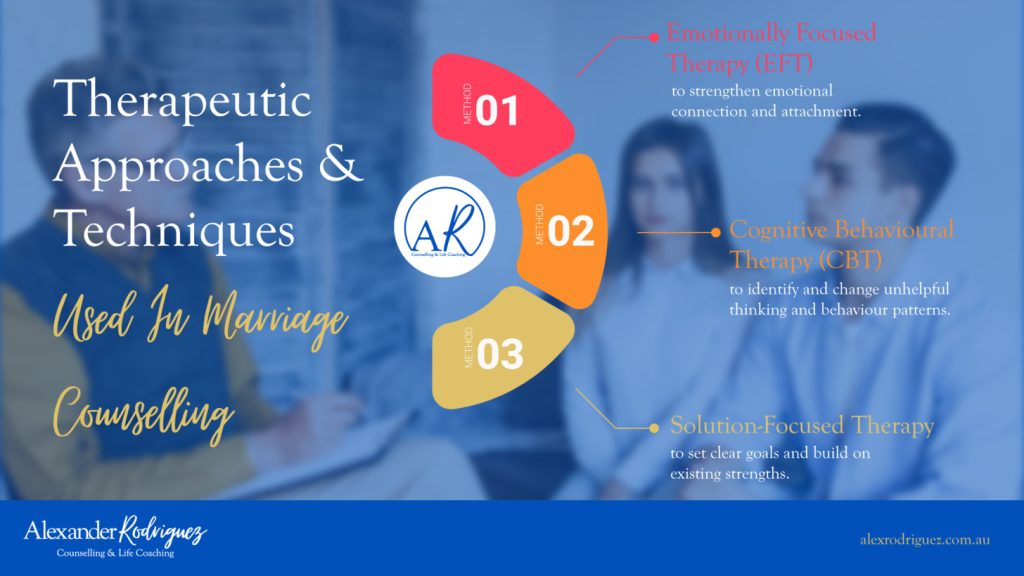
    Counsellors use different methods. Some use Emotionally Focused Therapy (EFT), others Cognitive Behavioural Therapy (CBT) or Solution-Focused Brief Therapy. Knowing these can help you pick the right one for you.

    Personal Compatibility and Trust

    Success in counselling depends on feeling comfortable and trusting your counsellor. You should feel heard and respected. Ask questions in your first meeting to see if it’s a good match.

    Think about qualifications, experience, methods, and how you connect with the counsellor. A careful choice will help you tackle relationship issues effectively.

    Relationship Counselling: Benefits of Professional Support

    Getting help from a relationship counsellor can transform the way you and your partner relate to each other. A skilled professional guides you through the deeper layers of your relationship, helping you both understand patterns, triggers and communication styles that may be causing tension. Through Relationship Counselling, you learn how to approach challenges as a team rather than as opponents. Services such as marriage counselling​, relationship therapy, and relationship guidance counselling provide structured strategies that strengthen emotional connection and reduce misunderstandings. With the right guidance, partners learn healthier ways to express needs, resolve conflict and rebuild trust, creating a more secure and supportive relationship.

    One of the biggest benefits of professional support is gaining practical tools that genuinely improve your everyday interactions. Whether you’re looking for couples counselling or seeking clarity through expert relationship advice, counselling gives you a safe place to talk openly about your concerns. You’ll learn how to communicate more effectively, set shared goals and understand each other’s emotional needs without judgment. As many couples experience, “relationship counselling gives you tools for stronger connections and better communication,” helping elevate the overall quality of your partnership. With guidance that addresses both current challenges and long‑term wellbeing, counselling helps you move forward with confidence, connection and a renewed sense of teamwork.

    Developing Stronger Communication Skills

    One key benefit of counselling is improving your communication skills. Good communication is essential for a healthy relationship. It lets you share your needs and feelings clearly. Counselling teaches you to listen better and respond with empathy, reducing misunderstandings and deepening your bond.

    Learning Effective Conflict Resolution Strategies

    Every relationship faces conflicts, but how you handle them is crucial. Counselling teaches you effective conflict resolution strategies. You learn to understand each other’s views and solve problems together, avoiding lasting damage.

    Managing Relationship Anxiety and Stress

    Relationship anxiety and stress can harm your well-being and relationship. Counselling offers a safe space to find the causes of your anxiety and learn to manage it. This helps reduce stress and makes your relationship more peaceful and supportive.

    Rebuilding Trust and Emotional Connection

    Rebuilding trust and strengthening emotional connection are key to a healthy relationship. Counselling helps you work on trust by facing past issues and building a secure bond. This involves being more present, fostering emotional closeness, and understanding each other’s needs better.

    By focusing on these areas, you unlock the full relationship counselling benefits. You’ll see improvements in communication, conflict resolution, and emotional connection. This approach helps build a stronger, more fulfilling relationship.

    How to Access Relationship Therapy Services

    Accessing Relationship Counselling in Australia is straightforward when you know where to begin. Start by deciding what type of support you need, whether it’s relationship therapy, marriage counselling​, or relationship guidance counselling. Many couples begin by searching online for couples counselling to find local options, or couples counselling in Sydney if they prefer support within the Sydney region. Most counselling centres have easy online booking systems, detailed service pages and options for in‑person or online sessions, allowing you to choose what suits your schedule and comfort level. You can also explore clinic websites, read therapist profiles and compare their areas of expertise to ensure they can help with issues like communication challenges, conflict, or relationship anxiety.

    Once you’ve shortlisted a few therapists, consider what matters most to you: session format, fees, availability and counselling style. Many services offer initial consultations, giving you the chance to see if the counsellor is a good fit before committing long‑term. If you need more structured guidance, you can also look for providers who specialise in evidence‑based relationship advice. Whether you prefer private practices, counselling organisations or online therapy platforms, there are plenty of options that make accessing support simple and flexible. With the right therapeutic service, you and your partner can begin working towards clearer communication, stronger emotional connection and a healthier future together.

    Finding Couples Counselling Near Me

    When looking for couples counselling near me, think about location and the counsellor’s specialisation. Start by searching online for therapists in your area. Check their credentials too. For example, Alex Rodriguez Counselling in Blacktown offers great relationship services, making it easy to get help.

    A relationship expert says, “The right counsellor can make all the difference in your journey towards healing and growth.” So, it’s important to find a counsellor who meets your needs.

    Online Relationship Guidance Counselling Options

    Online counselling is now more popular. It’s great for those who like remote sessions or are busy. Alex Rodriguez Counselling, among others, offers online sessions. This way, you can get help from home.

    • Ease of access from any location
    • Flexibility in scheduling sessions
    • Comfort of attending sessions from home

    In-Person Sessions in Your Local Area

    If you prefer in-person sessions, finding a local therapist is a good option. Alex Rodriguez Counselling in Blacktown offers face-to-face sessions. This can help build a strong bond with your therapist.

    Making Your First Appointment

    Making your first appointment is a big step. It’s normal to feel a bit nervous. But knowing what to expect can help.

    The first session usually involves talking about your relationship history and concerns. It’s a chance to connect with the therapist and see how they work.

    By understanding your options and what to expect, you can start accessing relationship therapy services that are right for you.

    What to Expect During Your First Counselling Session

    Your first session of Relationship Counselling is an important step toward understanding your relationship more clearly and building a stronger connection with your partner. It’s normal to arrive feeling a mix of nerves, hope and curiosity. The counsellor will guide the session gently, helping you settle in and feel comfortable enough to share your thoughts. The conversation often starts with simple questions about what brought you to counselling, what challenges you’ve been facing and what you hope to change. Whether you’re seeking relationship therapy or relationship guidance counselling, the goal of this first meeting is to give both you and your counsellor a clearer picture of your relationship dynamics. You may talk about communication patterns, moments of conflict, emotional distance or relationship anxiety you’ve been experiencing. This early step helps the counsellor understand your needs and sets the foundation for the sessions that follow.

    As the session continues, your counsellor may introduce basic strategies to help you and your partner communicate more openly and respectfully. You’ll likely find that most first sessions focus on building safety and trust rather than jumping straight into difficult topics. You’ll have the chance to express your feelings without judgment while also learning more about how your partner experiences the relationship. The counsellor’s role is to guide the conversation, help you recognise unhelpful patterns and provide early relationship advice that can make everyday interactions smoother. By the end of the session, many couples feel a sense of relief knowing they’ve started a meaningful process aimed at improving understanding, rebuilding connection and creating a healthier, more supportive partnership.

    Initial Assessment and Goal Setting

    The first part of your session is the initial assessment. Your counsellor will help you understand what’s really going on in your relationship. You’ll talk about the problems you face, your feelings, and what you hope to get from therapy. Goal setting is key here, where you and your counsellor will work together to set achievable goals for your sessions.

    For example, your goals might be to talk better, solve conflicts, or rebuild trust. Having clear goals helps you focus and see how far you’ve come in therapy.

    Creating a Safe and Confidential Environment

    A big part of good counselling is making a safe and confidential environment. Your counsellor will make sure you feel at ease sharing your thoughts and feelings. They promise to keep everything you say private.

    This safe space lets you talk openly about your relationship’s past, worries, and dreams without fear of being judged. It’s where you can truly be yourself, exploring your relationship in depth.
    Discussing Your Relationship History and Concerns

    In your first session, you’ll share your relationship history and what’s been troubling you. This might cover important events, how you communicate, and conflicts. Your counsellor will listen carefully, offering support and understanding.

    Talking about this helps your counsellor get a full picture of your relationship and find ways to improve it. It’s also a chance to understand your partner’s side of things.

    Establishing a Treatment Plan

    After understanding your situation, your counsellor will help you create a treatment plan. This plan outlines how you’ll tackle your relationship’s challenges and reach your goals.

    Component Description Benefit
    Initial Assessment Understanding the core issues and setting goals Clarifies the direction of therapy
    Safe Environment Creating a confidential and comfortable space Fosters open and honest communication
    Relationship History Discussing significant events and concerns Provides insight into relationship dynamics
    Treatment Plan Outlining strategies for addressing challenges Guides the therapy process and tracks progress

    Knowing what to expect in your first counselling session can make you feel more confident and hopeful. Remember, this is just the start of your journey to a stronger, healthier relationship.

    Understanding Costs and Session Frequency

    Understanding the cost of Relationship Counselling is an important part of planning your journey toward a healthier partnership. Prices can vary depending on where you live, the counsellor’s experience and the type of support you choose. Counsellors with specialised training or advanced qualifications may charge higher fees, while some community or not‑for‑profit services offer more affordable options. Location also plays a role, with metropolitan areas often costing more than regional centres. You’ll find a wide range of fee structures, from lower‑cost community services to premium private practices. Understanding these factors helps you choose a service that fits both your needs and your budget.

    Session frequency can also vary based on the challenges you and your partner are facing. In the early stages, many couples attend weekly sessions to build momentum, improve communication and address concerns like relationship anxiety. As progress becomes more consistent, sessions may shift to fortnightly or monthly check‑ins. Your counsellor will work with you to create a plan that’s realistic and sustainable, ensuring you have enough time between sessions to practise new skills and reflect on improvements. Whether you’re looking for straightforward relationship advice or more structured long‑term support, understanding the cost and frequency helps you prepare for a meaningful and steady counselling process that supports long‑term growth and connection.

    Typical Counselling Fees Across Australia

    In Australia, counselling fees vary a lot. This depends on whether you choose private counselling or services from places like Relationships Australia. Generally, a session can cost between $100 and $200 an hour. More experienced counsellors might charge more.

    Always ask about fees when you first talk to a counsellor. This way, you know what to expect. Some counsellors offer fees that adjust based on your income, so it’s good to ask about this.

    How Many Sessions You Might Need

    The number of counselling sessions needed can vary a lot. This depends on the issues you face and your goals. Some might see big changes in just a few sessions, while others need more.

    Counsellors will work with you to set a treatment plan. This includes how many sessions you might need. The plan can change as you progress.

    Viewing Counselling as an Investment

    While counselling costs are important, think of it as an investment in your relationship and well-being. Counselling can improve communication and help solve conflicts, leading to lasting benefits.

    Seeing counselling as an investment can bring long-term benefits to your relationship and mental health. Tackling issues early can stop bigger problems later on.

    Preparing Yourself for Relationship Counselling Success

    Getting the most out of Relationship Counselling starts with showing up prepared, open‑minded and ready to participate fully in the process. Before your first session, take some time to reflect on what you want to improve—whether it’s communication, rebuilding trust, reducing conflict or addressing relationship anxiety. Think about the patterns you’ve noticed, the moments that feel challenging and the goals you hope to achieve together. This clarity helps your counsellor understand your needs from the very beginning. Whether you’re engaging in relationship therapy, marriage and couples counseling​, or relationship guidance counselling, being honest with yourself and your partner sets the foundation for meaningful progress. Small steps like writing down your thoughts, acknowledging your feelings and being willing to listen can make a big difference in how effective each session becomes.

    Preparation also means understanding your role in the process and committing to practising what you learn between sessions. If you’ve found your therapist by searching for couples counselling near me or exploring couples counselling in Sydney, remember that counselling isn’t just about talking through problems; it’s about applying new skills in real life. You may receive relationship advice or exercises designed to improve communication, reduce tension or strengthen emotional connection. Make an effort to approach each session with patience and openness. Be willing to take accountability where needed and to support your partner in doing the same. Consistency and genuine effort help you build momentum, making your counselling journey more productive and ultimately leading to a healthier, more connected partnership.

    Setting Realistic Expectations for Progress

    It’s important to have realistic expectations about how fast you’ll see progress. Counselling is a journey that requires time, effort, and commitment from everyone. Remember, setbacks are normal and can keep you motivated.

    Think about the complexity of your issues and how long they might take to resolve. This mindset helps you celebrate small wins and stay committed to the journey.

    Ensuring Commitment from All Participants

    The success of counselling depends on the commitment of all participants. Everyone must be ready to fully engage, attend sessions regularly, and work on strategies together.

    Talk to your partner or family about the importance of counselling before starting. Agreeing on goals and roles can create a supportive environment for growth.

    Practising Openness and Honesty

    Openness and honesty are key to successful counselling. Sharing your true feelings and concerns helps your counsellor provide better guidance.

    Make a safe space where you and your partner can share thoughts without fear. This not only helps in counselling but also strengthens your bond.

    Completing Homework and Between-Session Activities

    Counsellors often give homework or activities to reinforce what’s learned. Doing these tasks can really help your progress.

    These tasks help you apply what you’ve learned in your daily life. By doing them, you can grow faster and improve your relationship more effectively.
    Preparation Step Description Benefit
    Setting Realistic Expectations Understand the time and effort required for progress Stay motivated and focused
    Ensuring Commitment Engage all participants fully in the counselling process Foster a supportive environment
    Practising Openness and Honesty Be truthful about feelings and concerns Enhance the effectiveness of counselling
    Completing Homework Apply insights and strategies to daily life Accelerate personal and relationship growth

    Professional Relationship Support in Blacktown: Alex Rodriguez Counselling

    If you’re seeking professional Relationship Counselling in Blacktown, Alex Rodriguez Counselling provides compassionate and tailored support for individuals, couples and families navigating difficult times. Their approach focuses on creating a safe, understanding environment where you can openly discuss challenges, explore emotions and work towards healthier communication. Whether you’re dealing with conflict, emotional distance or relationship anxiety, Alex Rodriguez Counselling offers guidance that helps you rebuild connection and restore stability in your relationship.

    The services include a range of support options such as relationship therapy, marriage counselling​, and relationship guidance, ensuring couples receive care suited to their needs. Our practice is a reliable choice for the Blacktown community. With practical tools, thoughtful relationship advice, and a warm, client‑centred approach and committed to helping you strengthen your relationship and move forward with confidence and clarity.

    Comprehensive Relationship Services Offered

    Alex Rodriguez Counselling provides many counselling services. These are tailored to meet each client’s unique needs. Services include:

    • Couples Therapy and Marriage Counselling: Helps strengthen relationships through better communication and conflict resolution.
    • Breakup, Separation, and Divorce Support: Offers compassionate guidance during tough times of separation.
    • Family and Friendship Relationship Counselling: Works to improve relationships within families and among friends.
    • Personalised Relationship Advice Sessions: Provides tailored support for specific relationship concerns.

    Couples Therapy and Marriage Counselling

    Couples therapy and marriage counselling aim to strengthen relationships. They focus on improving communication and solving conflicts. These services are great for couples wanting to improve their bond.

    Ending a relationship can be hard and emotional. Alex Rodriguez Counselling offers support and guidance. They provide a safe space to process emotions and move forward.

    Family and Friendship Relationship Counselling

    Relationship challenges aren’t just for romantic partners. Family and friendship counselling can help improve dynamics and resolve conflicts. This leads to stronger, more positive relationships.

    Personalised Relationship Advice Sessions

    For those seeking tailored guidance, personalised relationship advice sessions are available. These sessions address specific concerns. They provide individuals with the tools and strategies needed to improve their relationships.

    Easy Online Booking System

    Alex Rodriguez Counselling offers an easy online booking system. This makes booking an appointment convenient. You can schedule a session at a time that suits you, ensuring quick access to support.

    Conclusion

    Getting professional support through Relationship Counselling can make a meaningful difference when you’re facing challenges in your partnership. Taking time to understand your issues, communicate openly and recognise when to seek help can greatly improve the health of your relationship. In Australia, counselling provides a safe and supportive space to work on communication, conflict resolution and rebuilding trust, giving couples the chance to create a stronger foundation together.

    Choosing the right counsellor and staying committed to the process can help you move through difficulties with more clarity and confidence. Taking this step is a positive move toward a more respectful, loving and stable relationship, one that benefits both you and your community. With a clearer understanding of how counselling works and the benefits it offers, reaching out to a professional can pave the way toward a deeper, more meaningful connection with your partner.

    At Alex Rodriguez Counselling, we get how important it is to get things right. We offer effective Relationship Counselling. This guide will help you understand the Edinburgh Depression Scale. It will show you how it can help with your mental health journey. Call on 0429 220 646, or email info@alexrodriguez.com.au to take the first step, or book a session online.
    FAQ

    What is the primary difference between marriage and couples counseling?

    Marriage and couples counseling both focus on the relationship. Marriage counseling often deals with legal or long-term issues. Couples counseling, on the other hand, focuses on conflict resolution and emotional intimacy for all partners, including those dating or in de facto relationships.

    How can relationship therapy help if only one partner is willing to attend?

    Even if only one partner attends, individual therapy can be very helpful. It can help you work on your communication and emotional responses. This can often improve the relationship and help manage anxiety.

    Is there a way to get “couples counselling near me” if I live in a remote area?

    Yes, Alex Rodriguez Counselling offers online sessions. These sessions provide the same quality support as in-person visits. So, distance is not a barrier to getting professional advice.

    Can we use Medicare rebates for our sessions?

    In Australia, Medicare rebates are usually for individual mental health plans, not couples counseling. However, many private health funds offer rebates for sessions with a registered counsellor or psychologist.

    What should we do if we are nervous about our first session?

    Feeling nervous is normal. Your first session at Alex Rodriguez Counselling is designed to be welcoming. We aim to create a safe space where you can share your concerns at your own pace.

    How many sessions will we need to see an improvement in our communication?

    Every couple is different. But, many notice improvements in communication within 6 to 8 sessions. Consistency and viewing therapy as an investment in your well-being are key to success.

    What kind of relationship advice do you provide for those going through a breakup?

    We offer support for individuals and couples going through a breakup. Our goal is to ensure the process is as healthy as possible. This includes strategies for co-parenting, managing grief, and finding a path forward with mutual respect.

    Does Alex Rodriguez Counselling offer support for relationship anxiety?

    Yes, managing relationship anxiety is a core part of our practice. We help you identify the root causes of your insecurity or worry. We provide practical tools to build self-esteem and trust within your partnership.
  • 5 Signs It’s Time to Seek Relationship Counselling Near You

    5 Signs It’s Time to Seek Relationship Counselling Near You

    Relationships are at the heart of well-being, yet even strong couples face challenges. A study made in Australia, by Relationships Australia shows rising pressures on couples, and that help-seeking remains low, with 42.6% managing issues on their own and only 6.3% saying they would seek a counsellor . Interest in support is visible online too, with search demand for relationship counselling near me showing sustained activity across Australia. Recognising early signs that your relationship might benefit from counselling can make all the difference before problems become too entrenched.

    As someone concerned about your relationship, you may wonder if seeking professional help is the right step. Recognising signs of unhealthy relationship patterns is key to knowing when to seek couples counselling.

    I understand that taking control of your relationship can be a brave and important decision. At Alex Rodriguez Counselling & Life Coaching, I provide guidance and support to help you navigate relationship therapy.

    If you’re experiencing difficulties, don’t hesitate to reach out. Call me on 0429 220 646, or email me at info@alexrodriguez.com.au to take the first step toward a healthier relationship. You can also book your session through my online booking page, which enables you to schedule sessions both on-site and online.

    Key Takeaways

    • Clear red flags include hostile or silent communication, the same fights on repeat, fading intimacy, or broken trust.
    • Major life changes can strain even strong relationships, and early counselling helps prevent unhelpful patterns from hardening.
    • Counselling offers a structured, neutral space with practical tools to improve communication, resolve conflict, and rebuild trust.
    • Many couples find therapy effective, and the first session sets shared goals with simple at-home steps to start progress.

    The State of Relationships in Modern Australia

    Australian couples are navigating a complex web of relationship dynamics in the modern era, with money pressures and always-online habits shaping daily life. National panel data show that one in eight Australians reported multiple indicators of financial stress in 2023, reflecting the squeeze from rising living costs and housing pressures.

    At the same time, nearly all adults are online and social platforms are near-universal, which means digital interactions increasingly spill into couple dynamics. Broader safety concerns remain present too, with the ABS reporting that about 21 percent of adults have experienced partner violence or abuse since age 15, including emotional and economic abuse that can erode trust and stability.

    Put simply, modern relationships in Australia are juggling tighter budgets, constant connectivity, and higher safety and wellbeing risks, which raises the likelihood of misunderstandings, conflict cycles, and emotional distance. Relationship counselling gives couples a structured, private space to pause the pattern and rebuild how they relate.

    Common Challenges Faced by Australian Couples

    Couples in Australia face a myriad of challenges that can strain their relationships. Some of the most common issues include:

    • Financial conflicts, which can erode trust and communication
    • The impact of social media on relationship dynamics
    • Changing societal expectations and gender roles
    • Balancing work and family life

    These challenges can lead to a breakdown in communication, decreased intimacy, and increased conflict. It’s essential for couples to recognize these challenges and seek help when needed.

    When Normal Relationship Struggles Become Serious Issues

    While some level of conflict is normal in any relationship, there are signs that indicate when these struggles have become serious issues. For instance, when conflicts become repetitive and unresolved, or when communication breaks down entirely, it may be time to seek professional help. Couples therapy or marriage counselling can provide the tools and support needed to navigate these challenges and strengthen the relationship.

    Research shows that around 70% of couples found therapy to be effective in addressing their relationship challenges. By acknowledging the need for help and taking proactive steps, couples can work towards a healthier, more fulfilling relationship.

    Sign 1: Communication Has Broken Down or Become Hostile

    One of the most significant indicators that a relationship needs counselling is when communication becomes strained or hostile. Effective communication is crucial for a healthy relationship, and its deterioration can lead to misunderstandings, resentment, and emotional distance. When everyday discussions routinely turn into arguments, when one or both partners feel unheard or dismissed, or when sarcasm, criticism, and defensiveness replace curiosity and care, the bond begins to erode. Silence can be just as damaging. Stonewalling, avoiding difficult topics, or withdrawing during conflict prevents repair and allows small issues to harden into ongoing patterns.

    Relationship counselling helps by creating a structured, neutral space to slow conversations down and focus on listening, clarity, and respect. Partners learn to identify triggers, use clear “I” statements, check assumptions, and repair after missteps. With guided practice, they replace blame with problem solving, set fair rules for difficult discussions, and rebuild trust through consistent, small changes. As communication improves, connection, safety, and teamwork return, and the relationship can move from constant reactivity to a calmer, more supportive rhythm.

    When Conversations Turn Into Arguments

    When conversations consistently turn into arguments, it can be a sign that underlying issues need to be addressed. This shift from constructive dialogue to conflict can be draining and indicates a need for professional guidance to restore healthy communication patterns.

    The Silent Treatment and Emotional Withdrawal

    The silent treatment and emotional withdrawal are other manifestations of communication breakdown. When one or both partners stop communicating effectively or emotionally check out, it can create a significant rift in the relationship. This can be particularly challenging as it not only affects the couple’s interaction but also impacts their emotional well-being.

    How Counselling Rebuilds Communication Channels

    Relationship counselling can play a vital role in rebuilding and strengthening communication channels. Through therapy, couples can learn effective communication skills and conflict resolution strategies. A counsellor can provide a safe and neutral environment to explore the underlying causes of communication issues and work together to develop healthier interaction patterns.

    At Alex Rodriguez Counselling & Life Coaching, I offer various services including Relationship Counselling, Couples Counselling, Marriage Counselling, and Pre-Marriage Counselling to help couples navigate communication challenges and strengthen their relationship.

    Sign 2: The Same Issues Keep Resurfacing Without Resolution

    Couples often find themselves trapped in a pattern of conflict that feels impossible to escape without external guidance. The same themes resurface after brief truces, arguments follow a familiar script, and attempts to talk end in shutdown or escalation. Typical triggers include money, chores, intimacy, parenting, or perceived disrespect, yet the deeper loop is usually a pursue–withdraw or attack–defend dance where neither person feels heard. Over time, this unresolved loop creates emotional fatigue, shorter tempers, and increasing distance, with fewer moments of warmth or repair.

    When this happens, everyday life starts to feel like walking on eggshells. Small requests spark big reactions, apologies do not stick, and important topics are avoided because they seem too risky. Relationship Counselling helps by mapping the cycle in clear steps, teaching de-escalation skills, and introducing practical tools such as structured timeouts, speaker–listener turns, fair fighting rules, and repair statements. With guided practice, couples learn to slow conflicts, address the real issue beneath the surface, and agree on follow-ups and boundaries so problems are resolved rather than replayed.

    Identifying Cyclical Arguments and Patterns

    Recognizing the signs of cyclical arguments is crucial. These patterns often involve repetitive discussions that lead to the same outcome without any real resolution. By understanding these cycles, couples can begin to address the underlying issues.

    For instance, a couple might repeatedly argue about financial decisions without reaching a mutually acceptable solution. Identifying the root cause of such arguments, whether it’s fear, mistrust, or differing values, can be the first step towards breaking the cycle.

    Why Some Problems Seem Impossible to Solve

    Some issues may seem insurmountable due to underlying fears, past experiences, or unaddressed emotional needs. These deep-seated factors can complicate the resolution process, making it challenging for couples to move forward on their own.

    Breaking the Cycle Through Professional Guidance

    Relationship counselling can provide the necessary tools and strategies to break the cycle of recurring conflicts. A professional counsellor can help couples identify the root causes of their issues and work together to develop healthier communication patterns.

    Understanding the cycle of conflict can be facilitated by examining the common patterns and their effects:

    Pattern Description Effect on Relationship
    Cyclical Arguments Repetitive discussions without resolution Frustration and Hopelessness
    Emotional Withdrawal One or both partners disengage Disconnection and Isolation
    Escalation Conflicts become more intense Damage to Trust and Intimacy

    By seeking relationship counselling, couples can gain the insights and skills needed to overcome their challenges and strengthen their relationship.

    Sign 3: Intimacy and Connection Have Significantly Declined

    Intimacy is a vital component of any romantic relationship, and its decline can signal underlying problems. Intimacy includes both physical connection and emotional closeness, so warning signs might look like less affection or sex, fewer meaningful conversations, avoiding vulnerability, or feeling lonely even when you are together. Causes can range from unresolved conflicts and stress to mismatched desire, health issues, trust injuries, or constant digital distraction.

    In counselling, I help you rebuild safety and closeness by uncovering unmet needs, improving communication, repairing resentments, and creating simple rituals of connection. I also use practical tools such as fair-fighting rules, aligned expectations around touch and time together, and structured exercises to restore warmth, desire, and a sense of being chosen.

    Physical Intimacy Issues as Relationship Indicators

    Physical intimacy is an essential aspect of many romantic relationships. Problems with physical intimacy can lead to feelings of frustration, loneliness, and tension. It’s not just about the frequency of intimate moments but also the quality and the emotional connection associated with them.

    When physical intimacy declines, it can be a sign of deeper issues such as lack of communication, unresolved conflicts, or emotional disconnection. Working with me can help you identify the root causes and develop strategies to rekindle intimacy.

    Emotional Distance and Its Impact

    Emotional distance can be just as challenging as a lack of physical intimacy. When partners feel emotionally disconnected, they may struggle to share their feelings, leading to a sense of isolation. Emotional distance can result from various factors, including stress, past traumas, or lack of communication.

    Rebuilding emotional connection requires effort and commitment from both partners. Through relationship therapy, couples can learn to reconnect on an emotional level, fostering a stronger and more resilient bond.

    Rebuilding Connection Through Therapeutic Techniques

    Therapeutic techniques can help couples rebuild both physical and emotional intimacy. Techniques such as emotionally focused therapy can help partners understand each other’s needs and desires, improving their overall connection.

    Therapeutic Technique Description Benefits
    Emotionally Focused Therapy Focuses on improving emotional connection and understanding between partners. Enhances emotional intimacy, reduces conflict.
    Communication Exercises Teaches effective communication skills to improve understanding and empathy. Improves relationship satisfaction, reduces misunderstandings.
    Sensate Focus A technique that helps rebuild physical intimacy by focusing on sensory experiences. Rekindles physical connection, reduces performance anxiety.

    By working with a skilled counsellor, couples can address intimacy issues and strengthen their relationship. Alex Rodriguez Counselling & Life Coaching offers personalized relationship therapy to help you and your partner reconnect and build a more fulfilling relationship.

    Sign 4: Trust Has Been Broken or Severely Damaged

    Broken trust is a significant indicator that a relationship may need professional guidance. Trust is the cornerstone of any healthy relationship, and when it is compromised, the entire foundation can feel unstable. After a breach, partners often cycle between vigilance and withdrawal, with heightened anxiety, repeated checking, or arguments that never fully resolve. Day-to-day life can start to feel transactional rather than connected, and even small misunderstandings are read through a lens of doubt.

    Trust issues can stem from infidelity, financial deceit, secret online interactions, or other forms of emotional betrayal. Repair begins with safety and clarity. In counselling, couples slow the crisis, map what happened and why, and set immediate ground rules that reduce harm, such as full transparency with phones or finances, predictable check-ins, and agreed boundaries for contact with third parties. The process then shifts to structured accountability, validation of the injured partner’s feelings, and specific repair actions that demonstrate reliability over time. With guided conversations, empathy building, and practical agreements, couples can move from constant reactivity to a steadier rhythm where honesty is measurable, trust is gradually restored, and the relationship feels secure again.

    Recovering from Infidelity and Betrayal

    Infidelity is one of the most significant breaches of trust. The aftermath can leave both partners feeling lost and hurt. Recovering from such betrayal requires a careful and compassionate approach.

    It’s essential to understand that healing is a process that involves both partners. A counsellor can provide a safe space for both individuals to express their feelings and work together towards healing.

    “The greatest happiness of life is the conviction that we are loved; loved for ourselves, or rather, loved in spite of ourselves.” – Victor Hugo

    Rebuilding Trust After Financial or Emotional Breaches

    Trust can also be broken due to financial mismanagement or emotional neglect. Rebuilding trust in these areas requires transparency, commitment, and a willingness to work together.

    Steps to Rebuild Trust Description
    1. Acknowledge the Hurt Recognize the pain caused and take responsibility.
    2. Communicate Openly Discuss the issues and feelings openly.
    3. Make Amends Work on making things right.

    The Role of a Counsellor in Trust Restoration

    A counsellor plays a crucial role in guiding couples through the process of trust restoration. They provide tools and strategies to help couples communicate effectively and work through their issues.

    With the guidance of a counsellor, couples can learn to rebuild their relationship on a foundation of trust, understanding, and mutual respect.

    Sign 5: Major Life Changes Are Causing Relationship Strain

    Navigating major life changes together can be one of the most challenging aspects of a relationship, and counselling often makes that transition smoother. Big shifts like starting a family, career changes, caring for ageing parents, health issues, or relocating disrupt routines, roles, and expectations. Differences in coping styles can surface, finances may tighten, and time for intimacy or rest can shrink, creating tension even in otherwise strong partnerships.

    With my counselling support, I help you unpack the pressure points, clarify values and priorities, and agree on realistic plans for work, caregiving, money, and shared time. We set clear roles and boundaries, improve communication for high-stress conversations, and build small rituals of connection so you stay aligned while the change unfolds. The goal is to turn a disruptive transition into a coordinated one, with a shared roadmap, practical supports, and renewed confidence in each other.

    Navigating Parenthood and Family Dynamics

    The arrival of a new child can bring immense joy, but it also significantly alters the relationship dynamics between partners. The added responsibilities and stress can sometimes lead to feelings of neglect or resentment if not managed carefully. Counselling can provide strategies to navigate these changes, ensuring that both partners feel supported and connected.

    Career Changes, Relocations, and External Pressures

    Career changes or relocations can also exert considerable pressure on a relationship. The stress of adapting to a new environment or the demands of a new job can affect how partners interact with each other. Moreover, external pressures such as financial strain or adjusting to a new social environment can further complicate the situation. Professional counselling can offer a safe space to address these challenges and find ways to maintain a healthy connection.

    Using Counselling as a Transitional Support

    Counselling can serve as a vital support during times of significant change, providing couples with the tools they need to navigate their new circumstances together. At Alex Rodriguez Counselling & Life Coaching, I offer a range of services, including Relationship Counselling, Couples Counselling, Marriage Counselling, and Pre-Marriage Counselling, tailored to meet the unique needs of each couple.

    Service Description Benefit
    Relationship Counselling Guidance for navigating relationship challenges Improved communication and conflict resolution
    Couples Counselling Support for strengthening the bond between partners Enhanced emotional connection and intimacy
    Marriage Counselling Counselling tailored for married couples facing specific challenges Renewed commitment and understanding
    Pre-Marriage Counselling Preparation for a strong marital foundation Better understanding of each other’s needs and expectations

    By seeking counselling, couples can better navigate the complexities of major life changes, ensuring their relationship remains a source of strength and comfort.

    The Transformative Power of Relationship Counselling

    Embracing relationship counselling can mark the beginning of a profound transformation in how you connect with your partner. This process goes beyond fixing what feels broken; it helps you understand each other’s emotions, needs, and communication styles in a deeper, more compassionate way. Counselling provides a safe, structured space to unpack recurring issues, learn how to listen without defensiveness, and express yourself with honesty and respect. It also equips you with practical tools and strategies to manage future challenges more effectively, so small issues don’t grow into larger ones.

    Relationship counselling is not just about resolving conflicts; it’s about strengthening emotional intimacy and rebuilding trust. Through guided conversations and evidence-based exercises, couples can gain valuable insights into their relationship patterns, identifying triggers, rewriting unhelpful cycles, and replacing blame with teamwork. Over time, this process nurtures mutual understanding, patience, and a renewed sense of partnership, helping you both reconnect and move forward with greater confidence and closeness.

    Short-Term vs. Long-Term Benefits

    In the short term, relationship counselling can help reduce immediate tension and conflict by improving communication. In the long term, it can lead to a more resilient and fulfilling partnership.

    • Short-term benefits: Improved communication, reduced conflict, and a better understanding of each other’s needs.
    • Long-term benefits: A stronger, more resilient relationship, and the ability to navigate future challenges more effectively.

    Success Rates and Realistic Expectations

    Studies have shown that around 70% of couples found therapy to be effective. However, it’s essential to have realistic expectations. Success in relationship counselling depends on various factors, including the commitment of both partners to the process.

    Factors Influencing Success Description
    Commitment Level The degree to which both partners are willing to engage in the counselling process.
    Counsellor’s Expertise The experience and specialization of the counsellor in dealing with issues similar to those faced by the couple.
    Frequency of Sessions Regular attendance and the frequency of counselling sessions can impact progress.

    Preventative Counselling: Why Wait for a Crisis?

    Many couples seek counselling only when they’re in crisis. However, counselling can also serve as a preventative measure, helping to strengthen the relationship before significant issues arise.

    By investing in relationship counselling, couples can proactively work on their relationship, fostering a stronger and more resilient bond.

    What to Expect in Your First Relationship Counselling Session

    As you prepare for your initial relationship counselling session at Alex Rodriguez Counselling & Life Coaching, it is completely normal to feel a mix of nerves, relief, and hope. My job is to make the experience calm, respectful, and useful from the very first minute. I will outline confidentiality and how sessions work so you know exactly what to expect, then give each of you time to share what feels hardest right now and what a better relationship would look like.

    Together, we will map the patterns that keep conversations stuck, identify key triggers, and agree on clear goals, whether that is fewer arguments, fairer money talks, rebuilding trust, or more time and closeness. If safety or past breaches of trust are a concern, we will address those first with practical steps and transparent ground rules. You will leave the first session with a simple plan to try at home, such as a brief repair script, a time-out rule that actually works, or a weekly check-in ritual.

    You do not need to be perfect to start. What helps most is honesty, curiosity, and a willingness to try new ways of talking and listening. My aim is that you walk out feeling more organised, more hopeful, and more confident about the next steps.

    The Initial Assessment Process

    The first session typically begins with an initial assessment, where the counsellor will ask questions to understand your relationship dynamics, challenges, and goals. This process is crucial for creating a tailored approach to your needs.

    Setting Goals and Creating a Treatment Plan

    Following the assessment, you’ll work together with your counsellor to set realistic goals and develop a treatment plan. This collaborative process ensures that you’re both on the same page, working towards meaningful change.

    Practical Exercises and Homework

    To reinforce the progress made during sessions, your counsellor may suggest practical exercises or homework. These tools help you apply the insights and strategies learned in counselling to your daily life, fostering a stronger connection and understanding between you and your partner.

    Key Takeaways:

    • Initial assessment to understand your relationship dynamics
    • Collaborative goal-setting and treatment planning
    • Practical exercises to reinforce progress

    How to Choose the Right Relationship Counsellor

    The process of choosing a relationship counsellor in Blacktown becomes easier when you know what to look for. Start with qualifications and experience working specifically with couples, then consider the therapist’s approach, such as Emotionally Focused Therapy, Gottman-informed methods, or CBT for communication and problem solving. Fit matters just as much as credentials, so pay attention to how safe and understood you feel in an initial chat. Practicalities like availability, fees, privacy, and options for after-hours or telehealth also influence how consistent you can be. A short phone call or consult can help you ask about their experience with your concerns, what a first session looks like, and how progress is measured, so you can choose someone who feels like a good match for both of you.

    Qualifications and Specialisations to Look For

    When searching for a relationship counsellor, qualifications and experience are paramount. Look for a counsellor who is registered with a reputable professional body, such as the Australian Counselling Association. Specialisations in areas like couples therapy or conflict resolution can also be beneficial.

    Qualification Description Benefit
    Diploma in Counselling A foundational qualification in counselling Ensures a basic level of competency
    Specialisation in Couples Therapy Additional training focused on relationship dynamics Enhances the counsellor’s ability to address relationship issues

    The Importance of Personal Connection and Comfort

    Finding a counsellor with whom you feel comfortable is crucial. You need to feel safe and understood to open up about your relationship concerns. A good counsellor will create a non-judgmental space for you and your partner to explore your issues.

    Questions to Ask Before Booking Your First Session

    Before committing to a counsellor, prepare a list of questions to ask during your initial consultation. These might include inquiries about their approach to therapy, their experience with issues similar to yours, and what you can expect from your sessions.

    • What experience do you have in relationship counselling?
    • What therapeutic approaches do you use?
    • How will we track our progress?

    Alex Rodriguez Counselling & Life Coaching: Relationship Experts in Western Sydney

    With a comprehensive approach to couples and marriage counselling, Alex Rodriguez Counselling & Life Coaching stands out in Western Sydney. I combine evidence-based methods with practical tools tailored to your goals, so sessions feel clear, respectful, and useful from day one. You can expect a safe space to map what is keeping you stuck, rebuild communication and trust, and agree on realistic steps you can use at home. I offer flexible scheduling, including telehealth, and a confidential, culturally sensitive environment that supports both partners. The focus is on measurable progress, not jargon, so you leave each session with insight, direction, and renewed confidence in your relationship.

    Comprehensive Approach to Couples and Marriage Counselling

    At Alex Rodriguez Counselling & Life Coaching, I understand that every relationship is unique, and our counselling services are tailored to meet your specific needs. Our comprehensive approach includes:

    • Identifying and addressing underlying issues
    • Improving communication and conflict resolution skills
    • Rebuilding trust and intimacy
    • Supporting you through significant life changes

    Services Offered: Relationship, Couples, Marriage, and Pre-Marriage Counselling

    I offer a range of counselling services to support you and your partner, including relationship counselling, couples therapy, marriage counselling, and pre-marriage counselling. Our services are designed to help you:

    Service Description Benefits
    Relationship Counselling Support for navigating relationship challenges Improved communication, conflict resolution
    Couples Therapy Therapeutic support for couples Enhanced intimacy, trust rebuilding
    Marriage Counselling Counselling for married couples Strengthened marital bond, conflict management

    Client Success Stories and Testimonials

    Our clients have experienced significant improvements in their relationships through our counselling services. Here’s what some of them have to say:

    “Alex is great as a couples counseller and I have learnt so much in our sessions these last couple of months. Every session I have learnt a new skill that I can apply to my everyday life ensuring I stay the best version of myself. Thanks Alex for all the wisdom and knowledge!”

    — Kirsten 

    How to Book Your Initial Consultation

    Ready to take the first step toward a healthier relationship? Book your initial consultation, call me on 0429 220 646, or send a message via the contact page.

    Taking the First Step Towards Relationship Healing

    Embarking on the journey of relationship healing can be a daunting task, but it’s a crucial step towards creating a stronger and healthier relationship. I understand that taking the first step can be challenging, but it’s a brave and important decision that can lead to a more fulfilling relationship.

    You’ve identified the signs that indicate your relationship could benefit from counselling, and now it’s time to take action. By seeking professional help, you can begin to address the issues that have been affecting your relationship. Relationship healing is a process that requires commitment and effort from both partners, but with the right guidance, you can navigate this journey together.

    Taking the first step towards relationship healing involves being open to the idea of change and growth. It’s about being willing to work together to rebuild and strengthen your relationship. By doing so, you can create a more positive and supportive partnership that brings joy and fulfillment to both parties.

    FAQ

    What is relationship counselling, and how can it help my relationship?

    Relationship counselling is a type of therapy that helps couples address and resolve conflicts, improve communication, and strengthen their relationship. It provides a safe and supportive environment to explore issues and work together to achieve a more fulfilling partnership.

    How do I know if I need relationship counselling?

    You may need relationship counselling if you’re experiencing persistent conflicts, communication breakdowns, intimacy issues, or trust problems. If you’re feeling stuck or unsure about how to navigate challenges in your relationship, counselling can provide guidance and support.

    What can I expect in my first relationship counselling session?

    In your first session, you’ll typically undergo an initial assessment where you’ll discuss your relationship history, current challenges, and goals for counselling. Your counsellor will work with you to create a treatment plan and provide practical exercises to help you build a stronger connection with your partner.

    How long does relationship counselling typically take to show results?

    The length of time it takes to see results from relationship counselling varies depending on the complexity of the issues, the frequency of sessions, and the commitment of both partners. Some couples may experience improvements after a few sessions, while others may require more extensive therapy.

    What qualifications should I look for in a relationship counsellor?

    When choosing a relationship counsellor, look for qualifications such as a degree in psychology, social work, or a related field, as well as specialised training in couples therapy. Consider their experience working with couples with similar issues and their approach to counselling.

    Can relationship counselling help with specific issues like infidelity or trust breaches?

    Yes, relationship counselling can help couples address specific issues like infidelity or trust breaches. A trained counsellor can provide guidance on rebuilding trust, improving communication, and working through the emotional aftermath of a betrayal.

    Is relationship counselling only for couples on the brink of separation?

    No, relationship counselling is not just for couples on the brink of separation. It can be beneficial for any couple looking to strengthen their relationship, improve communication, and navigate challenges together. Preventative counselling can even help couples build a stronger foundation before issues arise.

    How do I choose the right relationship counsellor for my needs?

    To choose the right relationship counsellor, consider their qualifications, experience, and approach to counselling. It’s also essential to find someone with whom you feel comfortable and connected. You may want to ask questions about their experience working with couples with similar issues and their approach to addressing your specific concerns.
  • Marriage Counselling in Sydney: Costs, Services & Support

    Marriage Counselling in Sydney: Costs, Services & Support

    Marriage counselling can be a crucial step in addressing relationship challenges and strengthening bonds between partners. In Sydney, many couples seek professional support to navigate communication issues, trust concerns, and major life transitions. According to the Australian Bureau of Statistics, nearly 1 in 3 marriages in Australia end in divorce. Whether you’re facing difficulties in your relationship or simply seeking to improve your connection, marriage counselling offers a safe, non-judgmental space to work through these challenges. This service provides expert guidance tailored to your needs, helping you build healthier, more fulfilling relationships. In this guide, we explore the costs, services, and support available for marriage counselling in Sydney.

    I provide professional, compassionate marriage and relationship counselling across Sydney and nearby suburbs, helping individuals, couples, and families tackle challenges and build stronger connections. At Alex Rodriguez Counselling & Life Coaching, I offer a safe and supportive environment where people can explore concerns, learn practical skills, and work toward lasting change.

    Key Takeaways

    • Expert guidance from a compassionate counsellor to support your relationship
    • Personalised relationship counselling services across Sydney and surrounding suburbs
    • A confidential, supportive space for individuals, couples and families
    • Practical skills and strategies to improve communication, manage conflict and rebuild trust
    • Clear next steps — book an initial consultation to discuss services and options

    What Is Marriage Counselling and Why Consider It?

    Marriage counselling, often called relationship therapy, helps partners improve communication and problem‑solving so they can manage conflict, rebuild trust and strengthen connection. It supports people and couples to identify unhelpful patterns, clarify priorities and work toward practical changes in their day‑to‑day relationship.

    The Purpose and Goals of Relationship Therapy

    The primary aim of relationship therapy is to provide a confidential, neutral space where both partners can be heard. Typical goals include improving communication, resolving recurring conflicts, restoring intimacy and developing tools to cope with stressors that affect the relationship.

    Common Relationship Issues Addressed in Counselling

    Marriage counselling commonly helps with problems such as:

    • Poor communication or frequent miscommunication
    • Difficulty with conflict resolution and recurring arguments
    • Intimacy or sexual issues
    • Diminished trust after betrayal or ongoing suspicion

    Signs That Your Relationship Could Benefit from Professional Help

    If you and your partner are feeling stuck, counselling can help. Look out for signs such as:

    • Frequent arguing that doesn’t resolve (e.g. the same fights repeat every week)
    • Emotional distance — you feel unheard or shut down
    • Trust issues following an affair, financial secrecy or repeated broken promises

    Example situation: if small disagreements about household routines regularly escalate into full‑blown fights and neither of you feels understood, a few targeted counselling sessions can teach communication skills to prevent that pattern from continuing.

    Where there are co-occurring mental health concerns (depression, anxiety, trauma), I often recommend combining relationship counselling with individual care. I can advise on appropriate referrals. If your partner is hesitant about therapy, I reassure them that, as a professional relationship therapist, I remain neutral and focus on creating a safe, confidential space for both of you to express your concerns. For more details on what to expect during counselling, see the Relationship Counselling vs Couples Therapy – What’s Best for You.

    Types of Marriage Counselling Services Available in Sydney

    In Sydney and its surrounding suburbs, I offer a variety of relationship counselling services, each tailored to meet the unique needs of couples, individuals, and families. Whether you’re navigating communication challenges, trust issues, or life transitions, my services are designed to address your specific concerns and help you develop practical skills for fostering healthier, more fulfilling relationships.

    Pre-Marriage Counselling: Building a Strong Foundation

    Pre-marriage counselling helps couples explore values, expectations and practical topics like finances, parenting intentions and household roles. Example: a couple planning to move in together may use pre-marriage sessions to agree on budgeting and career plans before the wedding.

    Couples Counselling: Resolving Current Issues

    Couples counselling focuses on present problems such as communication breakdowns, trust concerns or intimacy issues. Sessions teach conflict resolution skills and communication techniques so partners can manage disagreements more constructively. Example: partners who repeatedly argue about time spent on work versus family can learn negotiation and scheduling strategies to reduce tension.

    Family Counselling: Addressing Wider Family Dynamics

    Family counselling brings parents, children and other family members together to address patterns that affect everyone. This service helps with parenting conflicts, blended family transitions and communication between generations. Example: parents and teens struggling with boundaries can work on shared rules and respectful communication. When issues involve family violence or safety concerns, immediate specialist support and referrals are provided.

    Individual Relationship Therapy: Personal Growth Within Relationships

    Individual relationship therapy supports a person to explore their own patterns, emotional triggers and communication style within a relationship. This can be helpful when one partner needs focused work on anxiety, attachment or personal wellbeing that affects the couple. It complements couples counselling by addressing personal barriers to connection.

    Conflict Resolution Counselling: Learning Effective Communication

    Conflict resolution counselling provides structured tools to de‑escalate arguments and negotiate solutions. You’ll practise practical skills such as reflective listening, setting boundaries and problem‑solving so conflicts become manageable rather than destructive.

    Separation & Divorce Counselling: Navigating Difficult Transitions

    Separation and divorce counselling supports people through the emotional and practical steps of separation. The focus is on respectful communication, co‑parenting plans for children and managing change. Where appropriate, we can provide information about legal and financial referral options (this is general guidance, not legal advice).

    Service Type Cost per Session
    Pre-Marriage Counselling $130/hour
    Couples Counselling $160/hour
    Family Counselling $190/hour
    Individual Relationship Therapy $130/hour
    Conflict Resolution Counselling $130/hour
    Separation & Divorce Counselling $130/hour

    The Cost of Marriage Counselling in Sydney

    Understanding the cost of marriage counselling is key to planning for your sessions, and I believe in providing clear fee transparency to help you make informed decisions. This section outlines typical charges, options to reduce out-of-pocket expenses, and where to find more information to help you before booking your appointment.

    Understanding Alex Rodriguez Counselling’s Fee Structure

    At Alex Rodriguez Counselling, the standard fee is $130 per session. To check availability or discuss individual needs, please contact the practice via the booking page or by phone.

    Comparing Costs Across Sydney’s Counselling Services

    Costs for counselling in Sydney vary depending on provider qualifications, session length and service type. It’s sensible to compare services and ask about concession or package options (for example, reduced rates for block bookings). If price is a concern, ask providers about sliding scale fees or community health alternatives.

    Medicare Rebates and Health Insurance Options

    Under the current Medicare system in Australia, relationship or couples counselling is not eligible for rebates, even if both partners have a Mental Health Treatment Plan. Medicare rebates are available only for individual therapy sessions focused on specific mental health conditions, such as depression or anxiety, and not for relationship counselling sessions

    Investing in Your Relationship: Value Beyond the Cost

    While fees are an important consideration, many couples find counselling delivers value in improved communication, reduced conflict and better wellbeing over time. If you’d like more detailed pricing information or to discuss appointment options, please contact us to arrange a booking or a short phone consultation.

    What to Expect During Your Marriage Counselling Journey

    Deciding to try marriage counselling can feel significant — knowing the process helps reduce uncertainty. The counselling journey is collaborative: you, your partner and the counsellor work together to clarify goals, build practical skills and track progress toward a healthier relationship.

    The Initial Consultation Process

    Your first appointment is an initial consultation where we discuss your presenting concerns, relationship history and what you both hope to achieve. Expect a confidential, structured conversation with time to ask questions about approach, session length and fees. This meeting also establishes safety and confidentiality, and helps decide whether ongoing relationship counselling or other supports are most appropriate.

    Therapeutic Approaches and Techniques Used

    We draw on evidence‑based approaches tailored to your needs, which may include:

    These methods are applied flexibly so the work is relevant to your situation and practical for everyday life.

    Setting Realistic Goals and Timeframes

    Together we set clear, achievable goals and a timeframe for your work — for example, improving communication around parenting routines over 6–8 sessions. Typical session cadence is weekly or fortnightly depending on availability and need.

    Measuring Progress and Outcomes

    Progress is reviewed regularly through simple check‑ins and agreed measures (for example, relationship satisfaction questions or skill demonstrations). If the plan needs adjustment, we agree on changes so the process remains focused and useful.

    If you’re ready to take the next step, you can book online or arrange a brief 10–15 minute phone call to discuss your situation and available sessions. For bookings or more information, feel free to contact me directly — I’m here to support you and your relationship every step of the way. You can book at this link.

    Local Resources and Referral Options in Sydney

    If you’re looking for further information, support or alternative services in Sydney, there are several local resources and referral pathways that can help you access accredited counsellors, community programs and urgent support.

    Finding Accredited Counsellors and Checking Registration

    Look for counsellors registered with recognised bodies and ask about their qualifications and insurance. Useful starting points for verification and listings include the Australian Counselling Association (ACA) and relevant professional registers. When contacting a provider, ask directly about their training, areas of specialisation and whether they can provide counselling for your particular needs.

    Local Support Services and Referral Pathways

    There are a range of community services across Sydney that support relationships and families, including community health centres, family support programs and relationship education workshops. For immediate listening and crisis support, Lifeline and state-based services (including 1800RESPECT for family and domestic violence) can provide confidential assistance and referrals. If you need legal or financial advice related to separation, your counsellor can suggest local solicitors or financial counsellors — note that these are referrals for information rather than professional legal or financial advice.

    Training, Programs and Subsidised Options

    Many community organisations run low‑cost or subsidised relationship programs and parenting courses. Local community health centres and non‑profit providers often offer programs suitable for parents, couples and families. If cost is a barrier, ask about concession rates, Medicare‑eligible psychology services or government‑funded programs in your area.

    When to Seek Urgent Help

    If you or someone else is in immediate danger, call emergency services (dial 000). For urgent mental health crises, contact your local emergency department or crisis lines. If you are experiencing or at risk of family violence, phone 1800RESPECT or your local police for immediate protection and specialist support.

    For more detailed local information or tailored support options, please contact your chosen service provider or community health centre — they can advise on available programs, training and referral pathways in your suburb.

    How to Choose the Right Marriage Counsellor for Your Needs

    Finding a counsellor who understands your situation and who you can trust is a key step in getting effective relationship support. The right match makes sessions more productive and helps you and your partner feel supported as you work through concerns.

    Essential Qualifications and Credentials to Look For

    When choosing a counsellor, check their training, registration and relevant skills. Ask whether they belong to recognised professional bodies (for example, the Australian Counselling Association or equivalent) and about their experience working with couples and families. For specific issues such as trauma or family violence, look for additional training or a trauma‑informed approach.

    The Importance of Therapist-Client Compatibility

    Compatibility matters. You should feel safe, heard and respected. A good fit often becomes clear within a short trial — we suggest assessing comfort and rapport after a trial period of about three sessions. If you consistently feel misunderstood or dismissed (for example, after three sessions), consider discussing these issues with the counsellor or seeking another professional.

    Questions to Ask During Your Initial Consultation

    Bring a short checklist of questions to your first meeting so you can evaluate whether the counsellor meets your needs:

    • What approaches and training do you use with couples (EFT, CBT, solution‑focused, etc.)?
    • How many couples have you worked with on similar concerns and what outcomes are typical?
    • What is the recommended process and timeline (how many sessions, typical cadence)?
    • What are your fees, cancellation policy and available concessions or packages?
    • How do you manage confidentiality and safety, particularly if family violence or child safety is a concern?

    When to Consider Changing Counsellors

    Consider changing counsellors if, after a few sessions, you still feel uneasy, your key concerns aren’t being addressed or you disagree with the counsellor’s approach. Different counsellors have different styles — sometimes a different skillset or personality is all that’s needed. If you’re unsure, ask for a brief ‘get to know you’ appointment via the Booking section to test compatibility before committing to more sessions.

    Online vs In-Person Marriage Counselling Options

    As a couple in Sydney, you can choose between online and in-person therapy for marriage counselling. The right option depends on your preferences, practical needs, and the complexity of your situation. Both formats can provide effective support when delivered safely and professionally, and I’m here to help you find the best fit for your need

    The Benefits of Virtual Counselling Sessions

    Online counselling offers flexibility and convenience: you can attend from home, reduce travel time and fit sessions around work or family commitments. It can be especially helpful for people in outer suburbs or with limited transport options.

    • Pros: more accessible, lower travel stress, easier to schedule for busy families.
    • Cons: relies on a stable internet connection and a private space, and may feel less personal for some people.

    Practical tips for virtual sessions: use a private, quiet room, ensure a reliable internet connection, and check your device and camera beforehand. Discuss confidentiality and secure platforms with your counsellor before starting.

    Advantages of Face-to-Face Therapy

    In-person counselling provides the benefits of being in the same room — nonverbal cues, therapeutic presence and an environment intentionally set for counselling. Face-to-face work can be preferable for more complex mental health concerns, trauma work, or situations where family members (including children) attend together.

    • Pros: stronger personal connection, easier to read body language and manage intense emotions.
    • Cons: requires travel and scheduling, which can be harder for busy or geographically distant families.

    Flexible Delivery Options and Choosing What’s Right

    I offer both online and face-to-face counselling sessions so you can choose the delivery method that best suits your family’s needs. For example, a busy couple may start with a few virtual sessions to learn communication skills, then switch to face-to-face work for deeper emotional processing.

    When deciding, consider the safety, privacy, and suitability of each option and discuss your preference during our initial consultation. I can recommend the best format based on your needs and the nature of the issues you bring.

    For more information or to book a session, visit Counsellor Booking, Contact Me, or View on Map.

    Booking Your Marriage Counselling Session with Alex Rodriguez

    Booking is straightforward and designed to fit around busy lives. Whether you prefer to arrange appointments online or by phone, we aim to make the first step as simple and supportive as possible.

    Available Hours: Monday to Saturday, 9:00 AM – 7:00 PM

    Appointments are available Monday to Saturday between 9:00 AM and 7:00 PM. Please confirm session length (typically 50–60 minutes) when booking and advise if you need an evening or weekend slot so we can try to accommodate your time needs.

    Online Counsellor Booking Process

    To book online, simply visit the Counsellor Booking page, select the service you need, choose an available time, and follow the prompts to confirm. Once you’ve booked, you’ll receive an email confirmation and an appointment reminder with details for the location or virtual session.

    Phone Booking Options

    If you prefer to speak with me directly, please contact me at 0429 220 646. I’m happy to answer any questions you have about services, fees, or available appointments and assist you in booking a suitable session.

    Location and Accessibility Information

    Our in‑person sessions are held at Suite 207A, 30 Campbell St, Blacktown NSW 2148. The practice aims to be accessible — please let us know if you need mobility access or any other adjustments when booking so we can make arrangements.

    Finding Suite 207A, 30 Campbell St Blacktown NSW 2148

    The suite is easy to reach by public transport and local roads. Use GPS or Google Maps to find the exact entrance; if you’d like, we can send detailed directions when you confirm your appointment.

    Parking and Public Transport Options

    There is nearby parking and convenient public transport links — for example, Blacktown Station is a short walk or bus ride away. If you’re attending a session with children or need extra time, mention this when you book so we can schedule a suitable appointment length.

    What to bring to your first appointment: a form of ID, any referral paperwork (if applicable), and a short list of the main concerns or goals you want to address. If you have questions about fees or concessions, we’ll discuss them when you call or book online.

    As “The greatest happiness of life is the conviction that we are loved; loved for ourselves, or rather, loved in spite of ourselves.” – Victor Hugo. We’re committed to providing compassionate support to help you and your partner build a stronger relationship.

    Conclusion: Taking the First Step Towards Relationship Healing

    Beginning counselling can feel daunting, but it’s often the most constructive step toward a stronger, healthier relationship. Marriage counselling provides practical tools, improved communication skills, and supportive guidance to work through difficulties and grow closer as a couple.

    If you’re ready to take the first step, you can book an initial appointment online or arrange a short 10–15 minute phone call to discuss your situation and options. Appointments and further information are available through the booking page or by phone — please contact me for details and to confirm availability.

    All sessions are conducted with respect for your confidentiality and safety. Taking this step can change the course of your relationship and your life. I’m here to support you through the process and the challenges ahead.

    FAQ

    What is marriage counselling, and how can it help my relationship?

    Marriage counselling (relationship counselling) is a professionally guided process that helps couples improve communication, resolve recurring conflicts and rebuild intimacy. It provides practical tools and a confidential space for both partners to explore issues and work towards agreed goals.

    What types of marriage counselling services are available?

    Services commonly include pre‑marriage counselling, couples counselling, family counselling, individual relationship therapy, conflict resolution and separation/divorce support. Community programs and relationship education workshops may also be available through local services.

    How much does marriage counselling cost in Sydney?

    Costs vary by provider. Typical private session fees are quoted per appointment; some practices charge around $130 per session. There may be concessions, package rates or subsidised community options — check with the provider for exact fees and any available rebate information.

    Will I get a Medicare rebate or can private health insurance help?

    Medicare rebates are generally available for eligible individuals seeking mental health support, including counselling, under a Mental Health Care Plan, but this typically applies to psychologists and not relationship counselling for couples. To qualify, a referral from a GP, psychiatrist, or paediatrician is required, and rebates can be used for up to 10 individual and 10 group therapy sessions per year. However, couples therapy is generally not covered by Medicare, as it is considered relationship counselling. Some private health insurance policies may offer rebates for individual therapy sessions depending on your coverage, but it’s essential to check with your provider for specifics. Keep in mind that you cannot claim both a Medicare rebate and a private health insurance rebate for the same session. For more details, visit the official Services Australia website.

    What can I expect during my initial consultation?

    The first appointment is an initial consultation to discuss your concerns, history and goals. You’ll be asked questions, learn about the proposed process and have an opportunity to raise questions about approach, fees, session length and confidentiality.

    How long does counselling usually take to help?

    There’s no fixed timeframe — outcomes depend on the issues, commitment and goals. Some couples see useful changes in 6–12 sessions, while others benefit from shorter or longer programs. Your counsellor will recommend a plan tailored to your needs and review progress regularly.

    Do you offer online counselling or face‑to‑face appointments?

    Both online and face‑to‑face options are commonly available. Online counselling is flexible and convenient, while in‑person sessions can be preferable for complex issues or when non‑verbal communication is important. Discuss your preference and situation at the initial consultation.

    How do I book a counselling session?

    You can book a counselling session either through my online booking page or by phone. To check appointment availability and make a booking, simply visit my booking page, or feel free to call me directly to discuss services, fees, and available times. I’m here to assist you every step of the way.

    What if my situation involves family violence or child safety?

    If there are safety concerns, such as family violence, seek immediate specialist support and priority safety planning — contact 1800RESPECT or emergency services if a person is in danger. Counsellors should follow mandatory reporting and safety procedures and can refer to specialist services where needed.

    In Sydney, evidence-informed relationship therapy supports healing and growth. Our customised marriage counselling services are tailored to your needs so you can better understand relationship patterns, improve communication and address the issues that matter most to your relationship.

  • Relationship Counselling vs Couples Therapy – What’s Best for You?

    Relationship Counselling vs Couples Therapy – What’s Best for You?

    Dealing with relationship challenges can feel overwhelming, especially when communication breaks down, trust is tested, or emotional distance begins to grow. These struggles often leave individuals feeling unheard, frustrated, or disconnected from their partner. While every relationship faces ups and downs, knowing when to seek help is crucial.

    Getting professional support is not a sign of failure, it’s a sign of commitment to growth, healing, and deeper connection. As a counsellor and life coach, I’ve worked with many individuals and couples navigating these difficult moments. With the right guidance, it’s possible to move from conflict and confusion to clarity, understanding, and lasting change.

    At Alex Rodriguez Life Coaching & Counselling, I provide both Relationship Counselling and Couples Therapy. My goal is to help you build a healthier and more rewarding partnership.

    Whether you’re struggling with communication or trust issues, our services are here to help. I provide you the tools and support you need to tackle these problems.

    Key Takeaways

    • Understanding the difference between Relationship Counselling and Couples Therapy is crucial.
    • Professional help can significantly improve your relationship.
    • Alex Rodriguez Life Coaching & Counselling offers tailored services for couples.
    • Identifying your specific needs is key to choosing the right therapy.
    • Our services aim to foster a healthier and more fulfilling partnership.

    Understanding Relationship Challenges in Modern Australia

    In today’s fast-paced Australian society, maintaining a healthy relationship can be more challenging than ever. With demanding work schedules, financial pressures, and the ever-present impact of digital distractions, many couples find it difficult to stay emotionally connected. These external stressors, combined with personal differences in communication styles, values, or expectations, can gradually erode trust and intimacy.

    As a counsellor working with Australian couples from diverse backgrounds, I’ve seen how relationship challenges don’t just affect partners but they ripple outward, impacting children, families, and even personal wellbeing. It’s important to recognise that these struggles are not a sign of failure but a reflection of how complex modern relationships have become. The good news is that with the right support, couples can learn to navigate these issues, strengthen their connection, and rebuild the foundation of their relationship.

    Common Issues Faced by Australian Couples

    Australian couples often face many issues that can strain their relationships. These challenges fall into several key areas.

    Communication Breakdowns and Their Effects

    One big challenge is communication breakdowns. When couples can’t talk well, it leads to misunderstandings and resentment. Good communication is key to a healthy relationship, and without it, problems can grow.

    Trust Issues and Infidelity Concerns

    Trust issues are another big problem, often caused by infidelity. Trust is vital in any relationship. When it’s broken, fixing it is hard. Infidelity can cause deep sadness and anger, making it important to tackle these issues quickly.

    The Impact of Relationship Difficulties on Mental Health

    Relationship challenges can have a significant impact on mental health, often leading to increased levels of stress, anxiety, and depression. When emotional needs go unmet or communication breaks down, it can create feelings of loneliness, frustration, and low self-worth. Over time, these emotional strains can take a toll not only on the individuals involved but also on those around them, especially children who may be affected by tension or conflict within the home.

    Left unaddressed, ongoing relationship issues can contribute to long-term mental health concerns, including chronic stress, emotional burnout, and difficulty forming healthy connections in the future. Seeking support through professional counselling is a proactive way to protect both your mental wellbeing and the health of your relationship. Addressing problems early creates space for healing, growth, and a more supportive emotional environment for everyone involved.

    If you’re facing relationship challenges, seeking support is a vital step toward healing and growth. You’re welcome to call me on 0429 220 646 to book an appointment at our Blacktown clinic located at Suite 207A, 30 Campbell St, Blacktown NSW 2148.

    Prefer to book online? Visit the counsellor booking page to choose a time that works best for you. I’m here to support you in strengthening your relationship with clarity and care.

    What Is Relationship Counselling?

    Relationship counselling offers a safe and neutral space for couples to explore their challenges and rebuild connection. Whether the issues involve communication difficulties, recurring conflict, trust concerns, or emotional distance, counselling provides practical tools and professional guidance to help couples move forward with understanding and intention.

    This process is not about assigning blame. It is about learning to listen, communicate more effectively, and reconnect in meaningful ways. As a counsellor, I view relationship counselling as a thoughtful and empowering step. It reflects a genuine commitment to growth and a willingness to strengthen the foundation of the relationship. Counselling is not only for couples in crisis. It can also benefit those who want to deepen their bond and create a more supportive, resilient partnership.

    Core Principles and Approaches

    Relationship counselling is all about empathy, understanding, and not judging. It helps you find and solve the real issues in your relationship. We make sure it fits your needs, so it’s just right for you.

    The main ideas are:

    • Empathy and Understanding: A safe space for both to share.
    • Personalized Approach: We tailor it to your situation.
    • Effective Communication: We work on talking better together.

    The Process of Relationship Counselling

    First, we figure out what’s tough for you. Then, we set goals and find ways to reach them. Our sessions are fun and interactive, so you’re always part of the action.

    Session Details Description Cost
    Initial Assessment Identifying key challenges and setting goals $130/hr
    Follow-up Sessions Working through strategies and addressing issues $130/hr

    When to Consider Relationship Counselling

    Relationship counselling is good at any time. It helps with problems or just to get closer. It gives you new ideas and ways to connect.

    Early Intervention Scenarios

    Starting early can stop small problems from getting big. If you feel off or apart, it’s time to talk to a counsellor.

    Preventative Relationship Maintenance

    Even when things are good, regular check-ins are smart. It’s about keeping your relationship strong and ready for anything.

    What Is Couples Therapy?

    Couples therapy is a form of talk-based support designed to help partners better understand each other, resolve conflicts, and strengthen their emotional connection. It focuses on improving communication, rebuilding trust, and addressing patterns that may be causing stress or disconnection in the relationship.

    As a counsellor, I’ve seen how effective couples therapy can be in helping partners feel heard, valued, and supported. It’s not about placing blame, but about creating a space where both individuals can express their needs, work through challenges together, and build a more fulfilling and balanced relationship. Whether you’re facing a specific issue or simply want to enhance your connection, couples therapy can offer practical tools and meaningful insights to support long-term growth.

    Theoretical Foundations of Couples Therapy

    Couples therapy uses theories like attachment theory, family systems theory, and cognitive-behavioral therapy. These theories help therapists understand and tackle relationship issues. They develop strategies to improve the relationship.

    These foundations give therapists a deep understanding of relationships. They can then tailor their therapy to meet each couple’s unique needs.

    The Couples Therapy Experience

    In couples therapy, you’ll find a safe and non-judgmental space. You’ll work through your relationship challenges together. Sometimes, individual sessions are also recommended.

    Our Couples Therapy services cost $130 per hour. This price offers a supportive environment to tackle your relationship issues.

    Ideal Scenarios for Couples Therapy

    Couples therapy is helpful in many situations. It’s great for addressing long-standing issues or healing after significant trauma.

    Addressing Long-standing Issues

    Dealing with long-standing issues like persistent conflict can be tough. Couples therapy provides a structured setting to work on these problems. It helps you develop better communication and conflict resolution skills.

    Healing After Significant Relationship Trauma

    Experiencing significant trauma, like infidelity or emotional abuse, can deeply affect a relationship. Couples therapy offers a safe space to process these experiences. It helps rebuild trust and strengthen your emotional bond.

    Benefits of Couples Therapy Description
    Improved Communication Developing effective communication skills to resolve conflicts and strengthen your relationship.
    Conflict Resolution Learning strategies to manage and resolve conflicts in a healthy, constructive manner.
    Emotional Connection Rebuilding and strengthening your emotional connection with your partner.

    Key Differences Between Relationship Counselling and Couples Therapy

    While the terms relationship counselling and couples therapy are often used interchangeably, they are not exactly the same. Both are valuable forms of support for couples, but they serve different purposes and use different approaches based on the nature of the issues being addressed.

    Relationship counselling typically focuses on current challenges and practical tools for improving communication, understanding, and emotional connection. Couples therapy, on the other hand, often goes deeper into the emotional and psychological patterns within the relationship, sometimes exploring individual mental health, past trauma, or longstanding conflict.

    As a counsellor, I often guide couples in understanding these distinctions so they can choose the path that best fits their needs, goals, and stage in the relationship. In the next sections, we’ll explore the specific differences in more detail to help you make an informed decision.

    Philosophical and Methodological Distinctions

    Relationship counselling focuses on the now, solving immediate problems and improving how we talk to each other. Couples therapy looks deeper, at past experiences and patterns that affect our relationship.

    Relationship counselling aims to fix specific issues quickly. Couples therapy digs into the emotional and psychological roots of our relationship, aiming to change long-standing habits.

    Duration and Intensity Comparisons

    Relationship counselling is usually shorter, tackling specific problems. Couples therapy, however, is more in-depth and can last longer, exploring complex emotions and histories.

    I offer flexible booking times: Monday to Friday, 7:00 AM – 7:00 PM, Saturdays, 5:15 PM – 7:15 PM. We’re closed on Sundays. Find a time that works for you and I’ll create a plan tailored to your relationship.

    Therapeutic Techniques and Approaches

    Relationship counselling often focuses on practical strategies to improve day-to-day communication, resolve conflicts, and rebuild trust. It’s ideal for couples who are facing situational challenges or want to enhance their relationship skills in a supportive, solution-focused environment.

    Couples therapy, on the other hand, may involve deeper, evidence-based therapeutic frameworks such as Emotionally Focused Therapy (EFT) or the Gottman Method. These approaches explore emotional patterns, attachment styles, and long-term relational dynamics to help couples heal deeper wounds and rebuild emotional connection.

    Understanding these differences can help you decide which path is right for your relationship. Whether you choose relationship counselling or couples therapy, both approaches are designed to help you strengthen your bond, increase understanding, and build a more fulfilling partnership.

    Benefits of Professional Relationship Counselling in Australia

    Professional relationship counselling offers meaningful support for couples navigating the pressures of modern life. From work-related stress and financial strain to communication breakdowns and emotional disconnection, today’s relationships face unique challenges that can feel overwhelming without the right guidance.

    In my experience as a counsellor, I’ve seen how counselling provides couples with the tools to better understand each other, manage conflict, and rebuild trust. It creates a safe environment to openly express concerns and work together toward a stronger, more connected relationship. For many Australian couples, seeking counselling is not just a step toward resolving issues—it’s an investment in long-term growth and emotional wellbeing.

    Improved Communication Skills

    One key benefit is better communication. Couples learn to talk clearly, listen well, and understand each other’s needs. This makes their relationship more supportive and harmonious.

    Conflict Resolution Strategies

    It also teaches couples how to solve conflicts. They learn to find the real reasons behind their fights and manage them better. This makes their bond stronger and reduces fights in the future.

    Building Stronger Emotional Connections

    Another big plus is a stronger emotional bond. Through special exercises and talks, couples get to know each other’s feelings better.

    Developing Empathy and Understanding

    Learning to see things from each other’s point of view is key. This helps couples be more compassionate and supportive towards each other.

    Creating Lasting Relationship Habits

    Creating good habits is also important. Couples can keep improving their relationship by doing things like having regular date nights and meaningful talks. These actions help their relationship grow.

    Benefits Description Outcome
    Improved Communication Effective expression and active listening More harmonious relationship
    Conflict Resolution Understanding root causes and managing conflicts Stronger bond and fewer disputes
    Emotional Connection Deeper understanding of emotional needs More compassionate and supportive relationship

    We offer both online and in-person counselling sessions to suit your needs and schedule. Our in-person counselling sessions are held at our Sydney clinic in Blacktown. Choosing professional relationship counselling is a powerful step toward building a stronger, more connected partnership.

    If you’re ready to improve communication, resolve conflicts, and deepen your bond, we’re here to help. Book your relationship counselling session today and take the first step toward lasting relationship growth

    Advantages of Specialised Couples Therapy

    Specialised couples therapy provides targeted support for deeper relationship healing and long-term transformation. Unlike general counselling, it focuses on the emotional patterns, communication styles, and core issues that shape how couples relate to one another.

    Through evidence-based approaches like Emotionally Focused Therapy (EFT) or the Gottman Method, couples can rebuild trust, strengthen emotional bonds, and navigate challenges with more empathy and clarity.

    As a counsellor, I’ve witnessed the powerful impact this type of therapy can have. Couples not only learn to resolve conflict more effectively, but they also grow closer, gain mutual understanding, and feel more connected and supported in their relationship.

    With the right guidance, specialised therapy can turn relationship struggles into opportunities for deeper connection and renewed commitment.

    advantages of couples therapy

    Addressing Deep-Rooted Relationship Patterns

    This therapy is great at tackling deep patterns that hurt relationships. It helps couples understand their interactions better. They learn to communicate in healthier ways.

    They start to see and change negative patterns. This makes their bond stronger and their happiness grow.

    Healing from Relationship Trauma

    Couples therapy is a safe place to heal from trauma. This can be from infidelity, emotional abuse, or other big stressors. It helps couples rebuild trust and intimacy.

    They learn to understand each other better. This includes empathy, open talk, and managing emotions together.

    Rebuilding Trust and Intimacy

    Rebuilding trust and closeness is key in therapy. Couples do exercises and talk openly to reconnect. They learn to meet each other’s emotional needs.

    This makes their relationship stronger. If you want to strengthen your bond, book an appointment online.

    What to Expect in Your First Session

    Starting your first counselling session is a big step towards improving your relationship. I’m here to help you know what to expect. We’ll start this journey together, making sure you feel supported and comfortable.

    Initial Assessment Process

    The first step is the initial assessment. It’s a chance for us to get to know each other. We’ll talk about the challenges you face and what you hope to achieve through counselling.

    This helps me tailor our approach to meet your needs. It’s a key part of your first session.

    Setting Goals and Expectations

    Setting clear goals is important in the first session. We’ll work together to identify what you want to achieve. This way, we can create a plan to help your relationship heal.

    Creating Your Relationship Healing Plan

    After the initial assessment and goal setting, we’ll create a healing plan. This plan will outline the strategies to address your challenges. It’s a flexible plan that can change as we progress.

    By the end of your first session, you’ll know what to expect. You’ll have a clear direction for your relationship healing journey. I’m here to support you every step of the way.

    Alex Rodriguez Life Coaching & Counselling Services

    At Alex Rodriguez Life Coaching & Counselling, we provide a wide range of relationship support tailored to your unique needs. Whether you’re facing communication challenges, emotional disconnection, or unresolved conflict, we’re here to help.

    As a counsellor, my goal is to create a safe, non-judgmental space where you and your partner can openly explore your concerns. Here, you’re encouraged to speak honestly, reflect deeply, and work collaboratively toward a stronger, more fulfilling relationship.

    Comprehensive Relationship Support Options

    I provide specific services to meet different relationship needs. These include:

    • Relationship Counselling Services – $130/hr: Personalised counselling to help you grow and improve your relationship.
    • Couples Therapy Services – $130/hr: Sessions for couples to work on communication and strengthen their bond.
    Service Rate Description
    Relationship Counselling $130/hr Personalised counselling for personal growth
    Couples Therapy $130/hr Joint therapy for improved communication and relationship strength

    Flexible Session Options

    I offer flexible session times to suit your needs:

    • Online Sessions for Convenience: Virtual counselling for those who prefer their own space or have mobility issues.
    • On-Site Sessions in Blacktown, Sydney: Face-to-face counselling at my practice.

    book couples therapy session

    Booking Information and Availability

    Timely support is crucial. Here’s what you need to know about booking:

    • Weekday and Saturday Appointments: Flexible scheduling to fit your busy life.
    • How to Schedule Your First Session: Contact me via phone or email to find a suitable time.

    I’m here to support you every step of the way on your relationship journey. Take the first step today by booking your appointment and starting the path toward greater connection, clarity, and growth.

    Conclusion: Taking the First Step Towards Relationship Healing

    Exploring the differences between relationship counselling and couples therapy shows both are great for healthier relationships. The first step to healing is understanding your needs and taking action.

    Whether you’re dealing with communication issues, conflicts, or deeper problems, getting professional help can change everything. Recognising the need for support is a big step towards positive change in your relationship.

    Starting the healing journey takes courage, but it’s worth it for a more fulfilling connection with your partner. Look into services like Alex Rodriguez Life Coaching & Counselling Services. Begin your journey to a stronger, more resilient relationship.

    Investing in your relationship improves your bond and boosts your well-being. Take that first step today. Discover the growth and healing potential in your relationship.

    FAQ

    What is the difference between Relationship Counselling and Couples Therapy?

    Relationship Counselling helps improve communication and solve conflicts. Couples Therapy goes deeper, focusing on the underlying issues and patterns.

    How long does a typical counselling or therapy session last?

    A typical session with Alex Rodriguez Life Coaching & Counselling is one hour. It costs $130 per session.

    Are online sessions available, and are they conducted via a secure platform?

    Yes, online sessions are available. They are held on a secure video platform. This lets you access our services from home in Sydney.

    What can I expect during my first session with Alex Rodriguez Life Coaching & Counselling?

    In your first session, we create a supportive environment. We start assessing your relationship to plan your healing journey.

    How do I book an appointment with Alex Rodriguez Life Coaching & Counselling?

    To book, call us on 0429 220 646. Or visit our booking page at https://www.alexrodriguez.com.au/counsellor-booking.

    What are the operating hours for Alex Rodriguez Life Coaching & Counselling?

    We are open Monday to Friday, 7:00 AM – 7:00 PM. On Saturdays, we’re open from 5:15 PM – 7:15 PM. We’re closed on Sundays.

    Do you offer on-site sessions, and if so, where are they located?

    Yes, we have on-site sessions at our Blacktown clinic. It’s at Suite 207A, 30 Campbell St, Blacktown NSW 2148.