Tag: Occupational Therapist

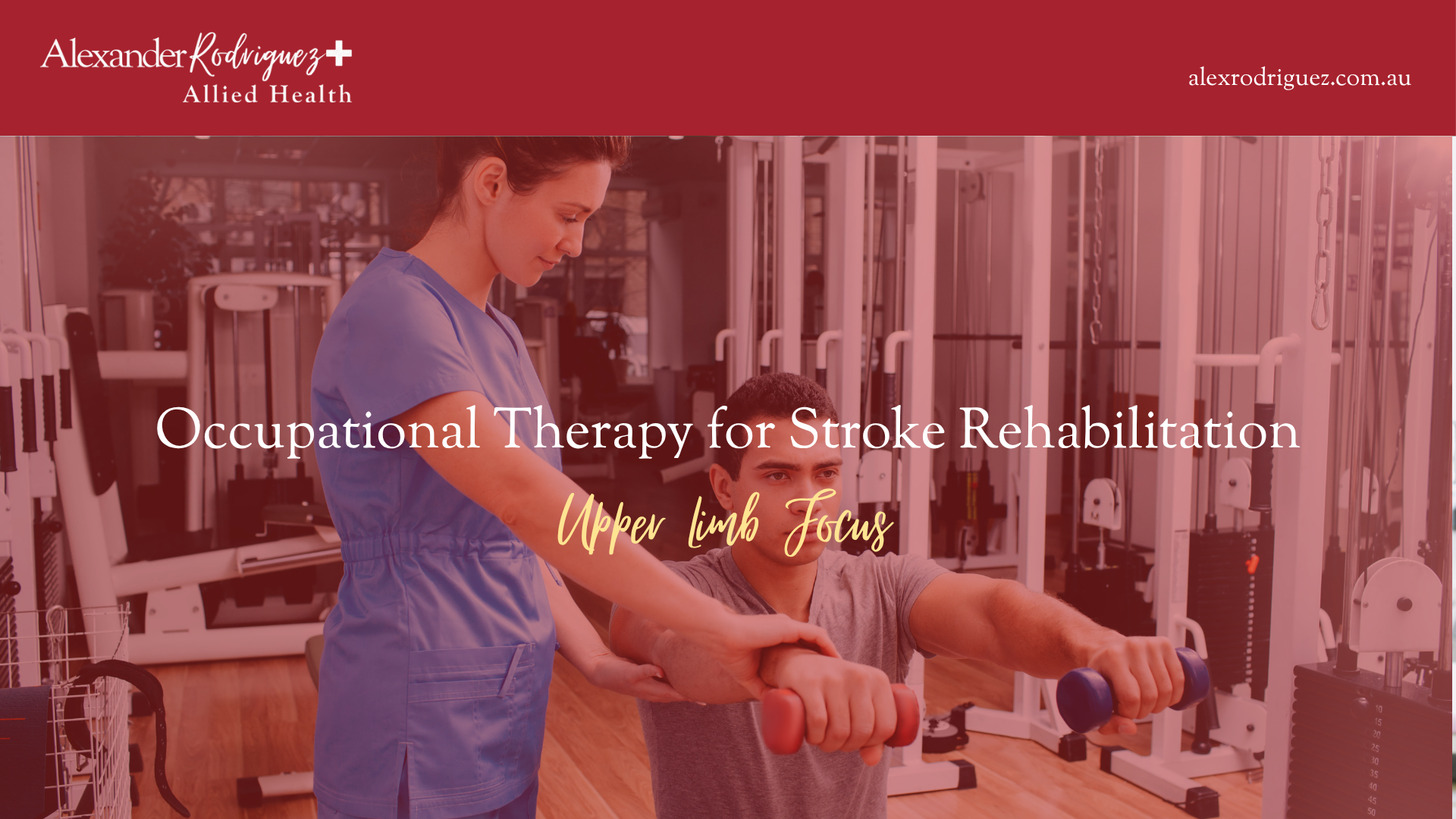
  • Occupational Therapy for Stroke Rehabilitation: Upper Limb Focus

    Occupational Therapy for Stroke Rehabilitation: Upper Limb Focus

    Occupational therapy plays a vital role in your stroke recovery, especially when your upper limb has been affected. In Australia, stroke is one of the leading causes of long-term disability, with around 425,000 Australians living with the effects of stroke and more than 41,000 stroke events occurring each year. Many people experience weakness in the arm or hand, making everyday activities like eating, dressing, or writing difficult.

    Through Stroke Rehabilitation, occupational therapy supports you to relearn these tasks by improving movement, coordination, and independence. As part of an Allied Health Service, your therapist works with you to build practical skills that fit into your daily life, helping you regain control and confidence during stroke treatment.

    After a stroke, regaining upper limb function is often one of your biggest goals. Difficulties with grip, coordination, and hand use can affect your fine motor skills, which are essential for work, home tasks, and social activities. Australian research shows that ongoing rehabilitation significantly reduces long-term disability and improves quality of life for stroke survivors. With the guidance of occupational therapy, you practise targeted movements and meaningful activities that support real-life recovery. By staying engaged in Stroke Rehabilitation and working closely with your Allied Health Service, you give yourself the best chance to improve arm function and move forward with greater independence after stroke treatment.

    At Alex Rodriguez, we understand how challenging living after a stroke can be. If you are noticing changes in your arm or hand movement, daily routines, or confidence, support is available to help you feel safer and more in control. Call us on 0429 220 646 or email nfo@alexrodriguez.com.au or book online to take the first step. We know how vital a positive outlook is, and our occupational therapy services are designed to support your stroke rehabilitation and help you see life in a brighter light.

    Key Takeaways

    • Occupational therapy is vital for improving upper limb function after a stroke.
    • Personalised stroke treatment supports safe recovery and daily independence.
    • Targeted Stroke Rehabilitation helps rebuild strength, movement, and coordination.
    • Improving fine motor skills makes everyday tasks easier and more manageable.
    • Support from an Allied Health Service addresses physical, emotional, and functional needs.

    Understanding the Role of Occupational Therapy in Stroke Recovery

    Your recovery journey is unique, and having the right support can make a meaningful difference. Occupational therapy plays an essential role in Stroke Rehabilitation by helping you move from hospital-based care into everyday life. After a stroke, simple tasks like dressing, cooking, or using your hands can feel challenging. Occupational therapists focus on practical stroke treatment approaches that help you adapt, rebuild skills, and regain independence in activities that matter most to you.

    Through guided practice and tailored strategies, occupational therapy helps improve movement, coordination, and confidence, especially in daily routines that rely on your upper limb and fine motor skills. As part of an Allied Health Service, your therapist works alongside you to overcome barriers, build problem-solving skills, and support a smoother return to meaningful roles at home, work, and in the community.

    Why your upper limb needs targeted rehabilitation

    The upper limb is a main focus in your recovery. It’s vital for almost all daily tasks. Without specific care, regaining arm and hand function after a stroke can be tough.

    Specialised stroke rehabilitation aims to retrain your brain and muscles. It improves coordination and strength by focusing on specific movements. This ensures you move with purpose and control.

    Assessing Your Current Upper Limb Function

    Your recovery journey begins with understanding what your arm and hand are able to do right now. After a stroke, changes in strength, movement, and coordination are common, and these can affect everyday tasks such as reaching, gripping, or using tools. Taking the time to assess your current upper limb function helps you and your therapist identify which movements are working well and which areas need extra support. This process forms a clear starting point for effective stroke treatment and ongoing Stroke Rehabilitation.

    By setting a realistic baseline, occupational therapy can be tailored to your specific needs and goals. Your therapist may look at your range of movement, muscle control, and how your arm and hand perform during daily activities. This personalised approach allows your Allied Health Service team to design therapy that builds on your strengths while safely addressing limitations. With a clear plan in place, you can track progress over time, stay motivated, and work towards improving upper limb use and fine motor skills in a way that fits your lifestyle.

    Identifying your baseline capabilities

    Your therapist will do some gentle movements to see how your muscles and joints react. This helps find out which areas need the most injury recovery support. You might find some movements easy, while others need more effort and patience.

    This is like taking a photo of your current health. Your therapist will check your range of motion, grip strength, and how you do simple tasks. This info helps create rehabilitation services that target your specific challenges.

    Tracking progress through functional assessments

    After setting your baseline, you’ll use functional assessments to track your progress. These assessments show how far you’ve come since your first session. Seeing these improvements can really motivate you during your stroke treatment.

    Your therapist will regularly check these results to make sure your rehabilitation services are working. If an exercise gets too easy, they’ll change your routine to keep you moving towards your goals. This structured approach keeps your recovery focused on what matters most for your daily life.

    Assessment Metric Purpose Frequency
    Range of Motion Measure joint flexibility Every 2 weeks
    Grip Strength Track muscle power Monthly
    Task Completion Evaluate daily function Every 4 weeks
    Coordination Test Assess motor control Every 6 weeks

    Setting Realistic Goals for Functional Skill Practice

    Breaking your recovery goals into small, manageable steps helps make the process clearer and less overwhelming. After a stroke, large goals can feel out of reach, but daily practice focused on simple, meaningful tasks allows steady progress. With guidance from occupational therapy, you can set goals that match your current ability and gradually build toward more complex movements using your arm and hand.

    Achievable milestones play an important role in keeping you motivated throughout your stroke treatment journey. Focusing on what you can work on today, such as improving grip, reach, or coordination, helps you see progress more clearly. Each success builds confidence and supports long-term improvement during Stroke Rehabilitation, making it easier to stay engaged and work towards greater independence in everyday life.

    Defining your personal recovery milestones

    Big recovery goals can feel too much, but breaking them down makes them doable. Think of these as stepping stones to greater independence. Every small victory counts, like holding a cup or buttoning a shirt.

    Working with rehabilitation services helps you focus on key skills for your lifestyle. Prioritising these skills means your efforts improve your life at home.

    Creating a structured routine for daily practice

    Consistency is key in recovery. By adding your practice to your daily routine, you make progress without it taking over your day.

    Try to do your exercises at the same time each day. This builds a reliable rhythm. Whether it’s during your morning coffee or while watching the evening news, routine building helps your brain create new pathways.

    Remember, your stroke treatment plan should change as you get better. Regularly check in with your therapist to make sure your rehabilitation services match your goals for independence.

    Step-by-Step Guide to Daily Living Skills Support

    Daily living skills support is a key part of occupational therapy and plays an important role in your Stroke Rehabilitation journey towards regaining independence at home. After a stroke, everyday tasks such as dressing, preparing meals, or personal care can be harder, especially when upper limb movement and fine motor skills are affected. Through personalised stroke treatment, occupational therapists focus on practical strategies that help you safely practise daily activities, build strength, and relearn movements that support real-life function.

    You might think some movement-based strategies are only used with children, but these approaches are just as effective for adults recovering from neurological events. By focusing on small, consistent wins, occupational therapy helps your brain and body adapt over time. With support from an Allied Health Service, step-by-step practice strengthens your confidence, improves upper limb use, and allows you to manage your household with greater ease as you progress through Stroke Rehabilitation.

    Breaking down complex tasks into manageable steps

    Complex activities often feel overwhelming when your upper limb function is limited. The secret lies in task analysis, which involves breaking a single activity into smaller, bite-sized actions. By focusing on one movement at a time, you reduce cognitive load and physical strain.

    For example, instead of trying to prepare an entire meal at once, focus solely on gathering your ingredients. Once that is complete, move to the next step of chopping or mixing. This structured approach ensures you remain safe while building the stamina needed for longer tasks.

    Using adaptive equipment for independence

    Adaptive equipment acts as a bridge between your current abilities and your goals. These tools are designed to compensate for reduced grip strength or a limited range of motion. Investing in the right gear allows you to maintain your dignity and privacy during daily routines.

    Selecting the right tools for your kitchen

    Your kitchen should be a space of creativity, not frustration. Consider using rocker knives, which allow you to cut food with a simple rocking motion rather than a sawing action. Non-slip mats are also essential to keep your bowls and plates stable while you work with one hand.

    Modifying personal grooming routines

    Grooming is a deeply personal experience that contributes to your overall well-being. Much like the developmental focus found in pediatric occupational therapy, we encourage you to use long-handled brushes or electric toothbrushes to reduce the need for complex wrist movements. Simplifying your setup by placing items at waist height can also prevent unnecessary reaching and fatigue.

    Implementing Strengthening and Mobility Support Exercises

    Getting your upper limbs moving again is a key part of regaining independence after a stroke. Occupational therapy plays an important role in Stroke Rehabilitation by helping you rebuild strength and improve mobility in your shoulder, elbow, wrist, and hand. After a stroke, weakness or stiffness can limit everyday actions like reaching, lifting, or holding objects. Targeted strengthening and mobility exercises support safe movement and help restore control as part of a structured stroke treatment plan.

    With guidance from an Allied Health Service, these exercises are introduced gradually and adjusted to suit your ability and goals. Occupational therapy focuses not only on muscle strength but also on coordination and fine motor skills needed for daily tasks. By practising consistent, purposeful movements, you can improve upper limb function, build confidence, and take meaningful steps forward in your recovery journey through Stroke Rehabilitation.

    Safe range-of-motion exercises for the shoulder and elbow

    Stiffness is common after a stroke, but gentle movement can prevent it. Start with slow, controlled stretches to improve your movement. Always stop if you feel sharp pain.

    Your therapist might recommend shoulder rolls or elbow extensions. These exercises keep your joints flexible, which is crucial for supporting your chronic condition. Sticking to these exercises is important for progress.

    Building grip strength for everyday objects

    Building grip strength lets you easily handle items like cups or door handles. Use tools like stress balls or therapy putty to strengthen your hand muscles. These methods, similar to those used in pediatric occupational therapy, are effective for adults too.

    The table below shows how different exercises help with daily tasks:

    Exercise Type Primary Benefit Daily Application
    Shoulder Pendulums Reduces joint stiffness Reaching for high shelves
    Elbow Flexion Improves arm control Bringing food to your mouth
    Grip Squeezes Increases hand power Holding a coffee mug
    Wrist Rotations Enhances dexterity Turning a door handle

    By adding these exercises to your daily routine, you’re on the path to better health. Remember, every small step forward is a big win for your long-term success.

    Refining Fine Motor Skills Through Therapeutic Activities

    Regaining precise hand and finger movement is an important step in your recovery after a stroke. Fine motor skills allow your hands and fingers to work together smoothly, which is essential for tasks like writing, using cutlery, managing buttons, or handling small objects. During Stroke Rehabilitation, occupational therapy focuses on retraining these detailed movements so you can return to daily activities with greater ease and confidence as part of your overall stroke treatment.

    Therapeutic activities are highly effective for improving coordination and control in a safe, structured way. Through occupational therapy, you practise task-based activities that challenge grip strength, dexterity, and hand-eye coordination without overwhelming your recovery. As part of an Allied Health Service, these activities are tailored to your current ability and progressed gradually, helping you rebuild fine motor control, improve upper limb function, and support meaningful independence throughout your Stroke Rehabilitation journey.
    Exercises to improve dexterity and coordination

    Improving hand function needs regular practice. Start with simple tasks that get harder as you get better.

    Try these therapeutic activities every day to improve your dexterity:

    • Coin sorting: Pick up coins of different sizes and put them into a narrow slot.
    • Pegboard puzzles: Use your thumb and index finger to place small pegs into holes.
    • Therapy putty: Squeeze, stretch, and roll soft putty to build finger strength and flexibility.
    • Buttoning practice: Use a practice board with various button sizes to improve coordination.

    Using repetitive task training for neural plasticity

    Your brain can change and adapt, a process called neural plasticity. Doing the same movement over and over helps your brain make new pathways.

    Repetitive task training is key to better fine motor skills. It’s not just about muscle exercise. It’s about training your nervous system to regain control.

    Be patient with your progress. Small, repeated efforts lead to big gains over time. Every time you do therapeutic activities, you’re strengthening the connection between your mind and body.

    Integrating Cognitive and Behavioural Strategy Support

    The mental side of recovery is just as important as the physical, especially during Stroke Rehabilitation. While your hands and arms work to regain movement, your mind is adjusting to changes in memory, attention, and confidence. Occupational therapy recognises that improving fine motor skills is not only about exercise, but also about staying motivated, focused, and emotionally supported throughout your stroke treatment journey.

    By integrating cognitive and behavioural strategies, occupational therapy helps you build a positive mindset and stronger self-belief. Techniques such as goal-setting, routine-building, and problem-solving support your ability to practise fine motor tasks consistently. As part of a holistic Allied Health Service, these strategies help you manage frustration, stay engaged in therapy, and maintain focus on progress. Supporting both mind and body allows you to achieve more meaningful and lasting improvements in fine motor skills during your Stroke Rehabilitation.

    Managing fatigue during your rehabilitation sessions

    Fatigue can make it hard to do therapeutic activities. It’s key to know your limits and listen to your body. Break tasks into smaller parts to manage your energy better.

    Do your hardest exercises when you’re most awake. Short breaks help you keep going without getting too tired. Remember, pacing yourself is a sign of getting better, not failing.

    Developing strategies to overcome frustration

    Feeling frustrated is normal when progress is slow or when tasks are hard. Good behavioural strategies can help manage these feelings. Celebrate small victories to keep your focus on the journey, not just the end.

    Positive self-talk can also help a lot. If you’re stuck, ask your support team for help. Being flexible in your routine lets you adjust to your changing needs while continuing your stroke rehabilitation.

    Strategy Benefit Implementation
    Energy Pacing Reduces burnout Rest every 20 minutes
    Goal Reframing Boosts morale Focus on daily wins
    Mindful Breathing Lowers frustration Use during rest breaks

    Managing Sensory Integration Support for Better Control

    Improving your sensory awareness can make a meaningful difference to how you move and function each day after a stroke. If the brain has difficulty interpreting signals from your arm or hand, tasks like gripping objects or judging pressure can become challenging. As part of occupational therapy, sensory integration support is used during Stroke Rehabilitation to help reconnect how your brain processes touch, movement, and position. This awareness is a key foundation for better control and more effective stroke treatment outcomes.

    By focusing on sensory integration, occupational therapy helps your brain and upper limb work more smoothly together. Activities may involve texture feedback, guided movement, or task-based practice that supports coordination and fine motor skills. Delivered through an Allied Health Service, this approach helps you feel more confident using your arm and hand in daily routines. Over time, improved sensory processing supports safer movement, stronger control, and greater independence throughout your Stroke Rehabilitation journey.
    Techniques for desensitisation and sensory re-education

    After a stroke, you might feel too sensitive or numb in your hand and arm. We use special therapeutic activities to make these feelings normal again. Desensitisation involves touching your skin with different textures, like soft fabrics or brushes, to lessen discomfort.

    Sensory re-education then teaches your brain to identify objects just by touch. For example, you might reach into a bag to find something without looking. This helps your nervous system get better at understanding touch signals.

    Improving proprioception for safer movement

    Proprioception is knowing where your body is without looking. If this sense is off, your movements might feel awkward. Getting better at this is crucial for staying safe while doing everyday things.

    There are specific therapeutic activities to boost your proprioception. These exercises challenge your sense of where your joints are. They include:

    • Weight-bearing activities help give feedback to your joints.
    • Mirror therapy helps your brain see the right limb position.
    • Guided reaching tasks that focus on getting the right spot.

    By doing these exercises regularly, you’ll see a big boost in your fine motor skills. This increased control lets you move with more confidence and precision all day long.

    Adapting Your Home and Work Function Support

    Recovery goes beyond the clinic and into your everyday environments. Occupational therapy plays an important role in Stroke Rehabilitation by helping you adapt your home and work spaces to better support your current abilities. After a stroke, small barriers such as furniture layout, lighting, or work setup can affect safety and independence. Making practical adjustments allows you to use your upper limb more confidently and apply what you are learning through stroke treatment in real life.

    Simple changes can make a big difference to how you function each day. With guidance from an Allied Health Service, occupational therapy focuses on modifying tasks, tools, and environments to support movement, comfort, and fine motor skills. These adaptations help reduce fatigue, lower the risk of injury, and improve confidence at home and work. By creating supportive spaces, you are better able to practise daily activities, maintain progress, and strengthen independence throughout your Stroke Rehabilitation journey.

    Modifying your environment for safety and efficiency

    Think about how you use objects at home. Improving fine motor skills can start with simple things. For example, using non-slip mats or ergonomic handles on kitchen tools can help.

    These changes make it easier to do everyday tasks without straining your body. It’s like the tips given in pediatric occupational therapy for kids. Making your home more accessible helps you save energy and avoid getting tired easily.

    Returning to work with professional guidance

    Going back to work is a big step. You need to plan carefully. Work with your therapist to figure out tasks that are hard for you. They can help you find ways to do them better.

    Here’s a table to help you plan changes for different places:

    Setting Primary Goal Example Modification
    Home Kitchen Safety & Ease Installing lever-style taps
    Home Office Efficiency Using a vertical mouse
    Workplace Sustainability Adjusting desk height
    Commute Independence Using adaptive travel aids

    Your therapist can also help you talk to your boss about making your job easier. Working together, you can make your workplace better for you. Remember, sticking to your routine is key to doing well at work and in life.

    Prioritising Occupational Therapy Support at Alex Rodriguez

    After a stroke, the emotional side of recovery can feel overwhelming and may affect your motivation, confidence, and day-to-day life. Alongside physical changes, it is common to experience frustration, anxiety, or low mood during Stroke Rehabilitation. Alex Rodriguez Occupational Therapy Service recognises that emotional regulation and mental well-being are essential parts of effective stroke treatment, not something to be left until later.

    Through a supportive and person-centred approach, occupational therapy provides a safe space to work through your feelings, rebuild routines, and strengthen coping strategies. As part of a trusted Allied Health Service, our therapists support you to manage stress, adjust to change, and stay engaged in your recovery. By prioritising emotional well-being, you also support progress in physical goals such as upper limb recovery and fine motor skills, helping you move forward with greater confidence and resilience throughout your Stroke Rehabilitation journey.

    Coping with the emotional impact of a stroke

    It’s normal to feel many emotions after a stroke. You might feel frustrated, sad, or anxious as you adapt to new daily challenges. Alex Rodriguez Allied Health helps you find ways to manage your emotions and regain balance.

    We help you create personalised coping strategies that suit you. By tackling these emotions early, you can maintain a positive outlook and stay motivated in your recovery.

    How to book your session with Alex Rodriguez

    Starting your mental wellness journey is a big step. We make it easy to get our occupational therapy support when you’re ready. Our team is dedicated to offering an allied health service that meets your needs.

    Speak with Our Occupational Therapy Team

    If you’d like to talk directly, call us on 0429 220 646. Our friendly staff are ready to answer your questions and book an appointment that fits your schedule.

    Book an Appointment Using Our Online Booking Portal

    Or, book online at https://www.alexrodriguez.com.au/booking. This easy digital tool lets you see available times and book your first session with Alex Rodriguez Allied Health at your convenience.

    Conclusion

    Your journey to regain upper limb function is unique, and receiving the right professional support can make recovery more effective and rewarding. With occupational therapy, your stroke treatment is designed around your individual needs, goals, and daily routines, helping you build confidence and practical ability over time.

    Working closely with a dedicated Allied Health Service supports consistent progress through Stroke Rehabilitation, from improving upper limb strength to restoring important fine motor skills. Every small step you take contributes to greater independence and comfort in everyday life. With the right guidance and persistence, meaningful change is achievable. Celebrate your progress, stay committed to your recovery, and look forward to a more confident and fulfilling future.

    At Alex Rodriguez, we understand how challenging living after a stroke can be. If you are noticing changes in your arm or hand movement, daily routines, or confidence, support is available to help you feel safer and more in control. Call us on 0429 220 646 or email nfo@alexrodriguez.com.au or book online to take the first step. We know how vital a positive outlook is, and our occupational therapy services are designed to support your stroke rehabilitation and help you see life in a brighter light.
    FAQ

    Why is an allied health service like occupational therapy so important for stroke rehabilitation?

    After a stroke, occupational therapy is key to getting you back on your feet. At Alex Rodriguez Allied Health, we focus on improving your upper limb. We use proven methods to help you do everyday tasks again with confidence.
    Our goal is to help you reach your physical and functional goals. This way, you can move forward in your recovery with a clear plan.

    How can therapeutic activities improve my fine motor skills?

    We use special activities to boost your fine motor skills and coordination. These activities help your brain adapt and improve control over your hand and arm. Whether it’s buttoning a shirt or writing, we tailor our services to help you interact better with your environment.

    Are the strategies used in adult stroke recovery similar to pediatric occupational therapy?

    Yes, many techniques from pediatric occupational therapy are also effective for adults. At Alex Rodriguez Allied Health, we adapt these methods for adults. This ensures your recovery is both effective and suited to your age.

    What kind of strengthening and mobility support can I expect during my sessions?

    Your sessions will include exercises to strengthen your shoulder, elbow, and wrist. We focus on safe movements to prevent stiffness and improve grip strength. This support is crucial for your long-term physical health and safety at home and work.

    How does Alex Rodriguez Allied Health support my mental health and emotional regulation?

    We understand that recovery is as much about the mind as the body. Our mental health support helps you manage emotions and frustration. We provide a safe space to talk about your feelings, ensuring you stay motivated and positive.

    Can you help me adapt my home for better independence?

    Yes, we offer support to make your home and work environment safer and more efficient. We provide advice on adapting your space and choosing the right tools. These changes help you use your fine motor skills in real-life situations, making your transition back to daily life easier.

    How do I book an appointment with Alex Rodriguez Allied Health?

    Booking your appointment is easy. Call us at 0429 220 646 to discuss your needs. Or, use our online booking portal at https://www.alexrodriguez.com.au/counsellor-booking/ to schedule your first consultation and start your occupational therapy programme.
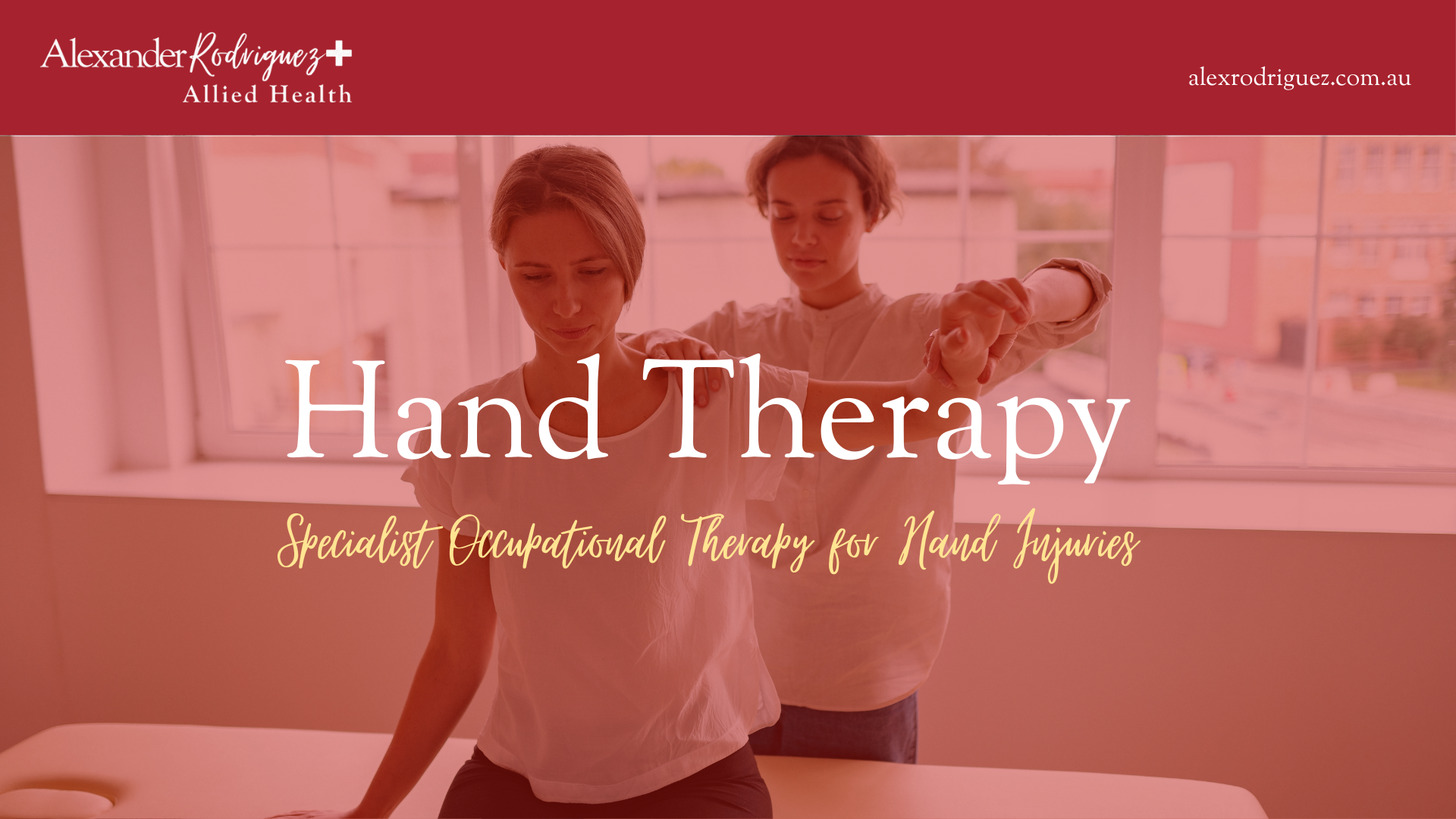
  • Hand Therapy: Specialist Occupational Therapy for Hand Injuries

    Hand Therapy: Specialist Occupational Therapy for Hand Injuries

    Occupational therapy is often essential after a hand or upper limb injury, especially given how common these conditions are across Australia. National data shows that close to 497,300 Australians experience a work-related injury each year, with hands, wrists, and fingers among the most frequently injured areas.

    These injuries occur not only in physically demanding jobs, but also through office work, sport, and everyday activities at home. When you experience a hand injury, simple tasks such as gripping, typing, dressing, or cooking can quickly become difficult and painful. Early support from qualified hand injury specialists and a skilled occupational therapist helps reduce complications and improve recovery outcomes. Through structured hand therapy, pain and swelling are managed while movement, strength, and coordination are safely restored.

    Hand therapy focuses on practical recovery that supports how you use your hands in real life. Experienced hand therapy experts provide targeted treatment for hand injuries tailored to your daily activities, work demands, and personal goals. This may include guided exercises, movement retraining, and strategies to protect joints and soft tissue while healing. A coordinated Allied Health Service approach ensures treatment considers the complex role your hands play in independence and quality of life. With consistent occupational therapy support, you are better equipped to manage symptoms, build long-term strength, and reduce the risk of future injury while returning to everyday activities with confidence.

    Occupational Therapy is available through Alex Rodriguez Allied Health Service. Call on 0429 220 646, email info@alexrodriguez.com.au, or visit us at Suite 15.01, Level 15, 60 Station St East, Parramatta NSW 2150 to take the first step. We know how vital a positive outlook is, and our services aim to help people see life in a brighter light.

    Key Takeaways

    • Personalised occupational therapy and hand injury treatment plans tailored to your daily needs.
    • Practical hand therapy focuses on restoring movement, strength, and independence.
    • Care delivered by experienced occupational therapists, hand injury specialists, and hand therapy experts.
    • Holistic Allied Health Service support for acute injuries, long-term conditions, and pain management.
    • Guidance that supports both physical recovery and emotional well-being throughout rehabilitation.

    Understanding the Role of Occupational Therapy in Hand Recovery

    Occupational therapy plays an important role in helping you recover after a hand injury and regain independence in daily life. Your hands are involved in almost everything you do, from personal care and household tasks to work and leisure activities. When an injury affects your fingers, hand, or wrist, even simple movements can become painful or restricted. With support from a qualified occupational therapist, recovery focuses on restoring function while helping you adapt safely as healing progresses. Working alongside experienced hand injury specialists, occupational therapy addresses both the physical challenges and the practical impact of a hand injury on your routine.

    Hand therapy is a specialised area within occupational therapy that focuses on improving strength, movement, coordination, and comfort in the hand and upper limb. Skilled hand therapy experts design personalised hand injury treatment plans that reflect how you use your hands every day, whether at work, home, or during hobbies. Treatment may include guided exercises, functional retraining, and strategies to protect healing structures. By taking a whole-person approach, an Allied Health Service supports your recovery beyond the injury itself, helping you rebuild confidence, reduce the risk of long-term complications, and return to meaningful activities with greater ease and independence.

    Why your hands are vital for daily independence

    Your hands are crucial for everyday tasks. They help with dressing, feeding, and even cooking. Losing hand function can make it hard to do these things on your own. Occupational therapy aims to restore hand function, so you can do these tasks again.

    How hand therapy experts facilitate healing

    Hand therapy experts, like occupational therapists, focus on treating hand injuries. They use special techniques and strategies for each person. This might include exercises for movement, strengthening, and using tools to help with daily tasks.

    Hand Injury Type Treatment Approach Recovery Goal
    Fractures Immobilisation, followed by exercises Regaining strength and mobility
    Tendon injuries Physical therapy, possible surgery Restoring tendon function
    Nerve damage Nerve rehabilitation exercises Improving sensation and motor control

    Knowing about occupational therapy in hand recovery helps people understand the care they get. It lets them find the right treatment, making their recovery better.

    Assessing Your Hand Injury and Functional Limitations

    Creating an effective hand injury treatment plan starts with understanding how the injury affects your everyday life, not just how it looks on a scan or assessment table. A detailed evaluation helps identify the source of pain, limits in movement or strength, and the activities that have become difficult since the injury. This process allows clear and realistic recovery goals to be set, focusing on what matters most to you, such as returning to work, managing daily tasks, or enjoying hobbies again. Without a thorough assessment, important factors that impact long-term recovery can easily be missed.

    Hand therapy specialists and hand injury specialists use specific assessment methods to understand how an injury to the hand, wrist, or upper limb affects function, coordination, and independence. An experienced occupational therapist looks at how you use your hands during real-life activities, including self-care, work duties, and repetitive tasks. This comprehensive approach provides a clear picture of injury severity and how it impacts your freedom and confidence. By understanding both the physical limitations and functional challenges, occupational therapy delivers targeted treatment that supports meaningful recovery and long term use of your hands.

    Identifying the Root Cause of Your Discomfort

    Finding out what’s causing your pain means looking closely at your hand’s state. You’ll check how flexible and strong your hand is, and how it affects your daily tasks.

    Assessment Area Description Importance
    Range of Motion Evaluating the flexibility and mobility of your hand and fingers. Helps in understanding the injury’s impact on hand function.
    Strength Assessing the muscle power in your hand and forearm. Crucial for determining the ability to perform daily tasks.
    Sensation Testing the sensitivity and feeling in your hand and fingers. Essential for understanding the injury’s effect on sensory feedback.

    Setting Realistic Goals for Your Recovery Journey

    Setting goals that are within reach is key to a good recovery. Knowing your current limits and injury extent helps you and your therapist set reachable milestones.

    These goals are made just for you, aiming to help you get back to doing things on your own. Regular checks and tweaks to these goals keep you on the right path with your Injury Recovery Support plan.

    Step One: Seeking Professional Evaluation

    Your recovery begins with a comprehensive assessment led by a qualified occupational therapist. This initial evaluation is an essential step in understanding the nature and severity of your hand injury and how it affects your daily activities. Rather than focusing only on pain or visible symptoms, the assessment looks at how your hand, wrist, or upper limb functions during real-life tasks such as work duties, self-care, and household activities. This detailed approach allows hand injury specialists to identify movement restrictions, strength loss, swelling, and coordination issues that may be limiting your independence.

    Through this professional evaluation, a personalised hand injury treatment plan can be developed to support safe and effective recovery. Using evidence-based hand therapy principles, the occupational therapist considers your lifestyle, goals, and recovery needs. This ensures treatment is practical, targeted, and aligned with how you use your hands every day. Guided by experienced hand therapy experts, this first step sets a clear foundation for restoring movement, improving function, and reducing the risk of long term complications while supporting confident and independent use of your hands.

    What to Expect During Your First Visit

    At your first visit, you’ll get a full check of your hand injury. The occupational therapist will look at your condition, talk about your symptoms, and plan a treatment just for you.

    This plan is made to fit your needs and goals. It ensures your recovery is focused and effective.

    Preparing Your Medical History for Your Therapist

    To get the most from your first visit, prepare your medical history. This includes any past diagnoses, treatments, and important medical records.

    Having this ready helps your therapist understand your situation better. They can then create a treatment plan that works well for you.

    Step Two: Developing Your Personalised Injury Recovery Support Plan

    After your initial assessment, the next stage focuses on creating a recovery plan tailored specifically to your needs, goals, and daily activities. This personalised plan is designed to address how your hand injury affects your movement, strength, coordination, and independence. Guided by a qualified occupational therapist, the plan considers the severity of the injury, healing stage, and how you use your hands at work, home, and during leisure activities. A structured approach ensures each stage of recovery is planned with purpose, helping you progress safely and steadily.

    Your personalised recovery support plan uses targeted hand therapy strategies to rebuild function and confidence over time. Experienced hand injury specialists and hand therapy experts focus on practical hand injury treatment that supports real-life tasks, not just clinical exercises. This may include progressive movement programs, activity modification, and techniques to protect healing tissues while maintaining independence. Delivered through a coordinated Allied Health Service, this approach helps you regain control, improve comfort, and return to everyday activities with greater confidence and long-term hand health.

    Tailoring Treatment to Your Specific Injury

    Your occupational therapist will make a treatment plan just for you. It might include exercises, stretches, and other ways to help you heal and improve.

    The aim is to make a plan that works for you and fits into your daily life. This way, you’re more likely to follow it and get the best results.

    Monitoring Progress Through Regular Reviews

    It’s important to have regular check-ups with your hand injury specialists. These reviews help track your progress and make any needed changes to your plan. This keeps you on track to meet your goals and deals with any problems quickly.

    In these reviews, your therapist will check how you’re doing, give feedback, and adjust your plan if needed. This teamwork helps you reach the best outcome.

    With your occupational therapist and hand injury specialists, you can create a recovery plan that supports your healing and independence journey.

    Step Three: Implementing Strengthening and Mobility Support Exercises

    At this stage of your recovery, you begin guided exercises designed to improve strength, movement, and hand function. With support from hand therapy experts, these exercises are chosen based on your injury, your current ability, and your recovery goals. The aim is to help reduce stiffness, improve flexibility, build strength, and make everyday tasks easier and more comfortable over time.

    As part of your hand injury treatment plan, your occupational therapist may use a range of techniques such as movement exercises, manual therapy, splinting, and functional activity practice. These approaches work together to support healing, reduce pain, and restore better use of your hand, wrist, and fingers. With the right hand therapy program, you can gradually regain confidence, mobility, and independence in daily life.

    Safe Techniques for Regaining Range of Motion

    Getting your hand to move again is very important. Your hand therapist will show you how to do this safely. You’ll learn:

    • Gentle stretching to loosen tight parts
    • Passive exercises where your therapist moves your hand
    • Active exercises where you move your hand yourself

    It’s important to listen to your therapist to avoid hurting yourself more.

    Building Muscle Endurance Without Overexertion

    It’s crucial to build muscle endurance in your hands. Your therapist will create a plan that gets stronger but doesn’t push you too hard. You might do:

    1. Resistance band exercises to strengthen your hand and forearm
    2. Putty or grip strengthening exercises to improve your grip
    3. Progressive loading exercises to challenge your hand and wrist

    By sticking to this plan, you’ll recover safely and effectively. Your hand therapy experts will keep an eye on your progress and change your exercises if needed. This way, you’ll get your hand working fully again.

    Step Four: Integrating Daily Living Skills Support into Your Routine

    As you progress through hand therapy, it becomes important to integrate daily living skills support into your routine. This stage of recovery helps you return to doing everyday tasks with greater independence and confidence, even while your hand is still healing. A hand injury can affect how you dress, cook, work, or manage personal care, so adjustments are often needed. Guided by a skilled occupational therapistand experienced hand injury specialists, you learn safe and practical ways to adapt your daily activities while protecting your hand and maintaining function.

    Daily living skills support is a core part of an effective Allied Health Service and focuses on the practical side of recovery. Hand therapy experts assess how you complete routine tasks and identify where pain, weakness, or limited movement may be creating difficulty. Through targeted hand injury treatment, you are supported with strategies such as task modification, energy conservation, and improved hand use techniques. This approach helps reduce strain, supports healing, and empowers you to stay independent in your daily life while building long-term hand health through occupational therapy.

    Modifying Household Tasks for Easier Completion

    Modifying household tasks is a big part of daily living skills support. This includes:

    • Using tools that are easier to grip or use.
    • Breaking down big tasks into smaller steps.
    • Finding new ways to do tasks that are hard because of your injury.

    For example, you might use a jar opener to open jars easily. Or a long-handled duster to reach high shelves without straining your hand.

    Independence and Routine Building Support Strategies

    Daily living skills support also helps with building independence and routines. This includes:

    1. Creating a daily schedule that balances rest and activity.
    2. Practising tasks in a safe place to build confidence and skill.
    3. Using reminders or tools to help stay on track and keep your routine.

    By using these strategies, you can get your independence back. You can keep living a full life even with a hand injury.

    The aim of daily living skills support is to help you adapt to your injury. It’s about finding new ways to do daily tasks. With the right support from your allied health service, you can stay independent and enjoy your favourite activities.

    Step Five: Utilising Cognitive and Behavioural Strategy Support for Pain Management

    Recovery from a hand injury is not only about physical healing. It also involves learning how to understand and manage pain effectively. Persistent or ongoing pain can affect your mood, sleep, motivation, and ability to stay active in your recovery. Skilled hand therapy experts recognise that pain is influenced by both physical and mental factors. Through hand therapy, you are supported to develop cognitive and behavioural strategies that help you respond to pain in a more controlled and confident way, rather than feeling overwhelmed by it.

    Managing long-term or complex pain often requires a combined approach. An experienced occupational therapist works with you to build practical skills that support pain control during everyday activities. This may include pacing tasks, relaxation techniques, graded activity exposure, and strategies to reduce fear of movement. As part of a comprehensive Allied Health Service, these approaches are integrated into your hand injury treatment to support both physical recovery and emotional well-being. With guidance from hand injury specialists, occupational therapy helps you manage pain more effectively, maintain independence, and improve your overall quality of life throughout your recovery journey.

    Changing your relationship with chronic pain

    Chronic pain can hurt your body and mind. It’s key to see managing pain as more than just getting rid of it. It’s about changing how you see pain.

    By using cognitive and behavioural strategies, you can see pain in a new light. You can learn to cope better. This might include:

    • Changing negative thoughts about pain
    • Using relaxation methods like deep breathing
    • Doing things that take your mind off pain

    A top pain management expert says,

    Mental techniques to assist physical healing

    Mental tricks can help your body heal. Mindfulness, visualisation, and meditation can lower stress and help you relax. This can speed up healing.

    Mental Technique Description Benefit
    Mindfulness Focusing on the present moment without judgment Reduces stress and anxiety
    Visualization Imagining a positive outcome or scenario Promotes relaxation and reduces pain perception
    Meditation Practising focused attention and awareness Enhances overall well-being and reduces chronic pain

    Adding these mental tricks to your day can make you more positive. It can also help you manage pain better. An occupational therapist can help you use these techniques in a way that fits you.

    Step Six: Enhancing Sensory Integration and Functional Skill Practice

    The sixth step in your recovery focuses on improving sensory awareness and strengthening functional skills so that everyday tasks feel more natural again. After a hand injury, your ability to feel textures, judge pressure, or coordinate fine movements can be reduced. This can make activities like buttoning clothes, writing, or handling small objects challenging. Through targeted occupational therapy, an occupational therapist helps retrain sensory feedback and supports safe, controlled use of your hand during meaningful tasks. Working with experienced hand injury specialists, this step supports both physical recovery and confidence in hand use.

    As part of structured hand therapy, hand therapy experts guide you through practical hand injury treatment activities that mirror real-life movements. Functional skill practice focuses on improving coordination, grip control, and accuracy while gradually increasing task complexity. Sensory re-education techniques help your brain reconnect with your hand, improving awareness and control over time. Supported within a coordinated Allied Health Service, this stage of recovery helps you regain independence, reduce hesitation in movement, and feel more comfortable using your hand during daily activities.

    Improving Dexterity through Targeted Activities

    Getting your hand to work better is key. Hand therapy specialists create special exercises for you. These exercises boost your finger dexterity, grip strength, and hand coordination.

    For example, you might do things like:

    • Pinching small beads between your thumb and fingers
    • Rotating a small ball in your hand
    • Using tweezers to pick up tiny objects

    Overcoming Sensory Sensitivities after Trauma

    After a hand injury, some people feel too sensitive to touch. Sensory integration helps you get used to different textures and sensations. Your hand injury specialists will help you with these exercises.

    Some activities you might do include:

    Activity Description Benefit
    Texture Exploration Touching different textures like sand, rice, or fabrics Desensitises the hand to various sensations
    Temperature Gradation Gradually exposing your hand to different temperatures Helps in overcoming temperature sensitivities
    Vibration Therapy Using vibration tools or devices on the hand Can help reduce pain and improve sensory integration

    By doing these activities every day, you’ll improve your hand function. It’s important to work with your hand injury specialists. They can make these activities fit your needs and check on your progress.

    Step Seven: Adapting Your Home and Work Function Support

    Adapting your home and work environments is an important step in supporting recovery during hand therapy. Your surroundings can either help or hinder healing, especially if daily tasks place repeated strain on your hand or wrist. Simple activities such as cooking, typing, lifting objects, or using tools may need temporary or long-term adjustments. Making these changes allows your recovery to progress smoothly while reducing the risk of further injury or prolonged pain. Support from hand injury specialists helps ensure these adjustments are practical and matched to how you use your hands each day.

    An experienced occupational therapist plays a key role in identifying environmental changes that support your hand health. This may include modifying workstations, adjusting task setups, or recommending alternative ways to complete tasks with less strain. As part of a coordinated Allied Health Service, this approach ensures your hand injury treatment extends beyond exercises and into real-life environments. Guided by hand therapy experts, these adjustments help improve function, reduce pain, and support independence, allowing occupational therapy to promote safe, confident hand use both at home and in the workplace.

    Ergonomic adjustments for your workspace

    Making your workspace ergonomic is important to avoid injury. Simple tweaks, like changing your chair height or computer monitor position, can help a lot.

    Here are some easy ergonomic changes:

    • Put your computer monitor right in front of you, about 20-25 inches away.
    • Make sure your chair height lets your feet rest flat or on a footrest, with knees at or below hip level.
    • Keep your keyboard and mouse close to your body to avoid stretching.

    Tools and equipment to assist your daily tasks

    Using the right tools and equipment can also help a lot with daily tasks. This includes special adaptive gear that makes things easier on your hands.

    Task Adaptive Equipment Benefit
    Cooking Adaptive utensils with larger grips Easier to hold and maneuver
    Writing Pens with ergonomic grips Reduces strain on the hand
    Gardening Gardening tools with cushioned handles Reduces discomfort and strain

    By making these changes and using adaptive equipment, you can make your environment more supportive. This helps your recovery and improves your hand health.

    Addressing Emotional Regulation and Mental Health: Occupational Therapy Support

    Recovering from a hand injury can be emotionally challenging, and your mental well-being is just as important as your physical recovery. Ongoing pain, reduced independence, and slow progress can lead to frustration, anxiety, low mood, or loss of confidence. These emotional responses are common when everyday tasks become difficult or when recovery takes longer than expected. Effective occupational therapy recognises that emotional regulation plays a major role in healing, motivation, and participation in daily life. Addressing mental health alongside physical symptoms supports a more balanced and sustainable recovery.

    An experienced occupational therapist helps you develop practical strategies to manage the emotional impact of injury as part of holistic hand therapy. Working alongside hand injury specialists and hand therapy experts, therapy may focus on building coping skills, reducing stress linked to pain, and improving confidence in hand use. Techniques such as activity pacing, goal setting, relaxation strategies, and routine rebuilding are often included within a broader hand injury treatment plan. Delivered through a supportive Allied Health Service, this approach helps you maintain emotional resilience, stay engaged in recovery, and improve quality of life while healing.

    Managing the Frustration of Recovery

    Recovering from a hand injury is slow and can hurt. It’s normal to feel upset when things don’t go as fast as you want. Hand therapy experts can help you deal with these feelings.

    Here are some ways to cope:

    • Set achievable goals and celebrate small wins
    • Try relaxation methods like deep breathing or meditation
    • Do things that make you happy and take your mind off recovery

    Using these methods can help you stay positive and handle recovery’s emotional ups and downs.

    Chronic Condition Support for Long-term Wellbeing

    For some, a hand injury can lead to a chronic condition that lasts a long time. Occupational therapists can help you adjust to your condition and stay independent.

    Here’s a table showing support areas for chronic conditions:

    Area of Support Strategies Benefits
    Pain Management Relaxation techniques, pain education Less pain, better quality of life
    Activity Adaptation Modifying tasks, using assistive devices More independence, less frustration
    Emotional Wellbeing Cognitive-behavioral therapy, support groups Better mental health, stronger coping skills

    With help from hand therapy experts in your allied health service, you can create a plan to manage your chronic condition. This will improve your overall well-being.

    Conclusion

    Effective occupational therapy plays a vital role in helping you recover after a hand injury and regain confidence in everyday life. Throughout your recovery journey, a thorough assessment, clear goal setting, and a personalised approach to hand injury treatment help address both physical limitations and daily challenges. With the guidance of an experienced occupational therapist, hand therapy focuses on restoring movement, strength, coordination, and comfort while supporting your independence at home, work, and in the community.

    A structured approach led by skilled hand injury specialists and hand therapy experts ensures your care is practical and meaningful. Therapeutic techniques are matched to your individual needs, whether that involves pain management, improving functional skills, or adapting daily activities. Delivered through a coordinated Allied Health Service, occupational therapy supports not just recovery from injury, but long-term hand health and quality of life. With the right professional support, you are better equipped to return to the activities that matter most, with confidence and control.

    Occupational Therapy is available through Alex Rodriguez Allied Health Service. Call on 0429 220 646, email info@alexrodriguez.com.au, or visit us at Suite 15.01, Level 15, 60 Station St East, Parramatta NSW 2150 to take the first step. We know how vital a positive outlook is, and our services aim to help people see life in a brighter light.

    FAQ

    Why should I see hand injury specialists instead of a general practitioner for my recovery?

    While your GP is great for general care, hand injury specialists know a lot about hands, wrists, and forearms. At Alex Rodriguez Allied Health, our experts focus on the details of tendons, nerves, and bones. This ensures your treatment is just right for your injury.

    What is the main role of an occupational therapist in hand recovery?

    An occupational therapist looks at how injuries affect your daily life. They help you get back to activities like typing, cooking, or driving. We aim to help you recover fully and get back to your normal life.

    How do you identify the root cause of my hand pain during an assessment?

    At our Parramatta clinic, we use tests to check your range of motion, grip strength, and nerve sensitivity. This helps us find out what’s causing your pain. We then set goals for your recovery that target the real problem.

    What should I prepare for my first appointment at Alex Rodriguez Allied Health?

    Bring any X-rays, scans, or reports from your injury. Also, have a list of your medications ready. This helps your occupational therapist create a recovery plan that’s safe and efficient from the start.

    Will my injury recovery support plan be unique to me?

    Yes, it will. Every injury and lifestyle is different. Your plan will be made just for you, whether you work in an office or do manual work. We also regularly review and adjust your plan as you get better.

    Is it possible to regain strength without risking further injury?

    Yes, safety is our top priority. We use special exercises that are safe and effective. Our experts will guide you through these exercises to help you regain strength and mobility without harming your healing tissues.

    How can I manage my daily chores while my hand is still healing?

    We offer support to help you keep up with your daily tasks. We teach you how to protect your joints and suggest ways to do household chores safely. This way, you can keep up with your routine while your hand heals.

    Can mental strategies really help with physical pain management?

    Yes, they can. We use mental strategies to help you cope with chronic pain. By managing stress and anxiety, you can reduce your pain response and aid in your physical healing.

    What if my hand feels numb or overly sensitive after surgery or trauma?

    This is where sensory integration comes in. We use exercises to “re-train” your brain and nerves. This can help reduce numbness or sensitivity, making your hand feel normal again.

    Can you help me adjust my workspace to prevent future hand strain?

    Yes, we can. We offer advice on making your workspace safe and supportive. This includes ergonomic changes and recommending tools to help you avoid hand strain in the future.

    How do I deal with the frustration of a slow recovery process?

    It’s normal to feel frustrated when recovering from an injury. At Alex Rodriguez Allied Health, we offer mental health support. We help you manage your emotions and focus on your long-term wellbeing, alongside your physical recovery.