Category: occupational-therapy

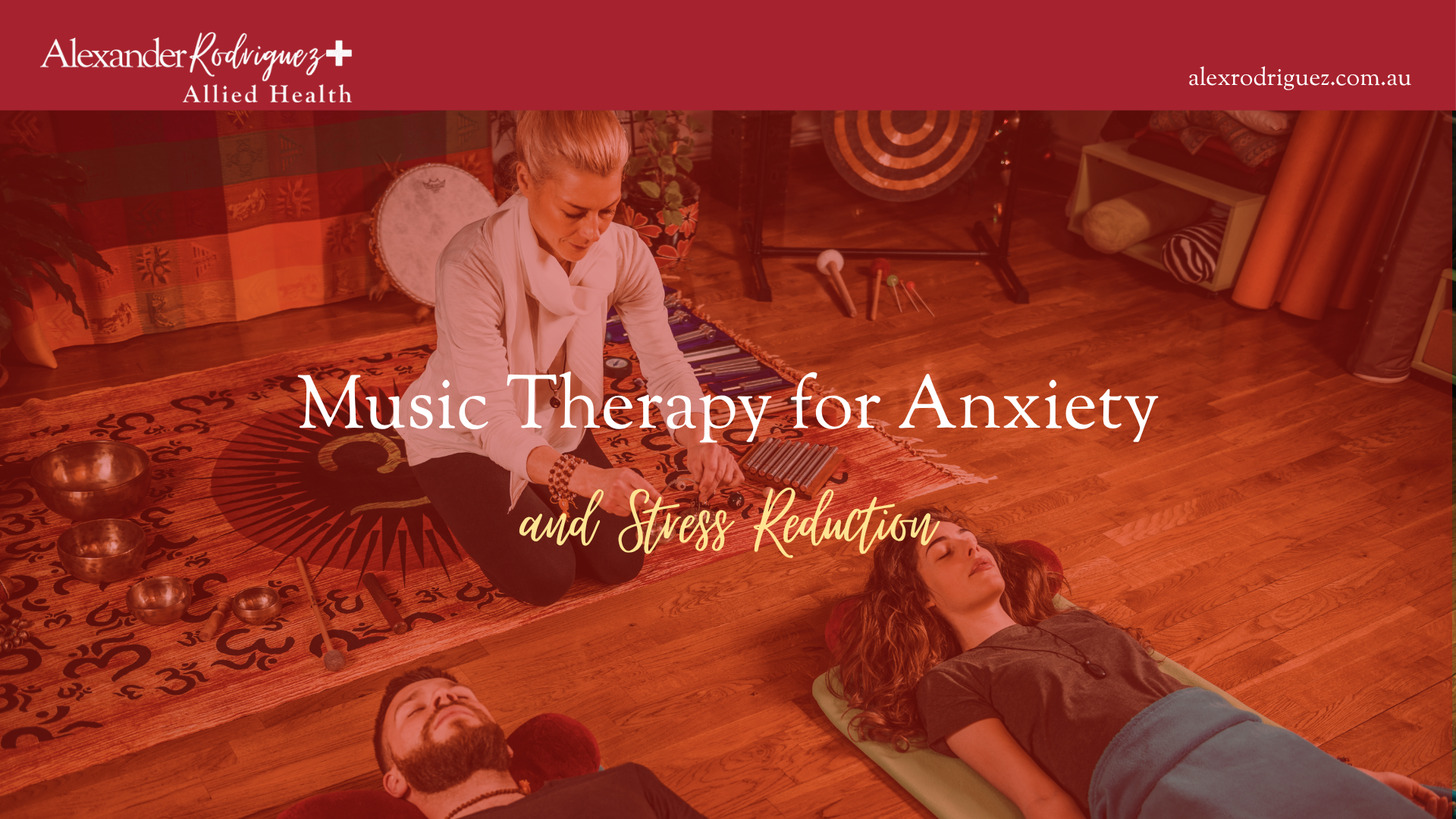
  • Music Therapy for Anxiety and Stress Reduction

    Music Therapy for Anxiety and Stress Reduction

    Music therapy is a powerful way to support your wellbeing, especially when you are dealing with the fast pace of life in Sydney and across Australia. Each year, around 1 in 5 Australians experience a mental health condition, showing how common stress and anxiety have become across the country.

    Through structured therapy techniques, music therapy helps calm your mind, regulate emotions, and ease the physical effects of stress. When combined with Occupational Therapy, it creates a more complete approach that supports both your mental well-being and everyday functioning. This style of care allows you to step away from daily pressure and reconnect with a sense of balance.

    As part of a trusted Allied Health Service, you can access tailored mental health support that focuses on practical stress management strategies you can use every day. These approaches help you build resilience, improve focus, and respond more confidently to challenges. With consistent guidance, you are not only reducing anxiety but also building habits that support long-term wellbeing. This supportive approach gives you space to grow, helping you move forward with clarity, stability, and a stronger sense of control.

    Need a break from constant stress?

    Work with Alex Rodriguez to build calming routines that fit your life. Call 0429 220 646, email info@alexrodriguez.com.au, or book online today.

    Key Takeaways

    • Music therapy helps reduce anxiety by calming your mind and body through sound.
    • Practical therapy techniques like listening, drumming, and humming support daily stress management.
    • Creating a calm environment improves relaxation and emotional regulation.
    • Occupational Therapy helps build routines, independence, and better daily functioning.
    • Personalised care through an Allied Health Service provides strong mental health support.
    • Consistent use of music-based strategies builds long term balance, resilience, and wellbeing.

    Understanding the Science Behind Music Therapy

    Music therapy is more than just listening to your favourite songs; it is a structured approach that uses sound to improve your overall wellbeing. When you engage in music therapy, your brain and body respond in ways that directly support relaxation and emotional balance. Research shows that music can lower heart rate, reduce cortisol levels, and help shift your body out of stress mode. By using guided therapy techniques, you can experience these benefits in a more focused way that supports long-term change. When combined with Occupational Therapy, this approach also helps you improve daily routines, focus better, and manage emotional triggers more effectively.

    As part of a broader Allied Health Service, music therapy offers practical and personalised mental health support that fits into your daily life. You are not just listening to music, you are learning how to use it as a tool for better stress management and improved emotional control. These methods help you build resilience, respond calmly to challenges, and feel more grounded throughout the day. Over time, this structured support makes it easier for you to manage anxiety, stay balanced, and maintain a healthier connection between your mind and body.

    How Sound Waves Influence the Nervous System

    Sound waves are physical vibrations that reach your ears. They trigger neural pathways to your brain’s emotional centres.

    A 2011 study published in Nature Neuroscience found that dopamine levels rise when you experience positive emotions through music. This chemical response helps your nervous system feel safe and relaxed, which is why regular music therapy can train your brain to return to calm states more easily.

    The Role of Rhythm in Regulating Heart Rate and Breathing

    Rhythm is a strong anchor for your body’s functions. Listening to music with a slow, steady beat can sync your body’s processes with it.

    This is called entrainment. It can lower your heart rate and help you breathe more deeply. By picking the right tempo, music therapy can help you find balance on busy days.

    Preparing Your Environment for Therapeutic Listening

    Music therapy becomes even more effective when you create a space that supports calm and focus. Setting up a quiet and comfortable area at home helps signal to your mind and body that it is time to slow down. This simple shift can make a big difference in how you respond to stress-reduction techniques and improve emotional balance. By pairing this environment with guidance from Occupational Therapy, you can build routines that make relaxation easier and more consistent in your daily life.

    A well-prepared space acts as a personal retreat where you can step away from daily pressures and focus on your wellbeing. Within an Allied Health Service approach, this kind of setup supports ongoing mental health support and improves your ability to practise effective stress management. Over time, your brain begins to associate this space with calmness and safety, making it easier for you to relax, recharge, and stay present.

    Creating a Sensory-Friendly Space

    Your space should feel safe and calm. Start by clearing out any visual clutter that might distract you.

    Think about the lighting and temperature too. Soft, warm light can calm your nerves, and a comfy temperature keeps you focused.

    Most importantly, trust your own preferences. If music makes you tense, pick something else that relaxes you. Choose sounds that make you feel calm.

    Selecting Appropriate Equipment for Optimal Sound Quality

    You don’t need fancy gear to enjoy music therapy. But good equipment makes a big difference in how well you feel the benefits.

    For headphones, look for ones with noise cancellation. They block out distractions, letting you dive into the music.

    If you use speakers, place them where you can hear them well but not too loudly. You want the sound to be gentle and enveloping. Good equipment helps you relax and stay well mentally.

    Active Music Therapy Techniques for Stress Management

    Music therapy offers practical ways to manage stress by actively engaging your mind and body. Instead of just listening, you take part in creating sound through structured therapy techniques that encourage expression and release. This hands-on approach helps you shift focus away from daily pressure and into the present moment. When supported by Occupational Therapy, these activities can also improve coordination, focus, and emotional awareness, making it easier for you to build healthy routines and respond to challenges with greater control.

    Through an Allied Health Service, active music therapy provides meaningful mental health support that goes beyond passive relaxation. Activities like drumming, singing, or simple rhythm exercises allow you to process emotions that may feel overwhelming or difficult to express in words. These methods are designed to support effective stress management, helping your body release tension while building confidence and emotional balance. Over time, this active involvement helps you feel more connected, grounded, and better equipped to manage stress in everyday life.

    Rhythmic Drumming to Release Tension

    Rhythmic drumming is great for calming down when you’re anxious. Drumming lets you release built-up energy safely. The beat helps your body and mind get in sync, which is key for managing stress.

    You don’t need to be a musician to use this method. Just focusing on the drum’s rhythm can calm your mind. It connects your body and emotions, bringing a sense of balance.

    Guided Vocalisation and Humming for Vagus Nerve Stimulation

    Your voice can calm your nervous system. Techniques like humming and singing target the vagus nerve. Humming sends a calming signal through your body.

    Humming can slow your heart rate and help you breathe more deeply. Many people notice a mood boost after humming for a few minutes. It’s a simple way to calm down whenever stress hits.

    Technique Primary Benefit Best Used For
    Rhythmic Drumming Physical tension release High-energy anxiety
    Guided Humming Vagus nerve stimulation Rapid calming
    Vocal Toning Emotional regulation Deep relaxation

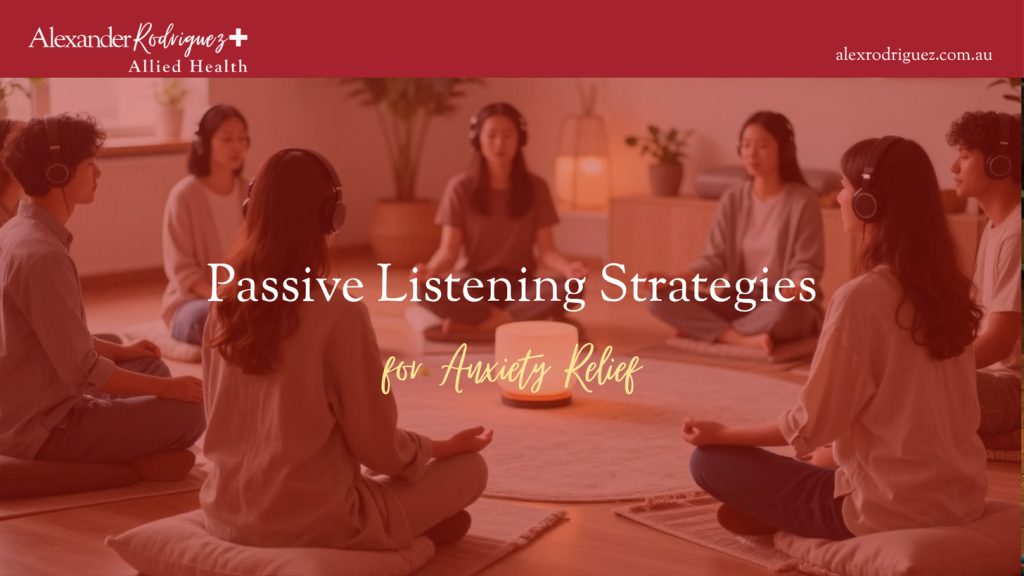
    Passive Listening Strategies for Anxiety Relief

    Music therapy can support your well-being through simple and intentional listening. You do not need to create music to feel the benefits. By choosing calming sounds and listening with purpose, you can gently guide your mind away from stress and toward relaxation. This approach helps your body slow down and gives you a break from constant mental pressure.

    Research shows that passive listening can play a strong role in stress management. Studies have found that nurses who listened to music experienced lower stress levels and reduced cortisol compared to those who rested without music. This shows how structured listening can offer real mental health support in everyday situations. Over time, this practice can help you feel more at ease, focused, and emotionally balanced.
    Curating Personalised Playlists for Emotional Regulation

    Building a collection of sounds that match your mood is caring for yourself. Choose songs that help you calm down from being too tense. Think about the song’s speed and how it makes you feel.

    Include both instrumental pieces and ambient sounds to block out daily stress. Regularly using music therapy can help your nervous system relax faster when you’re feeling stressed.

    Using Binaural Beats and Isochronic Tones

    There are special sounds like binaural beats and isochronic tones that can change your brainwaves. They help you relax deeply or focus better. These tools are great for those looking for a structured way to improve their mental health.

    Start with short sessions to see how you react to these sounds. Being consistent is important to get the most out of music therapy in your daily life.

    Technique Primary Benefit Best Use Case
    Classical Music Lowers heart rate Evening wind-down
    Binaural Beats Brainwave entrainment Deep focus or sleep
    Nature Sounds Reduces cortisol General stress relief
    Guided Music Therapy Emotional regulation Professional support

    Integrating Music Therapy into Daily Living Skills

    Music therapy can be a simple yet powerful way to make your everyday tasks more engaging and meaningful. By adding music to daily routines like getting ready, cooking, or organising your space, you create a sense of rhythm and structure that supports focus and motivation. These small changes can help you stay present and make tasks feel less overwhelming, especially when paired with practical therapy techniques that guide your actions and attention.

    With support from Occupational Therapy, music therapy can also help you build stronger daily habits and improve independence over time. This approach fits well within an Allied Health Service, giving you consistent mental health support while strengthening your ability to manage daily responsibilities. As you continue using music in your routine, it becomes a helpful tool for stress management, keeping you engaged, confident, and more in control of your everyday life.

    Using Music to Anchor Routine Building Support

    Starting a new habit can be tough, but music helps. Link a playlist to your morning or evening routine. Your brain gets used to it, making it easier to start your day.

    Choose songs that match your mood for the task. Fast songs for morning chores and slow ones for bedtime. This makes your day more predictable and comforting.

    Synchronising Music with Functional Skill Practice

    Music’s rhythm guides you when practising skills. It helps with cooking, organising, or exercises. This helps improve your coordination and focus.

    Matching your actions to the music makes tasks more fun. It also helps you see how far you’ve come. Your confidence will grow as you learn new things with music.

    Routine Type Musical Strategy Expected Outcome
    Morning Prep Upbeat, high-tempo tracks Increased alertness
    Skill Learning Steady, rhythmic beats Improved coordination
    Evening Wind-down Slow, ambient melodies Better emotional regulation
    Task Completion Instrumental focus music Higher task persistence

    The Role of Occupational Therapy in Mental Health Support

    Occupational Therapy plays an important role in supporting your overall well-being by focusing on how your daily environment, routines, and habits shape your mental health. It looks at the way you manage everyday tasks and helps you build practical skills to handle stress more effectively. By using structured therapy techniques, you can improve your ability to stay organised, adapt to challenges, and feel more in control. When combined with music therapy, this approach creates a balanced method that supports both emotional regulation and day-to-day functioning.

    As part of a comprehensive Allied Health Service, Occupational Therapy provides personalised mental health support that fits into your lifestyle. You learn how to create supportive routines, adjust your surroundings, and apply simple stress management strategies that make daily life easier. Over time, this helps you feel more confident, focused, and capable of handling life’s demands. This consistent support allows you to build a stable foundation for long term wellbeing and a healthier, more balanced life.

    How Alex Rodriguez Allied Health Approaches Holistic Care

    At Alex Rodriguez Allied Health, you are supported through a holistic approach that looks beyond symptoms and focuses on your overall well-being. By combining traditional care with evidence-based therapy techniques, including music therapy and Occupational Therapy, your support is tailored to suit your lifestyle, needs, and personal goals.

    This integrated Allied Health Service provides practical mental health support and effective stress management strategies that help you build lasting habits. The focus is on helping you feel balanced, confident, and in control, so you can experience real progress in your everyday life.

    • Personalised assessment of your daily routines.
    • Integration of creative arts to lower cortisol levels.
    • Collaborative planning to ensure your goals remain central.

    We offer mental health support that’s both professional and personal. We’re here to help you build a stronger, more peaceful life.

    Bridging the Gap Between Sensory Integration and Emotional Well-being

    Many face challenges due to sensory overload in today’s world. We aim to connect sensory integration with emotional control. This helps you find your balance.

    Our strategies are made for you to handle complex situations better. Knowing how your body responds to sensory input lets you change your daily life for the better.

    Discover how our occupational therapy can balance your life. With practice and guidance, you’ll get the tools for emotional stability.

    Cognitive and Behavioural Strategy Support Through Sound

    Music therapy uses sound as a practical tool to support how you think, feel, and respond to daily challenges. By applying simple therapy techniques, you can begin to shift negative thought patterns and manage emotional reactions more effectively. Sound helps your brain slow down, making it easier for you to move from feeling overwhelmed to feeling more balanced and in control. When combined with Occupational Therapy, this approach also supports better focus, routine building, and problem solving in everyday life.

    As part of an Allied Health Service, this method offers structured mental health support that you can apply in real situations. You learn how to use sound and rhythm as part of your stress management strategy, helping you stay grounded during difficult moments. Over time, these techniques give you the confidence to handle challenges with clarity a

    Reframing Negative Thought Patterns with Auditory Cues

    Negative thoughts can feel like a never-ending loop. Auditory cues can help break this cycle. Playing a chosen sound can stop your brain’s distress.

    This method shifts your focus from your worries to a calming sound. Over time, your brain links these sounds with calm. It’s a gentle way to reclaim your mental space without forcing positivity.

    Developing Mindfulness Anchors Using Musical Motifs

    Mindfulness anchors are short musical pieces for stressful times. By picking a melody or rhythm, you create a sensory anchor for calm. When tension rises, humming or listening to this motif can calm you down.

    Practice these motifs when you’re relaxed so they become natural. In stressful situations, your body will recognise the sound as a signal to relax. This proactive approach builds resilience and emotional stability over time.

    Strategy Primary Benefit Best Used For
    Auditory Interruption Stops negative loops Anxious rumination
    Musical Anchoring Promotes grounding High-stress moments
    Rhythmic Pacing Regulates heart rate Physical tension

    Customising Music Therapy for Chronic Condition Support

    Music therapy can play a valuable role in supporting you when you are living with a long term health condition. It offers a gentle and flexible way to manage both physical and emotional challenges through structured therapy techniques. Since every person’s experience is different, your care can be tailored to match your needs, preferences, and daily routine. When paired with Occupational Therapy, this approach helps you maintain independence, adapt to changes, and improve how you manage everyday tasks.

    As part of a personalised Allied Health Service, music therapy provides ongoing mental health support that fits naturally into your life. By adding music to your daily routine, you create a supportive space that encourages calm and stability. This also strengthens your approach to stress management, helping you cope with symptoms while improving your overall quality of life. Over time, these small and consistent changes can help you feel more in control, supported, and connected to your wellbeing.

    Adapting Techniques for Injury Recovery Support

    Recovering from an injury can feel challenging, especially when repeating the same exercises each day. By using structured therapy techniques, your sessions can be adjusted to keep you engaged, motivated, and focused on progress. Music therapy adds a supportive layer by helping you stay present and connected during movement, making each exercise feel more purposeful and less repetitive.

    When your movements are matched with rhythm and sound, it can improve coordination and reduce frustration. This approach, often used alongside Occupational Therapy, makes clinical exercises more enjoyable and easier to follow. As part of a broader Allied Health Service, this method also supports your stress management and builds confidence during recovery. With the right guidance, you can stay consistent, which is key to improving strength, movement, and overall well-being.

    Managing Pain and Stress Through Auditory Distraction

    Chronic conditions can make everyday life tough, especially with ongoing pain. Music can be a great auditory distraction to help you focus on something else. It engages your brain with calming sounds, which can lower stress hormones and ease your symptoms.

    Professional Guidance and Allied Health Service Integration

    Knowing when to seek extra support is an important step in taking care of your well-being. While self-help strategies like music therapy can be effective, there are times when professional guidance can help you move forward with greater clarity and confidence. Working with trained professionals allows you to access structured therapy techniques that are tailored to your needs, helping you better understand your challenges and build practical skills to manage them.

    By integrating an Allied Health Service into your routine, you receive consistent mental health support that focuses on long-term results. This approach often combines Occupational Therapy with personalised care to improve daily functioning and strengthen your approach to stress management. With the right support in place, you can feel more in control, make steady progress, and create a balanced routine that supports your overall well-being.

    When to Seek Support from a Qualified Occupational Therapist

    Wondering if you need outside help is normal. If daily tasks are hard or you struggle to manage your feelings, it’s time to seek help. A qualified occupational therapy expert can find out what’s holding you back.

    Looking for mental health support is wise if you’re tired all the time or find it hard to keep up with your usual activities. These signs mean you might need new ways to cope.

    Collaborative Goal Setting for Long-Term Mental Health

    At Alex Rodriguez Allied Health, your progress is treated as a shared journey where your thoughts, preferences, and goals are always at the centre. Through collaborative goal setting, you work closely with professionals to create a plan that feels right for you. This approach breaks down overwhelming challenges into smaller, practical steps, making it easier for you to build confidence and achieve steady, lasting growth.

    As part of a personalised Allied Health Service, your care plan is designed to grow and adapt with you over time. By combining Occupational Therapy with everyday routines, you receive consistent mental health support that helps you adjust to life’s changes. This ongoing guidance also strengthens your ability for effective stress management, allowing you to move forward with greater clarity, independence, and confidence.

    Feature Self-Management Professional Support
    Strategy Design Trial and error Evidence-based planning
    Accountability Personal motivation Structured check-ins
    Goal Clarity Subjective Collaborative and measurable
    Skill Building Independent research Guided clinical practice

    Getting Started with Alex Rodriguez Allied Health

    Starting your journey towards better wellbeing is a meaningful step in looking after yourself. At Alex Rodriguez Allied Health, you are supported with compassionate care that focuses on your needs, goals, and personal experiences. Through a combination of music therapy, therapy techniques, and Occupational Therapy, you are guided to build practical skills that improve your day-to-day life. This supportive approach helps you feel understood, respected, and confident as you begin making positive changes.

    As part of a trusted Allied Health Service, you receive personalised mental health support designed to help you manage challenges and move forward with clarity. The focus is on simple and effective stress management strategies that fit into your routine and support long-term progress. With the right guidance and a supportive environment, you can take this first step with confidence and begin creating a more balanced and fulfilling life.

    Accessing Our Range of Allied Health Services

    We have a wide range of allied health services to fit your needs. Whether you need help with moving around or doing daily tasks, our experts are ready to assist. We aim to give you practical help so you can live your life to the fullest every day.

    How to Book Your Initial Consultation Online

    Booking your first visit with us is easy and made to keep you comfortable. Just visit our online booking portal at https://www.alexrodriguez.com.au/booking/. This way, you can pick a time that fits your schedule perfectly.

    Contacting Our Team for Personalised Support

    If you have questions or want to learn more about our occupational therapy programs, just reach out. Call our friendly team at 0429 220 646. We’re always ready to offer the support you need to reach your health goals.

    Conclusion

    Music therapy is a powerful way to calm your nervous system and bring balance into your life. By using simple and effective therapy techniques, you can build stronger emotional awareness and improve your overall stress management. Even small changes in how you use sound each day can help you feel more relaxed, focused, and in control.

    Your path to better wellbeing is unique and deserves consistent care. With the support of an Allied Health Service, you can access personalised mental health support that adapts to your needs over time. Together with Occupational Therapy, these approaches help you build lasting habits, manage daily challenges, and create a more stable and confident future.

    Need a break from constant stress?

    Work with Alex Rodriguez to build calming routines that fit your life. Call 0429 220 646, email info@alexrodriguez.com.au, or book online today.

    FAQ

    How does music therapy at Alex Rodriguez Allied Health assist with anxiety and stress?

    At Alex Rodriguez Allied Health, we use proven therapy methods to tackle anxiety. We add sound to your life to help you grow emotionally. This approach supports your journey to better emotional health and personal growth.

    What is the biological connection between sound and my nervous system?

    Sound waves can change how your body works. Certain sounds can calm your brain by controlling your heart rate and breathing. This makes music a powerful tool for your mental health.

    How should I prepare my environment for the best therapeutic results?

    For stress relief, create a quiet, sensory-friendly space. We help you remove distractions and choose the right equipment for clear sound. This is key for achieving your relaxation goals.

    What are active music therapy techniques, and how do they help?

    Active music therapy involves using sound in a hands-on way, like drumming or humming. It stimulates your vagus nerve, helping you release tension. This gives you tools for quick emotional relief.

    Can passive listening really make a difference in my daily anxiety levels?

    Yes, it can. Passive listening helps keep you balanced all day. Personalised playlists and tools like binaural beats support your emotional balance.

    How can music be integrated into my daily living skills and routines?

    We use music to help you build routines. It helps you link sound with daily skills. This is part of our occupational therapy, helping you in everyday life.

    What makes the approach at Alex Rodriguez Allied Health unique for mental health?

    Our service looks at your whole care. We connect sensory integration with emotional wellbeing. Every session is made just for you, aiming for your personal growth.

    How does sound help in reframing negative thought patterns?

    We use music to help you focus on positive thoughts. Specific sounds help you change negative thoughts, building a stronger, more positive mindset.

    Can music therapy support me if I am managing a chronic condition or injury?

    Yes, we adapt our therapy for injury recovery and chronic pain. Sound helps distract you from pain, easing stress and discomfort.

    When is the right time to seek support from a professional occupational therapist?

    If stress or anxiety affects your daily life, it’s time to seek help. At Alex Rodriguez Allied Health, we work together to create a support plan that fits your long-term health goals.

    How do I get started with a consultation at Alex Rodriguez Allied Health?

    Starting is easy. Book your first consultation online. We’re here to support you, creating a plan for your personal growth and mental health.
  • Chronic Disease Management: The Multidisciplinary Allied Health Approach

    Chronic Disease Management: The Multidisciplinary Allied Health Approach

    Chronic disease affects many Australians, and understanding chronic disease is the first step towards taking control of your health. In Australia, chronic conditions such as heart disease, diabetes, and arthritis are responsible for nearly 9 in 10 deaths and account for a large share of illness and disability across the country. This means you or someone you know is likely living with a long-term condition that needs ongoing care rather than a one-off treatment.

    You are not alone in facing this challenge, yet managing ongoing health needs can still feel overwhelming. A structured chronic disease management plan gives you a clear path forward, helping you stay organised with treatment, appointments, and lifestyle changes while improving your overall quality of life.

    When you work with the right care team, you gain support from professionals such as your general practitioner, Allied Health providers, and specialists in areas like Occupational Therapy. This multidisciplinary approach ensures your physical, mental, and daily living needs are all addressed, not just your symptoms. Your GP plays a central role in coordinating care, while Allied Health professionals provide targeted support to help you stay independent and active. With consistent guidance and collaboration, you are better equipped to manage your condition, reduce complications, and move closer to your personal health goals.

    Living with Chronic Disease? Support Is Closer Than You Think

    Managing a long-term condition can feel overwhelming, even when you seem fine on the outside. At Alex Rodriguez, our Allied Health service is here to support your daily well-being and help you stay in control.

    Take the first step towards better chronic disease management

    [ Book Online ] | [ Call Now: 0429 220 646 ] [Email: info@alexrodriguez.com.au]

    Key Takeaways

    • Long-term health conditions account for the vast majority of global deaths.
    • A multidisciplinary team provides a more holistic approach to your care.
    • You are the centre of your own health journey and decision-making process.
    • Allied health professionals play a vital role in managing your daily symptoms.
    • Structured care plans help you regain confidence and improve your overall quality of life.

    Understanding the Role of Allied Health in Chronic Disease Management

    Understanding the role of Allied Health is essential when you are learning to live well with chronic disease. These professionals bring a wide range of specialised skills that support both your physical and emotional well-being. Chronic disease is not just about diagnosis; it is also about managing an ongoing condition that can affect your daily life. This is where a structured chronic disease management plan becomes important. It helps you stay organised, track your progress, and access the right services at the right time. With the guidance of your general practitioner, Allied Health professionals work together to ensure your care is consistent, personalised, and focused on improving your overall quality of life.

    A multidisciplinary approach means you are supported beyond just medical treatment. Allied Health services, such as Occupational Therapy, play a key role in helping you stay independent and engaged in your everyday activities. Occupational Therapy focuses on practical strategies that make daily tasks easier, safer, and more meaningful for you. At the same time, other Allied Health providers support your mental health, mobility, and lifestyle changes that are essential in long-term care. When all members of your team work closely with your general practitioner, your chronic disease management plan becomes more effective and easier to follow. This collaborative approach gives you the confidence, tools, and support needed to manage chronic disease and continue living a fulfilling life.

    Building Your Chronic Disease Care Plan with Your General Practitioner

    Your general practitioner is your first and most important point of support when managing chronic disease, helping you create a personalised chronic disease management plan that aligns with your health goals and daily needs, while coordinating access to essential Allied Health services such as Occupational Therapy so you can stay organised, improve your routines, and feel more confident and in control of your long-term wellbeing.

    How Allied Health Transforms Your Daily Health Experience

    This team effort changes how you see your health every day. They look beyond just symptoms. They aim to keep you active and connected with your community.

    Feature Traditional Medical Care Multidisciplinary Allied Health
    Primary Focus Diagnosis and medication Functional independence
    Care Approach Episodic consultations Ongoing capacity building
    Goal Setting Symptom reduction Improved daily living
    Team Structure General Practitioner Collaborative specialist network

    Adding allied health to your routine opens up more support. This team approach covers all aspects of your well-being. It helps you avoid big problems and live well at home.

    Consulting Your General Practitioner for a Care Plan

    Your journey in managing chronic disease often begins with a simple conversation at your local clinic. Your general practitioner plays a central role in understanding your condition, your lifestyle, and your goals for better health. When you discuss what a chronic disease is in relation to your own experience, your GP can guide you through the next steps with clarity and reassurance. One of the most important outcomes of this visit is creating a chronic disease management plan. This plan is not just a document; it is a personalised roadmap that outlines your treatment goals, ongoing care needs, and the support services required to help you stay well. It ensures that everyone involved in your care is aligned and working towards the same outcomes for your health and well-being.

    Having a structured chronic disease management plan also gives you access to a wider network of care, including subsidised Allied Health services through Medicare. This means support such as Occupational Therapy and other specialised care becomes more accessible and affordable. Your general practitioner will coordinate with your Allied Health team to make sure your treatment stays consistent and effective over time. This team-based approach allows you to focus on improving your daily life without the stress of managing everything on your own. Taking this first step helps you build a strong, supportive healthcare network that is tailored to your needs and designed to help you live well with chronic disease.

    Building Your Chronic Disease Care Plan with Your General Practitioner

    Your general practitioner is your first and most trusted point of support when managing chronic disease, helping you build a personalised chronic disease management plan that reflects your individual health needs, lifestyle, and long-term goals.

    This plan provides clear direction for your care, ensuring that every step, from treatment to follow-up, is organised and aligned with improving your overall wellbeing. Through this process, your GP also connects you with the right Allied Health services, including Occupational Therapy, so you can access practical support that improves your daily routines, independence, and quality of life. With ongoing guidance and regular reviews, this coordinated approach helps you stay on track, adapt to changes, and feel more confident and in control of your health journey.

    Assessing Your Needs with Functional Capacity Evaluations

    Understanding your day-to-day abilities is a key part of managing chronic disease effectively. Functional Capacity Evaluations give you and your care team a clear picture of your physical and mental strengths, and how your condition impacts your routine. When you explore what a chronic disease is in your own life, you begin to see how it influences not just your health, but your independence and daily activities. This assessment becomes a critical step in building your chronic disease management plan, as it provides real, evidence-based insights into what support you truly need. Working alongside your general practitioner and Allied Health team, these evaluations help ensure your care is tailored, practical, and focused on improving your overall wellbeing.

    Through this process, Allied Health professionals, including those specialising in Occupational Therapy, assess how you manage everyday tasks, your environment, and any barriers you may face. This detailed understanding allows your team to design a personalised chronic disease management plan that fits your lifestyle and goals. Instead of a one-size-fits-all approach, your care is built around real data and meaningful outcomes. With ongoing support from your general practitioner and allied health providers, these insights are turned into clear, actionable steps that help you stay independent, reduce complications, and improve your quality of life while living with chronic disease.

    Turning Assessment Insights into a Personalised Care Plan

    Your Functional Capacity Evaluation helps turn real insights into action. With support from your general practitioner and Allied Health team, including Occupational Therapy, these findings shape a clear chronic disease management plan that fits your daily life and helps you stay independent while managing chronic disease.

    Integrating Occupational Therapy Services for Daily Living

    Integrating Occupational Therapy into your care routine is a powerful step in managing chronic disease and improving your daily life. When you truly understand what a chronic disease is, you begin to see how it can impact everyday tasks, from simple routines to more complex activities. This is where Occupational Therapy plays a vital role within your chronic disease management plan. Working alongside your general practitioner and wider Allied Health team, occupational therapists assess what challenges you face and provide practical strategies to help you overcome them. Whether it is adjusting your home environment, improving mobility, or building strength, the focus is always on helping you regain control and independence in a way that suits your lifestyle.

    Occupational Therapy goes beyond physical support by helping you feel confident and capable in your everyday life. As part of your Allied Health care, therapists work with you to create personalised solutions that reduce strain, conserve energy, and make daily tasks safer and easier. These small but meaningful changes strengthen your overall chronic disease management plan, ensuring it is practical and sustainable over time. With ongoing guidance from your general practitioner and support from your Allied Health team, you gain the tools you need to manage chronic disease more effectively. This approach empowers you to live with greater independence, improve your well-being, and achieve a better quality of life.

    Building Independence Through Occupational Therapy Support

    With the support of Occupational Therapy, you can develop practical skills that make everyday tasks easier and more manageable. As part of your chronic disease management plan, this helps you stay independent while living with a chronic disease.

    Practical Strategies to Improve Daily Living

    Your Allied Health team uses Occupational Therapy to create simple, effective strategies that fit your routine. With guidance from your general practitioner, these changes support your well-being and help you manage chronic disease with greater confidence.

    Prioritising Mental Health and Emotional Wellbeing Support

    When you are living with a chronic disease, your emotional well-being plays a key role in how you manage your condition each day. As part of a structured chronic disease management plan, support from your general practitioner and Allied Health team helps you manage stress, stay motivated, and maintain a more balanced routine.

    With the right Allied Health support, including services like Occupational Therapy, you can build coping strategies that strengthen your confidence and improve your daily functioning. This integrated approach ensures your chronic disease management plan supports both your physical and emotional health, helping you stay consistent and in control while managing chronic disease.

    Key Psychosocial Support Areas for Improved Stability and Well-being

    Our team helps you build strength and find ways to cope that fit your life. Focusing on your mental health lets you take back control of your health journey. Here’s how different support areas help you stay stable.

    Support Focus Primary Benefit Expected Outcome
    Mental Health Allied Health Support Reduced anxiety Improved daily mood
    Emotional Wellbeing Support Stress management Greater resilience
    Holistic Care Planning Balanced recovery Long-term stability

    By adding these services, you build a strong base for your future. Your mental health matters as much as your physical health. We’re here to help you balance these needs for a more fulfilling life.

    Implementing Psychosocial Support Services for Long-term Stability

    Managing chronic disease goes beyond physical care; it also involves how you cope with everyday stress, relationships, and emotional well-being. When you begin to understand what a chronic disease is in your own life, you may notice its impact on your mental health and social connections. This is where psychosocial support becomes an important part of your chronic disease management plan. With guidance from your general practitioner and support from your Allied Health team, you can access services that focus on building resilience, improving coping strategies, and helping you stay on track with your health goals. This kind of support ensures that your care is holistic and addresses both the physical and emotional sides of living with a long-term condition.

    Through personalised support from Allied Health professionals, you are encouraged to develop confidence, manage stress, and stay connected to your community. Services such as counselling and lifestyle support work alongside interventions like Occupational Therapy to strengthen your ability to handle daily challenges. This integrated approach enhances your chronic disease management plan by making it more practical and sustainable over time. With regular input from your general practitioner and care team, you are better equipped to maintain stability, improve your overall well-being, and live a more balanced and fulfilling life while managing chronic disease.

    Key Areas of Psychosocial Support for Stability and Health

    The table below shows how these services help with your stability and health:

    Support Area Primary Benefit Expected Outcome
    Stress Management Reduces anxiety levels Improved daily focus
    Social Connection Combats isolation Stronger support network
    Resilience Building Enhances coping skills Long-term health stability
    Goal Setting Provides clear direction Increased personal confidence

    By making these services part of your life, you’re not just treating a condition. You’re investing in your future. We’re here to support every step you take. We tailor our approach to meet your unique needs and ensure your long-term success.

    Developing Essential Daily Living Skills

    Building strong daily living skills is an important part of managing chronic disease and improving your independence. When you truly understand what a chronic disease is in your day-to-day life, even the simplest tasks can start to feel unexpectedly demanding. This is why developing these skills is a core part of your chronic disease management plan. With guidance from your general practitioner and support from your Allied Health team, you can learn practical ways to manage routines, conserve energy, and stay in control of your health. This step focuses on helping you gain confidence so you can take an active role in your care and maintain a better quality of life.

    Through personalised strategies provided by Allied Health professionals, especially in Occupational Therapy, you can build habits that make daily life easier and safer. These may include adapting your home environment, simplifying tasks, or creating routines that reduce physical and mental strain. As part of your ongoing chronic disease management plan, these improvements are tailored to your specific needs and goals. With continued input from your general practitioner and care team, you are supported every step of the way. This approach helps you stay independent, overcome challenges, and live more confidently while managing chronic disease.

    Gaining Independence, Confidence, and Control in Daily Life

    Improving these skills is more than just doing chores; it’s about gaining personal independence. With targeted training, you can depend less on others and feel more valued. We think everyone should live with dignity and control.

    Skill Area Primary Benefit Therapeutic Focus
    Personal Hygiene Increased self-esteem Occupational therapy
    Meal Preparation Improved nutrition Energy conservation
    Home Organisation Reduced stress Environmental modification
    Financial Management Greater autonomy Cognitive support

    We’re dedicated to helping you reach your goals with consistent and compassionate support. By focusing on these key areas, you build a strong base for long-term health and well-being. Begin your path to more autonomy today by seeing how our services can help you.

    Leveraging NDIS Allied Health Support for Capacity Building

    Building independence while living with a chronic disease becomes more achievable with the right support through NDIS-funded Allied Health services. These supports are designed to help you develop practical skills for everyday life, so you can manage your condition with greater confidence. As part of your chronic disease management plan, NDIS services focus on long-term progress rather than short-term fixes. With guidance from your general practitioner and support from experienced providers in Allied Health, including Occupational Therapy, you can access care that is tailored to your personal goals and daily needs.

    NDIS funding allows you to invest in services that make a real difference to your wellbeing and independence. Your Allied Health team works closely with you to identify the supports that will have the greatest impact, from improving daily routines to building essential life skills through Occupational Therapy. When your NDIS supports align with your chronic disease management plan, every service contributes to your long-term stability and growth. With ongoing input from your general practitioner, you gain the tools, structure, and confidence to manage chronic disease more effectively and live a more independent and fulfilling life.

    Building Lasting Independence with Alex Rodriguez Allied Health Support

    At Alex Rodriguez Allied Health, we are committed to helping you build the essential skills and resources needed for a more independent and confident future. Through personalised Allied Health support, including Occupational Therapy, we help you make the most of your NDIS plan by turning it into a practical and goal-focused pathway. With guidance that aligns with your chronic disease management plan and support from your general practitioner, you can develop the tools, confidence, and structure needed to live well and achieve long-term independence.

    Focusing on Behaviour and Lifestyle Support

    Improving your daily habits is essential when managing chronic disease. As part of your chronic disease management plan, your general practitioner and Allied Health team work with you to identify behaviours that may be holding you back and replace them with positive, realistic habits that fit your lifestyle.

    With ongoing support, these changes become easier to maintain over time. Allied Health professionals help you stay consistent, build confidence, and take greater control of your health, making it easier to live well while managing chronic disease.

    Learning to manage yourself is a big part of this step. By making informed decisions daily, you take charge of your health. This change boosts your confidence and resilience.

    Building Confidence Through Daily Self-Management

    Changing your lifestyle can greatly reduce your chronic condition’s impact. Small changes can lead to significant improvements in your daily life. Focus on these areas for better health:

    • Nutritional awareness: Choose foods that fuel your body and meet your health needs.
    • Activity pacing: Find a balance between moving and resting to keep your energy up.
    • Sleep hygiene: Create routines for better sleep to improve physical and mental health.
    • Stress reduction: Use simple methods to handle daily stress and stay emotionally balanced.

    By focusing on these basics, you create a healthy environment for your body. Every positive choice you make helps build a stronger, healthier future. We’re here to help you make these changes a part of your daily life.

    Enhancing Community Participation Support

    Living with a chronic disease does not mean stepping away from the people and activities that matter to you. Staying connected to your community is an important part of your chronic disease management plan, as it supports both your mental and physical well-being. With guidance from your general practitioner and support from your Allied Health team, you can explore opportunities that match your interests, lifestyle, and goals. Whether it is joining local groups, attending events, or taking part in social activities, these experiences help you rebuild confidence and stay engaged in everyday life.

    Allied Health professionals work with you to reduce barriers that may prevent you from participating in your community. Through tailored strategies and support, they help you feel more comfortable stepping outside your routine and connecting with others. These social interactions play a key role in improving your overall well-being, giving you a sense of purpose and belonging while managing chronic disease. With the right support in place, you can remain active, build meaningful connections, and enjoy a more balanced and fulfilling life.

    Stay Active in Your Community with Alex Rodriguez Allied Health Services

    Alex Rodriguez Allied Health Services is here to help you stay active, independent, and connected while managing chronic disease. With support from your general practitioner and a personalised chronic disease management plan, you can access practical care such as Occupational Therapy that makes it easier to get out, engage in social activities, and enjoy your community. This ongoing support helps improve your wellbeing and confidence, so you can maintain a better quality of life.

    How to Connect with Alex Rodriguez Allied Health

    Reaching out for support is an important step in managing chronic disease and improving your well-being. After consulting your general practitioner, you can begin building a strong support network that works around your needs. With a personalised chronic disease management plan, you gain clear direction and access to the right services to help you stay on track. Alex Rodriguez Allied Health makes this process simple by guiding you through each step, ensuring you feel confident and supported from the very beginning.

    By connecting with us, you can access tailored services such as Occupational Therapy and other supports designed to suit your lifestyle. Working alongside your general practitioner, the Allied Health team helps turn your chronic disease management plan into practical, everyday actions. This coordinated approach ensures you receive consistent care, empowering you to manage chronic disease effectively while maintaining your independence and quality of life.

    Contacting the Team for Personalised Care

    Call Alex Rodriguez Allied Health at 0429 220 646 for personalised care. Our friendly team is eager to help you plan your care and answer any questions. If you prefer email, send a message to info@alexrodriguez.com.au to talk about your needs.

    Booking Your Initial Consultation Online

    Use our convenient online booking system to book your first consultation. Visit ouronline portal to book at a time that works for you. This easy process helps you keep moving forward after your general practitioner visit, starting your journey to stability today.

    Conclusion

    Managing chronic disease is an ongoing journey that requires the right balance of medical care, daily support, and personal commitment. By working closely with your general practitioner and building a strong Allied Health team, you can follow a structured chronic disease management plan that supports your physical, emotional, and social well-being. This team-based approach helps you stay organised, consistent, and confident in managing your health day to day.

    With support such as Occupational Therapy and other allied health services, you can build practical skills, improve independence, and create routines that truly fit your life. Small, consistent steps can lead to meaningful progress over time. With the right support system in place, you can take control of your health, improve your quality of life, and move towards a more stable and balanced future while living with a chronic disease.

    Living with Chronic Disease? Support Is Closer Than You Think

    Managing a long-term condition can feel overwhelming, even when you seem fine on the outside. At Alex Rodriguez, our Allied Health team is here to support your daily well-being and help you stay in control.

    ✨ Take the first step towards better chronic disease management

    [ Book Online ] | [ Call Now: 0429 220 646 ] [Email: info@alexrodriguez.com.au]

    FAQ

    What is chronic disease, and why does it require a multidisciplinary approach?

    A chronic disease lasts six months or more. It affects your life in many ways. A team of experts, including your GP and occupational therapists, work together to provide comprehensive care.

    How can I get a chronic disease management plan in Australia?

    Book a consultation with your GP to get a chronic disease management plan. They will assess your eligibility and create a plan. This plan helps you access Medicare rebates for allied health services.

    What happens during a Functional Capacity Assessment?

    A Functional Capacity Assessment evaluates your ability to do daily tasks. It helps us create a tailored support strategy. It’s often needed for NDIS support or specific occupational therapy.

    Can allied health professionals help with my mental health as well as physical health?

    Absolutely. Mental health support is crucial for managing chronic illness. We address the psychological impact of long-term conditions. This ensures a holistic treatment plan.

    How does Alex Rodriguez Allied Health assist with independent living?

    We focus on daily living skills and occupational therapy. This helps you maintain independence. We adapt your home and provide support to ensure you can live independently.

    Is community participation support included in my care?

    Yes, staying connected is vital for your well-being. Our community support strategies reduce isolation. They help you stay active and valued in your community.
  • The Allied Health Code of Conduct: Ethical Practice Explained

    The Allied Health Code of Conduct: Ethical Practice Explained

    Allied health plays a vital role in Australia’s healthcare system, supporting millions of people each year across a wide range of services and settings. In fact, national workforce data shows that there are around 300,000 allied health professionals delivering care across Australia in areas such as Occupational therapy, rehabilitation, and psychology services.

    When you understand what allied health is, you begin to see how these services work alongside doctors and nurses to improve your overall well-being. The AHPRA Code of Conduct guides professional behaviour, ensuring that every patient receives safe, respectful, and ethical care, whether in major cities or regional communities.

    As you explore different allied health specialties, you will start to recognise the meaningful benefits of allied health in your everyday life, from improving mobility through Occupational therapy to strengthening your emotional wellbeing with psychology services. The true importance of allied health becomes more evident as each allied health professional focuses on prevention, early support, and delivering personalised care that aligns with your unique goals and lifestyle. By understanding these services and the standards that guide them, you can take a more active role in your health journey, build stronger trust with your providers, and feel confident that your care is shaped by ethical principles designed to protect, support, and empower you.

    Looking for Allied Health Services Near You?

    Alex Rodriguez provides personalised occupational therapy and psychology services designed to support your daily wellbeing and emotional health.

    Connect with our allied health professionals for personalised Occupational therapy and psychology services designed just for you.

    Call 0429 220 646 | Email: info@alexrodriguez.com.au

    Book online today and start your journey towards better wellbeing!

    Key Takeaways

    • Professional standards help ensure your allied health care is always safe, respectful, and reliable.
    • Integrity and ethical practice shape every positive experience with an allied health professional.
    • Staying informed empowers you to build a stronger, more confident relationship with your provider.
    • Clear guidelines protect your rights and support fair, transparent care at every stage.
    • High-quality care depends on consistent commitment to recognised ethical frameworks.

    What is allied health, and why does a code of conduct matter?

    Allied health is a broad group of healthcare services delivered by trained allied health professionals who work closely with doctors and nurses to support your overall wellbeing. When you understand what allied health is, you can see how services like Occupational therapy, psychology services, and other allied health specialties help you recover from injury, manage health conditions, and improve your day-to-day life. These professionals focus on practical, personalised care that helps you stay independent, build skills, and achieve your health goals. The benefits of allied health include early support, tailored treatment plans, and ongoing care that meet your individual needs, underscoring the importance of allied health in Australia’s healthcare system.

    In Australia, the AHPRA Code of Conduct sets clear standards for how professionals must behave. AHPRA, the Australian Health Practitioner Regulation Agency, is the national organisation responsible for regulating health practitioners and ensuring they are properly qualified, safe, and accountable in their work. It oversees registration, manages complaints, and works to protect the public by enforcing strict ethical and professional guidelines. These standards include protecting your privacy, communicating clearly, and always acting in your best interest.. This means you can feel confident when accessing services like Occupational therapy or psychology services, knowing your care follows strict national guidelines. The importance of allied health is not just in the services provided, but in the trust built through ethical practice, helping you feel supported and respected at every step of your health journey.

    Defining the scope of allied health professionals

    The importance of allied health is huge. It covers many areas of medicine. Experts like physiotherapists, occupational therapists, and psychologists work with you. They make sure your treatment fits your life.

    They don’t just treat symptoms. They look at the whole person. Whether you’re recovering or managing a condition, they give you the tools to thrive. Their work helps you stay independent and live better.

    The role of the AHPRA code of conduct in your care

    Practitioners must follow the AHPRA code of conduct to ensure top care. This code is like a map for them. It makes sure every interaction is safe and respectful.

    Under this code, your practitioner treats you as an individual. They respect your privacy and dignity. This means your personal info is safe. By following the AHPRA code of conduct, your team puts your comfort first.

    How do ethical standards protect your rights as a patient?

    When you receive care from an allied health professional, ethical standards act as a strong foundation that protects your rights, safety, and well-being. These standards ensure that your personal information is kept private, your choices are respected, and your care is delivered fairly and professionally. For example, confidentiality is a key part of ethical practice, meaning your health details are not shared without your consent unless required by law. You also have the right to clear communication, so you can fully understand your treatment options and make informed decisions about your care. This is especially important across allied health specialties, where services such as Occupational therapy and psychology services often involve personal and sensitive information.

    Ethical standards also make sure you are treated with dignity and respect at all times. This includes being listened to, having your cultural background acknowledged, and being involved in decisions about your care plan. The AHPRA Code of Conduct guides allied health professionals to act in their best interest, avoid harm, and maintain professional boundaries. These rules create accountability, so if something goes wrong, there are clear processes in place to address concerns and protect you. Ultimately, ethical standards are more than just guidelines. They give you confidence, empower you to speak up, and ensure that your experience within allied health is safe, respectful, and focused on achieving the best possible outcomes for your health.

    Ensuring informed consent in every session

    Informed consent is key to your care. Before starting treatment, your practitioner must give you all the facts. This lets you make choices that are truly yours.

    You can always ask questions and get more information. Your consent is an ongoing conversation that respects your freedom. When you’re fully informed, you can help in your recovery with more confidence.

    Maintaining privacy and confidentiality in your records

    Your personal info is very sensitive. It’s a big responsibility for every practitioner to keep it safe. They make sure your records are only seen by those who need to know.

    We treat your health data with the utmost care and integrity. By following these rules, we make sure your patient rights are always protected. Here’s how these ethical standards support your care.

    Ethical Pillar Your Right Practitioner Duty
    Informed Consent To understand all treatment options Provide a clear, voluntary disclosure
    Confidentiality To keep personal data private Secure storage of all records
    Professionalism To receive respectful care Maintain high ethical standards

    What can you expect from your relationship with your practitioner?

    Your experience with allied health is built on a supportive and respectful partnership between you and your practitioner. From your first visit, you can expect your allied health professional to listen carefully, understand your needs, and involve you in every step of your care. Whether you are receiving Occupational therapy or psychology services, your treatment is designed to suit your goals, comfort, and daily life. This personalised approach highlights the real benefits of allied health, helping you improve your independence, confidence, and overall wellbeing.

    You can also expect your care to follow clear professional standards, guided by the AHPRA Code of Conduct. This means your privacy is protected, your choices are respected, and you are always treated with dignity. Good communication is a key part of this relationship, so you feel informed and confident in your decisions. This strong, ethical partnership reflects the true importance of allied health, ensuring you feel supported and safe while working towards better health outcomes.

    Building a foundation of trust and professional boundaries

    A strong therapeutic bond is built on trust, openness, and clearly defined limits. Your practitioner must set and uphold proper professional boundaries with you and others. These boundaries are crucial for safe and focused care.

    By setting these limits, your practitioner keeps the focus on your recovery and well-being. You can trust that your sessions are designed to protect your interests. This professionalism creates a safe space for you to work towards your health goals without distractions.

    The importance of clear communication in your treatment plan

    Open and honest talk is key to any successful treatment plan. Your practitioner should explain your care in simple terms. This way, you can actively contribute to your healing.

    Clear communication helps you stay on track with your goals and makes adjustments as needed. This openness makes you feel heard and valued. It’s a core benefit of allied health, empowering you to manage your health journey confidently.

    How does Alex Rodriguez Allied Health uphold these ethical values?

    At Alex Rodriguez Allied Health, your care is guided by a strong commitment to ethical practice and personalised support. As part of the allied health community, the team focuses on putting your needs first by delivering care that is respectful, transparent, and tailored to your goals. Every allied health professional takes the time to understand your individual situation, ensuring that services like Occupational therapy and psychology services are delivered in a way that feels safe, comfortable, and meaningful for you. This approach reflects the true benefits of allied health, where your well-being is always the top priority.

    The team also follows the standards set by the AHPRA Code of Conduct, which guides how care is delivered across all interactions. This means your privacy is protected, your voice is heard, and you are treated with dignity and respect at every stage of your journey. By combining professional accountability with genuine care, Alex Rodriguez Allied Health demonstrates the real importance of allied health, creating a supportive environment where you can feel confident, empowered, and fully supported in achieving better health outcomes.

    Our commitment to person-centred care

    You know your life best. Our team at Alex Rodriguez Allied Health listens to your concerns and tailors our methods to fit your needs. This way, you feel valued, respected, and in control of your recovery.

    Transparency in our service delivery and booking processes

    We build trust through clear communication and honesty. You’ll always know what to expect from your care, including the outcomes and treatment steps. We aim to make our services clear, making your experience as easy as possible.

    Our booking system is designed for your convenience. We give you transparent information about costs and availability, helping you make informed choices. Here’s how we’re different from others:

    Feature Standard Model Alex Rodriguez Allied Health
    Care Focus Condition-based Person-centred care
    Communication One-way instruction Collaborative dialogue
    Booking Complex and rigid Simple and transparent
    Goal Setting Practitioner-led Client-driven

    Navigating occupational therapy through an ethical lens

    When you begin your journey in allied health, especially through Occupational therapy, you are taking an important step towards improving your independence and quality of life. This process is not just about treatment; it is about understanding your personal goals, your daily challenges, and what truly matters to you. An allied health professional works closely with you to create a plan that supports your physical, emotional, and practical needs. This personalised approach highlights the real benefits of allied health, helping you build confidence, regain skills, and move towards a more comfortable and fulfilling lifestyle.

    Looking at allied health through an ethical lens means your care is always guided by respect, honesty, and your best interests. Every decision made during your therapy, including Occupational therapy, is centred around your comfort, safety, and informed choice. You are encouraged to ask questions, share your concerns, and be actively involved in your care. This ethical approach ensures that your voice is heard and that your journey feels supportive and empowering. It also reflects the true importance of allied health, where the focus is not only on recovery but on helping you live a life that feels easier, more meaningful, and rewarding every day.

    Daily living skills support and functional skill practice

    We guide you to move easily around your home and community. We break down big tasks into smaller steps. This helps you learn the functional skills you need every day. Our team supports you, whether it’s cooking or doing chores.

    Independence, routine building, and emotional regulation support

    Creating a routine helps you stay independent. We help you make a schedule that fits your energy and goals. We also help with emotional regulation to keep you grounded, even when things get tough.

    Cognitive, behavioural, and sensory integration strategies

    Our occupational therapy includes strategies for your mind and behaviour. We also use sensory integration to help you feel more comfortable. These methods aim to boost your well-being and help you succeed in different areas of life.

    Service Area Primary Goal Expected Outcome
    Daily Living Skill Acquisition Increased Autonomy
    Routine Building Consistency Reduced Stress
    Sensory Support Regulation Improved Comfort
    Cognitive Strategy Mental Clarity Better Decision Making

    Understanding the ethics of physical and recovery-based support

    Recovering your strength, movement, and independence through allied health requires more than just treatment; it needs a carefully planned and ethical approach. When you work with an allied health professional, your recovery plan is built around your personal goals, current abilities, and any limitations you may have. This is especially important in services like Occupational therapy, where your daily activities, routines, and environment play a key role in your progress. Ethical care ensures that you are not pushed beyond your limits, but instead supported at a pace that is safe, comfortable, and realistic for your situation. This approach reflects the true benefits of allied health, where your wellbeing always comes first.

    Ethical practice also ensures that every step of your recovery is guided by clear communication, respect, and informed decision-making. You are involved in setting goals, understanding your treatment, and making choices about your care. Across different allied health specialties, professionals use proven, evidence-based methods to support your progress while maintaining high standards of care. This focus on ethical support highlights the importance of allied health, as it not only helps you recover physically but also builds your confidence and trust in the process, making your journey towards better health more effective and empowering.

    Strengthening, mobility, and injury recovery support

    We see recovery as a team effort between you and your healthcare provider. We use evidence-based strengthening to help you get back to doing what you love. Our focus is on your safety and progress, whether it’s from a new injury or long-term challenges.

    Our team focuses on personalised rehabilitation for effective healing. We watch your progress and adjust your program as needed. This approach ensures you’re always safe and on a path to recovery.

    Managing chronic conditions and home or work function

    Dealing with a chronic condition means making daily life adjustments. We offer dedicated support to keep you independent at home or work. By combining different allied health specialties, we make your daily tasks simpler.

    We aim to give you the confidence to move through your environment easily. We consider your unique situation to make our care practical and effective. Your ability to function well in your space is how we measure our success.

    Ethical considerations in mental health occupational therapy

    When you seek support for your mental wellbeing through allied health, you deserve care that prioritises your safety, dignity, and personal story. Working with an allied health professional in areas like Occupational therapy or psychology services means more than just treatment; it involves building trust and feeling understood. Ethical care ensures that your experiences, background, and emotions are respected, and that you are supported in a way that feels safe and comfortable. This approach reflects the true benefits of allied health, where your mental health journey is guided with empathy, patience, and genuine care.

    An ethical approach also means clear communication, confidentiality, and mutual respect throughout your care. You should always feel heard, never judged, and fully involved in decisions about your treatment. In allied health, especially within mental health support, this creates a positive environment where you can openly express yourself and work towards meaningful progress. This highlights the importance of allied health, as it not only focuses on improving your mental well-being but also ensures that your care experience is built on kindness, honesty, and professional responsibility every step of the way.

    Providing safe and supportive mental health interventions

    Your safety is the basis of every session we have. We think a secure environment is key for you to face your challenges and find ways to cope. Our team follows strict rules to show respect and support for your vulnerability.”

    We keep professional boundaries clear to empower you. We use evidence-based practices that respect your dignity and help you feel calm and stable every day.

    Tailoring support to your unique life circumstances

    Every journey is different, so we don’t offer the same thing to everyone. We listen to your story, goals, and challenges. This personalised approach lets us tailor occupational therapy just for you.

    We help you learn the skills to manage your mental health. Whether it’s dealing with stress or improving your daily life, we aim to offer tailored support that honours your uniqueness. By focusing on your strengths, we help you feel more confident and clear in your daily activities.

    The ethical framework behind our psychology services

    At Alex Rodriguez Allied Health, your mental well-being is supported through a strong ethical foundation that guides every part of our allied health approach. Our allied health professionals are committed to delivering psychology services with empathy, respect, and professionalism, ensuring you feel safe and understood from your very first session. We follow clear standards that prioritise your privacy, protect your personal information, and ensure every interaction is built on trust. This reflects the real benefits of allied health, where your care is tailored to your needs and delivered with genuine compassion.

    Seeking support can feel like a big step, which is why we focus on creating a space where you feel heard, valued, and supported. Our team uses evidence-based methods while always considering your comfort and personal experiences. You are involved in your care decisions, and your goals guide the direction of your journey. This approach highlights the true importance of allied health, as it not only supports your mental health but also builds confidence and trust, helping you move forward with clarity and strength.

    General psychology therapy and individual session standards

    We provide general psychology therapy that fits your needs in a private space. Each session is a safe place to talk about your struggles. Our team follows strict rules to keep your therapy experience honest and effective.

    Here’s what you can count on from us:

    • Evidence-based interventions that really work.
    • A place where you’re not judged and your voice is heard.
    • Clear goals to track your progress.
    • Your privacy is protected by law.

    Supporting your journey through stress, anxiety, and depression

    Life can be tough, and we’re here to help you through stress, anxiety, and depression. We aim to teach you effective coping strategies to handle these challenges. Together, we’ll explore your thoughts and build your strength.

    We believe everyone deserves top-notch care that understands their life. Whether you’re facing a tough time or dealing with ongoing mental health issues, our psychology services offer the help you need. You’re not alone, and we’re here to help you find your way.

    How we approach trauma and emotional regulation ethically

    At Alex Rodriguez Allied Health, your healing journey is supported through a compassionate and ethical allied health approach that puts your safety, comfort, and trust first. We understand that trauma can affect how you think, feel, and respond to everyday situations, which is why every allied health professional in our team takes the time to truly listen and understand your experience. Whether you are accessing psychology services or Occupational therapy, your care is personalised to suit your emotional needs and pace. This reflects the real benefits of allied health, where your wellbeing is supported through respectful, tailored care that focuses on helping you feel safe and in control.

    Our ethical approach means creating a supportive space where you can express yourself openly without fear of judgment. We prioritise clear communication, informed choices, and emotional safety at every step of your journey. You are encouraged to move forward at a pace that feels right for you, with techniques that support emotional regulation and long-term resilience. This highlights the true importance of allied health, as it not only supports recovery from trauma but also helps you build confidence, stability, and a stronger sense of wellbeing in your daily life.

    Trauma-informed care practices for your safety

    Our team uses trauma-informed care in all treatments. This means we always put your safety first, making sure you never feel too much during sessions.

    We work hard to make our environment predictable and open. With trauma-informed care, we help you feel in control. This is key when dealing with the effects of tough times.

    Fostering mental clarity and resilience in therapy

    Helping you manage your emotions is a big part of what we do. We give you tools to handle strong feelings, helping you find balance in your life.

    Our sessions aim to improve your mental clarity and build long-term resilience. You’ll learn to spot your triggers and find healthy ways to cope, tailored to you.

    We’re here to support you through these tough times. With our trauma-informed care, you can focus on growing, knowing we’re here to help you every step of the way.

    How to reach out to Alex Rodriguez Allied Health for support

    Starting your journey with allied health can feel like a big step, but reaching out for help should be simple and stress-free. At Alex Rodriguez Allied Health, we make it easy for you to connect with a caring allied health professional who understands your needs and is ready to support your goals. Whether you are looking for guidance through Occupational therapy or support with psychology services, our team is here to listen, guide, and create a plan that works for you. This reflects the true benefits of allied health, where your care is designed around your comfort and well-being from the very beginning.

    We focus on making every interaction welcoming and supportive, so you feel confident taking that first step. You can contact our team directly to ask questions, book an appointment, or learn more about how we can help. Our approach is built on respect, clear communication, and personalised care, showing the real importance of allied health in helping you move forward with confidence. No matter where you are in your journey, you will be supported every step of the way.

    Contact our team for your initial consultation

    Got questions about our services or need to talk about your health? Our friendly team is here to listen. Just reach out to start planning your care.

    • Phone: Call us on 0429 220 646 to talk to our staff.
    • Email: Send your questions to info@alexrodriguez.com.au, and we’ll reply quickly.

    Using our online booking system for your convenience

    We know your time is precious. That’s why our online booking system gives you the flexibility you need.

    Visit our website at https://www.alexrodriguez.com.au/booking/ to see when we’re free. Book anytime, day or night, to fit your schedule.

    Contact details and service availability

    Plan your visit with our contact info and hours below. We’re excited to help you on your health journey.

    Contact Method Details Availability
    Phone Support 0429 220 646 Business Hours
    Email Support info@alexrodriguez.com.au Mon – Fri
    Online Booking Website Portal 24/7 Access

    Conclusion

    Ethical standards are central to quality care in allied health, ensuring your experience is built on trust, respect, and professionalism. Every allied health professional is guided by clear principles that focus on your wellbeing, whether you are accessing Occupational therapy, psychology services, or other allied health specialties. Your care should always reflect your goals, preferences, and comfort, which highlights the true benefits of allied health in supporting meaningful and lasting improvements in your daily life.

    Your rights as a patient remain the top priority, supported by the AHPRA Code of Conduct, which ensures your privacy is protected and your voice is respected at every step. This commitment reflects the real importance of allied health, creating a safe and supportive space where you can heal, grow, and feel empowered in your decisions. You deserve care that listens, understands, and adapts to your needs, helping you move forward with confidence and achieve better health outcomes.

    Alex Rodriguez provides personalised occupational therapy and psychology services designed to support your daily wellbeing and emotional health.

    Connect with our allied health professionals for personalised Occupational therapy and psychology services designed just for you.

    Call 0429 220 646 | Email: info@alexrodriguez.com.au

    Book online today and start your journey towards better wellbeing!

    FAQ

    What is allied health, and why is it important for my recovery?

    Allied health professionals help with movement, mental health, and independence. They work outside of medicine and nursing. Their holistic approach supports your recovery and improves your life quality.

    How does the AHPRA code of conduct protect me during my sessions?

    The AHPRA code ensures practitioners act with integrity and ethics. This means your care is safe, professional, and transparent. It guarantees your practitioner meets national standards for your wellbeing.

    What can I expect regarding privacy and informed consent?

    Your privacy and informed consent are our top priorities. We ensure you understand your treatment options before starting. We also keep your personal information confidential, following Australian privacy laws.

    How does occupational therapy assist with daily living and emotional regulation?

    Occupational therapy helps you develop daily living skills. At Alex Rodriguez Allied Health, we use strategies to improve independence. Our OT services also support emotional regulation, helping you manage stress and triggers.

    What are the benefits of allied health for physical rehabilitation and chronic disease management?

    Allied health offers focused expertise in physical rehabilitation and chronic disease management. Our team provides personalised strategies to improve function and resilience. This helps you stay active and independent.

    How are psychology services delivered ethically at Alex Rodriguez Allied Health?

    Our psychology services are trauma-informed and ethical. We offer individual sessions for stress, anxiety, and depression. We create a safe environment for you to build mental clarity and resilience.

    What does person-centred care mean for my treatment plan?

    Person-centred care makes you the expert in your life. At Alex Rodriguez Allied Health, we tailor your treatment plan to your goals and values. We ensure transparency in our services.

    How do I book an initial consultation with your team?

    Booking an initial consultation is easy. Call 0429 220 646 or email info@alexrodriguez.com.au to discuss your needs. You can also book online at https://www.alexrodriguez.com.au/booking/ at a time that suits you.
  • Psychologist vs. Psychiatrist: Who Treats Mental Health?

    Psychologist vs. Psychiatrist: Who Treats Mental Health?

    Psychologists play a key role in supporting your mental health across Australia, where mental health concerns are increasingly common. According to the Australian Institute of Health and Welfare, around 1 in 5 Australians (about 22% or 4.3 million people) experience a mental disorder each year. This highlights the growing need for accessible care and support across the country.

    When you begin exploring your options, the psychiatrist vs psychologist question often comes up, especially when you are trying to understand what type of care suits your situation best. Both a psychiatrist and a psychologist focus on improving your emotional well-being, but they offer different types of treatment through a range of mental health services and allied health services. Knowing how these roles differ can make your journey clearer and help you feel more confident about reaching out.

    As you explore available psychology services, you will find that a psychologist typically works with you through structured conversations and practical strategies to manage stress, anxiety, and other challenges. In contrast, a psychiatrist is a medical specialist who can assess more complex conditions and prescribe medication when needed. This distinction is at the core of the psychiatrist vs psychologist comparison, and it can guide you in choosing the right support based on your needs. By understanding how both professionals contribute to mental health services and broader allied health services, you can take a more informed step toward improving your emotional well-being and building a support system that works for you.

    At Alex Rodriguez Allied Health, our psychology services are here to support your emotional well-being with personalised, caring guidance. Call 0429 220 646, book online or email info@alexrodriguez.com.au to access trusted mental health services today.

    Key Takeaways

    • Psychiatrists are medical doctors who can prescribe medication for mental health conditions.
    • A psychologist primarily uses evidence-based talk therapy to support your emotional well-being.
    • Both professionals work together to provide comprehensive care for your specific needs.
    • You should consider your symptoms and goals when deciding which expert to visit first.
    • Your GP is the best starting point for a referral to the right mental health professional.

    Understanding the Core Differences in Mental Health Care

    Choosing the right support for your mental health can feel confusing, especially when comparing a psychologist and a psychiatrist. While both are trained to support your emotional well-being, they play different roles within mental health services and broader allied health services. A psychologist focuses on psychology-based approaches like talk therapy and behaviour strategies, helping you understand your thoughts, feelings, and patterns practically.

    On the other hand, a psychiatrist is a medical doctor who specialises in diagnosing and treating complex mental health conditions, often using medication when needed. This is where the psychiatrist vs psychologist difference becomes clear. Both professionals offer valuable psychological services and support, but their methods and training vary. Understanding these core differences can help you choose the right path and feel more confident in your mental health journey.

    The Role of a Psychiatrist in Medical Treatment

    A psychiatrist is a doctor who deals with mental health. They look at your whole health, not just your mind. They check how your body’s health affects your mind.

    The Scope of Practice for a Psychologist

    Psychology focuses on talking therapies and understanding behaviour. A psychologist doesn’t give out medicine. They use talk to help you deal with emotions.

    They help you change negative thoughts and find ways to cope. This approach helps you manage stress and feelings. Sometimes, seeing a doctor and a psychologist together works best.

    Training and Qualifications Explained

    Becoming a psychologist or a psychiatrist in Australia requires years of dedicated study, clinical training, and supervised practice. While both professionals work within mental health services to support your wellbeing, their education pathways are quite different. A psychologist typically completes an undergraduate degree in psychology, followed by honours and postgraduate training such as a Master’s or Doctorate. They also complete supervised placements to build practical skills in assessment, therapy, and behavioural support before they can practise independently.

    A psychiatrist, on the other hand, begins their journey in medicine. They complete a medical degree, followed by several years of hospital-based training, and then specialise in mental health through further psychiatric training. This medical background allows a psychiatrist to assess both the physical and psychological aspects of mental health conditions. Understanding the psychiatrist vs psychologist difference in training helps you see the level of expertise each brings, and how their unique qualifications shape the type of care and treatment you receive.

    Medical School and Specialisation for Psychiatrists

    A psychiatrist is a doctor who has studied hard to treat mental health issues. It takes 8 to 10 years of study after medical school.

    First, they earn an MD or DO degree. Then, they do a long residency program. This training lets them prescribe medicine and handle physical health issues that affect the mind.

    Academic Pathways and Clinical Training for Psychologists

    Psychology looks at human behaviour, emotions, and thinking. Psychologists get a PhD or PsyD, diving deep into psychology theories.

    Their training focuses on helping you through talk therapy and behaviour changes. Key differences in their training include:

    • Psychiatrists: Focus on medical training, neurobiology, and pharmacological interventions.
    • Psychologists: Focus on psychological assessment, human development, and therapeutic communication.
    • Clinical Scope: Both need to keep learning to stay registered in Australia.

    Choosing the right professional means your care fits your needs. Whether you need medical help or therapy, both paths show a deep commitment to your health.

    How a Psychologist Can Support Your Emotional Well-being

    Working with a psychologist can make a real difference to your emotional wellbeing, especially when life feels overwhelming. Through professional psychology services, you are given a safe, private space to talk openly about what you are experiencing without judgment. This supportive environment helps you better understand your thoughts, emotions, and behaviours, making it easier to manage stress, anxiety, and everyday challenges.

    A psychologist uses evidence-based approaches within mental health services to guide you toward practical coping strategies and healthier thinking patterns. Over time, this support can help you build resilience, improve relationships, and feel more in control of your life. Whether you are dealing with short-term stress or ongoing concerns, psychology-based care focuses on giving you the tools you need to move forward with confidence.

    Evidence-Based Approaches to Therapy

    Today’s psychology uses tested methods to tackle tough emotions. Therapists are trained in various techniques, like Cognitive Behavioural Therapy (CBT), psychoanalytic therapy, and Dialectical Behaviour Therapy (DBT).

    These methods are custom-made for you. Your therapist uses evidence-based tools to find the source of your problems. This ensures you get care that works and is backed by science.

    The Focus on Behavioural and Cognitive Patterns

    Understanding your thoughts and actions is key. Sometimes, we get stuck in unhelpful cycles without noticing. With psychology, you can spot these patterns and swap them for better ones.

    By looking at your thoughts and actions, you grow stronger. You learn practical skills to manage your emotions better. This journey helps you live a more balanced and rewarding life, boosting your emotional well-being in the long run.

    When to Consider Seeing a Psychiatrist

    There are times when seeing a psychiatrist becomes an important step in managing your mental health. If your symptoms are ongoing, feel intense, or begin to affect your daily life, work, or relationships, it may be worth seeking medical support. While many concerns can be addressed through psychology and talk-based approaches, some conditions require a deeper clinical assessment and treatment within specialised mental health services.

    A psychiatrist can help when symptoms such as severe anxiety, depression, mood changes, or sleep issues become difficult to manage on your own or with therapy alone. As a medical doctor, they can assess your overall health and consider whether medication or a combined treatment approach would be beneficial. Understanding the psychiatrist vs psychologist difference can guide you in recognising when additional support is needed, helping you take the right step towards improving your emotional wellbeing.

    Managing Complex Mental Health Conditions

    A psychiatrist is a doctor who focuses on serious mental health problems. They can look at both your mental and physical health.

    They check how your body affects your mind. This is key for treating serious conditions that need a doctor’s diagnosis and care.

    The Role of Medication Management

    Seeing a psychiatrist is often for managing medicines. As doctors, they can give and check medicines to help your mood or thinking.

    Your psychiatrist will help pick the right medicine for you. They’ll keep an eye on how it works and change it if needed. This helps you feel better and live a better life.

    The Importance of Choosing the Right Mental Health Professional

    Choosing the right support for your mental health is a personal and important decision. Whether you are considering a psychologist or a psychiatrist, the focus should be on finding someone you feel comfortable with and trust. Both professionals play valuable roles in mental health services, but your needs, preferences, and the type of support you are seeking will guide the right choice. Understanding the difference between a psychiatrist and a psychologist can make it easier to decide which approach suits your situation.

    A strong connection with your provider can make a big difference in your progress and overall emotional well-being. A psychologist may be ideal if you are looking for structured support through psychology-based strategies and ongoing conversations. At the same time, a psychiatrist may be more suitable for complex conditions that require medical input. Taking the time to choose the right professional ensures you receive care that aligns with your goals and helps you feel confident in your mental health journey.

    Assessing Your Personal Needs and Goals

    Before you book an appointment, think about what you want to achieve. Do you need a diagnosis, help with medication, or a place to talk about your behaviour? Knowing what you need helps you find the right allied health service.

    Ask yourself these questions when looking for a provider:

    • Does their area of expertise match my challenges?
    • Do I feel heard and respected when we first meet?
    • Is their treatment approach something I value?

    Navigating the Australian Allied Health System

    The Australian healthcare system can seem complex, but you don’t have to face it alone. Talking to your General Practitioner is a good start. They can refer you to the right care for your needs.

    Choosing between a psychiatrist vs psychologist is not a permanent choice. You can always seek a second opinion or change providers if needed. Empowerment comes from knowing you’re in charge of your health journey.

    Exploring Psychology Services at Alex Rodriguez Allied Health

    At Alex Rodriguez Allied Health, you will receive personalised psychology services designed to support your unique needs and improve your emotional wellbeing. Our approach helps you better understand the psychiatrist vs psychologist difference, so you can make informed decisions about your care. With guidance from an experienced psychologist, you will develop practical skills through evidence-based psychology methods, delivered within trusted mental health services and allied health services.

    We provide a supportive and confidential space where you can openly discuss your goals and challenges. While a psychiatrist may be involved in more complex medical treatment, our focus is on high-quality psychology services that help you build resilience, manage stress, and take meaningful steps towards better emotional well-being through professional mental health services.

    Our Commitment to Personalised Care in Parramatta

    We’re committed to compassionate care that respects your unique background. Our team knows that everyone’s journey is different. That’s why we use evidence-based strategies for you.

    We focus on your specific needs to make our psychology services effective. We aim to create a space where you feel heard, valued, and empowered to make positive changes.

    How Our Team Supports Your Mental Health Journey

    Our professionals work with you to understand your mental health with empathy. We believe everyone deserves quality care to overcome obstacles and build lasting resilience.

    Looking for clarity or tools to manage stress? Our team is here to guide you. We make our psychology services part of your life in a way that feels manageable and personal.

    Common Areas of Support for Your Mental Health

    Finding the right support is essential for improving your emotional well-being. Through tailored psychology services, a psychologist can help you understand your thoughts, feelings, and behaviours using proven psychology approaches. This support is especially helpful when you are unsure about the psychiatrist vs psychologist choice and want practical strategies to manage stress, anxiety, and everyday challenges.

    Our mental health services commonly support concerns such as depression, low confidence, relationship issues, and life transitions. In some situations, a psychiatrist may be involved if additional medical care is needed. Understanding the psychiatrist vs psychologist difference helps you access the right level of care, while ongoing psychology services focus on building long-term resilience and strengthening your emotional well-being.

    General Psychology Therapy and Individual Sessions

    We think everyone deserves a personalised approach to their mental health. Our individual therapy sessions offer a safe, private space. Here, you can talk about your thoughts and feelings without fear of judgment.

    These sessions are made just for you. Our team works closely with you to provide the practical tools you need. Whether you’re looking for clarity or personal growth, our psychology services are here to help.

    Specialised Support for Stress, Anxiety, and Depression

    Life can sometimes feel too much to handle. It’s okay to seek help when you’re struggling. We offer specialised support for those dealing with stress, anxiety, and depression.

    Our clinicians use proven strategies to help you manage your symptoms. We focus on your unique situation to build your resilience. If you’re ready to move forward with confidence, reach out to our team today. Let’s talk about how our psychology services can support your recovery and wellbeing.

    Building Resilience and Emotional Regulation

    Building inner strength is essential for maintaining your emotional well-being, especially when life feels unpredictable or stressful. Working with a psychologist through structured psychology services can help you develop practical skills to manage your emotions, respond calmly to challenges, and regain a sense of control. These evidence-based psychology approaches focus on helping you recognise triggers, understand your reactions, and apply healthier coping strategies in everyday situations.

    Through consistent support within mental health services, you can gradually build resilience and improve how you respond to difficult experiences. While the psychiatrist vs psychologist choice may depend on your needs, a psychologist plays a key role in helping you strengthen emotional regulation over time. This ongoing support allows you to face challenges with greater confidence and maintain long-term emotional well-being.

    Techniques for Mental Clarity and Resilience

    Getting mental clarity can be hard when life gets busy. We offer evidence-based strategies to clear your mind and focus on what’s important. These methods help you see things clearly and build resilience for the future.

    We focus on habits that keep your emotional well-being strong over time. You’ll learn to spot triggers and use mindfulness to stay sharp and steady. Here are some key areas to focus on:

    • Developing healthy coping mechanisms for high-stress situations.
    • Practising mindfulness to improve daily focus and decision-making.
    • Reframing negative thought patterns to build long-term mental toughness.

    Developing Tools for Emotional Regulation

    Learning to manage stress is a powerful skill. We help you create a personal toolkit for emotional regulation. This way, you can handle intense feelings without feeling overwhelmed. It’s crucial for your emotional well-being.

    Understanding your emotions gives you the power to choose how you react. Our team guides you in turning these insights into lasting habits. With these tools, you can handle life’s challenges with more composure and inner peace.

    Addressing Relationship and Family Dynamics

    Your relationships play a major role in your overall emotional well-being, but they can also become a source of stress when communication breaks down or expectations are not met. Working with a psychologist through guided psychology services gives you a safe and supportive space to openly explore these challenges. Using proven psychology approaches, you can better understand patterns in your relationships, improve communication skills, and learn how to manage conflict more healthily.

    Through professional mental health services, you can address concerns such as family tension, relationship stress, and ongoing communication issues without fear of judgment. When considering the psychiatrist vs psychologist difference, a psychologist is often the right choice for building stronger interpersonal skills and emotional awareness. This support helps you create more balanced, respectful, and fulfilling relationships while strengthening your long-term emotional well-being.

    Navigating Relationship Issues with Professional Guidance

    Every relationship faces challenges, but you don’t have to face them alone. Our team provides specialised support to find the source of conflicts and improve communication. This helps you resolve long-standing issues and build a stronger connection.

    Working with a professional helps you develop healthier connection patterns. You’ll learn to express your needs and listen to your partner’s views. This is key to building a strong bond that can handle life’s ups and downs.

    Strategies for Managing Family Stress

    Family life is complex, and stress can spread quickly. Whether it’s due to big changes or ongoing disagreements, a structured approach can help. We offer practical tools to manage stress effectively.

    To create a supportive home, start with small, consistent changes in how you handle conflicts. Our strategies help you move from reacting to mindful communication. By doing this, you can reduce tension and make sure everyone feels valued and heard.

    Challenge Type Common Symptom Professional Strategy
    Communication Breakdown Frequent misunderstandings Active listening exercises
    Conflict Resolution Recurring arguments De-escalation techniques
    Life Transitions Increased household stress Collaborative goal setting
    Emotional Distance Lack of intimacy Building shared experiences

    Trauma and Self-Esteem Building

    Reclaiming your sense of self after tough times is a brave step. It’s normal to feel lost when dealing with past hurts. But you don’t have to face it alone. Our clinic offers dedicated support to guide you through these challenges.

    Healing from trauma and boosting self-esteem are key to finding your purpose again. By focusing on your emotional health, you can overcome old hurdles. We aim to make your journey safe, respectful, and focused on your growth.

    Healing Through Trauma-Informed Care

    Trauma-informed care creates a safe space for you to heal at your own pace. It acknowledges how past experiences shape you today. Our goal is to ensure your emotional safety above all.

    In a supportive environment, you can learn to manage your emotions better. This isn’t about reliving the past but understanding your reactions. You’ll get the tools to find stability in your life.

    Empowering Yourself Through Self-Esteem Building

    Building self-esteem is crucial in your recovery. It helps you see yourself with more kindness and confidence. When trauma hits, self-doubt can creep in. Our services help you challenge these negative thoughts and find self-worth.

    We help you discover your strengths and values, the foundation for growth. As you develop these skills, you’ll see better relationships and stress management. Embracing your potential is a powerful way to reclaim your identity and live a more fulfilling life.

    Service Type Primary Focus Expected Outcome
    Trauma Support Safety and Processing Increased emotional stability
    Self-Esteem Building Confidence and Identity Improved self-worth
    Integrated Care Holistic Wellbeing Long-term resilience

    Accessing Support at Alex Rodriguez Allied Health

    If you are looking for trusted allied health services that focus on your emotional well-being, our team is here to make the process simple and supportive. We understand that reaching out for help can feel like a big step, which is why our mental health services are designed to be welcoming, confidential, and tailored to your needs. With guidance from a qualified psychologist, you can access personalised psychology services that help you feel heard and understood.

    Our approach also supports you in understanding the psychiatrist vs psychologist difference, so you can feel more confident about your care. Through consistent support and evidence-based psychology methods, our psychology services are focused on helping you build resilience, manage challenges, and improve your overall emotional well-being.

    How to Book Your Initial Consultation

    Getting started with the right psychology services is easy. To book your first appointment, simply call 0429 220 646 or enquire online. Our friendly team will help you organise your consultation and answer any questions you may have about our mental health services and allied health services. We are here to support your emotional well-being with care that is personalised, practical, and focused on helping you move forward with confidence.

    Conclusion

    Choosing between a psychologist and a psychiatrist is an important step towards improving your emotional well-being. By understanding the psychiatrist vs psychologist difference, you can feel more confident in selecting the support that best suits your needs. Whether you benefit from talk-based psychology services or require more specialised care from a psychiatrist, taking action is a positive move towards better mental health. Accessing the right mental health services can make a meaningful difference in how you manage challenges and build a more balanced life.

    Looking after your mental health is an essential part of self-care, and reaching out for support shows strength and awareness. With the right allied health services, you can develop the skills and resilience needed to handle life’s ups and downs. Ongoing psychology services guided by a qualified psychologist can help you build confidence, improve coping strategies, and maintain long-term emotional well-being, leading you towards a healthier and more stable future.

    At Alex Rodriguez Allied Health, our psychology services are here to support your emotional well-being with personalised, caring guidance. Call 0429 220 646, book online or email info@alexrodriguez.com.au to access trusted mental health services today.

    FAQ

    What is the main difference in the psychiatrist vs psychologist debate?

    A psychiatrist is a medical doctor who can prescribe medication and treat complex mental health conditions. A psychologist focuses on psychology services, using talk therapy and behavioural strategies to support your emotional wellbeing.

    Do I need a referral to access mental health services?

    You do not need a referral to access psychology services. However, many people choose to visit a GP for a Mental Health Treatment Plan, which can help reduce the cost of ongoing mental health services.

    Can a psychologist prescribe medication?

    No, a psychologist cannot prescribe medication. If medication is required, they may refer you to a psychiatrist or GP while continuing your care through psychology services.

    How many sessions will I need?

    This depends on your individual needs and goals. Some people benefit from short-term psychology services, while others may need ongoing support to maintain their emotional well-being.

    What happens during the first session?

    Your first session focuses on understanding your concerns, background, and goals. This helps your psychologist tailor your mental health services to suit your needs.

    Are psychology services confidential?

    Yes, all mental health services are confidential. Your psychologist follows strict professional and legal standards to ensure your privacy and safety.

    What psychology services are offered at Alex Rodriguez Allied Health?

    We provide personalised psychology services designed to support your emotional wellbeing, including help with stress, anxiety, depression, relationships, and life challenges through professional mental health services.

    How can I book an appointment with a psychologist at Alex Rodriguez Allied Health?

    You can easily book your appointment by calling 0429 220 646 or enquiring online. Our team will guide you through the process and help you access the right mental health services for your needs.

    Can Alex Rodriguez Allied Health help me choose between a psychiatrist and a psychologist?

    Yes, Our team can help you understand the psychiatrist vs psychologist difference and guide you toward the most suitable mental health services based on your situation and goals.

  • Occupational Therapy for Stroke Rehabilitation: Upper Limb Focus

    Occupational Therapy for Stroke Rehabilitation: Upper Limb Focus

    Occupational therapy plays a vital role in your stroke recovery, especially when your upper limb has been affected. In Australia, stroke is one of the leading causes of long-term disability, with around 425,000 Australians living with the effects of stroke and more than 41,000 stroke events occurring each year. Many people experience weakness in the arm or hand, making everyday activities like eating, dressing, or writing difficult.

    Through Stroke Rehabilitation, occupational therapy supports you to relearn these tasks by improving movement, coordination, and independence. As part of an Allied Health Service, your therapist works with you to build practical skills that fit into your daily life, helping you regain control and confidence during stroke treatment.

    After a stroke, regaining upper limb function is often one of your biggest goals. Difficulties with grip, coordination, and hand use can affect your fine motor skills, which are essential for work, home tasks, and social activities. Australian research shows that ongoing rehabilitation significantly reduces long-term disability and improves quality of life for stroke survivors. With the guidance of occupational therapy, you practise targeted movements and meaningful activities that support real-life recovery. By staying engaged in Stroke Rehabilitation and working closely with your Allied Health Service, you give yourself the best chance to improve arm function and move forward with greater independence after stroke treatment.

    At Alex Rodriguez, we understand how challenging living after a stroke can be. If you are noticing changes in your arm or hand movement, daily routines, or confidence, support is available to help you feel safer and more in control. Call us on 0429 220 646 or email nfo@alexrodriguez.com.au or book online to take the first step. We know how vital a positive outlook is, and our occupational therapy services are designed to support your stroke rehabilitation and help you see life in a brighter light.

    Key Takeaways

    • Occupational therapy is vital for improving upper limb function after a stroke.
    • Personalised stroke treatment supports safe recovery and daily independence.
    • Targeted Stroke Rehabilitation helps rebuild strength, movement, and coordination.
    • Improving fine motor skills makes everyday tasks easier and more manageable.
    • Support from an Allied Health Service addresses physical, emotional, and functional needs.

    Understanding the Role of Occupational Therapy in Stroke Recovery

    Your recovery journey is unique, and having the right support can make a meaningful difference. Occupational therapy plays an essential role in Stroke Rehabilitation by helping you move from hospital-based care into everyday life. After a stroke, simple tasks like dressing, cooking, or using your hands can feel challenging. Occupational therapists focus on practical stroke treatment approaches that help you adapt, rebuild skills, and regain independence in activities that matter most to you.

    Through guided practice and tailored strategies, occupational therapy helps improve movement, coordination, and confidence, especially in daily routines that rely on your upper limb and fine motor skills. As part of an Allied Health Service, your therapist works alongside you to overcome barriers, build problem-solving skills, and support a smoother return to meaningful roles at home, work, and in the community.

    Why your upper limb needs targeted rehabilitation

    The upper limb is a main focus in your recovery. It’s vital for almost all daily tasks. Without specific care, regaining arm and hand function after a stroke can be tough.

    Specialised stroke rehabilitation aims to retrain your brain and muscles. It improves coordination and strength by focusing on specific movements. This ensures you move with purpose and control.

    Assessing Your Current Upper Limb Function

    Your recovery journey begins with understanding what your arm and hand are able to do right now. After a stroke, changes in strength, movement, and coordination are common, and these can affect everyday tasks such as reaching, gripping, or using tools. Taking the time to assess your current upper limb function helps you and your therapist identify which movements are working well and which areas need extra support. This process forms a clear starting point for effective stroke treatment and ongoing Stroke Rehabilitation.

    By setting a realistic baseline, occupational therapy can be tailored to your specific needs and goals. Your therapist may look at your range of movement, muscle control, and how your arm and hand perform during daily activities. This personalised approach allows your Allied Health Service team to design therapy that builds on your strengths while safely addressing limitations. With a clear plan in place, you can track progress over time, stay motivated, and work towards improving upper limb use and fine motor skills in a way that fits your lifestyle.

    Identifying your baseline capabilities

    Your therapist will do some gentle movements to see how your muscles and joints react. This helps find out which areas need the most injury recovery support. You might find some movements easy, while others need more effort and patience.

    This is like taking a photo of your current health. Your therapist will check your range of motion, grip strength, and how you do simple tasks. This info helps create rehabilitation services that target your specific challenges.

    Tracking progress through functional assessments

    After setting your baseline, you’ll use functional assessments to track your progress. These assessments show how far you’ve come since your first session. Seeing these improvements can really motivate you during your stroke treatment.

    Your therapist will regularly check these results to make sure your rehabilitation services are working. If an exercise gets too easy, they’ll change your routine to keep you moving towards your goals. This structured approach keeps your recovery focused on what matters most for your daily life.

    Assessment Metric Purpose Frequency
    Range of Motion Measure joint flexibility Every 2 weeks
    Grip Strength Track muscle power Monthly
    Task Completion Evaluate daily function Every 4 weeks
    Coordination Test Assess motor control Every 6 weeks

    Setting Realistic Goals for Functional Skill Practice

    Breaking your recovery goals into small, manageable steps helps make the process clearer and less overwhelming. After a stroke, large goals can feel out of reach, but daily practice focused on simple, meaningful tasks allows steady progress. With guidance from occupational therapy, you can set goals that match your current ability and gradually build toward more complex movements using your arm and hand.

    Achievable milestones play an important role in keeping you motivated throughout your stroke treatment journey. Focusing on what you can work on today, such as improving grip, reach, or coordination, helps you see progress more clearly. Each success builds confidence and supports long-term improvement during Stroke Rehabilitation, making it easier to stay engaged and work towards greater independence in everyday life.

    Defining your personal recovery milestones

    Big recovery goals can feel too much, but breaking them down makes them doable. Think of these as stepping stones to greater independence. Every small victory counts, like holding a cup or buttoning a shirt.

    Working with rehabilitation services helps you focus on key skills for your lifestyle. Prioritising these skills means your efforts improve your life at home.

    Creating a structured routine for daily practice

    Consistency is key in recovery. By adding your practice to your daily routine, you make progress without it taking over your day.

    Try to do your exercises at the same time each day. This builds a reliable rhythm. Whether it’s during your morning coffee or while watching the evening news, routine building helps your brain create new pathways.

    Remember, your stroke treatment plan should change as you get better. Regularly check in with your therapist to make sure your rehabilitation services match your goals for independence.

    Step-by-Step Guide to Daily Living Skills Support

    Daily living skills support is a key part of occupational therapy and plays an important role in your Stroke Rehabilitation journey towards regaining independence at home. After a stroke, everyday tasks such as dressing, preparing meals, or personal care can be harder, especially when upper limb movement and fine motor skills are affected. Through personalised stroke treatment, occupational therapists focus on practical strategies that help you safely practise daily activities, build strength, and relearn movements that support real-life function.

    You might think some movement-based strategies are only used with children, but these approaches are just as effective for adults recovering from neurological events. By focusing on small, consistent wins, occupational therapy helps your brain and body adapt over time. With support from an Allied Health Service, step-by-step practice strengthens your confidence, improves upper limb use, and allows you to manage your household with greater ease as you progress through Stroke Rehabilitation.

    Breaking down complex tasks into manageable steps

    Complex activities often feel overwhelming when your upper limb function is limited. The secret lies in task analysis, which involves breaking a single activity into smaller, bite-sized actions. By focusing on one movement at a time, you reduce cognitive load and physical strain.

    For example, instead of trying to prepare an entire meal at once, focus solely on gathering your ingredients. Once that is complete, move to the next step of chopping or mixing. This structured approach ensures you remain safe while building the stamina needed for longer tasks.

    Using adaptive equipment for independence

    Adaptive equipment acts as a bridge between your current abilities and your goals. These tools are designed to compensate for reduced grip strength or a limited range of motion. Investing in the right gear allows you to maintain your dignity and privacy during daily routines.

    Selecting the right tools for your kitchen

    Your kitchen should be a space of creativity, not frustration. Consider using rocker knives, which allow you to cut food with a simple rocking motion rather than a sawing action. Non-slip mats are also essential to keep your bowls and plates stable while you work with one hand.

    Modifying personal grooming routines

    Grooming is a deeply personal experience that contributes to your overall well-being. Much like the developmental focus found in pediatric occupational therapy, we encourage you to use long-handled brushes or electric toothbrushes to reduce the need for complex wrist movements. Simplifying your setup by placing items at waist height can also prevent unnecessary reaching and fatigue.

    Implementing Strengthening and Mobility Support Exercises

    Getting your upper limbs moving again is a key part of regaining independence after a stroke. Occupational therapy plays an important role in Stroke Rehabilitation by helping you rebuild strength and improve mobility in your shoulder, elbow, wrist, and hand. After a stroke, weakness or stiffness can limit everyday actions like reaching, lifting, or holding objects. Targeted strengthening and mobility exercises support safe movement and help restore control as part of a structured stroke treatment plan.

    With guidance from an Allied Health Service, these exercises are introduced gradually and adjusted to suit your ability and goals. Occupational therapy focuses not only on muscle strength but also on coordination and fine motor skills needed for daily tasks. By practising consistent, purposeful movements, you can improve upper limb function, build confidence, and take meaningful steps forward in your recovery journey through Stroke Rehabilitation.

    Safe range-of-motion exercises for the shoulder and elbow

    Stiffness is common after a stroke, but gentle movement can prevent it. Start with slow, controlled stretches to improve your movement. Always stop if you feel sharp pain.

    Your therapist might recommend shoulder rolls or elbow extensions. These exercises keep your joints flexible, which is crucial for supporting your chronic condition. Sticking to these exercises is important for progress.

    Building grip strength for everyday objects

    Building grip strength lets you easily handle items like cups or door handles. Use tools like stress balls or therapy putty to strengthen your hand muscles. These methods, similar to those used in pediatric occupational therapy, are effective for adults too.

    The table below shows how different exercises help with daily tasks:

    Exercise Type Primary Benefit Daily Application
    Shoulder Pendulums Reduces joint stiffness Reaching for high shelves
    Elbow Flexion Improves arm control Bringing food to your mouth
    Grip Squeezes Increases hand power Holding a coffee mug
    Wrist Rotations Enhances dexterity Turning a door handle

    By adding these exercises to your daily routine, you’re on the path to better health. Remember, every small step forward is a big win for your long-term success.

    Refining Fine Motor Skills Through Therapeutic Activities

    Regaining precise hand and finger movement is an important step in your recovery after a stroke. Fine motor skills allow your hands and fingers to work together smoothly, which is essential for tasks like writing, using cutlery, managing buttons, or handling small objects. During Stroke Rehabilitation, occupational therapy focuses on retraining these detailed movements so you can return to daily activities with greater ease and confidence as part of your overall stroke treatment.

    Therapeutic activities are highly effective for improving coordination and control in a safe, structured way. Through occupational therapy, you practise task-based activities that challenge grip strength, dexterity, and hand-eye coordination without overwhelming your recovery. As part of an Allied Health Service, these activities are tailored to your current ability and progressed gradually, helping you rebuild fine motor control, improve upper limb function, and support meaningful independence throughout your Stroke Rehabilitation journey.

    Exercises to improve dexterity and coordination

    Improving hand function needs regular practice. Start with simple tasks that get harder as you get better.

    Try these therapeutic activities every day to improve your dexterity:

    • Coin sorting: Pick up coins of different sizes and put them into a narrow slot.
    • Pegboard puzzles: Use your thumb and index finger to place small pegs into holes.
    • Therapy putty: Squeeze, stretch, and roll soft putty to build finger strength and flexibility.
    • Buttoning practice: Use a practice board with various button sizes to improve coordination.

    Using repetitive task training for neural plasticity

    Your brain can change and adapt, a process called neural plasticity. Doing the same movement over and over helps your brain make new pathways.

    Repetitive task training is key to better fine motor skills. It’s not just about muscle exercise. It’s about training your nervous system to regain control.

    Be patient with your progress. Small, repeated efforts lead to big gains over time. Every time you do therapeutic activities, you’re strengthening the connection between your mind and body.

    Integrating Cognitive and Behavioural Strategy Support

    The mental side of recovery is just as important as the physical, especially during Stroke Rehabilitation. While your hands and arms work to regain movement, your mind is adjusting to changes in memory, attention, and confidence. Occupational therapy recognises that improving fine motor skills is not only about exercise, but also about staying motivated, focused, and emotionally supported throughout your stroke treatment journey.

    By integrating cognitive and behavioural strategies, occupational therapy helps you build a positive mindset and stronger self-belief. Techniques such as goal-setting, routine-building, and problem-solving support your ability to practise fine motor tasks consistently. As part of a holistic Allied Health Service, these strategies help you manage frustration, stay engaged in therapy, and maintain focus on progress. Supporting both mind and body allows you to achieve more meaningful and lasting improvements in fine motor skills during your Stroke Rehabilitation.

    Managing fatigue during your rehabilitation sessions

    Fatigue can make it hard to do therapeutic activities. It’s key to know your limits and listen to your body. Break tasks into smaller parts to manage your energy better.

    Do your hardest exercises when you’re most awake. Short breaks help you keep going without getting too tired. Remember, pacing yourself is a sign of getting better, not failing.

    Developing strategies to overcome frustration

    Feeling frustrated is normal when progress is slow or when tasks are hard. Good behavioural strategies can help manage these feelings. Celebrate small victories to keep your focus on the journey, not just the end.

    Positive self-talk can also help a lot. If you’re stuck, ask your support team for help. Being flexible in your routine lets you adjust to your changing needs while continuing your stroke rehabilitation.

    Strategy Benefit Implementation
    Energy Pacing Reduces burnout Rest every 20 minutes
    Goal Reframing Boosts morale Focus on daily wins
    Mindful Breathing Lowers frustration Use during rest breaks

    Managing Sensory Integration Support for Better Control

    Improving your sensory awareness can make a meaningful difference to how you move and function each day after a stroke. If the brain has difficulty interpreting signals from your arm or hand, tasks like gripping objects or judging pressure can become challenging. As part of occupational therapy, sensory integration support is used during Stroke Rehabilitation to help reconnect how your brain processes touch, movement, and position. This awareness is a key foundation for better control and more effective stroke treatment outcomes.

    By focusing on sensory integration, occupational therapy helps your brain and upper limb work more smoothly together. Activities may involve texture feedback, guided movement, or task-based practice that supports coordination and fine motor skills. Delivered through an Allied Health Service, this approach helps you feel more confident using your arm and hand in daily routines. Over time, improved sensory processing supports safer movement, stronger control, and greater independence throughout your Stroke Rehabilitation journey.

    Techniques for desensitisation and sensory re-education

    After a stroke, you might feel too sensitive or numb in your hand and arm. We use special therapeutic activities to make these feelings normal again. Desensitisation involves touching your skin with different textures, like soft fabrics or brushes, to lessen discomfort.

    Sensory re-education then teaches your brain to identify objects just by touch. For example, you might reach into a bag to find something without looking. This helps your nervous system get better at understanding touch signals.

    Improving proprioception for safer movement

    Proprioception is knowing where your body is without looking. If this sense is off, your movements might feel awkward. Getting better at this is crucial for staying safe while doing everyday things.

    There are specific therapeutic activities to boost your proprioception. These exercises challenge your sense of where your joints are. They include:

    • Weight-bearing activities help give feedback to your joints.
    • Mirror therapy helps your brain see the right limb position.
    • Guided reaching tasks that focus on getting the right spot.

    By doing these exercises regularly, you’ll see a big boost in your fine motor skills. This increased control lets you move with more confidence and precision all day long.

    Adapting Your Home and Work Function Support

    Recovery goes beyond the clinic and into your everyday environments. Occupational therapy plays an important role in Stroke Rehabilitation by helping you adapt your home and work spaces to better support your current abilities. After a stroke, small barriers such as furniture layout, lighting, or work setup can affect safety and independence. Making practical adjustments allows you to use your upper limb more confidently and apply what you are learning through stroke treatment in real life.

    Simple changes can make a big difference to how you function each day. With guidance from an Allied Health Service, occupational therapy focuses on modifying tasks, tools, and environments to support movement, comfort, and fine motor skills. These adaptations help reduce fatigue, lower the risk of injury, and improve confidence at home and work. By creating supportive spaces, you are better able to practise daily activities, maintain progress, and strengthen independence throughout your Stroke Rehabilitation journey.

    Modifying your environment for safety and efficiency

    Think about how you use objects at home. Improving fine motor skills can start with simple things. For example, using non-slip mats or ergonomic handles on kitchen tools can help.

    These changes make it easier to do everyday tasks without straining your body. It’s like the tips given in pediatric occupational therapy for kids. Making your home more accessible helps you save energy and avoid getting tired easily.

    Returning to work with professional guidance

    Going back to work is a big step. You need to plan carefully. Work with your therapist to figure out tasks that are hard for you. They can help you find ways to do them better.

    Here’s a table to help you plan changes for different places:

    Setting Primary Goal Example Modification
    Home Kitchen Safety & Ease Installing lever-style taps
    Home Office Efficiency Using a vertical mouse
    Workplace Sustainability Adjusting desk height
    Commute Independence Using adaptive travel aids

    Your therapist can also help you talk to your boss about making your job easier. Working together, you can make your workplace better for you. Remember, sticking to your routine is key to doing well at work and in life.

    Prioritising Occupational Therapy Support at Alex Rodriguez

    After a stroke, the emotional side of recovery can feel overwhelming and may affect your motivation, confidence, and day-to-day life. Alongside physical changes, it is common to experience frustration, anxiety, or low mood during Stroke Rehabilitation. Alex Rodriguez Occupational Therapy Service recognises that emotional regulation and mental well-being are essential parts of effective stroke treatment, not something to be left until later.

    Through a supportive and person-centred approach, occupational therapy provides a safe space to work through your feelings, rebuild routines, and strengthen coping strategies. As part of a trusted Allied Health Service, our therapists support you to manage stress, adjust to change, and stay engaged in your recovery. By prioritising emotional well-being, you also support progress in physical goals such as upper limb recovery and fine motor skills, helping you move forward with greater confidence and resilience throughout your Stroke Rehabilitation journey.

    Coping with the emotional impact of a stroke

    It’s normal to feel many emotions after a stroke. You might feel frustrated, sad, or anxious as you adapt to new daily challenges. Alex Rodriguez Allied Health helps you find ways to manage your emotions and regain balance.

    We help you create personalised coping strategies that suit you. By tackling these emotions early, you can maintain a positive outlook and stay motivated in your recovery.

    How to book your session with Alex Rodriguez

    Starting your mental wellness journey is a big step. We make it easy to get our occupational therapy support when you’re ready. Our team is dedicated to offering an allied health service that meets your needs.

    Speak with Our Occupational Therapy Team

    If you’d like to talk directly, call us on 0429 220 646. Our friendly staff are ready to answer your questions and book an appointment that fits your schedule.

    Book an Appointment Using Our Online Booking Portal

    Or, book online at https://www.alexrodriguez.com.au/booking. This easy digital tool lets you see available times and book your first session with Alex Rodriguez Allied Health at your convenience.

    Conclusion

    Your journey to regain upper limb function is unique, and receiving the right professional support can make recovery more effective and rewarding. With occupational therapy, your stroke treatment is designed around your individual needs, goals, and daily routines, helping you build confidence and practical ability over time.

    Working closely with a dedicated Allied Health Service supports consistent progress through Stroke Rehabilitation, from improving upper limb strength to restoring important fine motor skills. Every small step you take contributes to greater independence and comfort in everyday life. With the right guidance and persistence, meaningful change is achievable. Celebrate your progress, stay committed to your recovery, and look forward to a more confident and fulfilling future.

    At Alex Rodriguez, we understand how challenging living after a stroke can be. If you are noticing changes in your arm or hand movement, daily routines, or confidence, support is available to help you feel safer and more in control. Call us on 0429 220 646 or email nfo@alexrodriguez.com.au or book online to take the first step. We know how vital a positive outlook is, and our occupational therapy services are designed to support your stroke rehabilitation and help you see life in a brighter light.

    FAQ

    Why is an allied health service like occupational therapy so important for stroke rehabilitation?

    After a stroke, occupational therapy is key to getting you back on your feet. At Alex Rodriguez Allied Health, we focus on improving your upper limb. We use proven methods to help you do everyday tasks again with confidence.
    Our goal is to help you reach your physical and functional goals. This way, you can move forward in your recovery with a clear plan.

    How can therapeutic activities improve my fine motor skills?

    We use special activities to boost your fine motor skills and coordination. These activities help your brain adapt and improve control over your hand and arm. Whether it’s buttoning a shirt or writing, we tailor our services to help you interact better with your environment.

    Are the strategies used in adult stroke recovery similar to pediatric occupational therapy?

    Yes, many techniques from pediatric occupational therapy are also effective for adults. At Alex Rodriguez Allied Health, we adapt these methods for adults. This ensures your recovery is both effective and suited to your age.

    What kind of strengthening and mobility support can I expect during my sessions?

    Your sessions will include exercises to strengthen your shoulder, elbow, and wrist. We focus on safe movements to prevent stiffness and improve grip strength. This support is crucial for your long-term physical health and safety at home and work.

    How does Alex Rodriguez Allied Health support my mental health and emotional regulation?

    We understand that recovery is as much about the mind as the body. Our mental health support helps you manage emotions and frustration. We provide a safe space to talk about your feelings, ensuring you stay motivated and positive.

    Can you help me adapt my home for better independence?

    Yes, we offer support to make your home and work environment safer and more efficient. We provide advice on adapting your space and choosing the right tools. These changes help you use your fine motor skills in real-life situations, making your transition back to daily life easier.

    How do I book an appointment with Alex Rodriguez Allied Health?

    Booking your appointment is easy. Call us at 0429 220 646 to discuss your needs. Or, use our online booking portal at https://www.alexrodriguez.com.au/counsellor-booking/ to schedule your first consultation and start your occupational therapy programme.
  • Psychological Abuse in Relationships: Signs and Support

    Psychological Abuse in Relationships: Signs and Support

    Psychology helps you understand why psychological abuse in relationships can be so damaging and why it often goes unnoticed for so long. In Australia, this is a widespread issue. The Australian Bureau of Statistics reports that around 23% of women and 14% of men have experienced emotional abuse signs from a current or former partner since the age of 15, often without any physical violence being present.

    These emotional abuse signs can include constant criticism, control over your choices, isolation from others, or being made to doubt your own thoughts. When you understand the psychology behind these patterns, it becomes clear that the behaviour is not your fault, but part of a harmful dynamic rooted in power and control. Supportive tools used in general psychology therapy, including psychometrics, can help measure how abuse has affected your confidence, emotional health, and sense of self over time.

    Ongoing relationship issues support is vital when psychological abuse impacts your daily life, work, and emotional balance. Many people benefit from relationship counselling, individual therapy sessions, or structured psychotherapy approaches such as cognitive behavioural therapy, which focuses on changing unhelpful thinking patterns and improving emotional regulation support. Practices like mindfulness can help you feel more grounded and regain trust in your own instincts. At the same time, Allied Health Service may be helpful when abuse affects your routines, productivity, or home life. Across Australia, evidence shows that early access to psychological care improves recovery outcomes and long-term wellbeing, especially when therapy is tailored to your needs and delivered in a safe, supportive environment that prioritises your healing.

    Through Alexander Rodriguez’s Allied Health Services, you get practical tools you can use between sessions, so you are not left guessing what to do next. Call on 0429 220 646, email info@alexrodriguez.com.au or Book online to take the first step. We know how vital a positive outlook is, and our services aim to help people see life in a brighter light.

    Key Takeaways

    • Psychological abuse often involves subtle patterns of emotional control rather than physical harm.
    • Recognising emotional abuse signs early helps protect your mental health and personal safety.
    • Psychological abuse can affect confidence, emotional regulation, relationships, and family dynamics.
    • Trauma and anxiety symptoms may continue even after the abuse ends and need active support.
    • Evidence‑based psychology approaches can help rebuild clarity, resilience, and self‑worth.
    • Healing is a gradual process, but with the right tools and professional support, recovery is possible.

    Understanding the Dynamics of Psychological Abuse

    Understanding the dynamics of psychological abuse means recognising that harm can exist even when there is no physical violence. Psychological abuse relies on repeated patterns of control, manipulation, and humiliation that slowly undermine your sense of safety and self‑worth. Common emotional abuse signs include constant criticism, gaslighting, isolation, or being made to feel responsible for your partner’s behaviour. These patterns are often normalised over time, making it difficult to identify them as abuse. This is why many people seek support for relationship issues only after noticing ongoing anxiety, lowered confidence, or difficulty trusting their own judgment. In clinical settings, general psychology therapy and structured tools such as psychometrics can help clarify how deeply these experiences have affected your emotional and psychological health.

    Support and recovery focus on restoring emotional safety and personal autonomy. Approaches like psychotherapy and cognitive behavioural therapy are commonly used to challenge self‑blame, rebuild healthy thinking patterns, and strengthen boundaries. Practices such as mindfulness support awareness of emotional responses, while targeted emotional regulation support helps you manage stress and fear more effectively. Depending on your situation, relationship counselling, individual therapy sessions, or family stress support may be helpful, particularly when abuse impacts parenting or extended family dynamics. In some cases, occupational therapy also plays a role by helping you regain structure and confidence in daily routines affected by prolonged psychological distress. Together, these supports help you move towards healthier, more respectful relationships built on safety and trust.

    Defining emotional abuse signs

    Spotting emotional abuse signs can be hard because the behaviour is subtle and manipulative. It might include constant criticism, public humiliation, or withholding affection to punish you. You might feel your partner makes you feel small or unworthy of kindness.

    These actions are not accidental; they are calculated tactics to keep power and control. When you notice these patterns, it’s key to see them as a violation of your personal boundaries. Recognising these signs is the first step to reclaiming your sense of self.

    The impact on your mental well-being

    The effects of this treatment can be very harmful to your mental health. You might always be on edge, fearing a simple mistake will upset your partner. This constant stress can lead to anxiety, confusion, and a diminished sense of self-worth.

    Over time, your reality can start to erode, making you doubt your own perceptions and memories. It’s crucial to remember your feelings are valid and you deserve a safe environment. Taking care of your mental well-being is a courageous act that starts your healing journey.

    Recognising the Subtle Red Flags in Your Relationship

    Some of the most harmful patterns in a relationship are difficult to spot at first because they develop gradually and without obvious conflict. You may notice a constant sense of tension, self‑doubt, or the need to carefully manage your behaviour to avoid upsetting your partner. These experiences are common emotional abuse signs, even though there may be no physical harm. From a psychological perspective, feeling confused, anxious, or diminished over time is often linked to repeated emotional manipulation rather than healthy disagreement.

    Recognising these red flags early is key to protecting your mental health and sense of self. Many people seek psychological services when they begin to realise that their emotional well-being has been affected by ongoing patterns of control or criticism. Approaches such as cognitive behavioural therapy can help you identify unhelpful beliefs formed through abuse and rebuild confidence in your own thoughts and decisions. Paying attention to these signals is not an overreaction. It is an important step toward safety, clarity, and relationships built on respect rather than fear.

    Identifying patterns of control and isolation

    Abusers often use sneaky ways to control your life. They might doubt your friends or criticise your family, saying it’s because they care. This can lead to social isolation, making you feel alone from those who support you.

    Watching your phone, tracking your location, or needing constant updates are signs of control. These actions are not love; they’re ways to keep you dependent. Spotting these emotional abuse signs early can help you take back control.

    Gaslighting and the erosion of your reality

    Gaslighting is a sneaky form of manipulation. It makes you question your memory, perception, or sanity. They might deny events or say you’re “too sensitive” when you’re right to be concerned.

    If you often doubt what’s real, it’s time to think. This makes you feel powerless and dependent. Recognising these signs helps you trust yourself again.

    Feature Healthy Relationship Unhealthy Relationship
    Communication Open and respectful Manipulative or dismissive
    Boundaries Respected and clear Ignored or violated
    Social Life Encouraged and supported Controlled or isolated
    Conflict Resolved through compromise Used to exert power

    Assessing Your Personal Safety and Well-being

    Assessing your personal safety and well-being is an essential step when you are navigating a difficult or unhealthy relationship. From a psychology perspective, feeling constantly overwhelmed, fearful, or emotionally drained can be signs that your sense of safety has been compromised. Taking an honest look at your current situation, both your physical environment and your emotional state, helps you move out of denial and into awareness. This process is not about blaming yourself, but about recognising what is happening so you can begin to regain control and protect your mental health.

    Tuning into how you feel on a day‑to‑day basis is just as important as assessing external risks. Ongoing stress, anxiety, or emotional numbness may indicate a need for emotional regulation support to help you cope and feel more grounded. Many people find that general psychology therapy provides a safe space to explore these feelings, identify risks, and plan practical next steps in a supportive way. By acknowledging your reality and prioritising your wellbeing, you create space for clarity, safety, and the possibility of positive change.

    Documenting incidents and emotional shifts

    Writing down what happens can reveal patterns you might miss otherwise. This creates a true account of your experiences. Using psychometrics, tools for measuring your mental state, can help track these changes.

    Psychometrics help you see how your feelings change over time. This information is valuable when talking to a professional. It shows how your well-being has been impacted. Remember, your feelings are real, and keeping a record helps you stay true to yourself.

    Prioritising your immediate physical safety

    If you are facing physical abuse, such as hitting or pinching, you are at serious risk, and your safety must come first. If you are in immediate danger, call 000 right now. Reaching out to emergency services can help you get to safety and connect you with urgent support when you need it most.

    By using Allied Health Service, you can create a safe space and set healthy boundaries. This helps you build confidence in managing your environment. If you feel unsafe, contact local support services right away, your environment. If you feel unsafe, contact local support services right away.

    Safety Indicator Immediate Action Support Resource
    Physical Harm Leave the area Emergency Services (000)
    Emotional Distress Document the event Professional Counsellor
    Isolation Tactics Connect with friends Support Groups
    Loss of Independence Seek expert guidance Allied Health Services

    Seeking Professional Psychology Support

    Recovering from psychological abuse can be challenging, but you do not have to go through it alone. From a psychology perspective, ongoing abuse can deeply affect how you think, feel, and see yourself, often leading to self‑doubt and emotional exhaustion long after the situation has changed. Recognising emotional abuse signs and their impact on your wellbeing is a courageous first step. Seeking general psychology therapy offers a safe, confidential space where your experiences are validated and understood without judgment.

    Professional support focuses on helping you regain stability, clarity, and confidence. Through individual therapy sessions, approaches such as psychotherapy and cognitive behavioural therapy can help you process past experiences, challenge self‑blame, and develop healthier coping strategies. Many people also benefit from targeted emotional regulation support to manage anxiety, stress, and emotional overwhelm. In some situations, relationship counselling may assist with setting boundaries or navigating future relationships. Reaching out for psychological support is not a weakness. It is a positive and empowering step toward restoring your mental health, self‑worth, and sense of control.

    How general psychology therapy facilitates healing

    General psychology therapy gives you a place to deal with the trauma from control and manipulation. When you’re in an abusive situation, your view of reality can get distorted. A therapist helps you see these patterns, helping you slowly regain your sense of clarity.

    Regular sessions help you understand the emotional effects of your past. This is key to healing from survival mode to real recovery. Our team gives you the tools to handle your emotions and grow personally.

    The role of psychotherapy in rebuilding self-worth

    Emotional abuse can make you feel less than or unworthy. Psychotherapy is crucial in fighting these negative thoughts. It helps you reconnect with your values and find your inner strength.

    Through targeted psychotherapy, you learn to set healthy boundaries and focus on your needs. Building self-worth takes time, but it’s achievable with the right support. Our psychology services at Alex Rodriguez Allied Health are here to help you regain your identity and confidence.

    Utilising Therapeutic Techniques for Recovery

    Healing from psychological abuse is a gradual process, and psychology offers practical tools that help you understand your inner world and move away from patterns formed through harm. Abuse can change how you think about yourself, others, and the future, often keeping you stuck in fear or self‑blame. Therapeutic approaches focus on increasing awareness of these patterns so they no longer control your reactions. Through psychotherapy, you are supported to safely explore past experiences, make sense of emotional pain, and reconnect with your sense of identity. This deeper understanding creates the foundation for long‑term recovery rather than short‑term relief.

    Structured approaches such as cognitive behavioural therapy help you identify unhelpful thought patterns and gradually replace them with healthier, more balanced ways of thinking. Alongside this, mindfulness encourages you to stay present, recognise emotional triggers, and respond rather than react. Many people also benefit from emotional regulation support, which focuses on building skills to manage anxiety, anger, or overwhelm without becoming emotionally flooded. Together, these therapeutic techniques give you practical tools to use in daily life, helping you regain control, rebuild confidence, and move toward a healthier and more secure future.

    Applying cognitive behavioural therapy to challenge negative thoughts

    After psychological abuse, your mind might think harsh, critical thoughts that aren’t yours. Cognitive behavioural therapy helps you spot these thoughts and change them to more balanced ones.

    Start by keeping a thought diary to track your reactions to stress. This helps you:

    • Spot automatic negative thoughts early.
    • Challenge the truth behind your self-criticism.
    • Learn to talk to yourself more kindly.

    Practising mindfulness for emotional regulation support

    Practising mindfulness regularly is key to staying calm in tough times. It lets you watch your feelings without getting lost in them. This is crucial for managing your emotions well.

    Being present helps your nervous system calm down. Here are simple ways to add these habits to your day:

    • Take three minutes to focus on your breathing when you feel tense.
    • Use sensory techniques to connect with your surroundings.
    • Watch your emotions without judgment to improve emotional control.

    These methods are key to your recovery. By using cognitive behavioral therapy and mindfulness regularly, you can take back control of your mind. This leads to better mental health.

    Addressing Relationship Issues and Family Stress

    Managing relationship difficulties while also carrying family expectations can place a heavy emotional burden on you. From a psychology perspective, unresolved conflict, unspoken tension, or unhealthy dynamics can leave you feeling stuck, drained, or unsure of how to move forward. When family stress is layered on top of relationship concerns, it often amplifies feelings of guilt, obligation, and self‑doubt. Recognising how these pressures affect your emotional wellbeing is an important step toward clarity and balance, rather than pushing yourself to cope alone.

    Seeking support for relationship issues helps you understand these dynamics more clearly and identify what is within your control. Many people benefit from professional guidance that focuses on boundaries, communication, and emotional safety, especially when expectations from partners or family members feel overwhelming. Accessing family stress support can also ease the emotional load by helping you prioritise your own needs without ignoring important relationships. By placing your wellbeing at the centre of these challenges, you create space for healthier connections and a more grounded path forward.

    Navigating complex family stress support

    Dealing with an unhealthy relationship can make family dynamics even harder. Relatives might unintentionally add to your stress, making healing harder. Learning to set healthy boundaries is crucial for your mental health.

    By clearly telling others what you need, you can manage their expectations without losing your peace. Our team at Alex Rodriguez Allied Health offers support for relationship issues. We help you express your needs while keeping you safe.

    When to consider relationship counselling

    Choosing to go to counselling with your partner is a big decision. Relationship counselling can help with communication and tension. But it’s important to make sure it’s safe for open talks.

    If you think counselling could be harmful, consider individual therapy instead. It’s a safe space to process your feelings. Choosing the right path is crucial for your recovery and emotional health.

    Building Resilience and Mental Clarity

    Rebuilding after emotional harm requires time, care, and consistent effort. Psychology shows that resilience is not about removing the past or ignoring painful experiences, but about building the capacity to cope, adapt, and remain grounded as you move forward. Emotional harm can affect how you see yourself and the world around you, often creating fear, self‑doubt, or ongoing mental exhaustion.

    Prioritising your mental wellbeing supports long‑term healing by helping you regain clarity, restore confidence, and reconnect with your values. Through this process, psychology‑based support encourages steadier emotional balance and stronger self‑trust. Over time, this allows you to face the future with greater stability, confidence, and a renewed sense of inner strength.

    When past experiences begin to feel overwhelming or a persistent low mood sets in, seeking depression support is an important step. Professional guidance helps you unpack complex emotions in a safe and supportive environment while learning healthier ways to cope. Therapy provides practical tools for clearer thinking on difficult days, emotional balance, and stress management. Having a space where you can openly explore your feelings without judgment allows healing to happen at a pace that feels manageable. Building resilience and mental clarity is not something you have to do alone. With the right support, it becomes possible to move forward with strength, insight, and renewed hope.

    Strategies for mental clarity and resilience support

    Building resilience takes time and small steps. Start with daily habits that keep you present and reduce negative thoughts.

    • Establish a routine: Predictability lowers anxiety and offers safety.
    • Journaling: Writing down thoughts helps spot patterns and understand your emotions.
    • Physical movement: Gentle exercise, like walking or yoga, eases tension and boosts mood.
    • Limit stressors: Identify and avoid triggers to protect your mental health.

    Focusing on self-esteem building support

    Rebuilding your self-worth is crucial. After abuse, you might feel lost from your true self. Start by celebrating small wins and recognising your inherent value.

    Surround yourself with people who support and validate you. Remember, depression support is there if you need it. Asking for help shows great strength, not weakness.

    Managing Trauma and Anxiety Symptoms

    Beginning your recovery journey often starts with calming your nervous system and understanding how trauma affects your body and mind. Psychology explains that anxiety symptoms such as hypervigilance, racing thoughts, or feeling constantly on edge are common responses after emotional or psychological harm, even when the immediate danger has passed. Your nervous system may still be operating in survival mode, reacting as if threats are present.

    Recognising these responses without judging yourself is an important part of healing. By focusing on your well-being and applying psychological coping strategies, you can gradually restore a sense of safety and reduce the intensity of these reactions over time. This process helps your body and mind relearn that it is safe to slow down, allowing recovery to unfold in a more stable and supportive way.

    Therapeutic support plays a key role in managing trauma and anxiety safely. Approaches such as psychotherapy and cognitive behavioural therapy help you understand triggers, interrupt fear‑based thinking, and build healthier response patterns. Practices like mindfulness support awareness of bodily sensations and emotions, helping your nervous system settle rather than escalate. Many people also benefit from emotional regulation support, which teaches practical skills to manage overwhelming feelings and regain emotional balance during difficult moments. With the right tools and guidance, it becomes possible to feel more grounded, reduce anxiety symptoms, and move forward with greater confidence and calm.

    Trauma support for long-term healing

    Trauma Support is key to integrating past experiences into your life. It creates a safe space to explore your feelings at your own pace. Healing is not a linear path, and professional help gives you the tools to get through tough times.

    Through Trauma Support, you learn to spot triggers from the past. You build the strength to move on, regaining your safety and peace.

    Effective anxiety support and stress support techniques

    Handling the physical signs of your experiences needs practical Anxiety Support. Simple exercises like deep breathing or focusing on your senses can bring you back to the present. These methods calm your nervous system and lessen physical reactions.

    Adding regular Stress Support to your daily life is crucial for your long-term health. Mindfulness and setting healthy boundaries can greatly enhance your daily life. Remember, Anxiety Support and Stress Support are about creating a lasting foundation for happiness.

    Accessing Expert Care at Alex Rodriguez Allied Health

    Reaching out for professional help is a powerful and courageous step, especially when you have been carrying emotional distress on your own. Psychology recognises that this moment often marks a turning point in the healing journey, where confusion begins to shift toward clarity and direction. You do not have to face complex emotions, past experiences, or ongoing challenges by yourself.

    Professional psychology support offers a safe and structured space to pause, reflect, and understand what is happening beneath the surface. With expert guidance grounded in psychology, you can feel supported rather than overwhelmed, gain deeper insight into your experiences, and begin moving forward with greater confidence, stability, and emotional balance.

    At Alex Rodriguez Allied Health, care is centred on your mental wellbeing and personal goals. Services are guided by compassionate, evidence‑based practice, ensuring you are heard, respected, and supported at every stage of your journey. Professional psychology support focuses not only on addressing current concerns but also on building long‑term emotional resilience and healthier ways of coping. With the right guidance, healing becomes a process of empowerment, helping you move forward with greater confidence, balance, and a clearer sense of self.

    Individual therapy sessions

    We provide individual therapy sessions tailored to your unique needs. These sessions are held in a private, confidential space. Here, you can safely share your thoughts. Our practitioners help you build resilience and develop healthy coping strategies for the future.

    Through these personalised sessions, you’ll get the tools to process past experiences effectively. We believe everyone deserves a supportive space to work through their emotions at their own pace. We aim to empower you to regain control and find inner peace.

    Get Professional Support When You Need It Most

    It’s easy to take the next step. Call 0429 220 646 to book your first appointment. Email info@alexrodriguez.com.au or Book online

    Conclusion

    Understanding psychology and recognising emotional abuse signs is a powerful step toward reclaiming your sense of self, safety, and freedom. Awareness helps you break patterns of control and self‑doubt, while reminding you that your mental health deserves care and protection. Through general psychology therapy, supported by tools like psychometrics, you can better understand how past experiences have shaped your thoughts, emotions, and behaviours. Accessing the right relationship issues support allows you to move forward with clarity, confidence, and a stronger foundation for healthier connections.

    Healing is a journey, and with professional care, it becomes more manageable and empowering. Approaches such as psychotherapy and cognitive behavioural therapy help process past hurt, challenge unhelpful beliefs, and rebuild self‑worth. Practices like mindfulness and emotional regulation support strengthen your ability to cope on difficult days, while relationship counselling, family stress support, individual therapy sessions, and, when appropriate, occupational therapy, provide practical guidance for everyday life. With the right support in place, you deserve to build a future grounded in respect, balance, and lasting emotional well-being.

    Through Alexander Rodriguez’s Allied Health Services, you get practical tools you can use between sessions, so you are not left guessing what to do next. Call on 0429 220 646, email info@alexrodriguez.com.au or Book online to take the first step. We know how vital a positive outlook is, and our services aim to help people see life in a brighter light.

    FAQ

    What are the primary emotional abuse signs I should be aware of?

    Emotional abuse signs can be subtle. Look out for constant belittling or shaming. Your partner might try to control your social life and daily routines.
    Gaslighting is another red flag. It makes you doubt your own reality. This can hurt your confidence and mental health.

    How can cognitive behavioural therapy and mindfulness help me regain control?

    At Alex Rodriguez Allied Health, we use cognitive behavioural therapy (CBT). It helps you change negative thought patterns. Mindfulness techniques also help you manage your emotions.
    These strategies are key to balancing your mental state. They help you find peace within.

    What is the difference between general psychology therapy and psychotherapy for trauma?

    General psychology therapy helps with daily stress and mental health. Psychotherapy focuses on the root causes of your distress. It helps rebuild your self-worth.
    Both are important for healing from trauma. Our therapy sessions in Parramatta are tailored to your needs. We focus on coping skills and emotional healing.

    How do psychometrics and occupational therapy assist in the recovery process?

    Psychometrics help measure trauma’s impact on your life. Occupational therapy helps you regain independence and safety. These tools track your progress and guide your treatment.

    When should I consider relationship counselling or family stress support?

    Seek family stress support for complex household issues. Relationship counselling works best when both partners want healthy communication. If you’re experiencing abuse, we focus on your safety and support.

    How do I book individual therapy sessions at Alex Rodriguez Allied Health?

    Booking therapy is a brave step. Our team supports you. Call 0429 220 646 for a confidential space. We offer the support you need to move forward.
  • Occupational Therapy for Dementia: Maintaining Independence

    Occupational Therapy for Dementia: Maintaining Independence

    Dementia is a term used to describe a group of conditions that affect how the brain works, leading to a gradual decline in memory, thinking, behaviour, and the ability to manage everyday activities. In Australia, around 425,000 people are living with dementia, making it one of the country’s most significant health challenges.

    You may first notice the early signs of dementia through small but unsettling changes, such as forgetting appointments, struggling to find words, or finding familiar routines harder to manage. These symptoms of dementia tend to progress gradually and can look different for everyone. The causes of dementia vary and may include Alzheimer’s disease, vascular conditions, or other disorders affecting brain health. While dementia is more common as you age, it is not a normal part of ageing.

    Living with dementia can affect how confident and independent you feel, but the right care can make a meaningful difference. Across Australia, most people with dementia continue to live in their own homes with the right dementia care and practical support. This is where occupational therapy becomes an important part of your care journey. As an essential allied health service, occupational therapy helps you adapt your environment, build safe routines, and stay engaged in daily activities that matter to you. With tailored dementia support, you can continue to maintain independence, manage daily challenges, and feel more secure in your home and community for as long as possible.

    At Alex Rodriguez, we understand how challenging living with dementia can be. If you are noticing changes in your memory, routines, or confidence, support is available to help you feel safer and more in control. Call on 0429 220 646, email info@alexrodriguez.com.au, to take the first step. We know how vital a positive outlook is, and our services aim to help people see life in a brighter light.

    Key Takeaways

    • Occupational therapy helps you maintain your independence at home.
    • Small environmental changes can significantly improve your daily safety.
    • Therapists provide personalised strategies to support your specific needs.
    • Building a consistent routine fosters a greater sense of purpose.
    • Professional guidance empowers you to manage challenges with confidence.
    • You can continue living a meaningful life with the right support.

    Understanding the Role of Occupational Therapy in Dementia Care

    Dementia is a broad term used to describe conditions that affect memory, thinking, behaviour, and emotions, and it is important to understand that it is not a normal part of ageing. The condition develops when changes in the brain interfere with how you process information and manage daily life. Common symptoms of dementia can include memory loss, difficulty concentrating, changes in mood, and challenges with communication or decision-making. Recognising the early signs of dementia allows you to seek guidance sooner and put supports in place before daily tasks become overwhelming. The causes of dementia vary and may include Alzheimer’s disease, vascular changes in the brain, or other neurological conditions, each affecting how the condition progresses and how support is best delivered.

    As dementia progresses, everyday activities can become harder to manage without the right support. This is where occupational therapy plays a key role in dementia care, helping you maintain independence, safety, and confidence for as long as possible. As an essential allied health service, occupational therapy focuses on practical strategies that support daily living, such as adapting your home environment, simplifying routines, and finding new ways to complete meaningful activities. With tailored dementia support, occupational therapists work alongside you and your carers to reduce frustration, improve wellbeing, and promote participation in everyday life, ensuring you feel supported while continuing to live with dignity and purpose.

    Recognising early signs of dementia

    Spotting the early signs of dementia is key to getting the right support. You might find it harder to do familiar tasks or remember things short-term. These symptoms of dementia can sneak up on you.

    If you’re having trouble planning, organising, or managing your mood, get help. Early action leads to better dementia care and helps keep your life quality high.

    How occupational therapy supports your daily life

    Occupational therapy is a big help by focusing on keeping you independent. Your therapist helps make your environment and routines work for you. This is all about doing what you love, tailored just for you.

    The table below shows how professional help tackles common problems:

    Challenge Area Common Symptoms Occupational Therapy Focus
    Memory Forgetting appointments Using visual cues and routines
    Behaviour Increased frustration Creating calm environments
    Daily Tasks Difficulty with dressing Simplifying complex movements
    Safety Risk of tripping Home modification strategies

    Adding occupational therapy to your care plan gives you tools to manage symptoms. This approach lets you stay connected and keep your sense of self.

    Assessing Your Current Functional Skills and Daily Living Needs

    Understanding your current abilities is an important first step when living with dementia. This process focuses on how you manage everyday activities such as personal care, preparing meals, moving safely around your home, and keeping up with routines that matter to you. Changes in memory, attention, or organisation are common symptoms of dementia, and recognising how these affect your daily life helps identify areas where support may be useful. By exploring the early signs of dementia in a calm and respectful way, you gain clearer insight into your strengths as well as the tasks that may now require a different approach. Learning more about the causes of dementia also helps you understand why certain challenges arise and why support needs can change over time.

    As part of dementia care, a thorough assessment ensures your voice is heard and your goals remain central. Through occupational therapy, an experienced practitioner looks at how your environment, routines, and activities can better support your independence and safety. As a trusted allied health service, occupational therapy provides personalised strategies that reflect your lifestyle, preferences, and current abilities. This kind of tailored dementia support sets a strong foundation for meaningful changes, helping you feel more confident, capable, and supported in your daily life while maintaining dignity and control for as long as possible.

    The initial consultation process at Alex Rodriguez Allied Health

    At Alex Rodriguez Allied Health, we offer a detailed allied health service. In your first meeting, we listen to your story and understand your challenges. We delve into the causes of dementia symptoms to tailor our support.

    Our team doesn’t just see a diagnosis; we see the person. We look at how symptoms of dementia affect your confidence and daily tasks. This detailed approach sets the stage for your care.

    Identifying your personal goals for independence

    Occupational therapy is special because it considers your personal factors and environment. We believe your goals should guide your care plan. Whether it’s gardening or managing your morning, we’re here to assist.

    By knowing what’s important to you, we can create tailored interventions that really help. Our occupational therapy sessions focus on practical strategies that fit your life. We’re dedicated to helping you stay independent and improve your well-being.

    Building and Maintaining Your Daily Routine

    Creating and maintaining a daily routine plays an important role when living with dementia. A clear and familiar structure helps you know what to expect each day, which can reduce uncertainty and make daily life feel more manageable. When activities follow a regular pattern, you rely less on memory and constant decision‑making, easing some of the everyday challenges linked to dementia. Simple routines around waking, meals, personal care, and rest give your day a steady rhythm and help you feel more in control. Familiar activities provide comfort and direction, helping to reduce confusion and anxiety.

    Occupational therapy can support you to build a routine that fits your abilities, preferences, and energy levels. Rather than being rigid, routines are designed to be flexible and adjusted over time as your needs change. An occupational therapist helps focus on activities that matter most to you and finds practical ways to complete them safely and confidently. With the right dementia support, a daily routine becomes a supportive guide rather than a set of rules, helping you maintain independence, stability, and wellbeing in everyday life.

    Creating structured schedules for home life

    Managing daily details can be overwhelming. Our team offers Daily Living Skills Support to create a schedule for you. This ensures tasks like taking medications or cooking meals happen at the same time.

    Consistency is the foundation of your comfort. A clear daily pattern makes your brain work less. This lets you enjoy the activities you love more.

    Strategies for managing morning and evening tasks

    Your day starts and ends with a big impact on your well-being. We provide Independence and Routine Building Support to make these times easier. We break down morning routines into smaller steps, helping you stay independent.

    For evenings, we recommend a calming ritual to signal bedtime. These habits make you feel secure and prepared for tomorrow. With the right tools, you can live independently and confidently at home.

    Implementing Cognitive and Behavioural Strategies

    Adjusting to a diagnosis of dementia can feel overwhelming, but having the right strategies in place can make daily life more manageable. Cognitive and behavioural approaches focus on building on your existing strengths rather than highlighting what has changed. These strategies help you manage common challenges such as memory changes, difficulty concentrating, or feelings of frustration and anxiety. By learning practical ways to respond to challenges as they arise, you can maintain confidence and feel more in control of your thoughts, emotions, and daily activities.

    Through occupational therapy, cognitive and behavioural strategies are tailored to suit your individual needs, routines, and goals. This may include techniques to support memory, simplify tasks, manage changes in behaviour, or reduce stress in everyday situations. The focus is always on helping you remain as independent and engaged as possible while adapting to change at a comfortable pace. With the right dementia support, these strategies become part of your everyday life, helping you navigate challenges with greater confidence and maintain a sense of stability and wellbeing.

    Techniques to improve memory and focus

    Your daily tasks might seem harder now. We help you break them down into smaller steps. This makes things less tiring and keeps you focused on what’s important.

    Visual cues like calendars or colour-coded labels can boost your memory. These tools help you remember important things, making you feel more in charge. Using them regularly is a key part of our Chronic Condition Support.

    Managing behavioural changes with professional support

    Living with a chronic condition can lead to mood or behaviour changes. Our occupational therapists help you find what triggers these changes. We teach you new ways to do tasks, which lowers stress and anger.

    With our help, you have a safe place to talk about your worries. We create a calm space that supports your emotional health. Here’s how different strategies can help you in your daily life:

    Strategy Type Primary Benefit Practical Application
    Task Simplification Reduces frustration Breaking chores into steps
    Environmental Cues Improves memory Using labels and calendars
    Emotional Regulation Lowers agitation Guided breathing techniques
    Routine Structuring Increases focus Consistent daily scheduling

    By using these Cognitive and Behavioural Strategy Support techniques, you can manage your day better. Getting Chronic Condition Support is a step towards a better life. We’re here to help you feel capable and supported every step of the way.

    Enhancing Home Safety and Functional Mobility

    Your home should support your independence and well-being while living with dementia. As changes in memory, awareness, or coordination occur, everyday spaces can sometimes present unexpected risks. Simple tasks such as moving between rooms, using the bathroom, or preparing meals may feel less confident than before. By identifying potential hazards and making thoughtful adjustments, your home can remain a place of comfort rather than concern. Small changes, such as improving lighting, reducing clutter, or adding clear visual cues, can make moving around easier and help you feel more secure in your daily routines.

    Through occupational therapy, home safety and functional mobility are carefully assessed with your needs at the centre. An occupational therapist focuses on practical solutions that improve safety without disrupting familiar routines or the way you live. This may include recommendations for home modifications, equipment to support safer movement, or strategies to reduce the risk of falls. With the right dementia support, your home can continue to feel familiar and reassuring while adapting to changes over time. The goal is to help you move confidently, maintain independence, and feel safe in the place that matters most to you.

    Modifying your living space for better accessibility

    Small changes can make a big difference in moving around your home. Installing grab bars in the bathroom can give you essential stability during your daily routines.

    Dementia clocks help with time awareness, and power-riser recliner chairs make sitting and standing easier. These changes help your home adapt to your needs as they change.

    Strengthening and mobility support for fall prevention

    Keeping physically fit is key to staying independent. We offer Strengthening and Mobility Support to improve your balance and coordination. This is crucial for preventing falls.

    Our therapists work with you to create exercises that match your abilities. This care also helps with Injury Recovery Support if you’ve had a fall. By focusing on your physical health, you can move around your home more easily and with less worry.

    Managing Emotional Regulation and Mental Health

    Receiving a diagnosis of dementia can bring a wide range of emotions, and it is completely natural to feel overwhelmed, anxious, unsure, or even frustrated as you adjust. Changes in memory or daily abilities can also affect how you feel about yourself and your future. These emotional responses are a normal part of the experience and deserve the same level of care and attention as physical health. Acknowledging your feelings and understanding their impact is an important step toward maintaining balance and well-being.

    Managing emotional regulation and mental health helps you cope more effectively with the changes that come with dementia. Practical strategies, consistent routines, and supportive conversations can reduce stress and provide a sense of stability. With the right support, you can learn ways to manage difficult emotions, build resilience, and focus on what brings comfort and meaning to your life. Looking after your mental health plays a vital role in maintaining quality of life, confidence, and a sense of calm as you navigate day‑to‑day challenges.

    Coping with the emotional impact of a dementia diagnosis

    Getting news about your health can be tough for you and your family. Many people find that their daily lives change a lot because of these feelings. Our team offers caring dementia support to make sure you’re heard and understood on your journey.

    Remember, care partners also face a lot of stress. We know your support network needs care, too. That’s why we help those who are supporting you as well. Getting the right help can greatly enhance your ability to handle these changes together.

    Accessing mental health occupational therapy support

    Our Emotional Regulation Support is here to help you deal with the ups and downs of your condition. Through occupational therapy, we help you find what triggers your feelings and teach you healthy ways to cope. This helps you keep a sense of control and stability at home.

    We provide Mental Health Support to tackle the emotional challenges you face. By focusing on your strengths, we help you build resilience and confidence. You deserve a tailored care plan that puts your mental health on the same level as your physical health.

    Utilising Sensory Integration for Comfort and Calm

    Living with dementia can change how you experience the world around you. Every day sounds, lighting, textures, or busy environments may begin to feel overwhelming or confusing, even in familiar spaces. Sensory integration support focuses on understanding how your senses respond to your surroundings and making gentle adjustments to reduce stress. By creating a calmer and more predictable environment, you can feel more settled, comfortable, and at ease throughout the day.

    Simple sensory changes can make a meaningful difference to daily well-being. This may include soft lighting, soothing colours, familiar sounds or music, comforting textures, and reducing unnecessary noise or clutter. The goal is not to change your home, but to shape it in a way that supports relaxation and emotional balance. With the right approach, your home can remain a familiar, reassuring place that promotes calm, comfort, and a greater sense of security in everyday life.

    Understanding sensory changes in dementia

    Dementia can change how your brain handles sights, sounds, and touch. You might find bright lights, loud noises, or messy rooms overwhelming or confusing. These changes are part of the condition and can affect your daily peace.

    When your environment doesn’t meet your sensory needs, you might feel agitated or restless. Recognising what triggers these feelings is key. By identifying these triggers, we can adjust your home to better suit your needs.

    Practical sensory strategies for your home environment

    Studies show that homelike, multisensory, or person-centred environments can help reduce dementia symptoms. By adding Sensory Integration Support, you can turn your home into a calming space. Simple changes, like reducing noise or using soft lighting, can make a big difference.

    Here are some practical tips to improve your comfort:

    • Choose soft, natural textures for furniture and bedding for soothing tactile feedback.
    • Clear away unnecessary clutter to reduce visual distractions and help you focus.
    • Introduce familiar, calming scents or gentle background music to create a predictable and safe atmosphere.

    By making these small, intentional changes, you can stay independent and reduce anxiety. Our team is committed to providing the Sensory Integration Support you need to thrive at home. You deserve a space that supports your well-being every day.

    Supporting Your Ability to Work and Engage in the Community

    Staying connected to work, social activities, and your community plays an important role in maintaining independence and well-being while living with dementia. Being involved in meaningful activities gives you a sense of purpose, routine, and belonging, which can positively shape how you feel each day. Changes in memory, confidence, or communication can sometimes make social or work situations feel more challenging, but these changes do not mean you need to withdraw from the life you value. With the right support, you can continue to participate in activities that matter to you.

    Through Home and Work Function Support, our team helps you adjust daily activities to better suit your current needs. This includes identifying practical solutions that make work tasks, social interactions, and community engagement easier and more manageable. Support may involve modifying a workspace, adjusting routines, or developing strategies to conserve energy and reduce stress. The goal is to help you remain active, connected, and confident.

    Adapting your work and social functions

    Work and social environments often need complex communication and multitasking. When these tasks get hard, we break them down into simpler steps. This way, you can keep your professional identity and enjoy social time without stress.

    We focus on Home and Work Function Support to help you reach your goals. By adjusting your environment, we make things easier for your brain. This lets you focus on the meaningful connections that matter to you.

    Maintaining connections through functional skill practice

    Social withdrawal is a common worry, but it’s not set in stone. Through Functional Skill Practice, we build your confidence to stay connected with loved ones and peers. We identify barriers to socialising and create a plan to beat them.

    Regular practice keeps your skills sharp for community engagement. Our therapists guide you through exercises that mimic real-life scenarios. You’ll find that small, consistent steps lead to big improvements in your daily interactions.

    Activity Type Common Challenge Support Strategy
    Professional Tasks Difficulty with complex planning Task simplification and scheduling
    Social Gatherings Overwhelming noise or crowds Sensory-friendly planning
    Family Visits Communication fatigue Structured conversation prompts

    Connecting with Alex Rodriguez Allied Health in Parramatta

    You deserve a health plan that is centred on you, your goals, and your day‑to‑day life. Living with dementia and managing changes such as memory loss or reduced confidence can feel challenging, but support can make a meaningful difference. Understanding the early signs of dementia, the symptoms of dementia, and the causes of dementia helps shape care that is practical, respectful, and tailored to your needs.

    At Alex Rodriguez Allied Health, we provide compassionate dementia care through a trusted allied health service model. Our team, including occupational therapy professionals, offers personalised dementia support focused on maintaining independence, safety, and quality of life. By working with your strengths and priorities, we help you stay engaged, supported, and confident in your everyday routines.

    Taking the First Step: Booking Your Assessment

    Booking your assessment online is a simple and convenient way to get started. Our secure online booking process allows you to choose a time that suits you, making it easy to access support from the comfort of your own home. The process is straightforward and designed to be accessible for everyone.

    During your first appointment, we will take the time to understand your needs and discuss how occupational therapy can support your daily life. This initial assessment helps us develop a personalised care plan focused on your comfort, goals, and overall wellbeing. We look forward to supporting you on the next step of your journey.

    Get in touch with our team to access personalised care and support.

    Ready to move forward in your dementia care journey? Call us today. You can reach our team on 0429 220 646 to book your appointment. We’re here to answer your questions and offer expert occupational therapy advice.

    Choosing the right dementia support is crucial for your future. Let us help you stay independent with our expert care and practical tips. We’re here to support you in living a better life through our allied health service.

    Conclusion

    Living with a dementia diagnosis does not mean losing control over your daily life. Understanding the early signs of dementia, the symptoms of dementia, and the causes of dementia allows you to make informed choices and plan for support that suits your needs. With the right dementia care, you can continue to shape your routines, environment, and daily activities in ways that protect your independence and wellbeing.

    Occupational therapy, delivered through a trusted allied health service, plays a vital role in helping you adapt to change while staying engaged in the life you value. By creating structured routines, improving home safety, and supporting emotional well-being, practical dementia support helps you keep doing what brings purpose and enjoyment. With the right guidance, you can continue to live with dignity, confidence, and independence in your own space.

    At Alex Rodriguez, we understand how challenging living with dementia can be. If you are noticing changes in your memory, routines, or confidence, support is available to help you feel safer and more in control. Call on 0429 220 646, email info@alexrodriguez.com.au, to take the first step. We know how vital a positive outlook is, and our services aim to help people see life in a brighter light.

    FAQ

    What are the early signs of dementia I should look out for?

    Early signs of dementia include memory loss that affects daily life. You might also get confused about times or places. Difficulty with familiar tasks is another sign. If you notice these, get a professional assessment early. This can help you stay independent for longer.

    What are the primary causes of dementia?

    Dementia is not one disease but several conditions affecting the brain. It’s caused by damage to nerve cells, often due to Alzheimer’s disease or vascular issues. At Alex Rodriguez Allied Health, we focus on how these changes impact your abilities.

    How does occupational therapy help me manage daily life?

    Occupational therapy helps with everyday tasks. We provide support for daily living and building routines. This ensures you can move safely around your home, manage personal care, and enjoy activities you love.

    Can you help me improve my memory and focus?

    Yes, we offer Cognitive and Behavioural Strategy Support. This is designed to improve your focus and memory. Our team teaches you techniques to manage dementia symptoms, making daily tasks easier.

    What kind of dementia support is available for my emotional well-being?

    We offer Mental Health Occupational Therapy and Emotional Regulation Support. These services help you cope with the emotional impact of dementia. They provide a safe space to express your feelings.

    How can I make my home safer to prevent falls?

    Making your home safe is crucial. We provide advice on making your space more accessible. This helps prevent falls and supports your independence at home.

    What is sensory integration, and how does it help?

    Sensory changes can cause agitation or discomfort as dementia progresses. Our Sensory Integration Support helps you understand and manage these changes. It aims to create a calming environment, reducing stress in your daily life.

    How do I book an assessment at Alex Rodriguez Allied Health in Parramatta?

    Booking an assessment is easy. Or call 0429 220 646 to book your consultation and start your dementia care journey.
  • Occupational Therapy for Young Adults: Transition to Independent Living

    Occupational Therapy for Young Adults: Transition to Independent Living

    Occupational therapy plays a vital role in supporting young Australians as they move from high school into independent adulthood. In Australia, this transition is taking longer and becoming more complex. According to the Australian Institute of Family Studies, more than 50% of Australians aged 18–24 are still living with their parents, with many facing challenges related to money, confidence, and everyday life skills.

    For young people, especially those with disability or additional support needs, building independent living skills such as cooking, budgeting, cleaning, and time management is essential for a successful step into adulthood. This is where occupational therapy, as an Allied Health Service, helps you develop the daily living skills and home management skills you need to live more confidently and safely in your own space.

    As you move towards adulthood, occupational therapy also supports your ability to take part in the community, work, study, and social life. National data shows that 21.4% of Australians live with disability, and many young adults need extra support to manage everyday routines and independence at home and in the community. Through occupational therapy, you can build practical community participation skills, learn how to manage responsibilities, and gain confidence in decision-making. Occupational therapists work alongside you to create personalised strategies that suit your goals, helping you move towards independent living at your own pace—because you deserve to feel capable, supported, and in control of your future.

    Occupational Therapy is available through Alex Rodriguez Allied Health Service. Call on 0429 220 646, email info@alexrodriguez.com.au, to take the first step. We know how vital a positive outlook is, and our services aim to help people see life in a brighter light.

    Key Takeaways

    • Occupational therapy helps you move into independent adult life with confidence.
    • The focus is on building practical skills, routines, and emotional resilience.
    • Support is personalised and may be accessed through NDIS occupational therapy.
    • A trusted Allied Health Service helps you achieve long‑term independence and wellbeing.

    Understanding the Role of Occupational Therapy in Your Transition

    Occupational therapy supports you to move confidently from school into adult life by connecting your current abilities with your future goals. As expectations increase, everyday responsibilities like organising your time, managing appointments, or handling household tasks can feel overwhelming. Occupational therapy helps by breaking these demands into small, practical steps so you can learn at your own pace. As an Allied Health Service, it focuses on helping you build confidence, reduce stress, and develop routines that work for you. Rather than a one‑size‑fits‑all approach, your therapist works alongside you to support real‑life goals using practical strategies that strengthen your independence and decision‑making.

    Because your pathway to adulthood is unique, occupational therapy is always personalised. Your therapist supports you to develop essential independent living skills, including daily living skills such as personal hygiene, cooking simple meals, budgeting, and managing your health. You will also build home management skills, like cleaning, laundry, and keeping your living space safe and organised. Through occupational therapy, you can also strengthen community participation skills, such as using public transport, attending work or study, and engaging socially. With ongoing support and guidance, occupational therapy helps you feel capable, prepared, and confident as you transition towards independent living and greater control over your future.

    Building Everyday Skills for Greater Independence

    You’ll practice these skills in different places. This helps you adjust to any situation. It builds your confidence to face new challenges at home or out in the community. You’ll have the skills to succeed wherever you are.

    Skill Area Support Method Expected Outcome
    Personal Hygiene Routine building Consistent self-care
    Meal Preparation Kitchen safety training Nutritional independence
    Financial Management Budgeting workshops Stable living costs
    Occupational Therapy Goal-based coaching Increased autonomy

    Assessing Your Current Daily Living Skills

    Occupational therapy starts your transition to independence by helping you clearly understand where you are right now. Before setting goals or teaching new routines, an occupational therapist completes a detailed assessment of your daily living skills. This assessment looks at how you manage everyday tasks such as personal care, meal preparation, organisation, time management, and basic household responsibilities. The aim is not to judge you, but to build a clear picture of your strengths, routines, and areas that may need extra support so your journey towards independence is realistic and achievable.

    Through an occupational therapy assessment, you gain insight into what you already do well and where small changes or skill‑building could make a big difference. Your therapist may observe tasks, ask questions, or use simple tools to understand how you approach daily activities. This process highlights gaps in skills, confidence, or routines while also recognising your capabilities and independence. By understanding your current daily living skills, occupational therapy creates a strong foundation for future support, ensuring that strategies and goals are tailored to your needs and help you move forward feeling informed, confident, and supported.

    Identifying Strengths and Areas for Growth

    Everyone has unique strengths that can support confidence and independence. During the assessment, a therapist will help you connect with your current independent living skills and build on the abilities you already have. The focus is on recognising your strengths and potential, not just your challenges.

    Knowing your strengths, you can then work on areas needing more focus. This could be handling money or doing household tasks. Spotting these gaps early lets you grow in a focused way. This makes your journey to independence easier and more empowering.

    Setting Realistic Goals for Independence

    After figuring out what you need, it’s time to plan your path. Setting realistic goals for your daily living skills helps you see how far you’ve come. By breaking big tasks into smaller ones, you can make steady progress toward living alone.

    The table below shows how to categorise your skills to plan your next steps well.

    Skill Category Current Status Goal for Growth
    Personal Hygiene Independent Maintain routine
    Meal Preparation Needs Support Learn basic cooking
    Budgeting Developing Manage weekly expenses
    Public Transport Needs Support Navigate local routes

    Building Essential Home Management Routines

    Occupational therapy helps turn the daily demands of running a home into simple, repeatable routines that support safe and independent living. Managing a home can feel overwhelming at first, especially when tasks pile up at once. An occupational therapist works with you to break responsibilities like cleaning, laundry, cooking, and organising into smaller, manageable steps. This approach makes home management skills easier to learn and practise, reducing stress and helping tasks become part of your everyday routine rather than a constant challenge.

    By focusing on consistency rather than perfection, occupational therapy supports you to build habits that match your energy levels, schedule, and goals. You’ll learn practical strategies such as creating visual schedules, setting reminders, and organising your space so tasks are easier to start and finish. Over time, these routines strengthen your daily living skills and overall independent living skills, helping you feel more confident and in control of your own home. With the right support, managing a household becomes less about pressure and more about living on your own terms.

    Mastering Household Chores and Maintenance

    Keeping your home clean and functional is crucial for independent living skills. Begin with one area, like cleaning your kitchen or doing laundry. Focus on being consistent rather than perfect when starting.

    Regular upkeep stops small problems from growing. For example, cleaning the shower after use or taking out the rubbish on a set day keeps your home healthy. These daily living skills help you feel in control and comfortable at home.

    Creating Sustainable Daily Schedules

    A good schedule helps you manage your day, balancing work, fun, and personal tasks. It reduces the stress of deciding what to do next. Prioritising your tasks ensures important chores are done without losing your free time.

    Use a planner or app to track your commitments. This helps you see how you spend your time and allows for flexibility when things get busy. Here’s a simple way to organise your household tasks.

    Frequency Task Category Example Activity
    Daily Essential Upkeep Washing dishes and making your bed
    Weekly Deep Cleaning Vacuuming floors and changing bed sheets
    Monthly Home Maintenance Cleaning windows and checking smoke alarms

    By adding these routines to your life, you build the strength needed for long-term success. Remember, managing a home is a skill that improves with practice. Be patient with yourself as you develop these habits and enjoy the freedom of growing independence.

    Developing Community Participation and Social Skills

    Occupational therapy plays an important role in helping you build strong community participation skills, which are essential for independent living. Feeling confident in your local community, whether that’s catching public transport, attending appointments, shopping, or meeting new people, gives you more freedom and choice in your day‑to‑day life. An occupational therapist works with you to identify barriers that may make community involvement difficult and supports you to develop practical strategies to navigate these situations with confidence. This might include planning routes, practising communication skills, or learning how to manage anxiety in busy or unfamiliar environments..

    As you build confidence outside the home, occupational therapy also supports the development of social skills that help you form and maintain meaningful relationships. Participating in social, recreational, or work‑related activities strengthens your sense of belonging and independence. Step by step, you gain the skills needed to make decisions, solve problems, and advocate for yourself in real‑life settings. Developing these skills is a key milestone on your journey toward independent living, helping you feel capable, connected, and empowered to pursue your personal interests and long‑term goals.

    Navigating Public Transport and Local Services

    Learning to use public transport is a foundational step for your independence. Start by using journey planning apps to map out your routes before you leave home. Familiarising yourself with local bus stops or train stations helps reduce anxiety and makes travel feel like a routine task.

    Beyond transport, accessing local services such as libraries, cafes, or community centres is essential. You might find it helpful to visit these places during quieter hours first. This allows you to observe how things work and ask staff for assistance if you feel unsure about the process.

    Building Confidence in Social Environments

    Developing community participation skills also involves feeling at ease when interacting with others. It is perfectly normal to feel nervous in new social settings, but practice makes a significant difference. Start by engaging in small, low-pressure interactions, such as saying hello to a neighbour or ordering a coffee.

    Joining local interest groups or hobby clubs can provide a structured way to meet people. These environments offer a supportive space where you can practice communication and teamwork. Over time, these small steps will help you build the confidence needed to form lasting relationships and participate fully in your community.

    Strategy Primary Benefit Difficulty Level
    Using travel apps Reduces navigation stress Beginner
    Visiting local hubs Increases familiarity Intermediate
    Joining social clubs Boosts communication Advanced

    Enhancing Emotional Regulation and Mental Health

    Occupational therapy understands that emotional regulation and mental health are essential foundations for building independent living skills. Moving into adulthood or living on your own can be exciting, but it can also bring unexpected stress, anxiety, or emotional ups and downs. Changes in routine, increased responsibility, and new expectations can feel overwhelming if you don’t yet have strategies to manage them. As an Allied Health Service, occupational therapy supports you to recognise emotional triggers, understand how stress affects your body and behaviour, and build healthy routines that support your wellbeing as part of everyday daily living skills.

    Through occupational therapy, you develop practical tools to manage emotions in real‑life situations, such as calming strategies, structured routines, sleep habits, and ways to handle change or uncertainty. These skills help you stay regulated so you can keep up with responsibilities like work, study, relationships, and home management. If you access occupational therapy, your support can be tailored to strengthen emotional regulation alongside life skills, helping you remain engaged in your community and daily life. Building these emotional skills supports long‑term independence, confidence, and success as you move forward into adult living.

    Strategies for Managing Stress and Anxiety

    When you live on your own, having a proactive plan is crucial. Simple actions like deep breathing, journaling, or regular sleep can reduce anxiety. These habits help you stay calm when things get tough.

    It’s also important to know what makes you anxious. By spotting your triggers, you can create a calm environment for your mental health. It’s okay to ask for help if you feel overwhelmed.

    Utilising Mental Health Occupational Therapy Support

    At times, you might need extra help building emotional strength to live alone. Mental health occupational therapy offers personalised support for your needs and goals. These experts help you find coping strategies that fit into your daily life.

    Through therapy treatments, you can learn to control your emotions and improve your life. These sessions boost your confidence and mental stability. Getting this support is a big step towards true independence and well-being.

    Implementing Cognitive and Behavioural Strategies

    Occupational therapy supports your move into independent living by helping you change not only what you do, but also how you think about daily responsibilities. Cognitive strategies, including principles from CBT (Cognitive Behavioural Therapy), focus on identifying unhelpful thought patterns and replacing them with practical and realistic thinking. This approach helps everyday tasks feel manageable instead of overwhelming. Through occupational therapy, you learn how to plan your day, prioritise tasks, set achievable goals, and use tools like visual schedules and reminders. These strategies directly support the development of independent living skills, giving you structure and confidence when facing adult responsibilities.

    Behavioural strategies focus on turning actions into consistent habits. Using CBT-informed approaches, occupational therapy supports you to practise positive behaviours such as starting tasks, sticking to routines, and staying motivated when tasks feel difficult. Over time, these strategies strengthen your daily living skills, helping activities like cooking, cleaning, self-care, and managing appointments become more automatic and less stressful. By combining cognitive planning with behavioural practice, occupational therapy helps you build confidence, emotional resilience, and long-term independence as you adjust to adult life.

    Improving Executive Functioning for Daily Tasks

    Executive functioning helps you plan, focus, and handle many tasks at once. If you’re feeling stuck, therapy treatments can help. They break down big goals into smaller, doable steps. This stops you from getting overwhelmed and keeps you moving forward.

    Using tools like checklists or reminders helps a lot. They let you focus on the work, not remembering what to do. Being consistent is crucial when you’re learning to manage your home and schedule.

    Developing Problem-Solving Skills for Independent Living

    Living on your own means dealing with surprises, like broken appliances or scheduling problems. Good problem-solving skills help you stay calm and find solutions. Start by figuring out the main problem before reacting to the stress.

    Therapy treatments often teach “if-then” planning for these situations. This way, you’re ready for anything that comes up. Here’s how to use these strategies in everyday life.

    Task Type Common Challenge Strategy
    Household Chores Procrastination Break into 15-minute blocks
    Budgeting Impulse spending Use a weekly spending tracker
    Social Planning Anxiety about transport Map the route in advance
    Meal Prep Decision fatigue Create a rotating menu plan

    Addressing Sensory Integration and Physical Well-being

    Occupational therapy recognises that your physical wellbeing and sensory integration play a major role in supporting your independent living skills. Moving into a new home can expose you to unfamiliar sounds, lighting, temperatures, smells, and textures, which may affect your focus, energy, sleep, and emotional regulation. These sensory responses are not a weakness. Through occupational therapy, you learn how your body processes sensory information and how this impacts your daily living skills, such as concentrating on tasks, maintaining routines, and managing stress throughout the day.

    As an Allied Health Service, occupational therapy helps you create an environment that feels safe, comfortable, and supportive of independence. This may involve adjusting lighting, reducing noise, selecting calming textures, or building structured routines that support regulation and physical comfort. These strategies strengthen home management skills by making everyday tasks like cooking, cleaning, resting, and self-care easier to manage. With occupational therapy, this support can be personalised to your sensory and physical needs, helping you stay regulated, confident, and engaged in daily life while building long-term independence.

    Managing Sensory Needs in Your New Home

    Everyone handles sensory input differently. Your home should meet your unique needs. If bright lights overwhelm you, try using warm-toned bulbs or soft lamps for a calming atmosphere.

    Using noise-cancelling curtains or rugs can also help. They make your living area feel more secure and predictable.

    Keeping your space tidy helps manage sensory overload. A clean environment lets you focus better on your daily living skills. Small changes, like soft furniture, can greatly improve your comfort.

    Strengthening and Mobility Support for Daily Activities

    Physical strength is crucial for your independence. Engaging in exercises helps you build stamina for tasks like cooking and cleaning. Rehabilitation services can help improve your balance and coordination.

    Consistency is key to improving physical strength. Working on core stability or fine motor control enhances your ability to live independently. Seeking help from qualified professionals shows strength, not weakness.

    The table below shows how different strategies can improve your life at home:

    Support Area Primary Benefit Example Strategy
    Sensory Regulation Reduced anxiety Adjusting lighting and noise levels
    Physical Mobility Increased independence Targeted strength training exercises
    Rehabilitation Services Functional recovery Professional guidance for daily tasks

    By using these strategies, your home can be a place of growth. Getting rehabilitation services early helps you thrive in your new home. You deserve a space that supports your body and mind as you become more independent.

    Navigating NDIS Occupational Therapy Services

    Occupational therapy funded through NDIS plays an important role in supporting your move toward independence. While the NDIS system can feel overwhelming at first, understanding how your funding works gives you more control over the supports you receive. When you know what your plan covers, you can feel overwhelmed at first. Understanding how your funding works gives you more control over the support you receive. When you know what your plan covers, you can access occupational therapy that aligns with your personal goals, such as improving everyday routines, managing responsibilities, and building confidence in daily life. This understanding helps ensure your supports are working for you, not the other way around.

    As an Allied Health Service, occupational therapy is designed to be flexible and focused on your individual needs. An occupational therapist can help you use your funding wisely by identifying priorities, setting realistic goals, and planning supports that fit your lifestyle. With the right use of your NDIS plan, occupational therapy empowers you to take an active role in your journey, make informed decisions, and move forward with confidence as you build independence at your own pace.

    Understanding Your NDIS Plan and Funding

    Your NDIS plan gives you the money you need for your goals. Most people find that capacity-building budgets are best for services. These funds help you build skills for daily life and joining in community activities.

    It’s crucial to check your plan often to make sure your funding meets your needs. If you’re unsure, your Local Area Coordinator or Support Coordinator can help. They can tell you how to use your plan for an occupational therapy assessment or ongoing sessions.

    Funding Category Purpose Therapy Relevance
    Core Supports Daily assistance Limited usage
    Capacity Building Skill development Primary source
    Capital Supports Assistive technology Equipment trials

    How to Access Professional Allied Health Support

    After knowing your budget, find a provider that specialises in NDIS occupational therapy. A professional occupational therapy assessment is key. It helps identify where you need the most support.

    When you reach out to a provider, be ready to share your NDIS goals and how you manage your plan. Whether you manage it yourself or through an agency, there’s a way to get the help you need. Taking this proactive step means your occupational therapy will be tailored to improve your life at home and work.

    Overcoming Challenges in Injury and Chronic Condition Recovery

    Occupational therapy helps you stay independent and in control while living with a chronic condition or recovering from an injury. Changes in strength, mobility, pain, or energy can make everyday tasks harder, but they do not mean you have to give up your independence. Through occupational therapy, you are supported to adapt how tasks are done so they better suit your current abilities. The focus is on maintaining your routines, confidence, and quality of life while continuing to build and protect your independent living skills.

    With the right guidance, small and practical adjustments can make everyday life more manageable. Occupational therapy supports you to develop and maintain essential daily living skills by teaching techniques such as pacing, task modification, and safer ways to manage activities at home. These strategies help reduce strain on your body, support recovery, and prevent setbacks. With consistent support, occupational therapy empowers you to overcome challenges, remain active in your own home, and continue living as independently as possible.

    Adapting Your Environment for Chronic Conditions

    Your home should be a safe, supportive space, not a barrier. By improving your home management skills, you can make your environment safer and more comfortable. Simple changes, like rearranging furniture or adding grab rails, can greatly improve your daily life.

    Think about how your home layout affects your energy levels. If certain tasks are too tiring, it might be time to simplify your storage or automate chores. These steps help keep your home functional and allow you to stay independent.

    Injury Recovery Support for Long-Term Independence

    Recovery often needs professional guidance to succeed. Getting occupational therapy can give you a plan that meets your needs. These experts help you overcome obstacles and build confidence for the long term.

    Using top-notch rehabilitation services helps you regain strength and mobility in a structured way. Whether it’s from an injury or a chronic condition, these services help you get back to doing what you love. The table below shows how different support strategies can help you on your journey.

    Support Strategy Primary Benefit Focus Area
    Environmental Audit Increased Safety Home Layout
    Energy Conservation Reduced Fatigue Daily Routine
    Functional Training Improved Mobility Physical Tasks
    Adaptive Equipment Enhanced Ease Household Chores

    Your journey to independence is unique and deserves a tailored approach. By combining professional support with a willingness to adapt, you can overcome physical challenges and build a lasting future. Stay focused on your progress, no matter how small each step may seem.

    Connecting with Alex Rodriguez Allied Health in Sydney

    Finding the right support can make a real difference as you work toward independent living. At Alex Rodriguez Allied Health in Sydney, you are supported by an experienced Allied Health Professional who understands how challenging the transition into adulthood can be. Whether you are building everyday routines, increasing confidence, or learning new skills, the right professional support helps you feel capable and supported as you move forward.

    We focus on practical, goal‑driven support, Alex Rodriguez Allied Health works alongside you to strengthen your independence and confidence at your own pace. Having a trusted team in your local area means you do not have to navigate adulthood on your own. The right allied health support creates a strong foundation for success, helping you take control of your life and build a future that feels achievable and empowering.

    Our Contact Details

    Have a question or want to get started? We’re here to help.

    Phone: 0429 220 646

    email: info@alexrodriguez.com.au or Book Online 

    How Our Team Supports Your Unique Journey

    Everyone’s journey is different. We offer personalised care that meets your needs. Our team helps you find your strengths and learn daily skills.

    Choosing our allied health service means you get experts who care about your growth. We’re here to help you thrive in this new chapter. Contact us today to see how we can support you.

    Conclusion

    Starting a new chapter in life takes the right tools, guidance, and confidence. Building independent living skills through occupational therapy helps you turn everyday challenges into structured routines that feel manageable and realistic. By strengthening daily living skills and home management skills, you create habits that support long‑term independence, stability, and personal growth.

    You have the power to thrive in your own space. Developing community participation skills allows you to form meaningful connections, stay involved, and feel confident navigating everyday life. Having professional support makes this transition smoother and more effective. Working with a trusted Allied Health Service, including occupational therapy, ensures your support is personalised to your goals, strengths, and aspirations.

    Occupational Therapy is available through Alex Rodriguez Allied Health Service. Call on 0429 220 646, email info@alexrodriguez.com.au, to take the first step. We know how vital a positive outlook is, and our services aim to help people see life in a brighter light.

    FAQ

    Identifying Strengths and Areas for Growth

    Your journey starts with an occupational therapy assessment. This highlights your talents and areas needing support. It’s a team effort to build a transition plan based on your abilities.

    Setting Realistic Goals for Independence

    We set achievable milestones for you. This creates a roadmap for your future. We make sure these goals match your lifestyle and personal goals, making independence feel achievable.

    Mastering Household Chores and Maintenance

    Living alone means more than just having a key. We teach you to keep your space clean and manage laundry. These skills ensure you can live safely and independently.

    Creating Sustainable Daily Schedules

    Being organised is crucial for a balanced life. You’ll learn to design schedules that balance work, leisure, and chores. This ensures your routine is productive and sustainable.

    Navigating Public Transport and Local Services

    Being independent means feeling at home in your area. We help you navigate public transport and access local services. This way, you can move through your community easily.

    Building Confidence in Social Environments

    Social interactions are vital in adult life. Our structured approach helps you develop communication and teamwork skills. This boosts your confidence in any social setting.

    Strategies for Managing Stress and Anxiety

    The transition to adulthood can be stressful. We teach you strategies to manage anxiety. This emotional stability is crucial for your long-term wellbeing.

    Utilising Mental Health Occupational Therapy Support

    Specialised mental health support helps you manage your emotions. This support is essential for your adult journey.

    Improving Executive Functioning for Daily Tasks

    Managing complex tasks requires strong executive functioning. We teach you to break down big tasks into smaller steps. This makes everyday responsibilities easier.

    Developing Problem-Solving Skills for Independent Living

    Life throws unexpected challenges. We help you develop cognitive techniques and problem-solving skills. This ensures you can handle real-world responsibilities effectively.

    Managing Sensory Needs in Your New Home

    Your home should be a place of comfort. We guide you on managing your sensory needs. This ensures your home is supportive and relaxing.

    Strengthening and Mobility Support for Daily Activities

    Physical ability is key for independence. We offer strengthening and mobility support. This ensures you can engage in all daily activities without restriction.

    Understanding Your NDIS Plan and Funding

    The NDIS can be complex, but we simplify it. We help you understand your funding. This ensures you can use your resources to support your transition goals.

    How to Access Professional Allied Health Support

    occupational therapy provides the support you need. We guide you in accessing the right allied health service. This meets your specific needs.

    Adapting Your Environment for Chronic Conditions

    If you manage an injury or chronic condition, we help adapt your space. These modifications ensure your home is safe and accessible for your needs.

    Injury Recovery Support for Long-Term Independence

    We offer targeted rehabilitation services. Our focus is on helping you recover and maintain independence despite health challenges.

    Our Location and Contact Details

    Find us at Suite 15.01, Level 15, 60 Station St East, Parramatta NSW 2150. Call us at 0429 220 646 for any questions or to start your journey.

    How Our Team Supports Your Unique Journey

    Our dedicated team at Alex Rodriguez Allied Health is here to help you thrive. We offer tailored services to support your personal goals. This ensures you have the guidance to succeed in your new adult life.

    What is the benefit of an initial occupational therapy assessment?

    An occupational therapy assessment is the foundation of your success. It highlights your strengths and areas needing support. This ensures every strategy is tailored to your lifestyle and goals.

    How can occupational therapy support my transition to living alone?

    occupational therapy provides the funding and expertise for mastering daily skills. From budget management to meal preparation, our services help you achieve self-reliance.

    What specific home management skills will I learn?

    We focus on practical routines for a smooth life. This includes mastering household chores, laundry, and cleaning. We also help you design sustainable daily schedules.

    Can you help with community participation skills like using the train or bus?

    Absolutely. Building community participation skills is a key part of our service. We help you become confident in using public transport and accessing local services.

    Do you offer rehabilitation services for those with physical injuries?

    Yes, Alex Rodriguez Allied Health provides comprehensive rehabilitation services. We offer targeted therapy treatments and suggest home modifications to support your recovery and independence.

    Why should I choose Alex Rodriguez Allied Health as my allied health service provider?

    Choosing Alex Rodriguez Allied Health means you get personalised, professional care in Parramatta. We focus on evidence-based therapy and a supportive approach to help you thrive in your new adult life.
  • How to Find a Psychologist Near You

    How to Find a Psychologist Near You

    Psychologist support can be one of the most valuable steps you take for your mental well-being, especially when you are feeling overwhelmed, stuck, or unsure where to turn. In Australia, mental health challenges are far more common than many people realise.

    The ABS National Health Survey found that 14% of Australians aged 18 and over experienced high or very high psychological distress, with anxiety disorders being the most common. This shows just how important it is to know where and how to find the right professional support close to you. Whether you are dealing with ongoing stress, anxiety, depression, trauma, or major life changes, finding the right psychologist can help you better understand what you are going through and give you practical tools to cope with it.

    Looking for the right psychologist can feel confusing at first because there are many options, different specialties, and varying types of Psychology Services available. You may be searching through a psychologist directory, comparing psychologist reviews, or trying to work out when to book a psychologist who truly suits your needs. Having a clear checklist makes the process easier and helps you choose someone who feels like the right fit, not just the closest option. When you take the time to find a trusted professional through a quality Allied Health Service, you give yourself a stronger foundation for long-term support, personal growth, and better mental health.

    Through Alexander Rodriguez Allied Health Service, you can access professional Psychology Services designed to help you feel supported, informed, and confident in your next steps. If you are ready to book a psychologist, our team is here to make the process simple and approachable. Call on 0429 220 646, email info@alexrodriguez.com.au to take the first step. We know how vital a positive outlook is, and our services aim to help people see life in a brighter light.

    Key Takeaways

    • The right psychologist can help you better understand and manage life’s challenges.
    • Detailed research and trusted sources make the search process easier.
    • Quality Psychology Services should feel respectful, safe, and personalised.
    • Therapy can strengthen coping skills, resilience, and emotional regulation.
    • Seeking help early can support healthier long-term outcomes.

    Understanding the Role of a Psychologist

    A psychologist helps you understand, manage, and work through a wide range of emotional, behavioural, and mental health challenges. Their role goes far beyond simply listening. They are trained to assess how your thoughts, feelings, and behaviours affect your daily life, relationships, work, and overall wellbeing. Whether you are dealing with anxiety, depression, trauma, stress, grief, low self-esteem, or ongoing emotional difficulties, a psychologist uses evidence-based approaches to help you make sense of what you are experiencing and build healthier ways to cope. This is why taking time to understand their role is such an important part of choosing the right Psychology Services for your needs.

    When you seek support through a trusted Allied Health Service, a psychologist may help with assessment, diagnosis, treatment planning, and ongoing therapy tailored to your situation. They often use proven therapeutic methods such as Cognitive Behaviour Therapy, Acceptance and Commitment Therapy, and other structured approaches that give you practical tools to use both during and between sessions. This means you are not only talking about your challenges, but also learning strategies to manage them in everyday life. As you compare options through a psychologist directory, read psychologist reviews, or prepare to book a psychologist, understanding this role can help you make a more informed decision. It also helps you choose someone whose experience, treatment style, and approach align with your goals so you can feel more comfortable, supported, and confident throughout your mental health journey.

    What defines a psychologist?

    Psychologists have a deep understanding of human behaviour, thanks to their long university training. They are highly skilled in finding the source of your distress and creating plans just for you. Their work is backed by research, making sure you get the best support for your needs.

    Distinguishing between psychologists and psychiatrists

    It’s easy to get confused by the different titles in mental health. Both psychologists and psychiatrists aim to improve your life, but they have different training and methods. Psychiatrists are doctors who focus on mental illness and can prescribe medication.

    Psychologists, on the other hand, use talk therapy and other strategies. They don’t prescribe drugs but often work with your GP or psychiatrist. This table shows the main differences to help you choose what’s best for you.

    Feature Psychologist Psychiatrist
    Primary Training University Psychology Degree Medical School
    Medication Cannot prescribe Can prescribe
    Main Focus Talk therapy and behaviour Medical diagnosis and biology
    Treatment Goal Skill building and coping Symptom management

    Assessing Your Personal Mental Health Needs

    Before you start looking for a psychologist, it is important to understand what kind of support you may actually need. Taking time to reflect on your thoughts, feelings, and daily challenges can help you make a more confident and informed decision. You may be dealing with stress, anxiety, low mood, trauma, grief, relationship difficulties, work pressure, or ongoing emotional overwhelm. In some cases, the signs may be less obvious, such as poor sleep, low energy, irritability, trouble concentrating, or feeling disconnected from the people and routines around you. Recognising these patterns early can help you choose the right Psychology Services for your situation. When you have a clearer understanding of your symptoms, goals, and concerns, it becomes easier to use a psychologist directory, compare psychologist reviews, and decide when to book a psychologist who feels like the right fit.

    It is also important to remember that not every symptom is caused by a mental health condition alone. Some physical health problems can affect how you feel emotionally and mentally, including thyroid issues, vitamin deficiencies, hormonal changes, sleep problems, or chronic pain. That is why seeing your doctor first can be a very helpful step. A medical check-up can rule out underlying physical causes and guide you towards the most suitable care. Once you have done that, you can move forward with more confidence through a trusted Allied Health Service, knowing you are choosing support based on a clearer picture of your health. This can make your search for a psychologist more focused, practical, and far more helpful in the long run.

    Identifying symptoms and triggers

    After ruling out physical causes, track your daily life. Note when you feel overwhelmed or anxious. These moments often show what triggers your feelings.

    Keeping a journal is a great idea. Write about your moods, sleep, and any big events that affect your mental health. This will help you share important information with a professional later.

    Determining the type of support required

    Knowing what you need helps you choose the right support. Some people find talk therapy enough, while others need therapy and medication for a mental illness.

    The table below shows the different types of support available. It can help you decide what’s best for you:

    Support Type Primary Focus Best For
    Talk Therapy Behavioral patterns Mild to moderate stress
    Medication Chemical balance Severe symptoms
    Combined Care Holistic approach Complex conditions

    How to Find a Psychologist Near You

    Finding the right psychologist near you can feel difficult at first, especially when there are so many options online. You are not just looking for someone with the right qualifications. You are also looking for someone whose experience, approach, and communication style feel right for your needs. A good starting point is to use trusted online listings, professional websites, and a reliable psychologist directory to narrow down your options. These tools can help you compare qualifications, areas of focus, location, and availability, so your search feels more practical and less overwhelming.

    It is also helpful to look at clinic websites, referral pathways, and verified profiles that give clear information about the services offered. Reading about a psychologist’s background and treatment approach can help you decide whether they may be a good fit for your goals. The more organised your search is, the easier it becomes to find a psychologist who suits your preferences and supports your mental health journey with confidence.

    Utilising the psychologist directory

    Start by using a psychologist directory. Databases like those from the Australian Psychological Society let you filter by location and needs.

    Using a psychologist directory makes it easy to narrow down your choices. You can search by suburb, expertise, or therapeutic approaches that appeal to you.

    Checking professional credentials and registration

    After finding potential providers, check their credentials. In Australia, make sure they’re registered with the Psychology Board of Australia.

    Verifying their registration ensures you get care from a licensed and qualified expert. You can check their status on the AHPRA website before your first appointment.

    Search Method Reliability Ease of Use
    Psychologist Directory High Very Easy
    GP Referral Very High Moderate
    General Online Search Variable Easy

    Evaluating Potential Psychology Services

    Choosing the right Psychology Services is about more than finding someone with the right qualifications. It is also about finding a practitioner and support environment where you feel safe, understood, and respected. Your mental health journey is personal, so the quality of the connection you build with your practitioner can have a real impact on how comfortable you feel opening up and engaging in the process. Taking time to compare your options carefully can help you find support that matches both your needs and your personality.
    As you evaluate different services, look at factors such as the practitioner’s areas of experience, treatment approach, communication style, appointment availability, and the overall feel of the clinic or Allied Health Service. You may also find it helpful to read psychologist reviews or explore service information online to get a better sense of what to expect. The goal is to find a supportive and professional space where you feel confident, heard, and able to work towards better mental health with the right guidance.

    The importance of therapeutic rapport

    Feeling comfortable and safe with your therapist is crucial. You should feel heard without judgment and understood. This bond, called therapeutic rapport, is the base for your progress.

    If you’re unsure where to start, reading psychologist reviews can help. But remember, personal chemistry is unique. Trust your instincts during your first meetings to see if it feels right.

    Considering location and accessibility

    Practical aspects of care are also important. Regular attendance is key for therapy to work. So, choose a location that’s easy to get to.

    Accessibility includes parking, transport links, and the office’s comfort. Removing these barriers makes prioritising your mental health easier. High-quality psychology services that are easy to access help you stay on track.

    Spotlight on Alex Rodriguez Allied Health

    At Alex Rodriguez Allied Health, we understand that reaching out for support can feel like a big step. That is why we aim to make the process feel clear, welcoming, and comfortable from the very beginning. Based in Sydney, our team provides professional Psychology Services in a supportive environment where your needs, concerns, and goals are taken seriously. We know that finding the right help is not only about qualifications, but also about feeling safe, heard, and understood throughout the process.

    Choosing a trusted Allied Health Service is an important step towards better mental health and long-term wellbeing. It is a proactive decision that can help you gain clarity, build healthier coping strategies, and feel more supported as you move forward. At Alex Rodriguez Allied Health, we are committed to making that journey easier by offering compassionate care, practical guidance, and a professional space where you can focus on your wellbeing with confidence.

    Overview of services in Sydney

    Our place is designed to be calm and private. It’s where you can talk openly about your concerns.

    We offer many support options, tailored to your life. Whether you’re going through a tough time or working on long-term mental health goals, we’re here to help. Your well-being is our main focus in every session.

    Why choose this allied health service

    Finding the right provider is more than just convenience. It’s about finding a team that cares about your story. At Alex Rodriguez Allied Health, we offer a compassionate and evidence-based approach to care.

    We believe therapy should be as unique as the person getting it. Our team works together to make sure you feel heard and supported. We provide a wide range of psychology services for a holistic experience.

    Choosing our allied health service means you’re choosing a partner for your long-term growth and emotional strength.

    General Psychology Therapy and Individual Sessions

    Starting therapy for the first time can feel like a big step, but it can also be one of the most meaningful decisions you make for your well-being. General psychology therapy gives you a safe, private, and supportive space to talk openly about what you are experiencing without judgment. It is a place where you can explore your thoughts, feelings, behaviours, and life challenges with the guidance of a qualified professional who is there to help you better understand yourself and move forward with greater clarity.

    Through individual sessions, you can work on concerns such as stress, anxiety, low mood, grief, relationship difficulties, self-esteem, emotional overwhelm, or major life changes. These sessions are tailored to your needs, which means the support is focused on your personal experiences, goals, and pace. Over time, therapy can help you build healthier coping strategies, improve emotional awareness, and feel more confident in managing everyday challenges.

    What to expect in your first session

    Your first meeting is about building a connection with your therapist. You’ll talk about your past and what brings you to therapy today.

    This session isn’t about fixing everything right away. It’s a collaborative space where you and your therapist set goals for your treatment. You’ll be heard and respected as you share your story at your own pace.

    Tailoring therapy to your unique goals

    Everyone’s journey is different, which is why individual therapy sessions are tailored to you. Your therapist will help you find the right tools and strategies for your life.

    By focusing on your goals, you can deal with tough emotions and build meaningful resilience. Whether it’s managing stress or finding yourself, therapy is flexible and focused on your progress.

    Session Stage Primary Focus Expected Outcome
    Initial Intake History and Needs Establishing Rapport
    Goal Setting Defining Objectives Clear Treatment Plan
    Ongoing Therapy Skill Development Personal Growth

    Regular visits to psychology services help your treatment grow with you. You know your life best, and your therapist is there to support you in finding balance.

    Specialised Support for Stress and Anxiety

    You deserve to feel supported when stress and anxiety begin to affect your daily life. Ongoing pressure from work, relationships, family responsibilities, health concerns, or major life changes can leave you feeling overwhelmed, tense, and emotionally drained. Seeking professional support gives you a safe and private space to talk about what you are going through, understand your triggers more clearly, and learn practical ways to manage difficult thoughts and feelings. With the right guidance, it becomes easier to regain a sense of balance, calm, and control.
    Specialised support for stress and anxiety is designed to help you move beyond simply getting through each day. In therapy, you can work on recognising patterns, building healthier coping strategies, and improving the way you respond to emotional pressure. Over time, this support can help you feel more confident, more grounded, and better equipped to handle challenges more healthily.

    Evidence-based approaches for stress management

    Cognitive Behavioural Therapy (CBT) is a powerful tool for mental health. It helps you spot and change negative thoughts that cause stress. This way, you can adopt healthier ways to cope.

    Working with a professional lets you adapt these methods to fit your life. You’ll learn to tackle big problems one step at a time. This is crucial for easing the physical and emotional effects of stress.

    Strategies for overcoming anxiety

    Finding the right anxiety support often means learning to control your nervous system. Mindfulness and grounding exercises can greatly reduce anxiety. They help you stay in the moment, avoiding worries about the future.

    Building new habits for mental well-being takes time and effort. The table below shows some effective strategies to help you take back control of your life:

    Technique Primary Benefit Implementation
    Cognitive Restructuring Reduces negative bias Daily journaling
    Mindfulness Meditation Lowers cortisol levels Guided breathing
    Progressive Relaxation Eases physical tension Muscle release exercises
    Goal Setting Increases sense of agency Weekly planning

    By adding these proven methods to your daily routine, you can find more calm. Remember, success is a journey. Having a professional support you makes a big difference in your success.

    Addressing Depression and Trauma

    Living with depression or the effects of past trauma can feel heavy, confusing, and deeply personal. These experiences can affect your emotions, energy, relationships, confidence, and ability to manage everyday life. At Alex Rodriguez Allied Health, we understand that healing is not something that should be rushed or forced. That is why we provide a safe, professional, and supportive space where you can speak openly, feel heard, and begin working through these challenges with care and understanding.

    Our approach is centred on compassion, respect, and support that moves at a pace that feels right for you. Whether you are struggling with ongoing low mood, emotional numbness, painful memories, or the lasting effects of difficult life experiences, we are here to help you make sense of what you are going through. With the right guidance, you can begin to build healthier coping strategies, process difficult emotions, and take meaningful steps towards recovery and emotional well-being.

    Compassionate care for depression

    Good depression support looks at your emotional and behavioural life. We help you spot patterns that keep you feeling stuck and build better habits. In a judgement-free space, you can explore your feelings and find practical ways to cope.

    Our team uses proven methods to tackle the causes of your low mood. You’ll learn to challenge negative thoughts and see things more clearly. This structured approach helps you feel in control and boosts your life quality.

    Trauma-informed therapeutic techniques

    For trauma support, your safety and emotional well-being are our top priority. Our experts are trained in trauma-informed care. They understand how past events affect you now and help you process memories safely.

    The table below shows how we support depression and trauma differently:

    Focus Area Primary Goal Key Technique
    Depression Support Mood regulation Behavioural activation
    Trauma Support Safety and processing Grounding exercises
    Integrated Care Holistic recovery Cognitive restructuring

    With these special techniques, we guide you towards lasting recovery. You are more than your past. With the right professional partnership, you can create a brighter, more stable future.

    Building Resilience and Emotional Regulation

    Building resilience and improving emotional regulation can make a real difference to your long-term mental wellbeing. Life can bring stress, setbacks, uncertainty, and emotional pressure, but with the right support, you can learn how to respond in a healthier and more balanced way. Working with a psychologist can help you better understand your emotional patterns, manage difficult thoughts, and build practical coping strategies that support you in everyday life. This kind of support is an important part of quality Psychology Services, especially when you want to feel more confident, stable, and in control.

    Through a trusted Allied Health Service, you can develop skills that help you stay grounded during challenging moments and recover more effectively when life feels overwhelming. Resilience helps you adapt and move forward, while emotional regulation helps you respond to strong feelings with greater clarity and calm. Over time, these skills can improve your relationships, decision-making, stress management, and overall emotional well-being.

    Developing mental clarity and resilience

    Resilience means bouncing back from tough times. It’s not about avoiding pain or stress. It’s about having the inner resources to handle these feelings without losing yourself. Building this takes time and a dedication to growing personally.

    Getting mental clarity means learning to ignore daily distractions. By setting boundaries and focusing on what’s important, you make room for calm thoughts. This is crucial for keeping your mental health in check when things get busy.

    Tools for effective emotional regulation

    Emotional regulation is about healthily managing strong feelings. It’s not about hiding your emotions. It’s about seeing them as signals that need attention. This helps prevent feelings from taking over or controlling your actions.

    Simple techniques like mindful breathing or grounding exercises can help in stressful moments. These methods are highly effective for keeping your mental health in check. Regular use helps you face life’s ups and downs with balance and composure.

    Strengthening Relationships and Self-Esteem

    Strong relationships and healthy self-esteem play an important role in your overall emotional well-being. The way you see yourself can affect how you communicate, respond to conflict, set boundaries, and connect with others. When your confidence is low, it can influence your relationships, decision-making, and ability to cope with life’s challenges. Working with a psychologist can help you understand these patterns more clearly and build a stronger, healthier sense of self.

    Through professional Psychology Services, you can explore the thoughts, past experiences, and behaviours that may be affecting your confidence or your relationships. With support from a trusted Allied Health Service, you can learn practical strategies to improve self-worth, strengthen communication, and build more positive and supportive connections over time.

    Navigating relationship issues

    Every relationship faces challenges, but how you tackle them matters. Effective communication and solving conflicts are crucial. Our Relationship Issues Support helps you spot patterns causing trouble, leading to better conversations.

    Support for family stress

    Family life can be tough, causing a lot of emotional stress. Whether it’s generational or everyday issues, Family Stress Support offers a safe place to talk about them. You can learn to set boundaries that keep you calm while staying close to your family.

    • Identify triggers within family interactions.
    • Develop strategies for calm, assertive communication.
    • Create sustainable boundaries to reduce daily tension.

    Techniques for self-esteem building

    Your relationship with yourself is the most critical one. Through Self-Esteem Building Support, you can learn to fight the inner critic. By being kind to yourself and changing your thoughts, you can grow and accept yourself more.

    Change takes time, but small steps lead to big changes. By working on your emotional health, you improve your relationships with others.

    Practical Steps to Book a Psychologist

    Choosing to seek professional support is a brave and positive step for your well-being. When you are ready to book a psychologist, having clear information can make the process feel much easier and less overwhelming. Knowing what to look for, what questions to ask, and how to compare your options can help you move forward with more confidence and less stress.
    Before booking, it helps to think about your needs, preferred location, availability, and the type of support you are looking for. You may also want to check service details, session options, and whether the practitioner feels like the right fit for you. Taking these practical steps can make it easier to connect with the right psychologist and begin your support journey with greater clarity.

    Contacting Alex Rodriguez Allied Health Service

    We’re here to support you every step of the way. To book a psychologist at Alex Rodriguez Allied Health, just call our dedicated team.

    contact details

    Our clinic is easy to find. We are serving the local community. Here are our main contact details and location:

    Call: 0429 220 646,

    Email: info@alexrodriguez.com.au

    Preparing for your initial consultation

    After booking, you might feel a mix of emotions. To help you book a psychologist with confidence, here’s what to consider before your first visit.

    Preparation Step Why It Matters Action Required
    Gather History Provides context for your therapist Write down key life events
    List Goals Keeps your sessions focused Identify 2-3 main concerns
    Prepare Questions Clarifies the therapeutic process Note down any queries
    Check Logistics Ensures you arrive on time Confirm travel and parking

    Taking the time to prepare helps you get the most from your first session. Remember, your therapist is there to listen and help you grow.

    Conclusion

    Putting your mental health first is a meaningful step that can create lasting change in your life. Finding the right psychologist may take a little time and careful thought, but the value of the right support can be significant for your emotional well-being, relationships, and daily life. By understanding your needs, using trusted resources, and asking the right questions, you can move forward with greater clarity and confidence.

    You now have a clearer path to help you book a psychologist and choose support that feels right for you. Using the checklist and resources available shows that you are taking your well-being seriously and making a positive investment in your future. If you are ready to take the next step, professional Psychology Services through a trusted Allied Health Service can help you work towards greater balance, resilience, and long-term mental wellbeing.

    Through Alexander Rodriguez Allied Health Service, you can access professional Psychology Services designed to help you feel supported, informed, and confident in your next steps. If you are ready to book a psychologist, our team is here to make the process simple and approachable. Call on 0429 220 646, email info@alexrodriguez.com.au to take the first step. We know how vital a positive outlook is, and our services aim to help people see life in a brighter light.

    FAQ

    How do I begin the process of finding the right mental health support for my needs?

    Start by making a checklist of what you want in a practitioner. Look for their mental health expertise and location. This helps you find a team you can work with long-term to improve your life.

    What is the difference between a psychologist and a psychiatrist?

    A psychologist offers talk therapies for various conditions. A psychiatrist is a doctor who can prescribe medication for mental illness. Knowing this helps you decide if you need therapy, medication, or both.

    Why should I see a primary care doctor before I book a psychologist?

    Seeing your GP first is crucial. They can check for physical conditions causing your symptoms. They’ll help decide if you need therapy, medication, or other support.

    How can I effectively use a psychologist directory to find a practitioner?

    A directory lets you filter by location, credentials, and expertise. Always check if they are registered to ensure you get care from a qualified expert.

    How do I know if I have found the right person for my psychology services?

    Look beyond qualifications and reviews. Feeling heard, safe, and comfortable is key. Also, consider location and accessibility to make therapy easier.

    Why should I choose Alex Rodriguez Allied Health in Sydney?

    Alex Rodriguez Allied Health offers a caring approach in Parramatta. They provide tailored psychological treatments for the local community’s diverse needs.

    What can I expect during my first individual therapy session?

    Your first session is for sharing your concerns. Your therapist will understand your history and create a treatment plan. This sets the stage for your personal growth.

    How does therapy help with managing chronic stress and anxiety?

    Therapists use strategies to change negative thoughts. This helps you manage symptoms, regain control, and reduce anxiety’s impact on your life.

    What approach is taken for treating depression and trauma?

    Treatment for depression is sensitive. Trauma-informed techniques ensure support while processing memories, helping you recover safely.

    How can I improve my emotional regulation and build resilience?

    Therapy teaches you to manage emotions. This prevents overwhelming feelings, helping you face life’s challenges with stability and well-being.

    Can I seek help for relationship issues and low self-esteem?

    Yes, you can. Professional support helps with relationships and self-esteem. It offers ways to build a healthier self-image and relationships.

    How do I book a psychologist at Alex Rodriguez Allied Health?

    To book, call the Parramatta office or visit in person. Prepare notes on your symptoms and goals for your first visit.
  • What is a Functional Capacity Assessment (FCA)? NDIS Guide.

    What is a Functional Capacity Assessment (FCA)? NDIS Guide.

    A Functional capacity assessment (FCA) is a detailed assessment that helps explain how your disability affects your everyday life, your ability to complete daily tasks, and the type of support you may need through the NDIS. It looks beyond your diagnosis and focuses on how your condition impacts important areas such as personal care, mobility, communication, decision-making, learning, and community participation. This helps create a clearer picture of the challenges you face each day and the supports that may help you live more safely, independently, and confidently.

    In Australia, around 1 in 6 people, or about 4.4 million people, live with disability, and 761,442 people in Australia were benefiting from the NDIS. This shows why clear, practical evidence is so important when you are applying for support or preparing for an NDIS plan review. If you have been asking what a functional capacity assessment is, it is a professional assessment that looks at how well you manage daily activities such as personal care, mobility, communication, decision-making, and community participation. It helps show not just your diagnosis, but how your condition affects your day-to-day independence in real life.

    Usually completed by an Occupational Therapy professional, a functional capacity assessment gives the NDIA a clearer picture of the barriers you face and the supports that may be considered reasonable and necessary. The final FCA report can help explain where you need help, what risks or challenges affect your routine, and what support could improve your safety, independence, and quality of life. For many people, knowing how to get an FCA through a trusted Allied Health Service can make the process feel less overwhelming and far more manageable.

    Occupational Therapy is available through Alex Rodriguez Allied Health Service. Call on 0429 220 646, email info@alexrodriguez.com.au, to take the first step. We know how vital a positive outlook is, and our services aim to help people see life in a brighter light.

    Key Takeaways

    • Functional Capacity Assessment (FCA) explains how disability affects daily life.
    • OT assessment provides evidence used in NDIS decisions.
    • FCA report supports funding and plan reviews.
    • Functional areas include self‑care, mobility, communication, and participation.
    • Clear evidence helps align your NDIS plan with real support needs.

    Understanding the Functional Capacity Assessment

    Understanding a Functional Capacity Assessment is important if you want to show how your disability affects your everyday life and what supports you may need through the NDIS. This assessment is designed to look at how well you manage daily activities across different settings, not just in one place or during one moment. It helps build a full picture of how you function at home, in the community, during appointments, at work, at school, or in other parts of your routine. Rather than focusing only on a medical diagnosis, the assessment looks at how your condition affects your real-life ability to complete tasks such as showering, dressing, cooking, moving around safely, communicating with others, managing emotions, making decisions, and taking part in social or community activities. This information is important because the NDIA uses evidence like this to better understand the level of support you may need to live more independently and safely.

    A qualified Occupational Therapist (OT) or another relevant health professional usually assesses by observing your abilities, asking detailed questions, and reviewing how your disability affects your day-to-day functioning over time. They look at both your strengths and the areas where you need assistance, support, supervision, or assistive equipment. The goal is not just to describe what you struggle with, but to explain how those challenges affect your independence, participation, and overall quality of life. Once completed, the assessment findings are included in a report that can help support your NDIS application, plan reassessment, or funding review. A strong assessment can make your plan more accurate by showing why certain supports, services, or therapies may be reasonable and necessary for your situation.

    The Role of Occupational Therapists in Functional Capacity Assessment

    Occupational Therapists play a key role in a Functional Capacity Assessment because they assess how your disability affects your ability to manage everyday tasks such as personal care, household activities, mobility, communication, community access, and work or study responsibilities.

    They look at both your strengths and the areas where you need support, making sure the assessment reflects your real daily experience rather than just your diagnosis. By understanding how you function in different parts of life, they can prepare an FCA that clearly explains your needs, highlights your abilities, and supports recommendations for practical assistance, helping the NDIA make better decisions about the supports that may be reasonable and necessary for you.

    Components of a Functional Capacity Assessment

    A Functional Capacity Assessment looks at different areas, like:

    • Daily living skills
    • Community participation
    • Work or school-related tasks
    • Social interactions

    Here’s what an FCA might check and what support you might need:

    Domain Assessment Focus Potential Support Needs
    Daily Living Skills Personal care, meal preparation, and household chores Assistance with daily tasks, adaptive equipment
    Community Participation Shopping, using public transport, and social activities Support for community access, social skills training
    Work/School Tasks Job-specific tasks, study skills, workplace adaptations Workplace modifications, educational support

    Why do you need an OT functional capacity assessment for your NDIS plan?

    An OT functional capacity assessment is an important part of building a strong and realistic NDIS plan because it gives clear evidence about how your disability affects your daily life and the type of support you may need. A functional capacity assessment is a detailed review of how well you manage everyday tasks such as personal care, moving around safely, communicating, making decisions, completing household activities, and taking part in community life. This type of functional capacity assessment looks beyond your diagnosis and focuses on how your condition affects your actual level of independence. That is why a functional capacity assessment is so valuable.
    A detailed FCA report can help show why certain supports, therapies, assistive equipment, or services are needed in your NDIS plan. When a functional assessment is completed by an Occupational Therapy professional, it gives a clear and practical picture of your daily support needs. This can be especially useful during an NDIS plan review, when updated evidence is needed to support changes in funding or services. For many participants, learning how to get an FCA through a trusted Allied Health Service can make the process feel easier and less stressful. A strong OT functional capacity assessment helps make sure your NDIS plan is based on your real daily needs, so the support you receive is more suitable, practical, and helpful for your life.

    Key Benefits of an OT Functional Capacity Assessment

    The key benefits of an OT functional capacity assessment include:

    • Accurate identification of your support needs
    • Justification for funding requests
    • Tailoring of support mechanisms to your individual needs
    • Enhanced clarity for NDIS planners

    Getting an OT functional capacity assessment ensures your NDIS plan supports your goals. This proactive step can make a significant difference in the effectiveness of your support plan.

    Using an OT functional capacity assessment in your NDIS plan review makes support more effective. It’s a vital step to make sure your plan meets your current needs and goals.

    How to get an FCA and what the process involves

    To get an FCA, you usually need, the process usually begins when you, your support coordinator, your provider, or a family member identifies the need for stronger evidence about your daily support needs. A functional capacity assessment is designed to give the NDIA a clearer understanding of how your disability affects your everyday life and what supports may be reasonable and necessary under the NDIS. An NDIS functional capacity assessment is completed by an Occupational Therapy professional through an Allied Health Service, especially when an OT functional capacity assessment is needed to support funding requests, assistive technology recommendations, or an NDIS plan review.
    The process usually involves several steps so the assessor can build a full picture of your situation, strengths, and support needs. First, the therapist gathers background information about your disability, medical history, current supports, and goals. Then they complete an OT functional assessment, which may include interviews, observations, standardised assessment tools, and discussions with carers or support people where needed. The therapist looks at how you function across different parts of life, not just what diagnosis you have. This helps make the final FCA report more practical and relevant to your real daily experience. Once completed, the report outlines your abilities, the challenges you face, the impact on your independence, and recommendations for supports or services that may improve your safety, participation, and quality of life. A strong OT functional capacity assessment can make it much easier for the NDIA to understand your needs and build a plan that better matches your current circumstances and long-term goals.

    Steps Involved in Getting an FCA

    To start, you’ll follow a few key steps:

    • Initial Meeting: You’ll talk about what you need and want with an occupational therapist.
    • Information Gathering: The therapist will collect details about your health, skills, and any challenges you face.
    • Practical Assessment: You’ll do tasks that show how well you can do daily activities.
    • Report Writing: The therapist will write a detailed report based on what they found.
    • Review: You can look over the report and talk about the suggestions made.

    Knowing these steps helps you get ready. The first meeting is important because it starts the whole process.

    Key Benefits of the FCA Process

    In the practical assessment, you’ll do tasks that are like everyday activities. These might be physical or mental, depending on what the assessment focuses on.

    The report writing phase is when the therapist puts together all the information. This report will show your strengths and challenges. It will also suggest ways to help you.

    Benefits Description
    Personalised Assessment The FCA is made just for you, based on your needs and goals.
    Comprehensive Evaluation The assessment looks at many parts of your ability to function.
    Informative Report The final report clearly shows what you can do and what’s hard for you.

    Understanding the FCA process helps you move through the NDIS system. It makes sure your plan meets your needs.

    What happens during an NDIS functional capacity assessment?

    Knowing what happens during an NDIS functional capacity assessment can help you feel more prepared and less overwhelmed before the process begins. A functional capacity assessment is a detailed review of how your disability affects your ability to manage everyday life, rather than just focusing on your diagnosis alone. During the assessment, the therapist looks at how you function across a range of important areas that shape your independence and daily routine. This often includes communication, learning, mobility, self-care, self-management, social interaction, and your ability to take part in home, school, work, or community activities. The aim is to understand what you can do independently, where you need support, and how those difficulties affect your safety, participation, and overall quality of life.
    The assessment may involve questions, observation, discussions about your routine, and activities that help the therapist understand your day-to-day challenges in a practical way. They may also ask about how you manage personal care, household tasks, appointments, decision-making, relationships, emotional regulation, and community access. In some cases, family members, carers, or support workers may also provide helpful input to give a more complete picture of your needs. By looking at these areas closely, the assessment helps create a clear and evidence-based report that explains your strengths, limitations, and the supports that may help you live more independently and confidently under the NDIS.

    What the Assessor Will Look At During the Assessment

    During the test, the assessor might use different ways to find out information. They could:

    • Watch you do daily tasks to see what you can and can’t do.
    • Ask you questions to learn more about your daily life and any problems you face.
    • Talk to people who support you, like family or healthcare workers, to understand your needs better.

    The assessor will watch how you handle personal care, household tasks, and other daily activities. They might also check if you can learn new things, manage your time, and get along with others.

    The main aim of the NDIS functional capacity assessment is to understand your abilities and what support you need. By knowing what happens in this assessment, you can prepare better and feel more confident.

    How an FCA report influences your NDIS plan review

    Understanding how an FCA report influences your NDIS plan review is important because this document can have a major impact on the supports, services, and funding included in your plan. A functional capacity assessment gives the NDIA detailed evidence about how your disability affects your everyday life, including your ability to manage personal care, mobility, communication, household tasks, decision-making, social participation, and other daily activities. Rather than relying only on a diagnosis, the NDIS functional capacity assessment shows how your condition affects your real level of independence and where you need practical support. This makes the report much more useful during a review, because it helps the NDIA see whether your current plan still matches your needs, goals, and day-to-day challenges.
    A well-prepared OT functional capacity assessment also helps connect recommended supports directly to your personal goals and to the NDIS funding criteria. Through a detailed OT functional assessment, your therapist explains why certain supports may be reasonable and necessary, how they could improve your safety and independence, and what risks may arise if those supports are not in place. This is why an FCA report is often such a strong tool during an NDIS plan review. It can support requests for increased funding, updated services, assistive technology, therapy, support workers, or other practical changes that better reflect your current circumstances. Working with an experienced Occupational Therapy professional or a trusted Allied Health Service can make the process clearer and help ensure the report gives the NDIA a strong and accurate picture of your support needs.

    Why the FCA Report Matters for Your NDIS Plan

    The FCA report is important because it:

    • Shows detailed evidence of your abilities and needs.
    • Links strategies and supports to your personal goals.
    • Helps the NDIA see how supports will improve your independence and life quality.

    By using the FCA report’s evidence and recommendations, you can work well with the NDIA. This way, your NDIS plan will really meet your needs. So, the FCA report is more than a document; it’s a key to unlocking the right supports and services for your future.

    Expert occupational therapy services at Alex Rodriguez Allied Health

    At Alex Rodriguez Allied Health, you can access expert Occupational Therapy services tailored to your individual needs, daily challenges, and personal goals. The focus is on understanding how your condition affects your everyday life and providing practical support that helps you build greater independence, safety, and confidence. Whether you need help with daily living activities, mobility, functional skills, routine development, or NDIS-related assessments, the team works closely with you to deliver support that is relevant, personalised, and goal-focused. Every service is designed to help you improve the way you manage daily tasks and participate more fully in home, community, and social life.
    The occupational therapists at Alex Rodriguez Allied Health support a wide range of needs, including physical function, cognitive skills, self-care, and participation in everyday activities. They take the time to understand your strengths, identify the areas where support is needed, and recommend strategies that can make daily life easier and more manageable. Whether you are working towards more independence at home, better community access, or improved confidence in completing everyday tasks, the team is committed to helping you move forward with the right level of guidance and care.

    Daily living skills and independence building

    They focus a lot on daily living skills and independence building. The therapists work with you to find ways to do daily tasks better. This helps you become more independent and live on your own terms.

    They give you personalised therapy to help you manage your daily life better. You’ll learn to handle everyday tasks with more ease and confidence.

    Cognitive, behavioural, and emotional regulation support

    The team also helps with cognitive, behavioural, and emotional regulation support. They teach you how to handle stress, improve your thinking, and control your emotions. This support helps you deal with challenges and feel better overall.

    The therapists use proven methods to help with your thinking and feelings. They teach you ways to cope and improve your mental health.

    Physical health: Strengthening, mobility, and Occupational injury recovery

    The team also works on physical health, like getting stronger, moving better, and recovering from injuries. They use special exercises and programs to help you. This is great for people who want to get back to their usual activities or improve their physical health.

    By focusing on your physical health, the occupational therapists at Alex Rodriguez Allied Health help you live better. They also reduce the chance of getting hurt again.

    In summary, our occupational therapists are dedicatedis dedicated to providing top-notch occupational therapy services. They help with daily skills, thinking, and physical health. Their team of experts is ready to support you on your journey.

    Specialised support for mental health and chronic conditions

    Occupational therapy plays an important role in providing specialised support for people living with mental health conditions and chronic illness. It focuses on how your condition affects your daily life and helps you build the skills, routines, and strategies needed to manage everyday tasks more confidently. At Alex Rodriguez Allied Health, support is tailored to your individual needs, with a strong focus on improving your functional capacity, independence, and overall well-being.

    The team works with people experiencing a wide range of mental health and chronic health challenges, offering personalised assessments and practical interventions that match their goals and circumstances. By looking at how your condition affects areas such as self-care, routine, mobility, motivation, and community participation, occupational therapists can recommend supports that make daily life more manageable and meaningful. The goal is to help you strengthen your daily functioning and improve your quality of life over time.

    Mental Health Occupational Therapy Support

    Mental health support is vital for those with anxiety, depression, and PTSD. Our therapists help you:

    • Develop coping strategies to manage symptoms
    • Improve your daily living skills and routines
    • Enhance your social interactions and relationships
    • Increase your participation in meaningful activities

    This focus helps you gain independence and enhance your quality of life.

    Managing Chronic Conditions and Home/Work Function

    Managing your health and maintaining function is crucial for those with chronic conditions. Our occupational therapists offer support in:

    1. Assessing your home and work environments to identify potential barriers
    2. Developing strategies to manage your condition and reduce the risk of exacerbations
    3. Implementing adaptive techniques and equipment to enhance your independence
    4. Creating plans to maintain your physical and mental well-being

    Together, we can help you reach your goals and improve your function.

    Get Expert Occupational Therapy Support in Sydney

    If you are looking for expert occupational therapy support in Sydney, Alex Rodriguez Allied Health is here to help. Whether you want to book an appointment, ask about available services, or learn more about how the team can support your needs, getting in touch is simple. The team is committed to providing clear guidance, helpful information, and personalised support so you can take the next step with confidence. Reaching out is a good way to explore the right service options and find support that suits your goals and daily needs.

    Call Our Sydney Office

    You can call 0429 220 646 to speak with our friendly staff.

    Personalised Occupational Therapy Support for Your Goals

    At Alex Rodriguez Allied Health, we offer personalised occupational therapy services tailored to your needs. Whether it’s daily living skills, cognitive and emotional regulation, or physical health, our team is dedicated to helping you achieve your goals.

    We look forward to working with you and supporting your journey towards improved health and well-being. Don’t hesitate to reach out to us today to learn more about how we can assist you.

    Conclusion

    A functional capacity assessment is one of the most valuable tools you can have in your NDIS journey because it gives clear, practical evidence about how your disability affects your everyday life and the kind of support you may need. If you have been asking what a functional capacity assessment is, it is a detailed review of how you manage daily tasks such as personal care, mobility, communication, decision-making, household routines, and community participation. A well-prepared NDIS functional capacity assessment helps show not only your diagnosis, but also the real impact it has on your independence, safety, and quality of life. Completed through an OT functional capacity assessment by an Occupational Therapy professional, this process creates a strong FCA report that can support funding requests, justify services, and provide important evidence during an NDIS plan review. Knowing how to get an FCA through a trusted Allied Health Service can help you feel more prepared and confident when seeking the right supports.

    If you need professional guidance, Alex Rodriguez Allied Health offers personalised Occupational Therapy services to support you through every stage of the assessment process. With the right help, a detailed FCA report can make it easier to access supports that match your goals, daily needs, and long-term wellbeing. Call on 0429 220 646, email info@alexrodriguez.com.au to take the first step. We know how vital a positive outlook is, and our services aim to help people see life in a brighter light.

    FAQ

    What exactly is an ot functional assessment and how does it differ from a standard check-up?

    Unlike a standard medical check-up, an ot functional assessment is a detailed review of your ability to perform everyday activities. It looks at your physical, cognitive, and emotional capacity to live independently and participate in your community, which is essential for your NDIS plan.

    How can I find a reliable allied health service for my assessment in Parramatta?

    You can access high-quality support at Alex Rodriguez Allied Health. We are a trusted allied health service in Parramatta, specialising in occupational therapy and providing comprehensive reports that help NDIS participants secure the funding they need.

    Is a new fca report mandatory for every ndis plan review?

    While not always mandatory for every single review, having an updated FCA report is highly recommended if your circumstances have changed or if you are requesting an increase in funding. It provides the NDIS with the most current evidence of your functional needs.

    What is the best way for me to prepare for my ndis functional capacity assessment?

    The best way to prepare is to think about your typical “bad days” as well as your good ones. Consider the tasks you find most difficult and any equipment you currently use. When you work with Alex Rodriguez Allied Health, our therapists will guide you through the conversation to ensure all your challenges are documented.

    Can I get a functional capacity assessment if I have a psychosocial disability or mental health condition?

    Absolutely. A functional capacity assessment is incredibly beneficial for mental health conditions. It focuses on how your mental health impacts your motivation, social engagement, and ability to manage daily routines, providing clear evidence for the NDIS to support your mental health journey.

    How long does the process take from the initial appointment to receiving the final FCA report?

    Generally, the assessment involves a few hours of face-to-face or observational time. After the assessment, your therapist at Alex Rodriguez Allied Health will take the time to carefully write a detailed, evidence-based FCA report, which is typically delivered within a few weeks, depending on the complexity of your needs.