Category: occupational-therapy

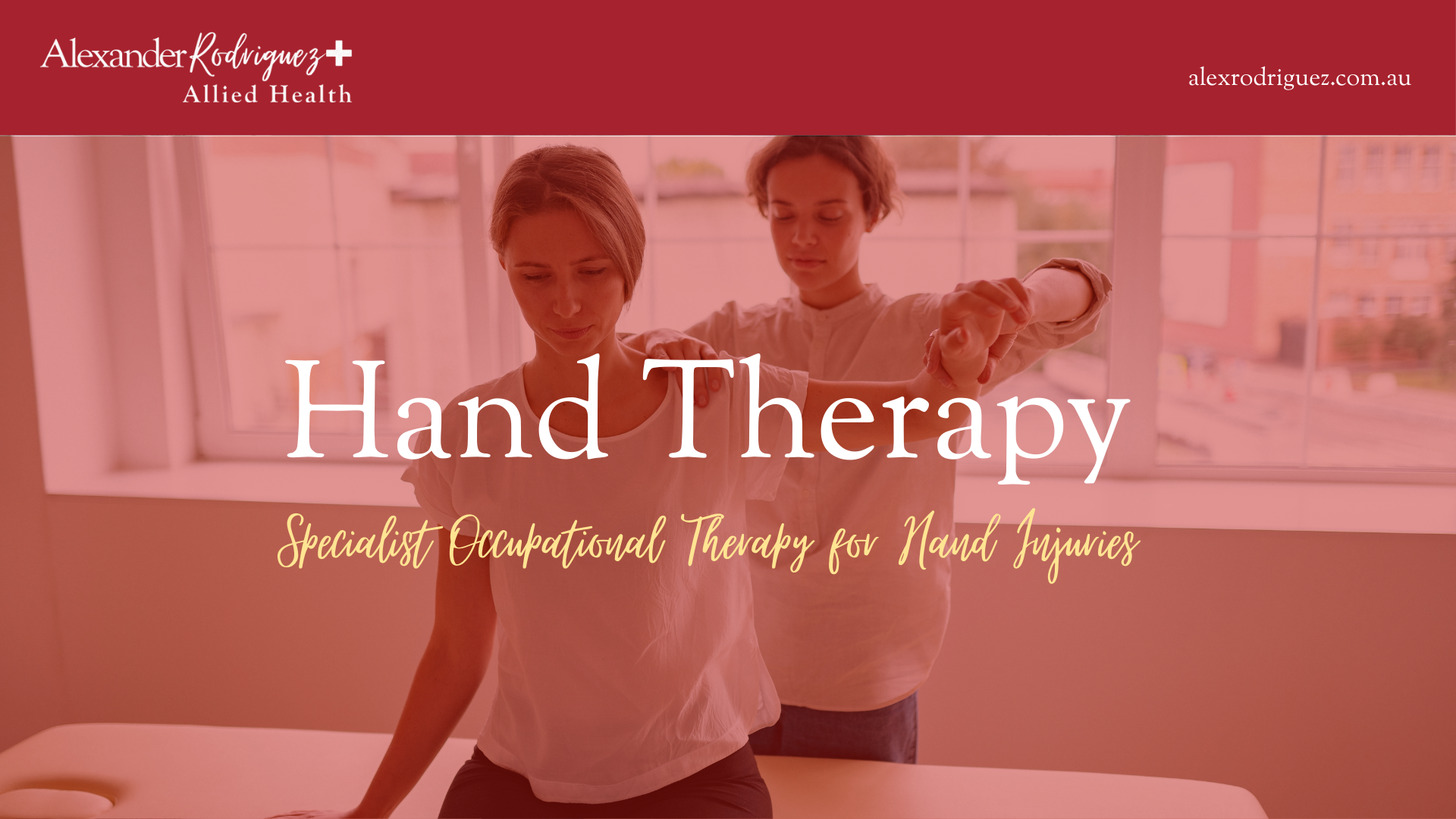
  • Hand Therapy: Specialist Occupational Therapy for Hand Injuries

    Hand Therapy: Specialist Occupational Therapy for Hand Injuries

    Occupational therapy is often essential after a hand or upper limb injury, especially given how common these conditions are across Australia. National data shows that close to 497,300 Australians experience a work-related injury each year, with hands, wrists, and fingers among the most frequently injured areas.

    These injuries occur not only in physically demanding jobs, but also through office work, sport, and everyday activities at home. When you experience a hand injury, simple tasks such as gripping, typing, dressing, or cooking can quickly become difficult and painful. Early support from qualified hand injury specialists and a skilled occupational therapist helps reduce complications and improve recovery outcomes. Through structured hand therapy, pain and swelling are managed while movement, strength, and coordination are safely restored.

    Hand therapy focuses on practical recovery that supports how you use your hands in real life. Experienced hand therapy experts provide targeted treatment for hand injuries tailored to your daily activities, work demands, and personal goals. This may include guided exercises, movement retraining, and strategies to protect joints and soft tissue while healing. A coordinated Allied Health Service approach ensures treatment considers the complex role your hands play in independence and quality of life. With consistent occupational therapy support, you are better equipped to manage symptoms, build long-term strength, and reduce the risk of future injury while returning to everyday activities with confidence.

    Occupational Therapy is available through Alex Rodriguez Allied Health Service. Call on 0429 220 646, email info@alexrodriguez.com.au, or visit us at Suite 15.01, Level 15, 60 Station St East, Parramatta NSW 2150 to take the first step. We know how vital a positive outlook is, and our services aim to help people see life in a brighter light.

    Key Takeaways

    • Personalised occupational therapy and hand injury treatment plans tailored to your daily needs.
    • Practical hand therapy focuses on restoring movement, strength, and independence.
    • Care delivered by experienced occupational therapists, hand injury specialists, and hand therapy experts.
    • Holistic Allied Health Service support for acute injuries, long-term conditions, and pain management.
    • Guidance that supports both physical recovery and emotional well-being throughout rehabilitation.

    Understanding the Role of Occupational Therapy in Hand Recovery

    Occupational therapy plays an important role in helping you recover after a hand injury and regain independence in daily life. Your hands are involved in almost everything you do, from personal care and household tasks to work and leisure activities. When an injury affects your fingers, hand, or wrist, even simple movements can become painful or restricted. With support from a qualified occupational therapist, recovery focuses on restoring function while helping you adapt safely as healing progresses. Working alongside experienced hand injury specialists, occupational therapy addresses both the physical challenges and the practical impact of a hand injury on your routine.

    Hand therapy is a specialised area within occupational therapy that focuses on improving strength, movement, coordination, and comfort in the hand and upper limb. Skilled hand therapy experts design personalised hand injury treatment plans that reflect how you use your hands every day, whether at work, home, or during hobbies. Treatment may include guided exercises, functional retraining, and strategies to protect healing structures. By taking a whole-person approach, an Allied Health Service supports your recovery beyond the injury itself, helping you rebuild confidence, reduce the risk of long-term complications, and return to meaningful activities with greater ease and independence.

    Why your hands are vital for daily independence

    Your hands are crucial for everyday tasks. They help with dressing, feeding, and even cooking. Losing hand function can make it hard to do these things on your own. Occupational therapy aims to restore hand function, so you can do these tasks again.

    How hand therapy experts facilitate healing

    Hand therapy experts, like occupational therapists, focus on treating hand injuries. They use special techniques and strategies for each person. This might include exercises for movement, strengthening, and using tools to help with daily tasks.

    Hand Injury Type Treatment Approach Recovery Goal
    Fractures Immobilisation, followed by exercises Regaining strength and mobility
    Tendon injuries Physical therapy, possible surgery Restoring tendon function
    Nerve damage Nerve rehabilitation exercises Improving sensation and motor control

    Knowing about occupational therapy in hand recovery helps people understand the care they get. It lets them find the right treatment, making their recovery better.

    Assessing Your Hand Injury and Functional Limitations

    Creating an effective hand injury treatment plan starts with understanding how the injury affects your everyday life, not just how it looks on a scan or assessment table. A detailed evaluation helps identify the source of pain, limits in movement or strength, and the activities that have become difficult since the injury. This process allows clear and realistic recovery goals to be set, focusing on what matters most to you, such as returning to work, managing daily tasks, or enjoying hobbies again. Without a thorough assessment, important factors that impact long-term recovery can easily be missed.

    Hand therapy specialists and hand injury specialists use specific assessment methods to understand how an injury to the hand, wrist, or upper limb affects function, coordination, and independence. An experienced occupational therapist looks at how you use your hands during real-life activities, including self-care, work duties, and repetitive tasks. This comprehensive approach provides a clear picture of injury severity and how it impacts your freedom and confidence. By understanding both the physical limitations and functional challenges, occupational therapy delivers targeted treatment that supports meaningful recovery and long term use of your hands.

    Identifying the Root Cause of Your Discomfort

    Finding out what’s causing your pain means looking closely at your hand’s state. You’ll check how flexible and strong your hand is, and how it affects your daily tasks.

    Assessment Area Description Importance
    Range of Motion Evaluating the flexibility and mobility of your hand and fingers. Helps in understanding the injury’s impact on hand function.
    Strength Assessing the muscle power in your hand and forearm. Crucial for determining the ability to perform daily tasks.
    Sensation Testing the sensitivity and feeling in your hand and fingers. Essential for understanding the injury’s effect on sensory feedback.

    Setting Realistic Goals for Your Recovery Journey

    Setting goals that are within reach is key to a good recovery. Knowing your current limits and injury extent helps you and your therapist set reachable milestones.

    These goals are made just for you, aiming to help you get back to doing things on your own. Regular checks and tweaks to these goals keep you on the right path with your Injury Recovery Support plan.

    Step One: Seeking Professional Evaluation

    Your recovery begins with a comprehensive assessment led by a qualified occupational therapist. This initial evaluation is an essential step in understanding the nature and severity of your hand injury and how it affects your daily activities. Rather than focusing only on pain or visible symptoms, the assessment looks at how your hand, wrist, or upper limb functions during real-life tasks such as work duties, self-care, and household activities. This detailed approach allows hand injury specialists to identify movement restrictions, strength loss, swelling, and coordination issues that may be limiting your independence.

    Through this professional evaluation, a personalised hand injury treatment plan can be developed to support safe and effective recovery. Using evidence-based hand therapy principles, the occupational therapist considers your lifestyle, goals, and recovery needs. This ensures treatment is practical, targeted, and aligned with how you use your hands every day. Guided by experienced hand therapy experts, this first step sets a clear foundation for restoring movement, improving function, and reducing the risk of long term complications while supporting confident and independent use of your hands.

    What to Expect During Your First Visit

    At your first visit, you’ll get a full check of your hand injury. The occupational therapist will look at your condition, talk about your symptoms, and plan a treatment just for you.

    This plan is made to fit your needs and goals. It ensures your recovery is focused and effective.

    Preparing Your Medical History for Your Therapist

    To get the most from your first visit, prepare your medical history. This includes any past diagnoses, treatments, and important medical records.

    Having this ready helps your therapist understand your situation better. They can then create a treatment plan that works well for you.

    Step Two: Developing Your Personalised Injury Recovery Support Plan

    After your initial assessment, the next stage focuses on creating a recovery plan tailored specifically to your needs, goals, and daily activities. This personalised plan is designed to address how your hand injury affects your movement, strength, coordination, and independence. Guided by a qualified occupational therapist, the plan considers the severity of the injury, healing stage, and how you use your hands at work, home, and during leisure activities. A structured approach ensures each stage of recovery is planned with purpose, helping you progress safely and steadily.

    Your personalised recovery support plan uses targeted hand therapy strategies to rebuild function and confidence over time. Experienced hand injury specialists and hand therapy experts focus on practical hand injury treatment that supports real-life tasks, not just clinical exercises. This may include progressive movement programs, activity modification, and techniques to protect healing tissues while maintaining independence. Delivered through a coordinated Allied Health Service, this approach helps you regain control, improve comfort, and return to everyday activities with greater confidence and long-term hand health.

    Tailoring Treatment to Your Specific Injury

    Your occupational therapist will make a treatment plan just for you. It might include exercises, stretches, and other ways to help you heal and improve.

    The aim is to make a plan that works for you and fits into your daily life. This way, you’re more likely to follow it and get the best results.

    Monitoring Progress Through Regular Reviews

    It’s important to have regular check-ups with your hand injury specialists. These reviews help track your progress and make any needed changes to your plan. This keeps you on track to meet your goals and deals with any problems quickly.

    In these reviews, your therapist will check how you’re doing, give feedback, and adjust your plan if needed. This teamwork helps you reach the best outcome.

    With your occupational therapist and hand injury specialists, you can create a recovery plan that supports your healing and independence journey.

    Step Three: Implementing Strengthening and Mobility Support Exercises

    At this stage of your recovery, you begin guided exercises designed to improve strength, movement, and hand function. With support from hand therapy experts, these exercises are chosen based on your injury, your current ability, and your recovery goals. The aim is to help reduce stiffness, improve flexibility, build strength, and make everyday tasks easier and more comfortable over time.

    As part of your hand injury treatment plan, your occupational therapist may use a range of techniques such as movement exercises, manual therapy, splinting, and functional activity practice. These approaches work together to support healing, reduce pain, and restore better use of your hand, wrist, and fingers. With the right hand therapy program, you can gradually regain confidence, mobility, and independence in daily life.

    Safe Techniques for Regaining Range of Motion

    Getting your hand to move again is very important. Your hand therapist will show you how to do this safely. You’ll learn:

    • Gentle stretching to loosen tight parts
    • Passive exercises where your therapist moves your hand
    • Active exercises where you move your hand yourself

    It’s important to listen to your therapist to avoid hurting yourself more.

    Building Muscle Endurance Without Overexertion

    It’s crucial to build muscle endurance in your hands. Your therapist will create a plan that gets stronger but doesn’t push you too hard. You might do:

    1. Resistance band exercises to strengthen your hand and forearm
    2. Putty or grip strengthening exercises to improve your grip
    3. Progressive loading exercises to challenge your hand and wrist

    By sticking to this plan, you’ll recover safely and effectively. Your hand therapy experts will keep an eye on your progress and change your exercises if needed. This way, you’ll get your hand working fully again.

    Step Four: Integrating Daily Living Skills Support into Your Routine

    As you progress through hand therapy, it becomes important to integrate daily living skills support into your routine. This stage of recovery helps you return to doing everyday tasks with greater independence and confidence, even while your hand is still healing. A hand injury can affect how you dress, cook, work, or manage personal care, so adjustments are often needed. Guided by a skilled occupational therapistand experienced hand injury specialists, you learn safe and practical ways to adapt your daily activities while protecting your hand and maintaining function.

    Daily living skills support is a core part of an effective Allied Health Service and focuses on the practical side of recovery. Hand therapy experts assess how you complete routine tasks and identify where pain, weakness, or limited movement may be creating difficulty. Through targeted hand injury treatment, you are supported with strategies such as task modification, energy conservation, and improved hand use techniques. This approach helps reduce strain, supports healing, and empowers you to stay independent in your daily life while building long-term hand health through occupational therapy.

    Modifying Household Tasks for Easier Completion

    Modifying household tasks is a big part of daily living skills support. This includes:

    • Using tools that are easier to grip or use.
    • Breaking down big tasks into smaller steps.
    • Finding new ways to do tasks that are hard because of your injury.

    For example, you might use a jar opener to open jars easily. Or a long-handled duster to reach high shelves without straining your hand.

    Independence and Routine Building Support Strategies

    Daily living skills support also helps with building independence and routines. This includes:

    1. Creating a daily schedule that balances rest and activity.
    2. Practising tasks in a safe place to build confidence and skill.
    3. Using reminders or tools to help stay on track and keep your routine.

    By using these strategies, you can get your independence back. You can keep living a full life even with a hand injury.

    The aim of daily living skills support is to help you adapt to your injury. It’s about finding new ways to do daily tasks. With the right support from your allied health service, you can stay independent and enjoy your favourite activities.

    Step Five: Utilising Cognitive and Behavioural Strategy Support for Pain Management

    Recovery from a hand injury is not only about physical healing. It also involves learning how to understand and manage pain effectively. Persistent or ongoing pain can affect your mood, sleep, motivation, and ability to stay active in your recovery. Skilled hand therapy experts recognise that pain is influenced by both physical and mental factors. Through hand therapy, you are supported to develop cognitive and behavioural strategies that help you respond to pain in a more controlled and confident way, rather than feeling overwhelmed by it.

    Managing long-term or complex pain often requires a combined approach. An experienced occupational therapist works with you to build practical skills that support pain control during everyday activities. This may include pacing tasks, relaxation techniques, graded activity exposure, and strategies to reduce fear of movement. As part of a comprehensive Allied Health Service, these approaches are integrated into your hand injury treatment to support both physical recovery and emotional well-being. With guidance from hand injury specialists, occupational therapy helps you manage pain more effectively, maintain independence, and improve your overall quality of life throughout your recovery journey.

    Changing your relationship with chronic pain

    Chronic pain can hurt your body and mind. It’s key to see managing pain as more than just getting rid of it. It’s about changing how you see pain.

    By using cognitive and behavioural strategies, you can see pain in a new light. You can learn to cope better. This might include:

    • Changing negative thoughts about pain
    • Using relaxation methods like deep breathing
    • Doing things that take your mind off pain

    A top pain management expert says,

    Mental techniques to assist physical healing

    Mental tricks can help your body heal. Mindfulness, visualisation, and meditation can lower stress and help you relax. This can speed up healing.

    Mental Technique Description Benefit
    Mindfulness Focusing on the present moment without judgment Reduces stress and anxiety
    Visualization Imagining a positive outcome or scenario Promotes relaxation and reduces pain perception
    Meditation Practising focused attention and awareness Enhances overall well-being and reduces chronic pain

    Adding these mental tricks to your day can make you more positive. It can also help you manage pain better. An occupational therapist can help you use these techniques in a way that fits you.

    Step Six: Enhancing Sensory Integration and Functional Skill Practice

    The sixth step in your recovery focuses on improving sensory awareness and strengthening functional skills so that everyday tasks feel more natural again. After a hand injury, your ability to feel textures, judge pressure, or coordinate fine movements can be reduced. This can make activities like buttoning clothes, writing, or handling small objects challenging. Through targeted occupational therapy, an occupational therapist helps retrain sensory feedback and supports safe, controlled use of your hand during meaningful tasks. Working with experienced hand injury specialists, this step supports both physical recovery and confidence in hand use.

    As part of structured hand therapy, hand therapy experts guide you through practical hand injury treatment activities that mirror real-life movements. Functional skill practice focuses on improving coordination, grip control, and accuracy while gradually increasing task complexity. Sensory re-education techniques help your brain reconnect with your hand, improving awareness and control over time. Supported within a coordinated Allied Health Service, this stage of recovery helps you regain independence, reduce hesitation in movement, and feel more comfortable using your hand during daily activities.

    Improving Dexterity through Targeted Activities

    Getting your hand to work better is key. Hand therapy specialists create special exercises for you. These exercises boost your finger dexterity, grip strength, and hand coordination.

    For example, you might do things like:

    • Pinching small beads between your thumb and fingers
    • Rotating a small ball in your hand
    • Using tweezers to pick up tiny objects

    Overcoming Sensory Sensitivities after Trauma

    After a hand injury, some people feel too sensitive to touch. Sensory integration helps you get used to different textures and sensations. Your hand injury specialists will help you with these exercises.

    Some activities you might do include:

    Activity Description Benefit
    Texture Exploration Touching different textures like sand, rice, or fabrics Desensitises the hand to various sensations
    Temperature Gradation Gradually exposing your hand to different temperatures Helps in overcoming temperature sensitivities
    Vibration Therapy Using vibration tools or devices on the hand Can help reduce pain and improve sensory integration

    By doing these activities every day, you’ll improve your hand function. It’s important to work with your hand injury specialists. They can make these activities fit your needs and check on your progress.

    Step Seven: Adapting Your Home and Work Function Support

    Adapting your home and work environments is an important step in supporting recovery during hand therapy. Your surroundings can either help or hinder healing, especially if daily tasks place repeated strain on your hand or wrist. Simple activities such as cooking, typing, lifting objects, or using tools may need temporary or long-term adjustments. Making these changes allows your recovery to progress smoothly while reducing the risk of further injury or prolonged pain. Support from hand injury specialists helps ensure these adjustments are practical and matched to how you use your hands each day.

    An experienced occupational therapist plays a key role in identifying environmental changes that support your hand health. This may include modifying workstations, adjusting task setups, or recommending alternative ways to complete tasks with less strain. As part of a coordinated Allied Health Service, this approach ensures your hand injury treatment extends beyond exercises and into real-life environments. Guided by hand therapy experts, these adjustments help improve function, reduce pain, and support independence, allowing occupational therapy to promote safe, confident hand use both at home and in the workplace.

    Ergonomic adjustments for your workspace

    Making your workspace ergonomic is important to avoid injury. Simple tweaks, like changing your chair height or computer monitor position, can help a lot.

    Here are some easy ergonomic changes:

    • Put your computer monitor right in front of you, about 20-25 inches away.
    • Make sure your chair height lets your feet rest flat or on a footrest, with knees at or below hip level.
    • Keep your keyboard and mouse close to your body to avoid stretching.

    Tools and equipment to assist your daily tasks

    Using the right tools and equipment can also help a lot with daily tasks. This includes special adaptive gear that makes things easier on your hands.

    Task Adaptive Equipment Benefit
    Cooking Adaptive utensils with larger grips Easier to hold and maneuver
    Writing Pens with ergonomic grips Reduces strain on the hand
    Gardening Gardening tools with cushioned handles Reduces discomfort and strain

    By making these changes and using adaptive equipment, you can make your environment more supportive. This helps your recovery and improves your hand health.

    Addressing Emotional Regulation and Mental Health: Occupational Therapy Support

    Recovering from a hand injury can be emotionally challenging, and your mental well-being is just as important as your physical recovery. Ongoing pain, reduced independence, and slow progress can lead to frustration, anxiety, low mood, or loss of confidence. These emotional responses are common when everyday tasks become difficult or when recovery takes longer than expected. Effective occupational therapy recognises that emotional regulation plays a major role in healing, motivation, and participation in daily life. Addressing mental health alongside physical symptoms supports a more balanced and sustainable recovery.

    An experienced occupational therapist helps you develop practical strategies to manage the emotional impact of injury as part of holistic hand therapy. Working alongside hand injury specialists and hand therapy experts, therapy may focus on building coping skills, reducing stress linked to pain, and improving confidence in hand use. Techniques such as activity pacing, goal setting, relaxation strategies, and routine rebuilding are often included within a broader hand injury treatment plan. Delivered through a supportive Allied Health Service, this approach helps you maintain emotional resilience, stay engaged in recovery, and improve quality of life while healing.

    Managing the Frustration of Recovery

    Recovering from a hand injury is slow and can hurt. It’s normal to feel upset when things don’t go as fast as you want. Hand therapy experts can help you deal with these feelings.

    Here are some ways to cope:

    • Set achievable goals and celebrate small wins
    • Try relaxation methods like deep breathing or meditation
    • Do things that make you happy and take your mind off recovery

    Using these methods can help you stay positive and handle recovery’s emotional ups and downs.

    Chronic Condition Support for Long-term Wellbeing

    For some, a hand injury can lead to a chronic condition that lasts a long time. Occupational therapists can help you adjust to your condition and stay independent.

    Here’s a table showing support areas for chronic conditions:

    Area of Support Strategies Benefits
    Pain Management Relaxation techniques, pain education Less pain, better quality of life
    Activity Adaptation Modifying tasks, using assistive devices More independence, less frustration
    Emotional Wellbeing Cognitive-behavioral therapy, support groups Better mental health, stronger coping skills

    With help from hand therapy experts in your allied health service, you can create a plan to manage your chronic condition. This will improve your overall well-being.

    Conclusion

    Effective occupational therapy plays a vital role in helping you recover after a hand injury and regain confidence in everyday life. Throughout your recovery journey, a thorough assessment, clear goal setting, and a personalised approach to hand injury treatment help address both physical limitations and daily challenges. With the guidance of an experienced occupational therapist, hand therapy focuses on restoring movement, strength, coordination, and comfort while supporting your independence at home, work, and in the community.

    A structured approach led by skilled hand injury specialists and hand therapy experts ensures your care is practical and meaningful. Therapeutic techniques are matched to your individual needs, whether that involves pain management, improving functional skills, or adapting daily activities. Delivered through a coordinated Allied Health Service, occupational therapy supports not just recovery from injury, but long-term hand health and quality of life. With the right professional support, you are better equipped to return to the activities that matter most, with confidence and control.

    Occupational Therapy is available through Alex Rodriguez Allied Health Service. Call on 0429 220 646, email info@alexrodriguez.com.au, or visit us at Suite 15.01, Level 15, 60 Station St East, Parramatta NSW 2150 to take the first step. We know how vital a positive outlook is, and our services aim to help people see life in a brighter light.

    FAQ

    Why should I see hand injury specialists instead of a general practitioner for my recovery?

    While your GP is great for general care, hand injury specialists know a lot about hands, wrists, and forearms. At Alex Rodriguez Allied Health, our experts focus on the details of tendons, nerves, and bones. This ensures your treatment is just right for your injury.

    What is the main role of an occupational therapist in hand recovery?

    An occupational therapist looks at how injuries affect your daily life. They help you get back to activities like typing, cooking, or driving. We aim to help you recover fully and get back to your normal life.

    How do you identify the root cause of my hand pain during an assessment?

    At our Parramatta clinic, we use tests to check your range of motion, grip strength, and nerve sensitivity. This helps us find out what’s causing your pain. We then set goals for your recovery that target the real problem.

    What should I prepare for my first appointment at Alex Rodriguez Allied Health?

    Bring any X-rays, scans, or reports from your injury. Also, have a list of your medications ready. This helps your occupational therapist create a recovery plan that’s safe and efficient from the start.

    Will my injury recovery support plan be unique to me?

    Yes, it will. Every injury and lifestyle is different. Your plan will be made just for you, whether you work in an office or do manual work. We also regularly review and adjust your plan as you get better.

    Is it possible to regain strength without risking further injury?

    Yes, safety is our top priority. We use special exercises that are safe and effective. Our experts will guide you through these exercises to help you regain strength and mobility without harming your healing tissues.

    How can I manage my daily chores while my hand is still healing?

    We offer support to help you keep up with your daily tasks. We teach you how to protect your joints and suggest ways to do household chores safely. This way, you can keep up with your routine while your hand heals.

    Can mental strategies really help with physical pain management?

    Yes, they can. We use mental strategies to help you cope with chronic pain. By managing stress and anxiety, you can reduce your pain response and aid in your physical healing.

    What if my hand feels numb or overly sensitive after surgery or trauma?

    This is where sensory integration comes in. We use exercises to “re-train” your brain and nerves. This can help reduce numbness or sensitivity, making your hand feel normal again.

    Can you help me adjust my workspace to prevent future hand strain?

    Yes, we can. We offer advice on making your workspace safe and supportive. This includes ergonomic changes and recommending tools to help you avoid hand strain in the future.

    How do I deal with the frustration of a slow recovery process?

    It’s normal to feel frustrated when recovering from an injury. At Alex Rodriguez Allied Health, we offer mental health support. We help you manage your emotions and focus on your long-term wellbeing, alongside your physical recovery.
  • Occupational Therapy: Support for Daily Living

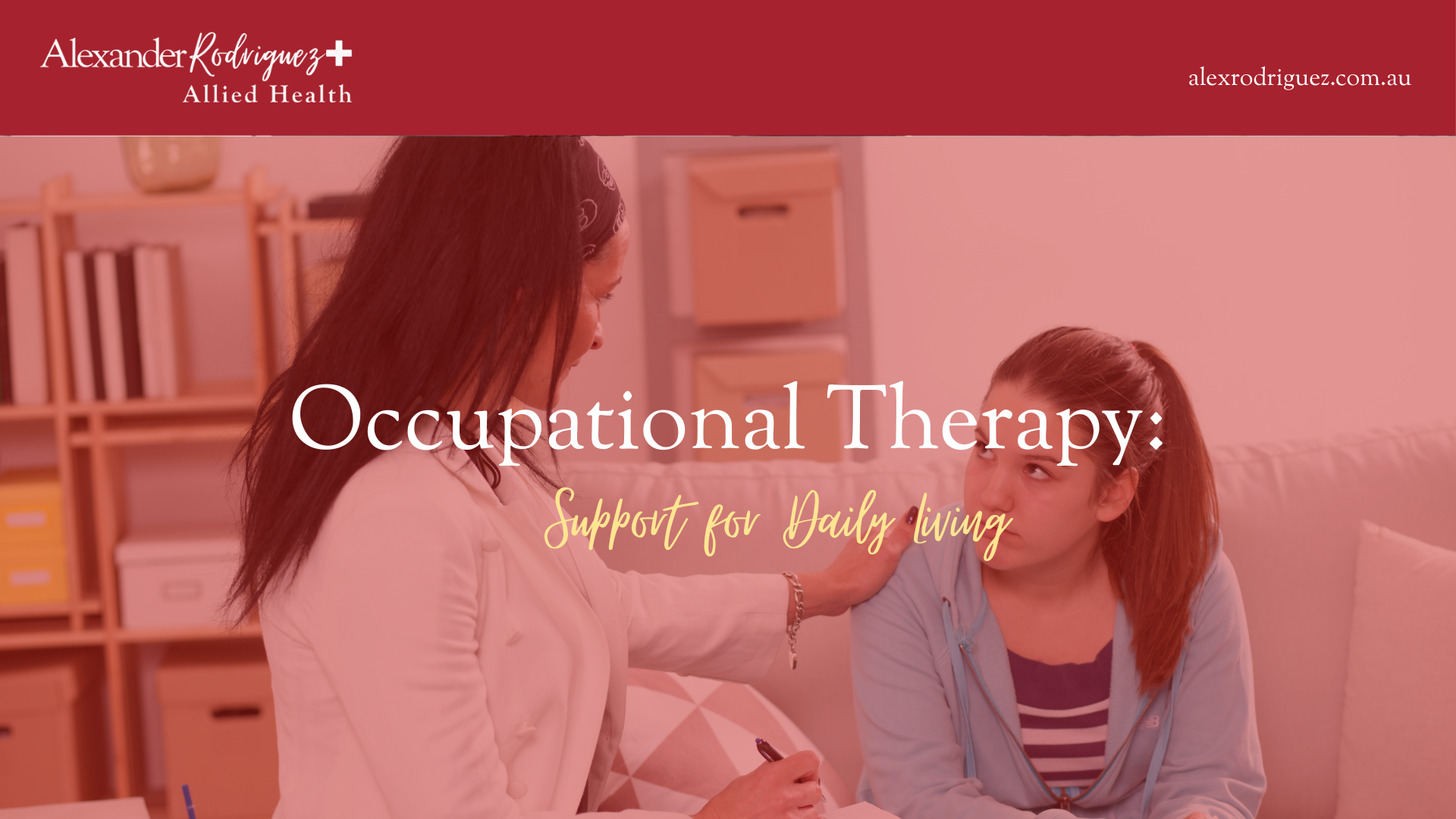
    Occupational Therapy: Support for Daily Living

    Occupational therapy plays an important role in helping you feel more capable, confident, and in control of everyday life, especially when simple tasks start to feel harder than they used to. In Australia, the need for this kind of support is significant. The Australian Institute of Health and Welfare reports that 3 in 5 people with disabilities living in households need help with at least one activity of daily living, with common areas including health care, property maintenance, cognitive or emotional tasks, household chores, transport, and self-care. This shows how closely daily independence is linked to the right support, practical strategies, and personalised care.

    When you receive the right occupational therapy services, you can build improved daily living skills that make it easier to manage personal care, move around your home more safely, complete household routines, and take part in the community with greater confidence and less stress.

    Occupational therapy is not just about managing current challenges. It is also about helping you create safer routines, improve function over time, and find practical ways to live more independently in a way that suits your goals. For many Australians, this may include support through NDIS occupational therapy, which can fund therapy supports delivered by qualified allied health professionals when they relate to a person’s disability needs. It may also include a functional capacity assessment, which helps identify how your condition affects your day-to-day life across areas such as mobility, communication, learning, and self-care, and what supports may be reasonable to help you function more independently. With the right guidance, you can develop skills, use tools more effectively, and make changes at home or in your routine that help daily life feel more manageable, more comfortable, and more rewarding.

    If you are based near Parramatta, Occupational Therapy may be available through Alex Rodriguez Allied Health Service. Call on 0429 220 646, email info@alexrodriguez.com.au or visit us at Suite 15.01, Level 15, 60 Station St East, Parramatta NSW 2150 to take the first step. We know how vital a positive outlook is, and our services aim to help people see life in a brighter light.

    Key Takeaways for Your Independence

    • Occupational therapy helps you manage daily life more independently.
    • It supports improved daily living skills, routines, and confidence.
    • It can help with physical, sensory, and mental health challenges.
    • NDIS occupational therapy and a functional capacity assessment can identify the right support for your needs.

    What Occupational Therapy Services Can Do for You

    Occupational therapy services can support you in many parts of everyday life. If daily tasks feel harder than they should, occupational therapy helps you find practical ways to manage them more safely and confidently. This can include support with getting dressed, preparing meals, moving around the home, keeping your space organised, and taking part in the activities that matter to you. The goal is to help you improve your routine and feel more independent in your day-to-day life.

    With the right support, you can build new skills or regain abilities that may have become harder over time. Occupational therapy services focus on your personal goals and the challenges you face in your home or community. This may involve learning easier ways to complete tasks, using helpful equipment, or making changes that improve comfort and safety. Over time, this support can help you feel more capable, more confident, and better able to live independently.

    Understanding the Role of an Occupational Therapist

    An occupational therapist is key in helping you become independent in daily activities. They check your current skills and challenges. Then, they create a plan to boost your functional skills.

    A leading Australian health source explains that occupational therapists can help with daily living skills such as dressing, showering, and budgeting.

    How Occupational Therapy Improves Your Quality of Life

    Occupational therapy focuses on improved daily living skills. This can really improve your quality of life. It does this by using specific plans that meet your needs and goals.

    For example, occupational therapists can teach you ways to manage your day better. They help you join in meaningful activities and improve your well-being.

    This method not only enhances your skills but also boosts your confidence and independence.

    How to Identify If You Need Occupational Therapy Support

    If you are finding it harder to manage everyday tasks, it may be a sign that you could benefit from occupational therapy services. You may be struggling with getting dressed, preparing meals, keeping your home organised, managing personal care, or taking part in activities that are important to your routine. These challenges can affect your confidence, safety, and independence over time. Occupational therapy helps you understand what is making daily life harder and what practical changes can improve it. With the right support, you can build improved daily living skills that make everyday tasks feel easier, safer, and more manageable in your home and community.

    You may also need support if you are living with a disability, recovering from injury, managing a chronic condition, or experiencing age-related changes that affect your daily functioning. Through NDIS occupational therapy, you can receive tailored support that focuses on your personal goals and the barriers affecting your independence. This may include practical strategies, assistive equipment, home recommendations, or a functional capacity assessment to better understand the level of help you need. As part of a trusted Allied Health Service, occupational therapists work with you to improve your daily routine, strengthen your confidence, and help you live with greater comfort, safety, and independence.

    Recognising Challenges in Your Daily Activities

    Having trouble with daily routines? Tasks like cooking, cleaning, or personal care getting harder? These signs might mean you need occupational therapy. An occupational therapist can help you find ways to manage these tasks better.

    Signs you might need occupational therapy include trouble with fine motor skills or adapting to changes. Feeling overwhelmed by daily tasks is another sign. Recognising these challenges is the first step to getting the help you need.

    Who Benefits from Professional Support

    Occupational therapy services help many people. This includes those with disabilities, recovering from injuries or illnesses, and older adults. People with chronic conditions like arthritis or neurological diseases also benefit.

    The main goal of occupational therapy is to help you live your daily life fully. It aims to improve your independence and quality of life. Whether it’s regaining lost skills or learning new ways to do tasks, occupational therapy can help.

    NDIS Occupational Therapy Eligibility

    If you’re an NDIS participant, you might be eligible for NDIS occupational therapy. The NDIS funds occupational therapy to help you achieve your goals and improve daily living skills. To qualify, your occupational therapy needs must be assessed and included in your NDIS plan.

    Working with an experienced provider can guide you through the process. They help assess your needs, set goals, and find strategies to improve your daily functioning.

    Building Your Daily Living Skills Step by Step

    You can boost your daily living skills with a structured plan and an occupational therapist’s help. They assess your abilities and set goals you can reach.

    Step 1: Assess Your Current Functional Capacity

    Start by checking how well you do daily tasks. This step helps find areas you need to work on. A functional capacity assessment shows your strengths and weaknesses.

    Step 2: Set Achievable Goals with Your Therapist

    After assessing your skills, set goals you can really achieve. Your therapist will help pick what’s most important to you. This keeps you motivated and tracks your progress.

    Step 3: Practice Skills in Real-Life Situations

    It’s key to practice skills in everyday life. Your therapist will help you use what you’ve learned in real situations. This makes it easier to use these skills every day.

    Step 4: Monitor Your Progress and Adjust Strategies

    Keep an eye on how you’re doing to see what works and what doesn’t. Your therapist will check in with you often. They’ll tweak your plan as needed to keep you improving.

    Improving daily living skills involves these main steps:

    Step Description Benefits
    Assess Functional Capacity Evaluate your ability to perform daily tasks Identifies areas for improvement
    Set Achievable Goals Develop a personalised plan with your therapist Enhances motivation and tracks progress
    Practice Skills Apply learned skills in real-life situations Improves integration into daily routine
    Monitor Progress Regularly review progress and adjust strategies Ensures continued improvement

    How to Develop Independence and Establish Effective Routines

    Building strong daily routines can help you feel more in control of your life and more confident in the way you manage each day. When your routine is clear and consistent, everyday tasks often feel less stressful and easier to complete. This can be especially helpful if you find it hard to stay organised, remember important tasks, or manage your time and energy. Through occupational therapy services, you can learn practical ways to structure your day, improve your habits, and build improved daily living skills that support greater independence at home and in the community.

    An occupational therapist works with you to create routines that match your needs, goals, and lifestyle. This may include support with morning and evening routines, meal preparation, personal care, household tasks, community participation, and managing responsibilities more effectively. Through NDIS occupational therapy, you may also receive tailored strategies, helpful tools, and a functional capacity assessment to better understand what support suits you best. As part of a trusted Allied Health Service, occupational therapy focuses on helping you develop routines that are realistic, sustainable, and designed to make daily life safer, smoother, and more manageable.

    Creating Personalised Daily Routines

    Making a daily routine that fits you means knowing what you need and want. Your occupational therapist will help you figure out what’s important for your day. They’ll guide you in making a routine that fits your life.

    Key considerations when creating a daily routine include:

    • Identifying your priorities and goals
    • Assessing your current abilities and limitations
    • Breaking down large tasks into smaller, manageable steps
    • Establishing a balance between activity and rest

    Breaking Down Complex Tasks into Simple Steps

    Big tasks can feel too much, but breaking them down helps. Your occupational therapist can help you simplify tasks.

    For instance, if meal prep is hard, they might break it down. This could mean planning meals, shopping for groceries, and cooking. It makes the task easier and more doable.

    Building Confidence Through Consistent Practice

    Regular practice is key to growing your confidence in daily tasks. By doing your skills often, you’ll feel more in control and independent.

    Tips for building confidence include:

    1. Starting with small, achievable goals
    2. Practicing regularly and consistently
    3. Celebrating your successes and progress
    4. Seeking support and feedback from your occupational therapist

    Managing Your Emotions and Behaviour with Professional Strategies

    Managing your emotions and behaviour is an important part of everyday life, especially when stress, frustration, anxiety, or changes in routine begin to affect how you function at home or in the community. When emotions feel harder to control, daily tasks, relationships, and personal goals can become more difficult to manage. Through occupational therapy services, you can learn practical strategies to respond to challenges more calmly and confidently. This support can help you build improved daily living skills, strengthen self-awareness, and develop healthier ways to cope with situations that may otherwise feel overwhelming.

    With the right support, occupational therapy can help you understand the triggers that affect your emotions and behaviour and teach you techniques to manage them more effectively. Through occupational therapy, this may include routines, sensory strategies, emotional regulation tools, and practical approaches that improve focus, communication, and day-to-day participation. In some cases, a functional capacity assessment may also help identify how emotional or behavioural challenges are affecting your independence and what support may be needed. As part of a trusted Allied Health Service, occupational therapists work with you to build strategies that improve your wellbeing, support your goals, and help you feel more in control of your daily life.

    Emotional Regulation Support Techniques

    Occupational therapists can create emotional control methods just for you. These might include:

    • Spotting what makes you upset and feeling stressed early
    • Learning ways to handle stress and anxiety
    • Trying out calm-down techniques like deep breathing

    With these skills, you can handle your feelings better and deal with tough times more easily.

    Cognitive and Behavioural Strategy Support

    Knowing how to handle your emotions and actions is crucial. Occupational therapists can teach you:

    • How your thoughts, feelings, and actions are linked
    • How to spot and change negative thinking
    • Ways to cope better and behave in a healthier way

    These methods can make you stronger and improve your mental health.

    Practical Tools You Can Use Every Day

    Occupational therapists also give you everyday tools for managing your emotions. These might be:

    1. Mood journals to track your feelings and find patterns
    2. Visual aids to keep you organised and focused
    3. Apps or guided meditation for relaxation

    Using these tools daily can help you become more aware and in control of your emotions.

    With an occupational therapist, you can make a plan to manage your emotions and actions. This can lead to better daily life and overall happiness.

    Addressing Sensory and Physical Challenges

    Sensory and physical challenges can make everyday life feel more difficult than it should. You may be sensitive to noise, light, touch, or busy environments, or you may be dealing with pain, weakness, poor balance, reduced coordination, or limited movement caused by injury, disability, or a chronic condition. These difficulties can affect how you manage daily tasks, move around your home, or take part in work, study, or community activities. Through occupational therapy services, you can receive practical support that helps you understand these challenges and find ways to manage them more effectively. The goal is to build improved daily living skills so you can feel safer, more comfortable, and more confident in your daily routine.

    With personalised occupational therapy, support is tailored to your specific needs, goals, and environment. An occupational therapist may recommend sensory strategies, assistive equipment, home adjustments, or task modifications to make daily activities easier and less overwhelming. In some cases, a functional capacity assessment can help identify how sensory or physical limitations are affecting your independence and what level of support may be needed. As part of a trusted Allied Health Service, occupational therapy focuses on reducing barriers, improving participation, and helping you live with greater independence, comfort, and control in everyday life.

    Sensory Integration Support for Better Functioning

    Sensory integration support is key in occupational therapy, especially for those with sensory processing issues. It helps you handle sensory inputs better, improving daily life functioning.

    Techniques include:

    • Sensory activities to regulate your experience
    • Strategies for better sensory response
    • Adaptive equipment for sensory needs

    Strengthening and Mobility Support

    Strengthening and mobility support are vital for improving physical abilities. Occupational therapists create personalized exercise plans to boost strength, flexibility, and mobility. This helps you do daily tasks more easily.

    Key components include:

    Component Description Benefits
    Exercise Programs Tailored exercises for strength and flexibility Improved physical function and injury risk reduction
    Mobility Training Training for a better range of motion and mobility Enhanced ability to do daily activities
    Assistive Devices Devices for mobility and strength support Increased independence and confidence

    Injury Recovery Support

    Injury recovery support is crucial, helping you regain function and independence after an injury.

    How to Regain Function After an Injury

    Regaining function after an injury needs a structured rehabilitation plan. Occupational therapists help you create a recovery plan with exercises, strategies, and assistive devices as needed.

    Setting Recovery Milestones

    Setting realistic recovery milestones is key in rehabilitation. It helps you and your therapist track progress and adjust the treatment plan as needed.

    Chronic Condition Support

    Chronic condition support is vital in occupational therapy. For those with chronic conditions, therapists provide strategies to manage symptoms, maintain function, and enhance quality of life.

    Examples include:

    • Energy conservation techniques
    • Pain management strategies
    • Adaptive equipment recommendations

    How to Maintain Your Mental Health Through Occupational Therapy

    Looking after your mental health becomes easier when you have the right support in place. Through occupational therapy services, you can develop practical strategies that help you manage everyday responsibilities, reduce stress, and build more stable routines. When daily life feels overwhelming, it can affect your confidence, motivation, and ability to stay engaged in the things that matter to you. Occupational therapy focuses on helping you strengthen improved daily living skills so you can manage your day with greater structure, balance, and independence.

    Occupational therapists work with you to identify the challenges that may be affecting your mental health and daily functioning. Through occupational therapy, support may include building healthier routines, improving emotional regulation, increasing community participation, and finding practical ways to manage tasks at home or in social settings. In some cases, a functional capacity assessment may be used to better understand how your mental health is affecting your independence and what support may help most. As part of a trusted Allied Health Service, occupational therapy helps you create positive habits, improve your wellbeing, and feel more in control of your everyday life.

    The Connection Between Mental Health and Daily Function

    Your mental health greatly affects your daily tasks and meaningful activities. Struggling with mental health can make everyday tasks seem too hard. This can lower your overall well-being.

    Occupational therapy helps by improving your daily living skills. This makes it easier to function well in different places.

    Mental Health Occupational Therapy Support Approaches

    Occupational therapists use many strategies to support mental health. They include:

    • Checking your current abilities and finding areas to get better.
    • Creating plans to improve your daily skills and coping methods.
    • Teaching ways to handle stress and anxiety.

    These methods are made just for you. This ensures you get the best support.

    Building Resilience and Coping Strategies

    Being resilient is key to good mental health. Occupational therapists teach you how to handle challenges and setbacks.

    The table below shows some coping strategies and their benefits:

    Coping Strategy Benefits
    Mindfulness practices Reduces stress and anxiety, improves emotional control
    Physical activity Boosts mood, improves physical health
    Social support networks Offers emotional support, lessens feelings of loneliness

    Adding these strategies to your daily life can boost your resilience. It helps you manage mental health challenges better.

    Optimising Your Home and Work Environments

    The spaces you use every day can have a big impact on how easily and safely you manage daily life. If your home or work environment does not suit your physical, sensory, or functional needs, simple activities can start to feel more difficult, tiring, or unsafe. Through occupational therapy services, you can receive support to identify what is not working well in your surroundings and what changes may help. This can improve comfort, reduce daily stress, and strengthen your improved daily living skills so you can move through your routine with more confidence and independence.

    Through tailored occupational therapy, an occupational therapist can assess your environment and recommend practical solutions that make daily tasks easier to manage. This may include changes to room layout, support equipment, workstation setup, safety improvements, or a functional capacity assessment to better understand how your environment is affecting your ability to function. As a trusted Allied Health Service, we provide occupational therapy support that helps turn your environment into a space that works better for you.

    Home Function Support and Modifications

    Occupational therapists can spot issues in your home that stop you from doing daily tasks. They might suggest things like installing handrails or changing the lighting. They also help with rearranging furniture for safety and function.

    Small changes, like removing tripping hazards or better storage, can make a big difference. Your therapist will work with you to find the best solutions for your needs.

    Work Function Support and Workplace Adjustments

    At work, occupational therapists can look at your space and suggest ways to make it better. This could be ergonomic changes, managing your workload, or making it easier to get around.

    These changes can help prevent injuries, improve how well you work, and make your workplace more welcoming. Your therapist will work with you and your employer to make these changes happen.

    Conducting a Functional Capacity Assessment

    A functional capacity assessment checks how well you can do daily tasks and work. It’s important to find out where you might need help or changes.

    Assessment Components Description Benefits
    Physical Ability Evaluates your strength, flexibility, and endurance. Helps identify physical limitations and informs exercise programs.
    Cognitive Function Assesses your memory, attention, and problem-solving skills. Guides strategies to improve cognitive function and daily task management.
    Environmental Assessment Examine your home and work environments for potential hazards and areas for modification. Leads to recommendations for environmental adjustments to enhance safety and functionality.

    Understanding your functional capacity helps occupational therapists create plans just for you. This might include learning new skills, making environmental changes, or using technology to help.

    The main goal of occupational therapy is to help you live a happy and independent life. By improving your home and work environments, you can overcome obstacles and reach your goals.

    How to Access Support Services in Sydney

    Accessing the right support in Sydney can feel much easier when you have a team that understands your needs and goals. At Alex Rodriguez Allied Health, you can receive personalised care that is designed around your daily challenges, level of independence, and the outcomes you want to achieve. Whether you need help with everyday tasks, building confidence at home, or improving your overall routine, the focus is always on providing support that feels practical, respectful, and suited to your situation.

    With the right guidance, getting started with support services does not have to feel confusing or overwhelming. We will work with you to make the process more accessible and tailored to your needs, so you can feel supported from the beginning. By offering a personalised approach in Sydney, the team helps you access care that fits your lifestyle and supports your progress in a way that feels clear, comfortable, and achievable.

    Getting Started with Alex Rodriguez Allied Health

    To start your occupational therapy, contact Alex Rodriguez Allied Health. This first step is key to creating your support plan.

    Location and Contact Information

    Our Alex Rodriguez Allied Health office is located in Parramatta, making it easy to access. You can call or email to learn more or book an appointment, and all contact details are available on our website.

    Booking Your Initial Assessment

    Booking your first assessment is simple. Just call 0429 220 646. They’ll help you through the process. This assessment is important for understanding your needs and creating a plan just for you.

    What to Expect During Your First Visit

    Your first visit will include a detailed assessment by an occupational therapist. They’ll help you identify your challenges and goals. You’ll get a clear plan to improve your daily life and independence. It’s also a chance to ask questions and learn about the support services available.

    Using Your NDIS Plan for Occupational Therapy

    If you’re an NDIS participant, you can use your plan for occupational therapy. Alex Rodriguez Allied Health can guide you on using your NDIS funds. They’ll help create a plan that meets your NDIS goals.

    Choosing our Allied Health Service is a big step towards a better life. They offer NDIS occupational therapy and other support services. Our team is committed to helping you achieve your goals and live more independently.

    Conclusion

    Occupational therapy can make a meaningful difference in your everyday life by helping you build the skills, strategies, and confidence needed to manage daily tasks more independently. Whether you need support with routines, emotional regulation, sensory challenges, or your home environment, the right guidance can help you overcome barriers and move closer to your goals. With stronger, improved daily living skills, you can create a routine that feels safer, smoother, and more manageable.

    Through tailored occupational therapy services, including NDIS occupational therapy and, where needed, a functional capacity assessment, you can receive practical support that is based on your goals, needs, and daily challenges.

    If you are based near Parramatta, Occupational Therapy may be available through Alex Rodriguez Allied Health Service. Call on 0429 220 646, email info@alexrodriguez.com.au or visit us at Suite 15.01, Level 15, 60 Station St East, Parramatta NSW 2150 to take the first step. We know how vital a positive outlook is, and our services aim to help people see life in a brighter light.
    FAQ

    How can occupational therapy services help me with my daily life?

    At Alex Rodriguez Allied Health, we focus on your unique needs. We help you regain or maintain independence. Our services give you practical strategies and adaptations for personal care, household chores, and community activities.
    This leads to improved daily living skills and a better quality of life.

    Am I eligible for NDIS occupational therapy support?

    If you’re an NDIS participant with goals for independence or community participation, you might be eligible. Our team in Parramatta can help you understand your plan. We ensure you get the support you need to meet your milestones.

    What is a functional capacity assessment, and why do I need one?

    A functional capacity assessment evaluates your ability to do everyday tasks. It shows where you might need support or equipment. This assessment is key for a tailored therapy plan.
    It’s often needed by the NDIS to justify funding and support levels.

    Can occupational therapy help me if I have a mental health condition?

    Yes, definitely. Our services go beyond physical support. We help manage mental health by setting up healthy routines and coping strategies. We also build resilience for work or social activities.

    How do you help me achieve improved daily living skills?

    We start by understanding your current abilities. Then, we set personalised goals and practice in real-life settings. We break down complex tasks into manageable steps.
    This builds confidence and consistency for long-term independence.

    What should I expect during my first visit to Alex Rodriguez Allied Health?

    Your first visit is about getting to know you. We’ll discuss your medical history, current challenges, and goals. This initial consultation starts the process of a functional capacity assessment.
    We design a support programme that fits your lifestyle.

    Can you help with making my home or workplace safer?

    Absolutely. We assess your environments to ensure they support your function. We recommend home modifications or workplace adjustments, like ergonomic equipment or rails.
    This ensures safe and efficient movement and work.

    Does Alex Rodriguez Allied Health provide support for sensory processing issues?

    Yes, we offer specialised sensory integration support. If you or a loved one has challenges with sensory input, our therapists provide tools and techniques. These help regulate sensory experiences, making daily activities easier without feeling overwhelmed.
  • Home Modifications: An Occupational Therapy Assessment Guide

    Home Modifications: An Occupational Therapy Assessment Guide

    In Australia, only 12% of people with disability were living in a home that had been modified to suit their needs, highlighting how many people may still be living in spaces that do not fully support their safety, comfort, or independence.

    Feeling safe and steady in your own home is essential to living well. At Alex Rodriguez Allied Health in Parramatta, we support people in making meaningful changes to their living environment so each space works better for their daily life, independence, and wellbeing.

    A well-designed home modification is about more than physical changes to a property. It is about helping you move with greater confidence, complete daily tasks more safely, and feel more in control at home. Through a detailed occupational therapy assessment, I look closely at your environment, routines, and challenges to recommend practical changes that can make everyday living easier.

    We believe small adjustments can lead to meaningful improvements in your quality of life. Whether you need support with daily living skills, guidance on assistive equipment, or recommendations for safer access around the home, we provide compassionate and personalised care tailored to your needs. We’re here to guide you every step of the way. If you are ready to take the next step, you can call at 0429 220 646 or contact us to learn more.

    Key Takeaways

    • Home modifications can improve safety, accessibility, and independence at home.
    • A professional occupational therapy assessment helps identify the right home modification solutions.
    • Recommendations may include minor home modifications, major home modifications, or assistive equipment.
    • NDIS home modifications may be funded for eligible participants.
    • A personalised home modification report helps guide approvals and implementation.
    • Ongoing occupational therapy services can support safer daily living and long-term independence.

    Understanding Home Modifications and Their Impact on Daily Living

    A safer home can have a life-changing impact on daily living, especially for people managing disability, reduced mobility, injury, or age-related challenges. In Australia, falls are the leading cause of injury hospitalisation, and in 2023 to 2024, people aged 65 and over were almost 12 times more likely to be hospitalised due to a fall than adults aged 25 to 44. That is why well-planned home modifications are so important. According to the Australian Institute of Health and Welfare, improving the home environment can play an important role in reducing everyday risks and supporting safer movement at home.

    The right home modifications can make a home safer, easier to move through, and better suited to everyday routines. Through a detailed occupational therapy assessment, we look at how the home environment affects comfort, mobility, and independence, then recommend practical changes that support a better quality of life.

    Whether that involves improving access to the bathroom, reducing fall risks, recommending supportive equipment, or making it easier to manage activities of daily living, the goal is to create a space that works for the individual. With the right occupational therapy home modification support, even small adjustments can lead to greater confidence, improved safety, and more freedom at home.

    What Are Home Modifications?

    Home modifications include things like adaptive equipment, technology, and changes to the home itself. These changes help people live safely and on their own.

    Examples of home modifications include:

    • Installing handrails and grab bars
    • Modifying bathroom facilities, such as roll-in showers
    • Improving lighting and electrical safety
    • Adapting kitchen spaces for easier meal preparation

    Who Benefits from Home Modifications?

    People of all ages with disabilities or health issues can benefit from home modifications. It doesn’t matter if you’re young or older. These changes can help you live more independently.

    Beneficiary Group Potential Benefits
    Older Adults Improved safety, reduced risk of falls, enhanced independence
    Individuals with Disabilities Increased accessibility, improved quality of life, greater autonomy
    People with Chronic Health Conditions Better management of health conditions, reduced risk of complications, improved daily functioning

    The Role of Occupational Therapy in Home Safety

    Our occupational therapist checks homes for safety and suggests changes. At Alex Rodriguez Allied Health, we work with people to find solutions that meet their needs. This helps them live more independently.

    Understanding occupational therapy’s role in home safety is key. It’s the first step to making your home safer and more accessible. This supports your overall well-being.

    Why Professional Occupational Therapy Assessment Is Essential

    A professional occupational therapy assessment is a vital part of planning effective home modifications. It does more than identify obvious concerns. It helps uncover hidden safety risks, mobility barriers, and everyday challenges that may affect independence, comfort, and the ability to manage tasks safely at home.

    Through a personalised occupational therapy assessment, we carefully evaluate how movement takes place within the home, what level of support may be needed, and which changes can improve safety and function in daily life. This process allows for tailored home modification recommendations that reflect individual needs, lifestyle, and long-term wellbeing, rather than relying on a one-size-fits-all solution.

    Identifying Hidden Safety Risks in Your Environment

    Our occupational therapists examine personal, environmental, and occupational factors to check your home’s safety and usability. They find hidden safety risks that could affect your daily life. This thorough method makes sure all risks are covered, making your home safe and easy to use.

    Personalised Solutions for Individual Functional Needs

    Everyone has different needs, and our occupational therapists at Alex Rodriguez Allied Health create personalised solutions for you. We work closely with clients to understand their daily lives, abilities, and challenges. This helps them suggest the right equipment and changes to improve your safety and freedom.

    Compliance with Australian Standards and Building Codes

    Our occupational therapists understand Australian standards and building codes. We make sure all suggested changes meet these rules. This ensures your safety and helps get the needed approvals and funding, like from the NDIS occupational therapy services.

    Choosing Alex Rodriguez Allied Health for your occupational therapy assessment means you get top-notch advice. We focuses on your safety, independence, and well-being.

    Preparing for Your Home Modification Assessment

    A professional occupational therapy assessment is an essential step when planning effective home modifications. It goes beyond identifying obvious concerns and helps uncover hidden safety risks, mobility barriers, and daily challenges that may affect independence, comfort, and the ability to manage everyday tasks safely at home.

    Through a personalised occupational therapy assessment, we carefully evaluate how movement takes place throughout the home, what level of support may be needed, and which changes can improve safety, accessibility, and day-to-day function. This process makes it possible to recommend tailored home modification solutions that suit individual needs, lifestyle, and long-term wellbeing, rather than relying on a one-size-fits-all approach.

    Step 1: Document Your Current Daily Living Challenges

    Start by writing down your daily challenges. This helps you and your occupational therapist understand what you need. Keep a journal or log to track any daily task difficulties, like bathing or cooking.

    Some questions to consider include:

    • What tasks do you struggle with?
    • Are there any specific areas of your home that you find difficult to navigate?
    • Do you experience any pain or discomfort when performing daily tasks?

    Step 2: Gather Relevant Medical and Allied Health Information

    It’s important to gather all your medical and allied health info. This includes:

    • Medical records and reports from your healthcare providers
    • Information about any medications you’re currently taking
    • Previous occupational therapy or physiotherapy assessments

    Having this info ready will help your occupational therapist understand your medical history and needs.

    Step 3: Consider Your Long-Term Independence Goals

    Think about your long-term goals when preparing for your assessment. Consider what you want to achieve and your ideal living situation.

    Some questions to consider include:

    • Do you want to continue living in your current home?
    • Are there specific modifications or changes you’d like to make to your home?
    • Are there any particular activities or tasks you want to be able to perform independently?

    Step 4: Prepare Questions for Your Occupational Therapist

    Prepare a list of questions for your occupational therapist. This ensures you get the most out of the assessment and that your needs are understood.

    Some examples of questions you might want to ask include:

    • What are the most critical modifications that need to be made to my home?
    • Are there any specific safety concerns that need to be addressed?
    • What are the next steps after the assessment, and what can I expect from the process?

    By following these steps and being prepared, you’ll get the most out of your home modification assessment. This is the first step towards a safer, more accessible living environment.

    Preparation Step Description Benefits
    Document Daily Living Challenges Keep a journal or log to track difficulties with daily tasks Helps identify areas for improvement and understand your needs
    Gather Medical Information Collect medical records, medication information, and previous assessments Provides a comprehensive understanding of your medical history and needs
    Consider Long-Term Goals Think about your ideal living situation and independence goals Helps tailor the assessment to your specific needs and goals
    Prepare Questions Write down questions to ask your occupational therapist Ensures you get the most out of the assessment process

    The Initial Occupational Therapy Consultation Process

    The initial occupational therapy consultation is an important first step in understanding how daily challenges may be affecting independence, safety, and overall wellbeing. This stage focuses on building a clear picture of current abilities, everyday routines, personal goals, and the level of support needed to improve function at home and in the community.

    During the consultation, we explore what matters most, identify areas where extra support may be helpful, and assess how everyday tasks can be made safer and easier. Services such as daily living skills support and functional skill practice can play an important role in building confidence, strengthening practical abilities, and supporting greater independence in day-to-day life. Through a personalised occupational therapy approach, the goal is to create a plan that supports better routine management, improved confidence, and a higher quality of life.

    Discussing Your Functional Skill Practice and Abilities

    We start by talking about your daily skills and abilities. We look at how you do daily tasks, your strengths, and where you might need help. This helps us find ways to improve your independence and get you involved in activities you enjoy.

    Reviewing Your Mobility and Strengthening Needs

    Then, we check your mobility and strength. We look at your physical abilities, including any challenges you face. Knowing this helps us find the best ways to support your independence and safety at home.

    We might check how well you can walk, stand, or do tasks that need physical effort. This helps us make recommendations that fit your needs.

    Understanding Your Daily Routines and Independence Requirements

    It’s important to know your daily routines. We look at your daily activities, like personal care and meal prep, to see what you need to be independent.

    By understanding your routines, we can create strategies to help you live independently and safely.

    Identifying Priority Areas for Assessment

    We work together to find what needs more attention. We talk about your concerns, goals, and challenges in your daily life. This helps us focus on the most important parts of your home that need help or support.

    The table below shows the main things we consider at the start:

    Aspect Description Importance
    Functional Abilities Assessment of daily task performance and skill levels High
    Mobility and Strength Evaluation of physical capabilities and limitations High
    Daily Routines Understanding typical daily activities and independence needs Medium
    Priority Areas Identification of critical areas for further assessment High

    This structured approach ensures our assessment is thorough and meets your specific needs. It helps improve your independence and quality of life.

    Conducting the Comprehensive Home Assessment

    A comprehensive home assessment is an important step in identifying the changes needed to improve safety, accessibility, and independence. Through a detailed occupational therapy assessment, we take the time to understand individual needs, daily challenges, and personal goals so the recommendations provided genuinely support everyday life.

    This detailed process looks at how movement takes place throughout the home, which areas may be creating difficulty or increasing risk, and what home modifications may help make daily tasks easier and safer. By tailoring recommendations to personal routines, mobility needs, and the home environment, it becomes possible to create a space that feels more functional, supportive, and better suited to daily living.

    Entry and Exit Point Evaluation for Accessibility

    We start by checking how easy it is to get in and out of your home. We look at your front and back doors to make sure they’re safe and simple to use. We think about things like doorway size, steps or ramps, and enough light.

    Key considerations include:

    • Doorway width and threshold height
    • Ramp or step accessibility
    • Lighting and visibility

    Bathroom and Toilet Assessment for Safety

    The bathroom and toilet are key places that need careful checking for safety. Our occupational therapists look at the layout, fixtures, and fittings to spot dangers. They suggest changes to stop falls and injuries.

    “A safe bathroom environment is crucial for maintaining independence and reducing the risk of accidents.”

    We check things like shower or bathtub types, grab rails, and toilet height. Our aim is to make your bathroom safe and easy to use for you.

    Kitchen and Meal Preparation Areas

    The kitchen is also important for our assessment. Our occupational therapists look at your kitchen’s layout and how it works to find safety risks and ways to improve.

    We look at bench height, storage access, and appliance types. We might suggest changes like adjusting heights or adding assistive tech. This helps you cook safely and efficiently.

    Bedroom and Living Spaces for Daily Function

    We also check your bedroom and living areas to make sure they’re safe and useful. We look at layout, lighting, and furniture to find hazards and ways to make things better.

    Our goal is to make your living space comfortable and safe. We want to support your daily needs and help you stay independent.

    Stairways and Internal Access Routes

    Lastly, we examine your home’s stairways and internal paths to ensure they’re safe and easy to get around. We check for handrails, stairs condition, and pathway width.

    Our recommendations may include:

    • Installing handrails or grab bars
    • Improving lighting and visibility
    • Modifying the layout to improve accessibility

    By doing a full home check, we find out what needs to be changed for your safety and freedom. Our occupational therapists work with you to create plans that fit your needs and goals.

    Common Types of Home Modification Recommendations

    Home modifications can make a significant difference to independence, safety, and overall daily living. A thorough occupational therapy assessment considers a wide range of factors, including mobility needs, physical limitations, home layout, and the challenges experienced during everyday tasks.

    Recommendations may include minor home modifications such as grab rails, hand-held shower fittings, non-slip surfaces, and improved lighting, as well as major home modifications like ramps, widened doorways, bathroom redesigns, or easier access throughout the home. Each recommendation is designed to make the living environment safer, more functional, and better suited to individual needs.

    Minor Modifications for Immediate Impact

    Minor changes are simple but very effective. They can make a big difference in safety and access. Examples include:

    • Installing grab rails in key spots
    • Improving lighting to cut down on falls
    • Removing tripping hazards like loose mats or cords

    These changes are easy to make and quickly improve daily life.

    Moderate Modifications for Enhanced Accessibility

    Moderate changes are bigger and make access easier. Examples include:

    • Widening doorways for better movement
    • Installing ramps for wheelchair access
    • Changing bathroom setups, like adding a walk-in shower

    These changes make homes more usable for people with mobility issues.

    Major Structural Modifications for Complex Needs

    For those with complex needs, big changes are needed. These can include:

    • Expanding living areas for mobility aids
    • Changing kitchen layouts for easier cooking
    • Creating outdoor spaces that are easy to get to

    These big changes need careful planning and often involve a lot of construction.

    Assistive Technology and Equipment Solutions

    Assistive technology and equipment also help a lot. This includes:

    • Smart home tech for easy control
    • Personal care tools like shower chairs and toilet aids
    • Devices for communication for those with speech or hearing issues

    At Alex Rodriguez Allied Health, we also offer Cognitive and Behavioural Strategy Support. This helps with home modifications, making daily life better.

    Modification Type Description Examples
    Minor Simple changes for immediate impact Grab rails, improved lighting, removing tripping hazards
    Moderate Substantial changes for enhanced accessibility Widening doorways, installing ramps, bathroom modifications
    Major Significant structural changes for complex needs Extending living areas, reconfiguring kitchens, accessible outdoor spaces
    Assistive Technology Equipment and technology for enhanced independence Smart home technology, personal care equipment, communication devices

    NDIS Home Modifications and Funding Pathways

    Navigating NDIS home modifications and the related funding pathways can feel complex, but the right support can make the process much easier. The NDIS may fund home modifications when they are related to a person’s disability support needs and help improve safety, access, and independence in the home. The scheme also distinguishes between minor home modifications and complex home modifications, depending on the cost, scope, and structural work involved. You can read more in the official NDIS home modifications explained guide.

    A thorough occupational therapy assessment plays an important role in this process, as it helps identify the changes needed and provides the evidence required to support funding requests. From assessing eligibility and recommending suitable modifications to preparing reports and supporting the approval process, professional guidance helps ensure each step is aligned with NDIS requirements. With the right planning and documentation, home modification funding can help create a safer, more accessible, and more functional living environment.

    Understanding NDIS Home Modification Categories

    The NDIS funds home changes for people with disabilities. These changes are sorted by how complex they are and the support needed. Knowing these categories helps you navigate the funding process better.

    • Minor Modifications: These are simple changes like grab rails or new door handles.
    • Moderate Modifications: This includes bigger changes like bathroom updates or ramps.
    • Major Structural Modifications: These are big changes like rebuilding parts of your home for disability needs.

    Eligibility Requirements for NDIS Occupational Therapy Services

    To get NDIS funding for home changes, you must meet certain criteria. Our occupational therapists help assess your needs and prepare your funding application.

    You need a significant and permanent disability that affects your daily life. We’ll help you understand your needs and prepare a detailed report for the NDIS.

    The NDIS Quote and Approval Process in Australia

    The NDIS quote and approval process can be tricky. Our team at Alex Rodriguez Allied Health will help you through it. We make sure your quote is detailed and meets NDIS standards.

    Step Description
    1 Initial Assessment: Our occupational therapist checks your home and finds needed changes.
    2 Quote Preparation: We create a detailed quote for the suggested changes.
    3 NDIS Submission: We send the quote to the NDIS for approval.
    4 Approval and Implementation: After approval, we help you make the changes.

    Alternative Funding Options for Home Modifications

    While the NDIS is a main funding source, other options exist. These include state programs, non-profit groups, and private funding.

    Creating Your Personalised Home Modification Report

    After a detailed home assessment, the next step is to prepare a personalised home modification report. This report outlines the recommended changes, estimated costs, and the key details needed to support the next stage of the process. It is tailored to individual needs, living circumstances, and the way daily life is managed at home.

    A well-prepared home modification report clearly explains which changes are recommended, why they are needed, and how they can improve safety, accessibility, and independence. Guided by a thorough occupational therapy assessment, the report focuses on both functional needs and personal goals, helping ensure that each recommendation supports a safer, more practical, and more comfortable home environment.

    Reviewing Comprehensive Assessment Findings

    First, you’ll review the findings from your home assessment. Your occupational therapist will look at the data to find the most important changes needed.

    They’ll check your home’s entry points, bathroom safety, kitchen, bedrooms, and more. This helps pinpoint where changes are most important.

    Prioritising Modifications Based on Risk and Functional Need

    Next, you’ll sort the changes by how urgent they are. Your occupational therapist will rank them. This way, the most important changes come first.

    This order is key to making your home safer and more independent. It improves your life quality.

    Receiving Detailed Recommendations with Costings and Specifications

    Finally, you’ll get a detailed report with costs and specs. The report will list all the suggested changes, their prices, and details.

    This helps you make smart choices about your home. You can plan your changes better.

    Here’s what the report might look like:

    Modification Cost Priority Level
    Installing grab rails in the bathroom $150 to $800 High
    Widening doorways for wheelchair accessibility Around $2,126+ per door Medium to High
    Modifying kitchen countertops / minor kitchen accessibility changes Around $3,996+ Low to Medium

    At Alex Rodriguez Allied Health, we know how crucial a good home modification report is. Our team works hard to give you a report that fits your needs perfectly. It’s all about improving your well-being.

    We also offer Emotional Regulation Support. This extra help ensures you get the care and guidance you need while making your home changes.

    Implementing Home Modifications Safely and Effectively

    Implementing home modifications safely and effectively requires careful planning, clear communication, and coordination between everyone involved. This often includes the individual, the occupational therapy professional, and the builders or contractors completing the work. Working together helps ensure that each modification is practical, safe, and suited to the person’s daily needs and home environment.

    A detailed occupational therapy assessment helps guide this process by identifying the right changes, clarifying functional goals, and supporting informed decisions before work begins. For NDIS home modifications, the NDIS explains that home modifications may be minor or complex, and that building approvals, permissions, and compliance with relevant laws and standards may be required depending on the scope of work. You can read more in the official NDIS Home Modifications Explained guide and the NDIS guidance for builders and designers.

    By working closely with experienced contractors who understand accessibility requirements and relevant NDIS expectations, the installation process can be managed more smoothly and with greater confidence. This helps ensure the final outcome improves safety, supports independence, and makes everyday living easier.

    Selecting Qualified Builders and Contractors in New South Wales

    Finding the right builders and contractors is crucial. You need experts who are good at their job and know about NDIS home modifications. It’s important they follow Australian standards and building codes.

    When picking a builder or contractor, look at their:

    • Experience with home modifications, especially NDIS home modifications
    • Reputation and references from past clients
    • Understanding of your specific needs and requirements

    Occupational Therapy Oversight During Installation and Construction

    Our occupational therapy team will work with builders and contractors. They ensure the modifications are installed correctly and safely. This is key to meeting your needs and improving your daily life.

    During installation, we:

    • Watch the progress of the modifications
    • Deal with any issues or concerns
    • Make sure the final result meets our standards

    Post-Installation Review and Training for Equipment Use

    After the modifications are done, we review them to see if they meet your needs and are safe. We also teach you how to use new equipment or features, like grab rails or modified bathrooms.

    We aim to make sure you can use your home modifications safely and confidently. This boosts your independence and improves your quality of life.

    Ongoing Support and Home Function Optimisation

    Home modifications are an important step, but they are only one part of creating a safer and more supportive living environment. Ongoing support is often essential for maintaining independence, improving home function, and making sure the space continues to meet changing needs over time. As routines, mobility, and health needs change, the home may also need to be reviewed to ensure it still supports safe and effective daily living.

    Continued occupational therapy support helps identify whether further adjustments, equipment changes, or updated strategies are needed to improve comfort, accessibility, and function at home. Through flexible and responsive occupational therapy services, it becomes easier to adapt to new challenges, maintain progress, and support long-term confidence in everyday life.

    Regular Review of Modification Effectiveness for Daily Living Skills

    Regular checks are vital to keep your home modifications working well. Our occupational therapists will assess how well they’re helping you. They’ll also spot any areas that need tweaking.

    “The regular reviews helped us identify areas we hadn’t considered, and the adjustments made all the difference in our daily lives.”

    These reviews cover:

    • Checking your current abilities and daily skills
    • Seeing if the home mods are still effective
    • Finding out about new challenges or needs
    • Offering advice on more mods or tweaks

    Adapting to Changing Needs with Chronic Condition Support

    For those with chronic conditions, having a supportive team is essential. Our team offers NDIS occupational therapy tailored to your needs. We’re experienced in supporting individuals with chronic conditions.

    Chronic conditions can affect daily life in many ways. We’re here to help you stay independent. Our occupational therapists work with you to:

    • Keep an eye on how your condition affects your daily life
    • Adjust home mods as needed to keep them effective
    • Teach you new strategies and techniques to manage your condition

    Additional Occupational Therapy Services for Independence and Routine Building

    We also offer a range of occupational therapy services to support your independence and routine. These include:

    Mental Health Occupational Therapy Support

    Our team provides compassionate and professional support to help you work towards your goals, build confidence, and manage everyday life more effectively.

    Daily Living Skills Support

    We help strengthen the practical skills needed for everyday tasks, making daily routines easier, safer, and more manageable.

    Functional Skill Practice

    This support focuses on improving the skills needed to participate more confidently in everyday activities at home and in the community.

    Home Modifications and Assistive Equipment Recommendations

    We assess your environment and recommend suitable home modifications or equipment to improve safety, accessibility, and comfort.

    With ongoing support and regular reviews, we ensure your home stays safe and supportive. It helps you stay independent and well.

    Getting Started with Alex Rodriguez Allied Health in Parramatta

    Getting started with Alex Rodriguez Allied Health is the first step towards creating a safer, more accessible, and more supportive home environment. Through personalised occupational therapy services, support is tailored to individual needs, daily routines, and long-term goals so that each recommendation is practical, meaningful, and focused on improving daily living.

    A supportive home can make a significant difference to independence, safety, and overall quality of life. With professional occupational therapy, it becomes easier to identify the right strategies, equipment, and home modifications to support greater comfort and confidence at home.

    To get started, you can contact us, call 0429 220 646, or find our Parramatta location here.

    Our services include:

    • Detailed home assessments
    • Personalized modification recommendations
    • Guidance on NDIS funding and approvals

    Booking Your Home Modification Assessment

    To start making your home more accessible, book your home modification assessment by calling 0429 220 646. Our friendly team is ready to help with any questions and guide you through the booking process.

    We’re committed to making your home a safe and comfortable space that supports your independence.

    Additional Support Services Including Cognitive and Behavioural Strategy Support

    We also offer other support services to enhance your well-being and independence. These include cognitive and behavioural strategy support, tailored to meet your individual needs.

    Service Description
    Home Modification Assessments Comprehensive assessments to identify and recommend modifications for a safer and more accessible home.
    Cognitive and Behavioural Strategy Support Personalized strategies to support cognitive and behavioural needs, enhancing overall well-being and independence.
    NDIS Funding Guidance Expert guidance on navigating NDIS funding and approvals for home modifications and other support services.

    Conclusion

    Home modifications can make a meaningful difference to the lives of people living with disability, reduced mobility, or ongoing health challenges. With the right support, changes to the home can improve safety, strengthen independence, and make daily living more comfortable and manageable.

    Through professional occupational therapy assessments, the most suitable home modification solutions can be identified based on individual needs, goals, and living circumstances. Whether support is needed for NDIS home modifications or guidance through other funding pathways, the process becomes easier with clear recommendations and the right level of professional support.

    If you are based near Parramatta, Occupational Therapy may be available through Alex Rodriguez Allied Health Service. Call on 0429 220 646, email info@alexrodriguez.com.au or visit us at Suite 15.01, Level 15, 60 Station St East, Parramatta NSW 2150 to take the first step. We know how vital a positive outlook is, and our services aim to help people see life in a brighter light.
    FAQ

    What are home modifications and how can they improve my daily life?

    Home modifications are changes made to your home to make it safer and more accessible. At Alex Rodriguez Allied Health, we see these changes as key to your independence. They can be as simple as grab rails or as complex as major structural changes.
    Our goal is to make sure your home supports your lifestyle and needs. This way, you can move around your home with confidence.

    Why do I need a professional occupational therapy assessment before making changes?

    A professional assessment is crucial because we look for hidden risks and barriers. Our team ensures all recommendations meet Australian standards. This gives you peace of mind.
    By choosing ndis occupational therapy, you get a plan tailored to your abilities and goals. This prevents mistakes and keeps your home safe.

    How should I prepare for my upcoming home modification assessment?

    To make the most of our time, document your daily challenges. This could be getting out of the shower or navigating steps. Also, gather any medical or allied health information.
    Think about your long-term goals for independence. This helps us focus on the most important changes for you. Call us at 0429 220 646 if you’re unsure where to start.

    What areas of my home will be evaluated during the assessment?

    Our assessment covers every part of your home. We check entry and exit points, bathrooms, and kitchens. We also look at bedrooms, living spaces, and stairways.
    This ensures your home is safe and easy to move around in.

    Can you help me navigate the process for NDIS home modifications?

    Yes, navigating NDIS home modifications can be tough. But our team at Alex Rodriguez Allied Health is here to help. We understand NDIS funding and the application process.
    We work to make your application strong and show why the modifications are needed.

    What is the difference between minor, moderate, and major structural modifications?

    Minor modifications are simple changes like handrails or non-slip strips. They have a big impact on safety. Moderate changes might include widening a doorway.
    Major changes are more complex, like a full bathroom redesign or installing a lift. We also consider assistive technology to enhance your independence.

    Does Alex Rodriguez Allied Health oversee the building and installation process?

    Yes, we oversee the building and installation process. We help you find qualified builders and contractors in New South Wales. We also provide professional oversight during construction.
    After installation, we review and train you on using your new modifications. This ensures your safety and comfort.

    How do I book an assessment at your Parramatta office?

    Booking an assessment is easy. Call Alex Rodriguez Allied Health at 0429 220 646. Our office is at Suite 15.01, Level 15, 60 Station Street East, Parramatta.
    We offer more than home modifications. We also provide cognitive and behavioural strategy support to help you in all areas of life.
  • Understanding the Team Care Arrangement (TCA) Medicare

    Understanding the Team Care Arrangement (TCA) Medicare

    Allied health support can be a game-changer when you are living with a long-term condition such as arthritis, back problems, asthma, diabetes, or heart and vascular disease, because chronic illness is common across Australia. In the ABS National Health Survey, 49.9% of Australians (about 12.6 million people) had at least one chronic condition, and 81.4% had at least one long-term health condition.

    When symptoms from chronic conditions affect your mobility, energy, mood, or ability to manage daily tasks, the right Allied Health Service helps you build practical strategies so you can stay active and independent while your health needs are changing.

    A Team Care Arrangement helps your general practitioner work with other health professionals, so your care feels organised and consistent. When it is used with a general practitioner’s chronic condition management plan, you may be able to get a Medicare rebate for approved allied health visits if you have the right referral and meet the rules. If you need Occupational Therapy, it can be included to help you with daily tasks, build independence, and create routines that suit your health needs, with your therapist reporting back to your general practitioner as required.

    If you are based near Parramatta, Occupational Therapy may be available through Alex Rodriguez Allied Health Service. Call on 0429 220 646, email info@alexrodriguez.com.au or visit us at Suite 15.01, Level 15, 60 Station St East, Parramatta NSW 2150 to take the first step. We know how vital a positive outlook is, and our services aim to help people see life in a brighter light.

    Key Takeaways

    • A TCA helps a general practitioner coordinate chronic disease management with a wider care team.
    • The general practitioner prepares the GP management plan and provides the required referrals to other services.
    • Allied health services, including Occupational Therapy, can support daily activities, independence, and routines.
    • Medicare rebates can reduce costs, but a gap fee may still apply, so session use should be tracked across the year.

    What is a Team Care Arrangement (TCA) in Australia?

    Team Care Arrangement (TCA) is part of Australia’s chronic disease management approach that helps you get organised, team-based support for a long-term health condition. It is designed for people who need care from more than one health professional, not just a general practitioner. With a TCA, your general practitioner coordinates your care with other providers so your treatment goals, services, and follow-ups are clear and consistent. This matters because chronic conditions are common in Australia, and many people need more than one type of support to manage symptoms and daily life.

    A TCA is often used alongside a GP management plan, so you have a written plan and a coordinated care team working toward the same outcomes. When you have the right referral and you meet the program rules, this pathway can help you access eligible Medicare rebate support for approved Allied Health Service visits. This can include Occupational Therapy, which focuses on helping you manage everyday activities, improve independence, and build routines that fit your health needs, with required written reports sent back to your general practitioner as part of the referral process

    Definition and Purpose of TCA

    A TCA is a plan for patients with chronic conditions. It’s designed to give patients care from a team of health professionals. This team includes GPs, specialists, and allied health providers. Working together, they help better manage chronic diseases.

    How TCA Fits Within the Medicare Benefits Schedule

    The Medicare Benefits Schedule (MBS) helps with TCAs by offering rebates for chronic disease management. This includes services from GPs, specialists, and allied health professionals. Using a TCA, patients can get these rebates, making care more affordable.

    Historical Development of TCA in Australian Healthcare

    TCAs have grown as part of Australia’s healthcare strategy to better manage chronic diseases. The Australian government has seen the value of coordinated care. They’ve supported TCAs through healthcare reforms over the years.

    Eligibility Criteria for Team Care Arrangements

    To be eligible for a team care arrangement under Australia’s chronic disease management pathway, you usually need a health condition that is long-term and needs support from more than one type of health professional, not just your general practitioner. A chronic condition is generally one that has been, or is likely to be, present for six months or longer, or it may be a terminal condition, and your general practitioner uses clinical judgement to decide whether a structured plan and team-based care will help you. If your care is complex and you need input from different providers, your general practitioner can coordinate the services you need across your care team, which is the main purpose of a team care arrangement and related planning.

    You also need to be able to access Medicare-funded services, which means you generally need to be Medicare-eligible and have a valid Medicare card so a Medicare rebate can be claimed for approved services when the referral rules are met. In practice, your general practitioner may set up a GP management plan and then coordinate team-based care so you can be referred to an Allied Health Service that matches your needs, including Occupational Therapy when daily tasks, independence, or home and work routines are affected.

    Chronic Conditions That Qualify

    Many chronic conditions can make you eligible for a Team Care Arrangement. These include diabetes, heart disease, and chronic respiratory conditions.

    Common Eligible Conditions

    • Diabetes
    • Chronic heart disease
    • Asthma and other chronic respiratory conditions
    • Chronic kidney disease

    If you have one or more of these conditions, a Team Care Arrangement can help manage your health better.

    Assessment Process by Your GP

    Your GP is key in checking if you’re eligible for a Team Care Arrangement. They’ll look at your condition and decide if it’s right for you. They’ll also create a GP Management Plan to outline your care needs and the services you need.

    The Role of Your GP in Team Care Arrangements

    Your general practitioner is the main person who organises your care under a team care arrangement as part of chronic disease management. They assess your condition and decide if you need a structured plan, especially when your health needs are complex, and you may benefit from support from more than one provider. Your general practitioner then creates a detailed care plan that lists your health needs, goals, and the treatments and services you are likely to need. They also make sure your care is coordinated by sharing the right information with your care team (with your consent) and keeping a clear record of your plan in your medical file.

    Your general practitioner also helps you access the right allied health support by arranging referrals to approved Allied Health Service providers when it matches your needs. This is important because the referral allows eligible patients to claim a Medicare rebate for certain allied health visits under the program rules. If Occupational Therapy is appropriate, your general practitioner can include it in your plan and refer you so you can get help with daily activities, independence, and routines that fit your condition. They also stay involved by reviewing progress over time and receiving written reports from allied health providers, which helps keep your care connected and practical.

    GP Management Plans Explained

    A GP Management Plan (GPMP) outlines your chronic health conditions and treatment goals. It’s vital for coordinating your care with other healthcare providers.

    Key components of a GPMP include:

    • Assessment of your chronic conditions
    • Setting treatment goals and strategies
    • Identifying the healthcare providers involved in your care

    How Your Doctor Coordinates Your Care

    Your GP works closely with other healthcare professionals. This includes specialists and allied health providers. It ensures your health is managed fully.

    Documentation and Referral Processes

    The referral process is crucial in TCA. Your GP will refer you to allied health services. You can book these appointments online or in-person.

    Step Description
    1 GP develops a GPMP
    2 GP refers you to allied health services
    3 You access allied health services

    Understanding your GP’s role in Team Care Arrangements helps you see the benefits. It shows how coordinated care improves your health management.

    Allied Health Services Available Through TCA Medicare

    Allied health services play a big role in chronic disease management, especially when your condition affects how you move, work, sleep, eat, or manage daily tasks. Under a team care arrangement, your general practitioner coordinates your care with other health care providers so you can get the right mix of support, not just one type of treatment. This pathway can help you access Medicare rebate support for eligible Allied Health Service visits when you have the right referral and meet Medicare rules. It is designed for people with complex care needs who benefit from a team approach, with your general practitioner helping to connect the services and keep your care organised.

    The allied health mix you can access depends on what your general practitioner believes will best support your goals and health needs. Under the Medicare chronic disease arrangements, a team care arrangement has been used to provide access to Medicare subsidised individual treatment services from selected allied health professionals, including Occupational Therapy, physiotherapy, podiatry, dietetics and exercise physiology, depending on your needs. If Occupational Therapy is included, it can help you manage everyday activities, improve independence, and build routines that better fit your health limits. Your allied health provider also needs to send written updates back to your general practitioner after the first and last visit under the referral, which helps keep everyone on the same page.

    Types of Services Covered

    TCA Medicare covers many allied health services. This includes occupational therapy, physiotherapy, dietetics, and psychology. These services aim to boost your health and manage chronic conditions well.

    Occupational Therapy Benefits

    Occupational therapy is a big part of TCA Medicare. It helps you learn, recover, or keep skills for daily life and work. Occupational therapists create plans to enhance your life and independence.

    Other Eligible Allied Health Providers

    Other services include physiotherapists, dietitians, and psychologists. These experts work together to support your care. They form a team to help you fully.

    Using TCA Medicare for allied health services can help manage your chronic condition. It’s important to talk to your GP about what you need. They can help choose the best services for you.

    Medicare Rebates for Team Care Arrangements

    Understanding Medicare rebate support linked to a team care arrangement can help you lower the cost of allied health care when you are managing a long-term condition. Under chronic disease management, your general practitioner may organise a general practitioner management plan and a team care arrangement when your condition needs a structured approach and support from different health professionals. If you meet the rules and have the right referral, you can access Medicare-subsidised Allied Health Service visits, including Occupational Therapy, when these services are considered helpful for your condition. In most cases, you can use up to 5 Medicare-supported individual allied health services per calendar year, either all with one provider or split across different allied health types, depending on your needs.

    For you, it usually works like this. Your general practitioner prepares the plan, then writes a referral to the allied health provider you need, such as an occupational therapist, and that referral supports your Medicare claim for eligible visits. Your allied health provider must send a written report back to your general practitioner after the first and last appointment under the referral, which helps keep your care connected and practical. As an occupational therapist, and that referral supports your Medicare claim for eligible visits. Your allied health provider must send a written report back to your general practitioner after the first and last appointment under the referral, which helps keep your care connected and practical.

    Understanding Your Medicare Rebate Entitlements

    If you’re in a TCA, you can get Medicare rebates for some allied health services. These rebates help lower the cost of services like occupational therapy and dietetics.

    To get the most from your rebates, knowing the Medicare Benefits Schedule (MBS) is important. The MBS shows which services you can get rebates for and how much you’ll get.

    Gap Payments and Out-of-Pocket Costs

    Even with Medicare rebates, you might still have to pay some money. This happens when the service costs more than the rebate.

    Bulk Billing Options

    Some providers offer bulk billing, where they claim the rebate for you. Checking if your provider offers bulk billing can help you save money.

    Service Medicare Rebate Average Out-of-Pocket Cost
    Occupational Therapy $52.60 $20-$50
    Dietetics $52.60 $30-$60

    By knowing your Medicare rebate rights and looking for bulk billing, you can use your TCA well. You’ll get the care you need while keeping costs down.

    Step-by-Step Process to Access TCA Medicare Benefits

    Getting TCA Medicare support usually starts with a longer appointment with your general practitioner, where you talk through your symptoms, medications, daily limits, and what support you need to manage your condition over time. If your condition has lasted, or is likely to last, 6 months or more (or is terminal), your general practitioner can use chronic disease management planning to set clear goals and outline the treatment and services you are likely to need. If you have complex needs and require care from a team, your general practitioner can organise a plan that supports team-based care and links you with the right providers, including allied health.

    Once your plan is in place, your general practitioner writes a referral to the allied health professional you need, which is what connects you to an eligible Medicare rebate for approved Allied Health Service visits. You can then book with the provider that matches your goals, including Occupational Therapy if you need help with daily tasks, independence, safety at home, or getting back to routines that work for your health. In most cases, you can access up to 5 Medicare-supported individual allied health services per calendar year in total, either with one provider or split across different types of allied health care, so it helps to track your visits as you go. Your allied health provider also needs to send written updates to your general practitioner after the first and last visit under the referral, which helps keep your care connected and practical.

    Initial Consultation with Your GP

    In your first meeting, your GP checks if you’re eligible for a TCA. You’ll talk about your chronic conditions and if a TCA fits your care needs.

    Referral to Allied Health Professionals

    After your TCA is set up, your GP will send you to allied health experts. You might see occupational therapists, dietitians, or others based on your needs.

    Booking Your Allied Health Appointments

    You can book with your chosen health professionals online or by phone. Make sure to keep track of your appointments and check they’re within the referral time.

    Required Documentation

    To get the most from your TCA Medicare benefits, have the right documents. You’ll need:

    • A valid referral from your GP
    • Your Medicare card
    • Any important medical history or reports

    Having these documents ready makes your appointments smoother. It helps you get the most benefits from your TCA.

    Maximising Your TCA Medicare Sessions

    To get the most from your TCA Medicare sessions, start with a clear plan that matches your biggest day-to-day problems. Your general practitioner can link your chronic disease management needs with the right allied health supports, based on what will help you function better and stay well. Because your Medicare-supported visits are limited, it helps to focus on the goals that will give you the biggest improvement first, like pain management, safer movement, better routines, or staying independent at home and work. Under Medicare, eligible people can access up to 5 individual Allied Health Service visits per calendar year in total, and you can use them with one provider or split them across different allied health types depending on your needs.

    A smart way to stretch your sessions is to treat each visit like a checkpoint, not a one-off. Book your first appointment early in the year if you can, then space the rest to support follow-through and progress. Your allied health provider must deliver each session face-to-face for at least 20 minutes, and they also need to send a written report back to your general practitioner after the first and last visit, which helps keep your care connected and makes your plan easier to adjust.

    Planning Your Treatment Schedule

    To plan your treatment schedule well, follow these steps:

    • Chat with your GP to figure out how often you need allied health services.
    • Book your appointments early to keep your care on track.
    • Remember your appointments and any changes to your treatment plan.

    When to Schedule Review Appointments

    It’s important to have regular review appointments to check on your progress and tweak your care plan if needed. You should schedule these reviews:

    1. First, after a few sessions, see if your treatment plan is working.
    2. Then, as your healthcare provider suggests, keep an eye on your ongoing progress.

    Tracking Your Progress

    To get the best from your TCA Medicare sessions, it’s important to track your progress. Keep a log of your appointments, treatments, and any changes in your health. This helps you and your healthcare team make better decisions about your care.

    By following these tips, you can make the most of your TCA Medicare sessions. This will help improve your chronic disease management.

    Chronic Disease Management Through Allied Health Services

    Living with a chronic condition can affect more than your symptoms. It can change how you move, work, sleep, and manage everyday tasks at home and in the community. That is why chronic disease management works best when your care is planned and connected. Allied health services are a key part of this support because they focus on practical treatment that helps you function better in daily life, not just in the clinic. Your general practitioner helps bring everything together by looking at your health needs as a whole and matching you with the right Allied Health Service for your goals.

    With the right care planning, your general practitioner may organise a GP management plan and, when you need team-based care, a team care arrangement, so different health professionals can work toward the same outcomes. This pathway can also support access to a Medicare rebate for eligible allied health visits when you have a valid referral. If Occupational Therapy is included, it can help you with daily activities, independence, and routines that fit your condition, and your occupational therapist provides written updates back to your general practitioner to keep your care on track.

    Long-term Benefits of Coordinated Care

    TCAs bring many benefits. They improve your health outcomes and quality of life. Your healthcare team creates a plan that fits your needs.

    Benefits of coordinated care include:

    • Enhanced communication between healthcare providers
    • Personalised treatment plans
    • Better management of chronic conditions

    Managing Multiple Chronic Conditions

    Dealing with multiple chronic conditions is tough. But with the right support, you can do better. Allied health services are crucial, offering specialised help for various conditions.

    Success Stories and Outcomes

    Many people have seen great improvements thanks to TCAs. They’ve worked with their healthcare team to boost their health and wellbeing.

    With allied health services and coordinated care, you can manage your chronic disease better. This improves your overall health.

    Common Questions About TCA Medicare Rebates

    If you are searching for clear answers about TCA Medicare rebates, you are not the only one. Many people feel unsure about what the rebate covers, how referrals work, and what steps help you avoid extra costs. A team care arrangement supports chronic disease management by helping your general practitioner coordinate care with allied health providers, so your treatment feels planned and connected. With the right referral, you may be able to access an approved Allied Health Service and claim a Medicare rebate, which can reduce some of the cost of care.

    People often ask how many sessions they can use, whether they can split visits across different allied health types, and what paperwork is needed, especially for services like Occupational Therapy. It also helps to know that allied health providers usually need to send written updates back to your general practitioner under the referral process, so your care stays on track.

    Renewal and Expiration of Referrals

    Referrals for allied health services under Team Care Arrangements (TCAs) have a set validity period. It’s crucial to remember when your referral is due to end to avoid treatment gaps. Usually, a GP can give you a new referral to keep your care going smoothly.

    Renewal Timeline: Referrals are good for up to five visits in a calendar year. If you need ongoing care, your GP can issue a new referral.

    Changing Providers Mid-Treatment

    Switching allied health providers is possible without major disruption. Just tell your GP about the change and get a new referral for the new provider.

    Steps to Change Providers:

    • Notify your GP about your decision to change providers.
    • Obtain a new referral for the replacement provider.
    • Ensure the new provider is eligible under your TCA.

    Medicare Claiming Process

    The Medicare claiming process is easy. After getting allied health services, your provider will either bulk-bill Medicare or give you an invoice to claim a rebate.

    Claiming Process Step Description
    1. Receive Allied Health Services Visit your chosen allied health provider.
    2. Provider Bulk-Bills or Invoices Your provider either bulk-bills Medicare or gives you an invoice.
    3. Claim Your Rebate If invoiced, submit the invoice to Medicare for a rebate.

    Understanding TCA Medicare rebates helps you use the system better. This way, you can make sure you’re getting the most benefits available to you.

    Allied Health Services at Alex Rodriguez

    At Alex Rodriguez Allied Health, we offer a wide range of allied health services in Parramatta. Our team is here to help you manage chronic conditions and boost your well-being.

    Occupational Therapy Services Offered in Parramatta

    Our occupational therapy services aim to help you regain your independence. We assess your needs and create plans to tackle challenges related to your chronic condition.

    Some key areas we focus on include:

    • Improving daily living skills
    • Enhancing mobility and strength
    • Adapting your home environment for safety

    Our Approach to Chronic Disease Management

    At Alex Rodriguez Allied Health, we take a holistic approach to managing chronic diseases. Our occupational therapists work with your healthcare team for coordinated care.

    How to Book Your Appointment

    Booking an appointment with our occupational therapists is easy. Just call our Parramatta office or visit our website to find a time that works for you.

    Service Description Benefits
    Occupational Therapy Personalised therapy to improve daily living skills and independence Enhanced mobility, safety, and participation in daily activities
    Chronic Disease Management Coordinated care with your healthcare team Better management of chronic conditions, improved quality of life

    Combining TCA with Other Medicare Benefits

    If you are using a TCA, you may also be able to use other Medicare-supported options to build stronger chronic disease management support around you. A TCA works best when it sits alongside a GP management plan, because your general practitioner can map your health goals, list the services you need, and coordinate care across your team. When your plan is set up, and you have the right referral, you can use eligible allied health appointments and claim a Medicare rebate for approved services that support your condition. This can include Occupational Therapy if your daily activities, independence, or routines are being affected by your condition and your general practitioner includes it in your care pathway.

    You can also combine your chronic condition support with other Medicare care planning pathways when they apply to your needs. Medicare includes different types of care plans, such as chronic condition management planning and other care plan pathways, and your general practitioner can help you choose what fits your situation. It also helps to understand what has changed recently.

    Mental Health Treatment Plans

    If you have mental health issues with your chronic conditions, you might get a Mental Health Treatment Plan. This plan helps you get cheaper mental health services. It includes counselling and psychological services. With TCA, you get care for both your physical and mental health.

    Other Available Subsidies and Support

    There are more Medicare subsidies and support besides mental health services. You can get help for chronic diseases like diabetes, heart disease, and asthma. Your doctor can help you find the right options and make a plan for you.

    Private Health Insurance Considerations

    Medicare is great, but think about how private health insurance can help too. Some policies offer extra services or rebates for certain doctors. Make sure to check your policy and talk to your insurer. They can tell you how to use your Medicare benefits best.

    Conclusion: Taking the Next Step with Your TCA Medicare Benefits

    Allied health support can be a powerful part of your long-term care when you are living with a chronic condition. A Team Care Arrangement (TCA) helps bring your care together, so you are not trying to manage everything on your own. With a GP management plan and the right referrals, your chronic disease management becomes more organised and goal-focused. This can make it easier to access the right Allied Health Service, including Occupational Therapy, depending on what you need most in daily life.

    Your next step is to work closely with your general practitioner and the health professionals on your care team. They can build a plan that matches your symptoms, routines, and personal goals, then guide you on how the Medicare rebate applies to your referrals. If Occupational Therapy is part of your plan, it can support you with practical areas like daily activities, independence, safety, and routines that suit your condition. When you use your TCA well, each session has a clear purpose and helps you move forward, not just cope.

    If you are based near Parramatta, Occupational Therapy may be available through Alex Rodriguez Allied Health Service. Call on 0429 220 646, email info@alexrodriguez.com.au or visit us at Suite 15.01, Level 15, 60 Station St East, Parramatta NSW 2150 to take the first step. We know how vital a positive outlook is, and our services aim to help people see life in a brighter light.

    FAQ

    What is a Team Care Arrangement (TCA) and how does it work with Medicare?

    A Team Care Arrangement (TCA) is a plan made by your GP with other healthcare providers. It’s for managing chronic conditions. With Medicare, you can claim rebates for services like occupational therapy in your care plan.

    What are the eligibility criteria for a TCA?

    To get a TCA, you need a chronic condition and your GP’s approval. Your GP will check if you need a coordinated care plan. They’ll talk to you about if a TCA is right for you.

    How do I access allied health services through a TCA?

    To get allied health services through a TCA, you need a GP Management Plan. Your GP must refer you to a provider like an occupational therapist. Then, you can book an appointment and claim a Medicare rebate.

    What allied health services are covered under a TCA?

    Allied health services like occupational therapy and physiotherapy are usually covered. The services depend on your needs and your GP’s care plan.

    How do Medicare rebates work for TCA services?

    Medicare rebates for TCA services are claimed by the patient after the service. The rebate amount varies by service and provider. Some providers bulk bill, so you might not pay anything.

    Can I change my allied health provider mid-treatment?

    Yes, you can change providers if needed. You’ll need a new referral from your GP. It’s good to talk to your GP and providers about any changes.

    How often do I need to review my TCA?

    Your TCA should be reviewed every 12 months, or more often if your condition changes. Regular reviews keep your care plan effective.

    Can I combine my TCA with other Medicare benefits?

    Yes, you can use your TCA with other Medicare benefits. This includes mental health treatment plans. Your GP can help you understand how to access these benefits.

    How do I book an appointment with an allied health provider through a TCA?

    To book an appointment, you need a referral from your GP. Contact the provider directly to book. For example, Alex Rodriguez Allied Health offers occupational therapy services and can be booked online.
  • Sensory Processing Disorder in Adults: OT Strategies

    Sensory Processing Disorder in Adults: OT Strategies

    Sensory Processing Disorder (SPD) is a condition where the brain struggles to handle and respond to the information it receives from the senses. SPD can affect you as an adult, even if many people still believe it only occurs in childhood. You may notice SPD symptoms in adults, such as becoming overwhelmed by noise, avoiding certain textures or environments, or constantly seeking stronger sensory input to stay focused. These experiences are more common than many people realise. Although Australia does not publish specific data on SPD alone, national disability reporting shows that 5.5 million Australians, which is 21.4 per cent of the population, live with a disability that affects everyday function.

    This highlights how common sensory‑related challenges can be across the community. International research also shows that up to 50 per cent of adults with SPD live with other conditions such as substance use disorders, which often develop as a way to cope with ongoing sensory overload. For many sensory-seeking adults, these challenges can influence work, social life, and emotional well-being.

    Occupational Therapy provides support that helps you understand your sensory needs in a simple, practical way. A qualified occupational therapist can help you recognise your triggers and guide you in using occupational therapy sensory strategies that make day‑to‑day tasks easier to manage. When you understand how your brain processes sensory information, you can build routines that help you feel calmer and more in control. With the right support, you can create a steadier, more balanced daily life that suits your individual sensory profile.

    At Alex Rodriguez Allied Health Service, we help you understand your triggers, learn simple strategies, and feel better in daily life. Learning about SPD is the first step to a more balanced life. Call on 0429 220 646, email info@alexrodriguez.com.au, or visit us at Suite 15.01, Level 15, 60 Station St East, Parramatta NSW 2150 to take the first step. We know how vital a positive outlook is, and our services aim to help people see life in a brighter light.
    Key Takeaways

    • Sensory Processing Disorder affects adults and can impact work, relationships, self‑care, and daily routines.
    • Occupational therapy helps adults understand their sensory profile and manage challenges with personalised strategies.
    • Sensory strategies such as self‑regulation techniques, sensory diets, and environmental adjustments support daily balance.
    • Creating sensory‑friendly home and work environments can reduce overwhelm and improve well-being.
    • With the right support, adults with SPD can improve focus, emotional regulation, and quality of life.

    What Is Sensory Processing Disorder and Its Impact on Adult Life

    Sensory processing disorder happens when the brain has trouble sorting and responding to sensory information from the world around you. For many people, this continues into adulthood, not just childhood. Common SPD symptoms in adults include being overly sensitive to noise, light, touch, taste, or smell; feeling under-responsive in some situations; or needing strong input, such as deep pressure or movement, to feel settled, which is typical of sensory seeking. These patterns reflect differences across the sensory systems, including vestibular,proprioceptive, and interoceptive inputs, not just the five senses you learned about in school. This can leave you feeling overloaded or flat, and it can chip away at confidence, focus, and energy across the day.

    These challenges can affect almost every part of adult life, from work and study to relationships, sleep, and self‑care. The good news is that an occupational therapist can help you map your sensory profile and put sensory strategies in place that fit your routines. Helpful supports may include structured sensory diets, simple environmental changes, planned movement or pressure input, graded exposure to tricky settings, and practical tools you can use on your own. Adults and adolescents who receive sensory‑focused occupational therapy report gains in daily participation and regulation, and professional guidance outlines clear, real‑world strategies for work, home, and community settings. If you recognise SPD symptoms, learning what your system needs and using targeted strategies can make everyday tasks feel calmer and more manageable.

    The Neurological Foundations of SPD

    SPD changes how the brain handles sensory signals. Studies show that people with SPD might have different brain structures and functions. This can make certain things feel too much or too little.

    Experts say, “The brain’s ability to control sensory input is key for getting along in life.” But for those with SPD, this control is often off, leading to trouble with sensory processing.

    How SPD Differs in Adults Compared to Children

    SPD is often seen in kids, but it affects adults differently. Adults might have learned to cope, but they still face big hurdles. Unlike kids, adults have to handle work, social life, and home duties, making SPD even harder.

    Common Misconceptions About Sensory Processing

    Many think SPD is just being “sensitive” or reacting too much to things. But it’s a complex brain issue that needs a deep understanding. It’s not just about being overwhelmed by loud noises or bright lights; it’s about the brain’s inability to properly process and integrate sensory information.

    By grasping the neurological roots of SPD and its adult-specific aspects, we can tackle the unique hurdles adults with this condition face.

    Recognising SPD Symptoms in Adults

    Sensory processing disorder can look very different in adulthood, which is why it is often missed or misunderstood. You may notice SPD symptoms such as feeling easily overwhelmed by noise, bright lights, busy environments, or physical touch, even when others seem unaffected. Everyday experiences like commuting, shopping, or working in an open office can feel exhausting or stressful. At the same time, some adults experience the opposite response and are sensory seeking, meaning they look for strong input such as movement, pressure, music, or specific textures to feel alert, calm, or focused. These reactions are not habits or personality traits. They are signs that your nervous system processes sensory information differently.

    Recognising these patterns is an important step toward managing their impact on daily life. Once you understand your sensory triggers and preferences, you can begin using practical sensory strategies that support regulation and reduce stress. This is where occupational therapy can play a key role. An occupational therapist helps you identify how sensory processing affects your routines, emotions, and energy levels, then works with you to develop strategies that fit your lifestyle. With the right support, adults with sensory processing disorder can improve focus, emotional regulation, and confidence, making everyday tasks feel more manageable and less overwhelming.

    Hypersensitivity: When Sensations Are Overwhelming

    Hypersensitivity makes you very sensitive to things like loud noises or bright lights. You might feel anxious in busy places or avoid social events because of too much sensory input. Common examples include:

    • Covering your ears in response to certain sounds
    • Avoiding crowded or noisy environments
    • Feeling overwhelmed by strong smells

    Hyposensitivity: When Sensations Go Unnoticed

    Hyposensitivity means you might not notice some sensory stimuli as much. You might do sensory-seeking behaviors to get more stimulation, like fidgeting or engaging in intense physical activities.

    Sensory Seeking Behaviours in Adults

    Sensory seeking behaviors are ways to meet your sensory needs. Adults with SPD might show these in different ways, such as:

    • Fidgeting or restlessness
    • Engaging in intense physical activities
    • Seeking out strong flavors or textures

    Knowing about these behaviors can help you better handle your sensory experiences.

    How Sensory Processing Disorder Affects Daily Life

    Living with Sensory Processing Disorder (SPD) can affect many parts of your daily routine, often in ways that others do not see. Common SPD symptoms in adults include feeling overwhelmed by noise, lights, crowds, or physical touch, as well as difficulty focusing when there is too much happening at once. Everyday tasks such as getting dressed, commuting, shopping, or working in a busy environment can feel exhausting or stressful. Some adults are sensory seeking, meaning they look for strong input like movement, pressure, music, or certain textures to help their body feel calm or alert. These sensory responses are not choices or habits, but part of how the nervous system processes information.

    Over time, unmanaged sensory challenges can affect well-being, confidence, and quality of life. Adults with SPD may avoid social situations, struggle with sleep, feel emotionally drained, or find it hard to maintain routines at work or home. Using the right sensory strategies can make a real difference. Simple adjustments such as planning sensory breaks, changing the environment, or building calming routines can help reduce overwhelm. This is where occupational therapy plays an important role. An occupational therapist helps you understand how sensory processing affects your daily life and supports you to develop practical strategies that make everyday activities feel more manageable and balanced.

    Challenges in Work Environments

    Work can be tough for adults with SPD. Sensory stimuli like fluorescent lighting, background noise, or strong scents can be too much. It’s hard to focus on work.

    Small changes can help a lot. For example, flexible work hours, a quiet space, or noise-cancelling headphones can make a big difference.

    Social Interaction Difficulties

    Social interactions can be hard for people with SPD. They have to process many sensory inputs at once, like listening to conversations while ignoring background noise. This can cause social anxiety or make them avoid social situations.

    It helps to find ways to manage these interactions. Choosing quieter places to socialize or taking breaks can ease the stress.

    Impact on Self-Care and Domestic Activities

    SPD also affects self-care and domestic tasks. Simple tasks like cooking, cleaning, or personal grooming can be overwhelming. This is because of sensory sensitivities or integration issues.

    Creating a structured routine and using sensory-friendly products can help. It makes these tasks easier to handle.

    Understanding how SPD affects daily life is the first step. It helps to find ways to lessen its impact. Whether it’s adjusting work, navigating social situations, or simplifying self-care routines, there are many ways to improve life with SPD.

    The Occupational Therapy Approach to SPD Management

    For adults living with Sensory Processing Disorder (SPD), occupational therapy offers a practical and personalised way to manage everyday challenges. Rather than taking a one‑size‑fits‑all approach, an occupational therapist works with you to understand your unique sensory profile, including your triggers, sensitivities, and strengths. This may involve identifying common SPD symptoms such as sensory overload, shutdowns, difficulty concentrating, or emotional dysregulation. For sensory-seeking adults, therapy also focuses on understanding why your body looks for certain sensations like movement, pressure, or sound, and how to meet those needs in safe, supportive ways.

    A key part of occupational therapy is developing realistic sensory strategies that fit into your daily life. These strategies might include planning sensory breaks, adjusting your home or work environment, building calming or alerting routines, and learning tools to regulate your nervous system when things feel overwhelming. Occupational therapy helps you practise these strategies in real‑life situations, so they feel natural and easy to use. With the right support, adults with SPD can improve focus, emotional regulation, and confidence, making daily tasks feel more manageable and less draining over time.

    Comprehensive Sensory Assessment Process

    A comprehensive sensory assessment is the first step in managing SPD. This involves evaluating your sensory experiences and challenges through detailed interviews, questionnaires, and observation. The assessment helps identify areas where you may be hypersensitive or hyposensitive to certain stimuli.

    Developing Personalised Intervention Plans

    Based on the assessment results, occupational therapists develop personalised intervention plans. These plans include strategies to help you manage sensory overload, improve your sensory processing, and enhance your overall well-being. Techniques may include sensory integration exercises, self-regulation strategies, and environmental modifications.

    Measuring Progress and Adjusting Strategies

    Regular review sessions are crucial to measure progress and adjust strategies as needed. This ensures that the intervention plans remain effective and relevant to your changing needs. By continuously assessing and adapting the therapy approach, occupational therapists can help you achieve better sensory regulation and improved quality of life.

    Assessment Component Description Outcome
    Sensory History Detailed interviews and questionnaires about your sensory experiences. Understanding your sensory challenges.
    Observation Observing your responses to different sensory stimuli. Identifying hypersensitive or hyposensitive areas.
    Intervention Planning Developing a personalised plan based on assessment results. Effective strategies for managing SPD.

    Creating Your Sensory-Friendly Home Environment

    Creating a home that supports your sensory needs is an important part of managing Sensory Processing Disorder (SPD) in everyday life. When your environment does not match how your nervous system processes sensory input, common SPD symptoms such as overwhelm, irritability, fatigue, or difficulty relaxing can increase. Noise levels, lighting, textures, smells, and visual clutter can all affect how comfortable you feel at home. For sensory seeking adults, a space that lacks the right type of movement, pressure, or stimulation can also lead to restlessness or difficulty focusing. A sensory‑friendly home helps reduce stress and allows your body and mind to settle more easily.

    With the right sensory strategies, your home can become a place that supports regulation rather than adds to overload. Small changes such as adjusting lighting, creating quiet zones, choosing comfortable fabrics, or adding calming or alerting sensory input can make daily routines easier. Occupational therapy can help you identify which parts of your home environment support or challenge your sensory system and guide you in making practical changes that fit your lifestyle. When your home reflects your sensory needs, it becomes easier to rest, recharge, and manage daily life with greater comfort and confidence.

    Lighting and Visual Adjustments for Australian Homes

    Lighting is vital for a sensory-friendly home. In Australia, where the sun shines bright, finding the right balance is important. Use:

    • Blinds or curtains to control natural light.
    • Dimmer switches for artificial light to adjust brightness.
    • Warm-toned light bulbs for a cozy feel in the evenings.

    Sound Management in Urban vs. Rural Settings

    Managing sound is crucial for a sensory-friendly home. The approach differs based on whether you live in the city or the countryside.

    Setting Common Noise Sources Mitigation Strategies
    Urban Traffic, construction, neighbors Soundproofing, white noise machines
    Rural Wildlife, weather conditions Soundproofing, strategic placement of home

    Tactile Considerations for Different Climate Zones

    Australia’s varied climates mean different tactile needs. For example:

    • In warm areas, choose lightweight, breathable fabrics.
    • In cooler areas, use weighted blankets or heavier clothes for deep pressure.

    Olfactory and Gustatory Accommodations

    Considering smells and tastes is also important for a sensory-friendly home. This includes:

    • Using essential oils or scented candles for calm.
    • Avoiding strong-smelling cleaning products or perfumes.
    • Offering a range of textures and flavors in food.

    By using these strategies, you can make your home comfortable and supportive of your sensory needs. It’s all about being flexible and listening to your body’s signals to keep your environment balanced.

    Navigating Australian Workplaces with SPD

    Navigating Australian workplaces with sensory processing disorder can be challenging, especially in environments with high noise levels, bright lighting, strong smells, or frequent interruptions. Common SPD symptoms such as sensory overload, difficulty concentrating, emotional fatigue, or shutdowns can affect how you perform at work and how comfortable you feel during the day. Some employees are also sensory seeking, needing movement, pressure, or specific sensory input to stay focused and regulated. These experiences are part of how your nervous system works and do not reflect your skills, motivation, or capability.

    In Australia, people with sensory processing disorder are protected under disability and workplace legislation, which supports fair treatment and reasonable adjustments at work. Understanding your rights helps you explore options such as flexible hours, quieter workspaces, changes to lighting, or structured routines that reduce sensory strain. Using practical sensory strategies, often developed with support from occupational therapy, can make a meaningful difference in managing sensory demands at work. When workplaces recognise sensory needs and make thoughtful adjustments, it creates a more inclusive environment that benefits not only people with SPD, but the wider workforce as well.

    Understanding Your Rights Under Australian Disability Legislation

    The Disability Discrimination Act 1992 (DDA) protects those with disabilities, including SPD. Employers must not discriminate against you because of your SPD. They also need to make reasonable adjustments so you can do your job well.

    Requesting Reasonable Adjustments from Employers

    To ask for reasonable adjustments, talk to your employer first. You might need changes to your workspace, workload, or schedule. Having a doctor’s note can help support your request. Some examples of adjustments include:

    • Flexible working hours to avoid peak sensory overwhelm times
    • Modifying your workspace to reduce sensory stimuli
    • Providing written instructions in addition to verbal ones

    Creating a Sensory Retreat Space at Work

    A sensory retreat space is great for managing SPD at work. It could be a quiet room or a flexible area for when you need it. To make a good sensory retreat space, think about these things:

    • Comfortable seating and calming decor
    • Minimal noise and distractions
    • Access to sensory tools such as fidget toys or stress balls

    By knowing your rights, asking for adjustments, and setting up a sensory retreat space, you can do well in the Australian workplace with SPD. This approach can make your work life better and improve your overall well-being.

    Self-Regulation Techniques for Sensory Overwhelm

    ensory overwhelm can be very difficult to manage, especially when it happens often or without warning. Adults living with Sensory Processing Disorder (SPD) may struggle to regulate how their body and mind respond to sensory input such as noise, light, touch, movement, or busy environments. When sensory input becomes too intense or unbalanced, it can lead to feelings of anxiety, stress, irritability, or deep fatigue. Over time, repeated sensory overwhelm can affect concentration, emotional wellbeing, and the ability to cope with everyday demands at work, home, or in social situations.

    Self‑regulation techniques play an important role in managing sensory overwhelm and restoring balance. These techniques help your nervous system settle when it feels overloaded or under‑stimulated. Learning how to recognise early signs of overwhelm and respond with the right strategies can reduce stress and prevent shutdowns or burnout. With regular practice, self‑regulation supports calmer reactions, better emotional control, and more energy throughout the day. When combined with guidance from an occupational therapist, these techniques can be tailored to your sensory needs and become a practical part of daily life.

    Grounding Exercises for Immediate Relief

    Grounding exercises offer quick relief from sensory overwhelm. They focus your mind on the now, taking your mind off overwhelming feelings. Examples include:

    • Deep pressure exercises, such as hugging yourself or using a weighted blanket
    • Paying attention to your five senses, like noticing the feeling of your feet on the ground or the sounds around you

    Breathing and Mindfulness Practices

    Breathing exercises and mindfulness practices also help manage sensory overload. Techniques like diaphragmatic breathing, progressive muscle relaxation, and mindfulness meditation calm your nervous system. Regular practice boosts your ability to self-regulate and lessens sensory overwhelm’s impact.

    Physical Activities That Help Regulate Your Sensory System

    Physical activities are another way to regulate your senses. Exercise reduces stress and anxiety and improves sensory integration.

    Indoor Options for Extreme Weather Days

    On extreme weather days, indoor activities like yoga, tai chi, or dancing to your favorite music are great. These activities provide physical exercise and help regulate your senses.

    Outdoor Activities in Australian Natural Environments

    Australia’s natural environments offer many outdoor activities for sensory regulation. Bushwalking, surfing, or just being in nature can be very beneficial. As one person with SPD said, “Being in nature makes me feel more grounded and connected.”

    By adding these self-regulation techniques to your daily routine, you can better handle sensory overwhelm. This improves your overall quality of life.

    Developing a Sensory Diet: Daily Activities for Balance

    A sensory diet is a personalised plan of daily activities designed to help adults with Sensory Processing Disorder (SPD) manage sensory input and stay regulated throughout the day. It is not about food. Instead, it focuses on providing the right type and amount of sensory input at the right times. This helps prevent sensory overload, fatigue, or restlessness before they build up. A sensory diet takes into account whether you are easily overwhelmed, under‑responsive, or sensory seeking, and supports your nervous system to stay more balanced.

    A well‑planned sensory diet includes simple, intentional activities that fit naturally into your routine. These may involve movement, deep pressure, calming tasks, alerting input, or quiet breaks, depending on your needs. The goal is to support self‑regulation so daily life feels more manageable and predictable. With guidance from occupational therapy, a sensory diet can be adjusted over time as your needs change. When used consistently, it can improve focus, emotional regulation, and energy levels, helping you move through the day with greater comfort and confidence.

    Morning Routines for Sensory Regulation

    Begin your day with a routine to balance your senses. This could be:

    • Gentle stretching or yoga
    • A warm shower or bath
    • A short walk outside

    Midday Reset Strategies

    Keep your day balanced with midday resets. Try:

    • Taking short breaks to move around
    • Deep breathing exercises
    • Using a stress ball or fidget toy

    Evening Wind-Down Techniques

    Winding down at night is key. You can:

    • Read a book in a quiet space
    • Listen to calming music
    • Do a relaxing hobby

    Seasonal Adjustments to Your Sensory Diet

    Seasons change, so do your sensory needs. For example, in summer, you might need more water and cool activities. In winter, warm and cozy activities are better.

    Season Sensory Diet Adjustments
    Summer Increased hydration, cooling activities
    Winter Warm and comforting activities, indoor exercises

    By adding these activities to your daily life and adjusting for the seasons, you can create a sensory diet. This helps you find balance and manage SPD symptoms well.

    Assistive Tools and Products Available in Australia

    Australia offers a wide range of assistive tools and products that support adults living with sensory processing disorder (SPD). These tools are designed to help manage common SPD symptoms such as sensory overload, difficulty concentrating, restlessness, or fatigue. By improving comfort and giving you more control over your environment, assistive products can make everyday life at home, work, and in the community feel easier and less stressful.

    Many of these tools form part of practical sensory strategies used to support regulation and wellbeing. Items such as noise‑reducing headphones, weighted blankets, fidget tools, and adjustable lighting can be especially helpful for sensory seeking adults or those who feel easily overwhelmed. With guidance from occupational therapy, you can choose the tools that best suit your sensory needs and learn how to use them effectively throughout the day. When used regularly, assistive products can support independence, emotional balance, and overall quality of life.

    Wearable Solutions for Sensory Comfort

    Wearable tech is now a big help for managing SPD symptoms. Weighted blankets and compression clothing apply gentle pressure. This can calm the body and mind.

    Sensory Tools for Home and Work

    There are many sensory tools for use at home and work. Fidget toys, sensory swings, and balance balls help with focus and sensory control.

    Technology and Apps for Sensory Regulation

    Technology is key in managing SPD, with many apps and devices available. White noise apps and guided meditation tools can be used anywhere, anytime.

    Where to Purchase Specialised Equipment Locally

    You can find these tools and products at specialised stores and online. Occupational therapy supply stores and online marketplaces are great places to look. They offer a wide range of sensory products.

    How Alex Rodriguez Allied Health Service Supports Adults with SPD

    Alex Rodriguez Allied Health Service provides personalised support for adults living with sensory processing disorder. The service focuses on understanding SPD symptoms such as sensory overload, fatigue, emotional regulation difficulties, and sensory seeking behaviours that can affect daily life, work, and relationships.

    Through tailored occupational therapy, adults receive practical guidance and effective sensory strategies that fit into real‑life routines. Support is individualised, helping each person understand their sensory needs, manage triggers, and build skills that support independence, confidence, and improved quality of life.

    Specialised Occupational Therapy Services

    Their services are designed for adults with SPD. They focus on strategies to handle sensory challenges.

    The Assessment and Treatment Process

    The assessment starts with a detailed evaluation of your needs. Then, a treatment plan is made with you. It ensures it meets your goals and preferences.

    Service Description Benefits
    Comprehensive Assessment In-depth evaluation of your sensory processing needs Identifies areas for improvement and develops a personalized plan
    Personalized Treatment Plans Tailored strategies to manage SPD Enhances daily functioning and reduces sensory overwhelm
    Regular Follow-Ups Ongoing support to adjust strategies as needed Ensures continued progress and adaptation to changing needs

    Client Success Stories and Outcomes

    Many clients have seen big improvements in managing SPD. This has led to better well-being and quality of life.

    Conclusion: Embracing Life with Sensory Processing Differences

    Living with Sensory Processing Disorder (SPD) brings its own set of challenges. But, with the right strategies and support, you can live a fulfilling life. Understanding your sensory processing differences helps you handle daily situations better and improves your well-being.

    To embrace life with SPD, create a sensory-friendly environment at home and work. Develop self-regulation techniques and a sensory diet that suits you. These tools help reduce sensory overwhelm and bring more calm and control into your life.

    Getting professional help, like from Alex Rodriguez Allied Health Service in Parramatta, is crucial. It offers the guidance and resources you need to manage SPD well. Call on 0429 220 646, email info@alexrodriguez.com.au or visit us at Suite 15.01, Level 15, 60 Station St East, Parramatta NSW 2150 to take the first step. We know how vital a positive outlook is, and our services aim to help people see life in a brighter light.

    FAQ

    What is Sensory Processing Disorder (SPD) and how does it affect adults?

    Sensory Processing Disorder (SPD) is a neurological condition. It affects how people process sensory information. In adults, it can make daily life hard, causing problems with sensory integration and emotional control.

    What are the common symptoms of SPD in adults?

    Adults with SPD might be too sensitive to some things or not sensitive enough. They might also seek out intense sensory experiences. This can vary a lot from person to person.

    How can Occupational Therapy help manage SPD symptoms in adults?

    Occupational Therapy can help adults with SPD. It offers strategies and techniques to manage sensory processing issues. This includes creating a sensory-friendly environment and teaching self-regulation techniques.

    What are some strategies for creating a sensory-friendly home environment in Australia?

    To make your home sensory-friendly, adjust lighting and visuals. Manage sound levels and add tactile elements for the Australian climate. Using smells and tastes can also help create a calm space.

    How can I navigate the workplace with SPD in Australia?

    To work with SPD in Australia, know your rights under disability laws. Ask for reasonable adjustments at work. Creating a sensory retreat space can also help.

    What self-regulation techniques can help manage sensory overwhelm?

    Grounding exercises, breathing, and mindfulness can help regulate your senses. Physical activities and assistive tools can also support your needs.

    Where can I find assistive tools and products for SPD in Australia?

    You can find tools for SPD in Australia at specialised stores or online. Look for wearable solutions, sensory tools, and technology for sensory regulation.

    How can Alex Rodriguez Counselling & Life Coaching support adults with SPD?

    Alex Rodriguez Counselling & Life Coaching offers Occupational Therapy services. They help develop strategies for managing SPD symptoms. This improves your quality of life.
  • Positive Psychology: How to Build Resilience and Well-being

    Positive Psychology: How to Build Resilience and Well-being

    Psychology techniques can help us feel steadier, cope better under pressure, and bounce back when life does not go according to plan. In Australia, this matters because mental health challenges are common, and they affect people in every state and territory. The Australian Bureau of Statistics reports that one in five Australians (21.5% or 4.2 million people) aged 16 to 85 experienced a 12-month mental disorder, which shows why learning practical coping skills is not just “nice to have”, it is a real part of protecting your day-to-day wellbeing.

    When stress builds up, it can impact sleep, focus, patience, and relationships, even if you are still showing up and doing what needs to be done. That is why psychological support can be useful, because it helps you turn good intentions into clear, repeatable habits that actually work in real life.

    Psychology techniques work best when they are simple, realistic, and matched to what you are dealing with right now. For example, mindfulness can help you slow down racing thoughts, gratitude can help you notice what is still going well, and strengths-based routines can help you rebuild confidence after a setback. Over time, these well-being strategies support positive mental health by helping you handle strong emotions, reduce overwhelm, and respond with more control when things get hard. If you want more structured guidance, working with a psychologist can help you understand your stress triggers, practise coping tools step by step, and set goals that fit your life, not someone else’s.

    Through Alexander Rodriguez’s Allied Health Services, you get practical tools you can use between sessions, so you are not left guessing what to do next. Call on 0429 220 646, email info@alexrodriguez.com.au, or visit us at Suite 15.01, Level 15, 60 Station St East, Parramatta NSW 2150 to take the first step. We know how vital a positive outlook is, and our services aim to help people see life in a brighter light.
    Key Takeaways

    • Psychology techniques build resilience through small, consistent habits that strengthen everyday coping.
    • Positive psychology supports growth by focusing on strengths, meaning, and progress, not just problems.
    • A growth mindset, mindfulness, and emotional regulation skills help us stay steady under pressure.
    • Strong social connections, self-compassion, and self-care protect positive mental health and reduce burnout.
    • A psychologist can personalise well-being strategies through psychology-based support to build long-term resilience.

    The Science of Positive Psychology and Resilience

    Positive psychology is the science of what helps you function well, not just what is going wrong. It focuses on building strengths, supportive habits, and healthy emotions that improve everyday life. This approach supports positive mental health by helping you notice what is working, build confidence, and develop skills that protect your mood during stressful times. When you understand how thoughts, feelings, and behaviours shape your choices, you can use practical tools to feel more steady, more hopeful, and more in control, even when life feels uncertain.

    Resilience is not something you are born with; it is something you can practise and strengthen over time. Simple well-being strategies like gratitude, mindfulness, strengths-based goal-setting, and building social support can help you recover faster after setbacks and handle pressure with greater clarity. If you want more personalized guidance, a psychologist can help you identify your stress triggers, practise coping tools step by step, and turn these strategies into routines that fit your real life, so resilience becomes part of how you live, not just something you try during hard moments.

    Origins and Core Principles of Positive Psychology

    Positive psychology started in the late 1990s, thanks to psychologists like Martin Seligman. It aims to increase positive emotions, engagement, relationships, meaning, and achievement (PERMA). These elements help improve mental health and build resilience.

    How Resilience Contributes to Mental Well-being

    Resilience is key to dealing with life’s ups and downs. It helps people bounce back from tough times and keep their mental health strong. Building resilience helps manage stress and boosts overall well-being.

    The Australian Context: Mental Health Challenges and Solutions

    Australia faces big mental health issues, like high anxiety and depression rates. Positive psychology offers solutions by teaching well-being strategies and resilience training. These methods help Australians improve their mental health and build a stronger community.

    Assessing Your Current Resilience Levels

    Knowing your current resilience level helps you understand what is already working for you and what needs more support. If you are juggling work pressure, family responsibilities, money stress, or feeling worn down from “always having to push through”, it is easy to miss the early signs that you are running low. In Australia, many people keep going until they hit a breaking point, so taking a moment to check in with yourself can be a smart first step. You can look at how you respond when things go wrong. Do you bounce back within a day or two, or does it take weeks? Do you reach out, problem-solve, and reset, or do you shut down, overthink, and feel stuck?

    A practical way to assess this is to reflect on your last few tough moments and ask: What helped you cope, what drained you, and what patterns keep showing up? For example, you might notice you manage stress better when you sleep well, keep a steady routine, or talk things through, but struggle when you are isolated, overwhelmed, or hard on yourself. In Psychology, resilience is not about being “tough” all the time; it is about learning skills that support recovery and steady coping. If you want a clearer plan, a psychologist can help you map your strengths, identify stress triggers, and choose well-being strategies that build positive mental health in a way that fits your real life.

    Self-Assessment Tools and Questionnaires

    Self-assessment tools and questionnaires offer great insights. They show how you handle stress and your overall well-being.

    Identifying Your Resilience Strengths and Growth Areas

    Assessing your resilience helps you find your strong points and areas to work on. This lets you focus on building resilience in the right ways.

    Resilience Aspect Current Level Desired Level
    Emotional Regulation 6/10 8/10
    Stress Management 7/10 9/10
    Coping Strategies 5/10 7/10

    Talking to a psychologist can also help. They can guide you in making a plan to boost your resilience.

    Setting Realistic Well-being Goals

    Setting realistic goals is crucial for building resilience. Having a plan helps you track your progress and stay motivated.

    Effective Psychology Techniques for Building Resilience

    Resilience is more than just getting through hard times. It is about learning, adapting, and becoming stronger because of what you have faced. In Psychology, we know that resilience grows when you build steady habits that support your thoughts, emotions, and behaviour, especially under stress. Positive psychology focuses on strengths, hope, and meaning, so you can keep moving forward without feeling like you have to “just cope” on your own.

    By using simple psychology techniques every day, you can improve how you respond to pressure, recover faster after setbacks, and feel more balanced over time. These practical well-being strategies can support positive mental health, even when life feels busy or uncertain. If you want a more personalized plan, a psychologist can help you choose the right tools for your situation and turn them into routines you can actually stick to.

    Evidence-Based Approaches from Positive Psychology

    Positive psychology has many ways to build resilience. One is gratitude, where you think about what you’re thankful for often. This helps you focus on the positive and feel more optimistic.

    Cognitive Behavioural Techniques for Resilience

    Cognitive Behavioural Therapy (CBT) is also very helpful. One key method is cognitive restructuring. It helps you change negative thoughts into more positive and realistic ones.

    • Identify negative self-talk patterns.
    • Challenge these thoughts by examining the evidence for and against them.
    • Replace negative thoughts with more positive and realistic alternatives.

    Adapting Techniques to Your Personal Circumstances

    It’s important to make these techniques fit your life. For example, if stress is a big issue, try mindfulness and relaxation. If negative self-talk bothers you, cognitive restructuring might help more.

    By making these methods fit your needs, you can create a plan that works for you. This way, you can build resilience in a way that suits your lifestyle and goals.

    Developing a Growth Mindset for Greater Resilience

    A growth mindset can make a real difference to your resilience because it changes how you respond when life gets hard. Instead of seeing challenges as proof you are not good enough, you start seeing them as something you can learn from and improve with time. This does not mean pretending things are easy. It means recognising that effort, practice, and support can help you build skills, even if you are struggling right now. These practical psychology techniques are a core part of positive psychology because they help you stay focused on progress rather than perfection.

    A growth mindset supports stronger coping because it helps you stay flexible under pressure. You are more likely to try again, adjust your approach, and use helpful well-being strategies like reframing negative thoughts, setting small goals, and tracking wins over time. This steady approach also supports positive mental health, especially when stress is ongoing. If you want personalised support, a psychologist can help you build this mindset in a way that fits your life, using practical psychology tools you can apply day to day, so you feel more confident when challenges show up.

    Understanding Fixed vs Growth Mindset

    Carol Dweck introduced the idea of a growth mindset. It’s different from a fixed mindset, where people think their skills and smarts don’t change. Knowing the difference helps you face life’s hurdles with more resilience.

    Practical Steps to Cultivate a Growth Mindset

    To grow your mindset, start by taking on challenges. See failures as chances to learn and get better. Reflect on yourself, and ask for feedback to find areas to improve. These steps help you build resilience and improve your life.

    Overcoming Limiting Beliefs and Negative Self-Talk

    Beliefs that hold you back and negative self-talk can stop you from growing. To beat these, challenge negative thoughts by looking at them in a better way. Use affirmations to boost your self-confidence. Surround yourself with people who support your growth.

    Mindfulness Practices for Emotional Regulation

    Mindfulness is one of the most practical psychological techniques for emotional regulation because it helps you notice what you are feeling without getting swept away by it. Instead of reacting on autopilot, you learn to pause, name the emotion, and choose a calmer response. This can be especially helpful when stress is high, your thoughts are racing, or you feel overwhelmed. Over time, mindfulness supports positive mental health by lowering emotional intensity, improving focus, and helping you feel steadier in day-to-day life.

    Mindfulness also builds resilience by teaching you how to ride out difficult moments without spiralling. Simple well-being strategies like slow breathing, body scans, mindful walking, or a short “stop and reset” check-in can help you settle your nervous system and return to what matters. If you want a more tailored approach, a psychologist can show you how to use mindfulness in a way that suits your day, your stress triggers, and what you are working towards, so it feels practical and easy to rely on when things get tough.

    The Science Behind Mindfulness and Well-being

    Mindfulness is about being fully present in the moment. Studies show it can change the brain, helping with emotional control.

    Mindfulness and Brain Function: Mindfulness can change the brain, especially in areas that handle emotions.

    Simple Mindfulness Exercises for Daily Life

    Adding mindfulness to your daily routine is easy and beneficial. Here are a few exercises to try:

    • Body Scan: Lie down or sit comfortably, focusing on each body part from toes to head.
    • Mindful Breathing: Pay attention to your breath, noticing air going in and out of your nose.
    Mindfulness Exercise Benefits Duration
    Body Scan Reduces stress, improves relaxation 10-15 minutes
    Mindful Breathing Enhances focus, calms the mind 5-10 minutes

    Creating a Sustainable Mindfulness Practice

    To keep mindfulness a regular part of your life, start small and stick to it. Begin with short sessions and increase them as you get more comfortable. of your life, start small and stick to it. Begin with short sessions and increase them as you get more comfortable.

    Tips for a Sustainable Practice: Make mindfulness a habit by adding it to your daily routine, like right after waking up or before bed.

    Building Emotional Intelligence to Navigate Challenges

    Building emotional intelligence helps you handle stress, conflict, and pressure with more control. It is the skill of noticing what you feel, understanding why it is happening, and choosing a response that matches the situation. When emotional intelligence is strong, you are less likely to react in the heat of the moment and more likely to stay calm, communicate clearly, and make better decisions when things feel hard.

    It also helps you grow stronger over time because you learn from challenges instead of getting stuck in them. You can build emotional intelligence by naming emotions early (before they boil over), spotting triggers, and practising simple well-being strategies like pausing, breathing, and reframing negative self-talk. These psychological techniques support positive mental health by improving self-awareness, self-control, and relationship skills, which makes everyday problems feel more manageable and less overwhelming.

    Recognising and Managing Your Emotional Responses

    Knowing how you feel is the first step to handling your emotions. By understanding your reactions, you can find ways to manage them. This helps you respond in a better way.

    Developing Empathy and Social Awareness

    Being empathetic and socially aware is important for good relationships and social skills. It means you can see things from others’ points of view. This way, you can support and connect with people better.

    Using Emotional Intelligence During Difficult Times

    When things get tough, emotional intelligence keeps you strong. It helps you keep your emotions in check and stay positive. This way, you can get through hard times more successfully.

    Emotional Intelligence Skill Description Benefit
    Recognising Emotional Responses Awareness of your emotional reactions Better emotional regulation
    Developing Empathy Understanding others’ emotions and perspectives Stronger, more supportive relationships
    Managing Emotions Regulating your emotional responses Improved resilience and well-being

    Strengthening Social Connections and Support Networks

    Building strong social connections can make tough times feel lighter because you are not carrying everything on your own. These relationships are a practical part of positive mental health because they give you a safe space to talk, reset, and feel understood when stress builds up. Strong support also helps you stay steady under pressure, as trusted people can offer perspective, emotional reassurance, and practical help when life feels messy. Alongside other well-being strategies, social support is one of the most reliable ways to strengthen resilience over time.

    Support networks do not need to be big to be powerful. A few consistent people, like a close friend, partner, family member, colleague, or community group, can help you recover faster after setbacks and keep moving forward. You can strengthen these connections by checking in regularly, being clear about what you need, and showing up for others in small ways. A psychologist can help you turn everyday interactions into stronger support, using practical psychology techniques that make it easier to speak up, listen well, and protect your energy without guilt, so your relationships feel safer and more reliable when life gets hard.

    The Role of Relationships in Building Resilience

    Your relationships are crucial for your mental health and resilience. Positive connections help you deal with stress, boost your mood, and improve your life quality. Spend quality time with loved ones, listen well, and show gratitude to those around you.

    Nurturing Healthy Connections in the Digital Age

    Today, staying connected is easier than ever. But it’s important to balance online and offline interactions. Social media is great for keeping in touch, but face-to-face interactions are essential for deep connections. Try joining local clubs or groups that match your interests to grow your social circle.

    Self-Compassion and Self-Care Strategies

    Life’s challenges can be tough, and it is easy to become your own harshest critic when things feel heavy. Self-compassion means treating yourself with the same kindness, patience, and understanding you would offer a close friend. It does not mean making excuses or ignoring problems. It means recognising that struggle is part of being human, and you deserve support while you work through it. When you practise self-compassion, you are more likely to recover from setbacks, handle stress with less shame, and take the next step without feeling stuck in self-blame. This is one of the most practical psychology techniques for building resilience because it helps you feel safe inside your own mind, even when life is messy.

    Self-care is the action side of that kindness. It is about doing small, steady things that protect your energy and support positive mental health. Helpful well-being strategies can include keeping a simple sleep routine, eating regular meals, moving your body, limiting doom-scrolling, taking short breaks, and saying no when you are stretched too thin. It can also mean checking in with your feelings, asking for help, or making time for the people and activities that help you feel grounded. When self-care is realistic and consistent, it becomes a safety net you can rely on during stressful periods, not something you only try when you are already burnt out.

    Understanding the Three Elements of Self-Compassion

    Self-compassion has three main parts: self-kindness, common humanity, and mindfulness. Being gentle with yourself is self-kindness. Knowing we all face struggles is common humanity. And being present without judgment is mindfulness.

    Developing a Personalised Self-Care Plan

    Creating a self-care plan that fits you can boost your well-being. Find activities that feed your mind, body, and spirit. This might be exercise, meditation, or enjoying nature. Make sure to include these in your daily life.

    Overcoming Barriers to Self-Care

    Barriers to self-care include a lack of time or feeling unworthy. Start with small steps. Remember, self-care is vital for your health and resilience. By focusing on self-care, you’ll face life’s challenges better and support others too.

    Transforming Setbacks into Growth Opportunities

    When life throws you a curveball, it is easy to get stuck in worst-case thinking and start believing the setback says something about you. But setbacks can also be useful feedback, showing you what matters, what needs to change, and what support you might need next. This is a core part of positive mental health, where challenges are not just something to “get through”, but something you can learn from. The goal is not to force a positive spin on everything. It is to build the skill of finding meaning, taking a lesson, and choosing a helpful next step, even when it is hard.

    One of the most helpful well-being strategies is to shift the question from “Why is this happening to me?” to “What can this teach me, and what can I do now?” Simple psychology techniques like reframing unhelpful thoughts, focusing on what you can control, and breaking the problem into small actions can turn overwhelm into forward movement. Over time, this approach helps you trust yourself more, because you start seeing proof that you can adapt, recover, and grow, even when life does not go to plan.

    Reframing Negative Experiences and Failures

    Learning to reframe negative experiences is a key well-being strategy. By changing how you see failures, you can start to see them as valuable learning experiences. This change in mindset can make you more resilient.

    Post-Traumatic Growth: Finding Meaning in Adversity

    The idea of post-traumatic growth is that people can find meaning and purpose in tough times. It doesn’t mean they welcome the experience, but it can lead to personal growth. By focusing on the positive outcomes of tough situations, you can build a more resilient mindset.

    Building Resilience Through Life’s Challenges

    Building resilience is a continuous process. It involves developing coping strategies and learning from your experiences. It’s about understanding that setbacks are a natural part of life and that you can navigate them. By adopting a growth mindset and practicing self-compassion, you can bounce back from adversity and keep your well-being strong.

    As you keep working towards resilience, remember that every challenge is an opportunity for growth. By embracing this mindset, you can turn setbacks into stepping stones for a more fulfilling life.

    Maintaining Well-being Through Life Transitions

    Life changes, like starting a new job, entering a new relationship, moving house, becoming a parent, or working on personal growth, often push us out of our comfort zone. Even positive change can feel stressful because it brings uncertainty, new routines, and higher expectations. When everything shifts at once, it is normal to feel unsettled, tired, or unsure of yourself. What helps most is remembering that adjustment takes time, and you do not need to have it all figured out straight away.

    With the right support and steady habits, change can become a season of growth rather than overwhelm. Simple well-being strategies like keeping a basic routine, focusing on small daily wins, and staying connected to supportive people can protect your energy while you adjust. Practical psychology techniques like noticing unhelpful thoughts, reframing what you can, and taking action on what you can control can also help you feel more confident and grounded. Over time, this approach supports positive mental health by helping you adapt, learn from the experience, and move forward with more resilience.

    Navigating Career Changes and Work Stress

    Switching careers can be stressful. To handle it well, it’s key to build resilience. This means having a positive mindset and getting help from experts, like a psychologist. It’s also important to set goals, take care of yourself, and be open to new challenges.

    Building Resilience During Relationship Changes

    Changes in relationships, like starting a new one, getting divorced, or losing someone close, can be hard on our feelings. To stay strong, be kind to yourself, keep a strong support network, and focus on growing personally. Doing things that make you feel good, like mindfulness and exercise, can also help.

    Adapting to Major Life Events with Resilience

    Big life events, like moving or health changes, need us to be resilient to adjust well. To cope, break things down into smaller steps, ask for help from loved ones or experts, and take care of yourself. This way, you can keep your well-being and find chances to grow.

    Professional Support: When and How to Seek Help

    Getting professional help can be one of the strongest steps you take to protect your positive mental health. Life can get tough, and stress does not always fade on its own, especially when you are juggling work, family, relationships, or big changes. Reaching out is not a sign of weakness. It is a practical decision to get support, learn helpful coping skills, and stop problems from building up in the background.

    It can be time to seek support if you notice things like ongoing low mood, constant worry, panic symptoms, poor sleep, irritability, feeling overwhelmed, or struggling to function at work, at home, or in relationships. You might also want help if you are stuck in negative thinking, using unhealthy coping habits, or feeling disconnected from people around you. The “how” can be simple: start by booking an appointment with a psychologist, explain what has been going on, and share what you want to improve. From there, you can learn practical psychology techniques and well-being strategies that fit your situation, so you feel more supported, more in control, and better equipped to handle what comes next.

    Signs You Might Benefit from Professional Support

    If you feel sad, anxious, or hopeless a lot, it’s time to seek help. You might also need help if daily tasks are hard, relationships are strained, or stress is too much. Spotting these signs early can help you improve your mental health.

    • Feeling stuck or unable to cope with challenges
    • Experiencing significant life changes or transitions
    • Struggling with negative thought patterns or self-doubt

    What to Expect from Allied Health Service

    Allied health services provide practical tools and strategies to support better day-to-day wellbeing. They help you manage life’s challenges more effectively by building skills, improving coping habits, and supporting you to work towards clear goals that fit your needs.

    Services Offered by Alex Rodriguez Allied Health Service

    Alex Rodriguez Allied Health Service provides services tailored to your needs. They include:

    • Allied Health Service assessments and personalised support planning
    • Evidence-based approaches such as cognitive behavioural therapy (CBT) and acceptance and commitment therapy (ACT)
    • Mindfulness-based support for stress management and emotional regulation
    • Practical strategies to strengthen routines, sleep habits, and daily functioning
    • Support for common concerns like stress, anxiety, low mood, grief, and relationship challenges

    The Counselling Process at Our Parramatta Practice

    At our Parramatta practice, you’ll find a supportive and non-judgmental space. The counselling process usually involves:

    1. Initial assessment to understand your needs
    2. Collaborative goal setting
    3. Regular sessions to work through challenges

    Conclusion: Your Ongoing Journey to Resilience and Well-being

    Building resilience is a journey that keeps growing with you. It takes commitment, practice, and the willingness to learn from real life, not just read about it. The good news is resilience is not about being “tough” all the time; it is about building skills that help you recover, reset, and move forward when stress, change, or setbacks show up. When you apply the right well-being strategies, you create a stronger base for day-to-day coping and long-term positive mental health. The psychology techniques covered in this guide work best when used together: a growth mindset to learn from setbacks, mindfulness for emotional regulation, emotional intelligence for clearer decisions and communication, stronger social connections for support, and self-compassion and self-care to protect your energy and keep you steady.

    Through Alexander Rodriguez Allied Health Service, you can access structured psychology support that helps you understand your patterns, build practical coping skills, and stay consistent with the tools that make the biggest difference. If you are ready to take the next step, call 0429 220 646, email info@alexrodriguez.com.au, or visit us at Suite 15.01, Level 15, 60 Station St East, Parramatta NSW 2150. We know how vital a positive outlook is, and our services aim to help people see life in a brighter light.

    FAQ

    What is positive psychology, and how can it help me build resilience?

    Positive psychology focuses on mental well-being and resilience. It offers strategies to develop a positive mindset and build strong relationships. This helps you face life’s challenges with confidence.

    How can I assess my current resilience levels?

    Use self-assessment tools and questionnaires to check your resilience. These tools show your strengths and areas to improve. This helps you set goals and create a plan to boost your resilience.

    What are some effective psychological techniques for building resilience?

    Techniques like cognitive behavioural therapy, mindfulness, and self-compassion are effective. They can be tailored to fit your needs, helping you develop a strong and flexible mindset.

    How can I cultivate a growth mindset and overcome limiting beliefs?

    Understanding the difference between fixed and growth mindsets is key. Reframe negative thoughts, embrace challenges, and keep trying. This helps you grow and overcome obstacles.

    What role does emotional intelligence play in building resilience?

    Emotional intelligence is vital for resilience. It helps you manage emotions, develop empathy, and handle tough situations well.

    How can I strengthen my social connections and support networks?

    Nurture healthy digital connections and find local community support. Building strong relationships is crucial for a robust support network, essential for resilience.

    What is self-compassion, and how can I develop a self-care plan?

    Self-compassion means treating yourself with kindness and patience. Create a self-care plan by identifying your needs and setting achievable goals. Overcome barriers to self-care to nurture your well-being.

    How can I transform setbacks into growth opportunities?

    Turn negative experiences into lessons by finding meaning in them. This approach helps you grow and face challenges with confidence.

    What are some strategies for maintaining well-being through life transitions?

    Adapt to career changes, manage work stress, and build resilience in relationships. Develop a growth mindset, practice self-compassion, and seek support when needed.

    When should I seek professional support, and what can I expect from counselling and life coaching?

    Seek professional help for mental health challenges or resilience building. Counselling and life coaching offer a safe space to explore concerns and develop strategies. They help you achieve your goals.
  • Occupational Therapy for ADHD: Focus and Organisation Strategies

    Occupational Therapy for ADHD: Focus and Organisation Strategies

    Occupational Therapy can help you create a skills-based way to manage Attention Deficit Hyperactivity Disorder (ADHD) when staying focused, getting organised, and following through feels harder than it should. In Australia, ADHD is estimated to affect around 2.5% of adults, according to the Royal Australian and New Zealand College of Psychiatrists (RANZCP). When ADHD is impacting your day-to-day life, it often shows up in very real ways, like losing track of time, starting tasks but not finishing them, forgetting steps, struggling to prioritise, or feeling overwhelmed by clutter and admin. These challenges are closely linked to executive functioning, which is why executive function Occupational Therapy support focuses on the skills behind planning, initiation, working memory, time awareness, and self-management.

    With the right ADHD occupational therapy strategies, you are not just learning “tips”; you are building systems that match how your brain works, so your routines become easier to repeat. An occupational therapist can help you set up an environment that reduces distractions, create clear task steps, and use cues that prompt action at the right time. Over time, these strategies strengthen organisational skills and help manage ADHD by making your workload feel more manageable, your home set-up more functional, and your goals easier to track.

    At Alexander Rodriguez Allied Health, we support you with structured, tailored strategies so you can feel more in control of your day and make steady progress toward what matters to you. Call on 0429 220 646, email info@alexrodriguez.com.au or visit us at Suite 15.01, Level 15, 60 Station St East, Parramatta NSW 2150 to take the first step. We know how vital a positive outlook is, and our services aim to help people see life in a brighter light.

    Key Takeaways

    • Occupational therapy can help adults with ADHD manage their symptoms.
    • Tailored strategies can improve focus and organisational skills.
    • With the right approach, individuals with ADHD can lead a more balanced life.
    • Our team is committed to helping you achieve your goals.

    Understanding ADHD and Its Impact on Daily Life

    Living with ADHD can be tough because it can affect many parts of daily life, including home, work, study, and relationships. ADHD is not just a childhood condition. It is a neurodevelopmental condition that can continue into adulthood and often shows up as difficulty staying focused, getting started, finishing tasks, staying organised, and managing time. You might know what needs to be done, yet still feel “stuck” when it is time to act. This can lead to missed deadlines, forgotten appointments, clutter building up, and feeling constantly behind, even when you are trying hard.

    Many everyday challenges linked to ADHD relate to executive function, which includes planning, prioritising, working memory, impulse control, and emotional regulation. This is where Occupational Therapy can help, because it focuses on practical strategies that improve daily functioning, not just understanding the problem. With occupational therapy strategies for ADHD, you can build systems that match how our brain works, such as breaking tasks into smaller steps, using cues and reminders that prompt action, and adjusting the environment to reduce distractions. Through executive function ot support, you can strengthen your organisational skills, making it easier to follow routines, keep track of responsibilities, and feel more in control of everyday life when you are living with ADHD.

    Common Challenges with Focus and Attention

    People with ADHD often struggle to stay focused and attentive. It’s hard to keep your mind on tasks that are boring or need a lot of mental effort. This can make it hard to finish tasks, meet deadlines, and reach your goals.

    Organisation Difficulties and Executive Function

    ADHD also messes with your organisational skills and executive function. Executive function is about controlling your behaviour. People with ADHD find it hard to plan, organise, manage time, and control their emotions.

    How ADHD Affects Work, School, and Home Life

    ADHD’s impact isn’t just in one area; it affects work, school, and home life. Simple tasks can seem overwhelming, and keeping a routine is hard.

    What Is Occupational Therapy and How Does It Help with ADHD

    Occupational Therapy is a practical, goal-focused health service that helps you build the everyday skills you need to function well at home, at work, and in the community. If you are living with to function well at home, at work, and in the community. If you are living with ADHD, it can support you with routines, planning, task initiation, and follow-through, especially when motivation drops or distractions take over. Rather than offering generic advice, an occupational therapist looks at how your environment, habits, and daily demands interact with your brain, then designs strategies that suit your lifestyle. This is why Occupational Therapy is often effective for improving focus, organisation, and time management in real-world situations.

    For ADHD, therapy often targets executive functioning challenges that sit underneath common struggles like procrastination, forgetfulness, messy spaces, and running late. With ADHD-focused occupational therapy strategies, you can build systems to prioritise tasks, break work into smaller steps, use reminders that support follow-through, and set up a workspace that limits distractions. With executive function ot support, you can build stronger planning, working memory, and self-management skills over time. As these habits become more consistent, your organisational skills improve too, making daily life feel more structured, achievable, and less overwhelming when you are living with ADHD.

    The Role of Occupational Therapy in ADHD Management

    Occupational therapists help find where ADHD symptoms affect daily life. They create customised plans to tackle these issues. These plans often include Occupational Therapy strategies for ADHD, such as adjusting your environment and building practical daily skills.

    Evidence-Based Benefits for ADHD Symptoms

    Studies show that occupational therapy is very effective in reducing ADHD symptoms. Some benefits are:

    • Improved focus and attention
    • Enhanced organisational skills
    • Better time management
    • Increased ability to complete tasks

    Experts say, “Occupational therapy helps ADHD individuals manage their symptoms. It improves their overall quality of life.”

    Differences Between Occupational Therapy and Other Interventions

    Occupational therapy is different from other interventions because it focuses on real-world applications. It teaches strategies that can be used every day. This makes it a very effective approach.

    Assessment Process: How Occupational Therapists Evaluate ADHD Needs

    To create an effective support plan for ADHD, an occupational therapist starts with a detailed assessment to understand how your symptoms show up in real life, not just in theory. This process looks at what is getting in the way of your day-to-day functioning, such as focus, time management, follow-through, and emotional regulation. The goal is to identify the patterns behind the struggle, whether it is distractions, poor task initiation, weak routines, or difficulty prioritising, so the support is tailored to you. This is the foundation of Occupational Therapy because the strategies need to fit your environment, responsibilities, and lifestyle to be sustainable.

    During the assessment, the therapist may use structured interviews, checklists, and practical observations to map your executive functioning and daily performance. This often includes reviewing routines, work or study demands, sleep patterns, energy levels, sensory needs, and the way you organise tasks and spaces. From there, the therapist can identify which Occupational Therapy strategies for ADHD will have the biggest impact, such as improving planning, building routines, setting up reminders, or adjusting your workspace to reduce distraction. With executive function ot support, the plan targets the skills behind attention and organisation, so your organisational skills improve in a clear, measurable way over time when you are living with ADHD.

    Initial Evaluation Methods

    The initial evaluation typically involves a combination of interviews, observations, and standardised assessments. Occupational therapists will ask you about your daily routines, challenges you face, and your goals for therapy. They may also observe your behaviour and performance in various tasks to identify areas of strength and difficulty.

    Standardised assessments used may include rating scales and questionnaires that help quantify symptoms and identify patterns. These tools provide a baseline understanding of your ADHD symptoms and their impact on your daily life.

    Identifying Strengths and Challenge Areas

    Once the initial evaluation is complete, occupational therapists will identify your strengths and the areas where you struggle. This involves analysing the data collected during the assessment to understand how ADHD affects your daily functioning. This includes tasks such as organisation, time management, and focus.

    Creating Personalised Treatment Plans

    With a clear understanding of your strengths and challenges, occupational therapists will work with you to create a personalised treatment plan. This plan is tailored to your specific needs and goals. It incorporates strategies and interventions that are most likely to be effective for you.

    Component Description Benefit
    Initial Evaluation A combination of interviews, observations, and standardised assessments Provides a comprehensive understanding of your ADHD needs
    Identifying Strengths and Challenges Analysing assessment data to understand daily functioning Helps in creating a targeted treatment plan
    Personalised Treatment Plan Tailored strategies and interventions based on your needs and goals Enhances the effectiveness of the treatment

    At Alexander Rodriguez Allied Health, our occupational therapists are dedicated to providing comprehensive ADHD assessments and personalised treatment plans. We understand the importance of a tailored approach in managing ADHD effectively.

    Environmental Modification Strategies for Better Focus

    Simple changes in your environment can make a big difference when you are living with ADHD, because your space can either support your focus or constantly pull your attention away. In Occupational Therapy, adjusting your environment is often one of the quickest ways to reduce distractions and improve follow-through, especially when you feel mentally overloaded. The goal is to create “low-friction” spaces where it is easier for you to start tasks, stay on track, and finish what you begin. These Occupational Therapy strategies for ADHD also help you conserve energy, so you are not spending your whole day fighting your surroundings.

    Practical executive function ot changes can include setting up one dedicated work zone, keeping only task-relevant items in sight, and using simple visual boundaries like trays, boxes, or a single “active project” folder. You can also reduce noise distractions by using quiet time blocks, closing the door, switching off notifications, or using a consistent background sound rather than unpredictable noise. Lighting, seating comfort, and screen set-up matter too, because discomfort can increase restlessness and task-switching. When your space clearly prompts the next step, your organisational skills improve naturally when you are living with ADHD, because you spend less time searching, deciding, and restarting.

    Creating ADHD-Friendly Workspaces

    It’s important to design a workspace that cuts down on distractions for ADHD individuals. This means:

    • Clearing the area to reduce visual distractions
    • Choosing ergonomic furniture for comfort and to avoid physical distractions
    • Setting up the workspace away from busy areas or loud noises

    Reducing Sensory Distractions

    For many with ADHD, some sensory inputs can be too much. Ways to lessen these distractions include:

    • Using noise-cancelling headphones or white noise machines
    • Keeping strong smells away or using scent-free policies
    • Adjusting the lighting to a comfortable level

    Using Visual Cues and Reminders

    Visual cues are very helpful for those with ADHD. They help organise tasks and improve memory. Techniques include:

    Colour-Coding Systems

    Colour-coding helps sort tasks, files, or reminders. It makes it easier to prioritise and remember. For instance, use red for urgent tasks and green for ones that are done.

    Strategic Placement of Reminders

    Putting reminders in places where they’re seen often helps ADHD individuals stay focused. This could be sticky notes on the fridge, a bulletin board, or digital reminders on a phone.

    By making these environmental changes, people with ADHD can improve their organisational skills. This leads to better focus, more productivity, and less stress.

    Time Management Techniques for ADHD

    If you live with ADHD, time can feel hard to control. You might start something and lose track of time, or put a task off because it feels too big. Better time management can lower stress and help you get more done, because your day feels more predictable. In Occupational Therapy, you learn simple systems you can use every day, not complicated rules that are hard to keep up with.

    Helpful adhd occupational therapy strategies include using a timer, planning your day in short blocks, and breaking big tasks into small steps. You can also set reminders for start times (not just deadlines) and leave extra “buffer time” between tasks so you are not rushing all day. With executive function ot support, you learn how to pick the most important task first and stay on track. Over time, these habits build stronger organisational skills for ADHD and make it easier to meet your goals.

    Effective Use of Timers and Alarms

    Timers and alarms are simple yet effective tools. They help set time limits for tasks, keeping ADHD individuals on track. Timers create a sense of urgency, making tasks easier to start and finish.

    Breaking Tasks into Manageable Chunks

    Big tasks can feel overwhelming, especially for those with ADHD. Breaking them down into smaller parts makes them more doable. This method is called “task segmentation.”

    Creating Realistic Schedules and Routines

    Having a daily routine helps stay organised. A realistic schedule includes time for work, breaks, and fun. Consistency is key to making this work.

    The Pomodoro Technique for ADHD

    The Pomodoro Technique involves focused 25-minute work sessions, followed by a 5-minute break. It helps avoid burnout and keeps focus.

    Time Blocking Strategies

    Time blocking means setting large blocks of uninterrupted time for important tasks. It helps ADHD individuals prioritise and manage their time better.

    Organisation Systems That Work for ADHD Brains

    If you live with ADHD, the right organisational system can reduce stress and make it easier to focus, because you spend less time searching, forgetting, and restarting. The key is using systems that match how your brain works, not forcing yourself into rigid routines that fall apart after a busy week. In Occupational Therapy, the goal is to create simple, repeatable structures that support your day, like where things “live”, how tasks are tracked, and what helps you follow through when motivation is low. These adhd occupational therapy strategies work best when they are easy to maintain, even on your harder days.

    A strong approach is to keep your system visible and low effort. Use one main calendar, one task list, and one “drop zone” for essentials like keys, wallet, and work items. Make storage simple: open baskets, labelled tubs, and clear categories like “To Do”, “Doing”, and “Done”. This is also part of executive function ot, because organisation is not just tidiness, it is planning, memory support, and reducing decision fatigue. Over time, the right system builds stronger organisation skills adhd, so you can stay on top of responsibilities with less overwhelm.

    Physical Organisation Tools and Methods

    Managing ADHD starts with physical organisation. Using labelled storage bins and colour-coded files makes it easy to find things. The idea of having a home for everything helps keep things tidy and within reach.

    Digital Organisation Solutions

    In our digital world, tech is a must for staying organised. Digital calendars and task management apps help keep track of plans and deadlines. These tools send reminders and alerts that can be tailored to fit your needs.

    Maintaining Systems Long-Term

    Setting up a system is just the start; keeping it going is key. Weekly reset routines help keep things organised. Spending time each week to check tasks, clean up, and plan for the next week boosts consistency.

    Weekly Reset Routines

    A weekly reset means looking back at the week, updating to-do lists, and planning for the next week. This keeps the momentum going and lets you adjust plans as needed.

    Accountability Partners

    Having an accountability partner adds extra motivation. This could be a friend, family member, or coach who regularly checks in. They help keep you on track with your organisational goals.

    Age-Specific Occupational Therapy Strategies for ADHD

    As you move through life with ADHD, your challenges often shift, so your support needs to shift too. What helps in primary school is not always what works at uni, in a busy job, or while managing a household. This is why Occupational Therapy is so effective, because it is built around your real routines and responsibilities at each stage. Age-specific support focuses on what you need right now, like classroom participation, study systems, workplace performance, independent living skills, or family routines. With the right adhd occupational therapy strategies, you can keep building the skills that help you stay focused, organised, and consistent over time.

    Across all ages, the main targets are often the same: planning, time awareness, task initiation, working memory, and emotional regulation. That is where executive function ot comes in, because it helps you strengthen the “management” skills behind daily life. For children, strategies might focus on visual routines, smoother transitions, and sensory supports to improve attention and behaviour. For teens, the focus often shifts to homework systems, time management, and study habits that reduce overwhelm. For adults, therapy usually targets workplace structure, home organisation, budgeting, and routines that make daily responsibilities easier. As these supports become consistent, your organisational skills ADHD improve in a way that feels practical and sustainable, not forced.

    Childhood ADHD: Play-Based Interventions

    In kids, therapy for ADHD uses play-based interventions. These fun activities boost focus and control. They also help kids manage their feelings and get better at social skills.

    Adolescent Strategies: Building Independence

    When kids become teens, therapy shifts to building independence. It teaches them to manage time, stay organised, and speak up for themselves. These skills are vital for teens to handle school and social life well.

    Adult ADHD: Workplace and Home Management

    Adults with ADHD get help with workplace and home management. They learn to follow routines, use tech to stay organised, and handle stress. These steps help adults work better and balance their personal and work lives.

    Transitioning Between Life Stages

    Changing life stages can be tough for those with ADHD. Occupational therapists help by creating strategies for smooth transitions. They make sure care continues and adjust methods as needed.

    By making therapy fit the person’s age and needs, it greatly helps them manage ADHD. It also improves their life quality. Key to this is developing executive function through therapy.

    Collaborating with Schools and Workplaces for ADHD Accommodations

    Working with your school or workplace can make a big difference when you are living with ADHD, because the right accommodations reduce unnecessary barriers and help you perform at your best. Instead of relying on willpower alone, you can set up practical supports that match how you focus, learn, and manage tasks. In Occupational Therapy, this often means identifying what is getting in the way (distractions, time pressure, unclear instructions, overload) and then creating solutions that are realistic for the environment you are in. These adhd occupational therapy strategies are not about “special treatment”, they are about giving you a fair setup so your strengths can come through.

    Helpful supports can include clearer written instructions, breaking tasks into smaller milestones, using check-ins to stay on track, and adjusting deadlines or workload where possible. You might also benefit from practical changes like a quieter workspace, noise-cancelling headphones, flexible scheduling, or permission to take short movement breaks. This is also part of executive function ot, because accommodations often support planning, prioritising, and follow-through, not just attention. Over time, with the right structure and communication, your organisational skills for ADHD improve because your systems become easier to maintain, and your day feels more manageable.

    Educational Accommodations and IEPs

    Students with ADHD need special help at school. An Individualised Education Program (IEP) is made by teachers, parents, and sometimes the student. It might include extra time, a quiet spot, or a tape recorder.

    Workplace Adjustments and Disclosure Strategies

    At work, people with ADHD might need special help. This could be flexible hours, a tidy space, or tech for staying organised. Telling your boss about ADHD can help get the support you need. Knowing your rights under Australian laws is important.

    Advocating for Your Needs Effectively

    Talking about your needs is a big part of managing ADHD. It means explaining to teachers or bosses what you need. can make things better.

    By speaking up for what you need, you can make your school or workplace better. It helps everyone.

    Sensory Integration Approaches in Occupational Therapy

    Occupational Therapy for ADHD often includes sensory integration approaches because your ability to notice, filter, and respond to sensory input can affect focus, behaviour, and emotional regulation throughout the day. Sensory integration is the way your brain processes information from your senses, like sound, light, movement, touch, and what is happening around you. If you are living with ADHD, you might feel easily overwhelmed by noise, busy spaces, certain fabrics, or constant interruptions, or you might swing the other way and seek stimulation through fidgeting, tapping, or moving a lot. When sensory input feels “too much” or “not enough,” it can make it harder to stay on task, switch between activities, or keep calm under pressure.

    This is where adhd occupational therapy can help by identifying your sensory triggers and building practical supports into your routine. You might use sensory tools like movement breaks, heavy work activities (push, pull, carry), fidgets, or calming breathing to reset your attention. You can also adjust your environment with softer lighting, reduced background noise, and clear visual set-ups to cut down sensory overload. This connects closely with executive function ot, because when your nervous system is more regulated, it is easier to plan, prioritise, start tasks, and follow through. Over time, these supports can strengthen organisational skills for ADHD as well, because you become less distracted, less reactive, and better able to stick to routines that help your day run smoothly.

    Understanding Sensory Processing in ADHD

    People with ADHD might find some things too much or too little. Sensory integration techniques help them manage these feelings better.

    Sensory Tools and Fidgets

    Sensory tools and fidgets are key in occupational therapy for ADHD. Things like fidget toys, weighted blankets, and sensory balls are used. They help a lot in keeping calm and staying focused.

    Movement Breaks and Physical Activity

    Moving around regularly is also important. Exercise is good for ADHD, making it easier to concentrate and less hyperactive.

    Creating a Sensory Diet

    A sensory diet is a plan made just for you. It lists the sensory activities you need to stay focused and organised. It’s a mix of activities and strategies that fit your needs.

    Sensory Activity Benefits for ADHD
    Fidgeting with stress balls Improves focus, reduces anxiety
    Outdoor play Enhances concentration, reduces hyperactivity
    Yoga or tai chi Promotes relaxation, improves balance and coordination

    Building Executive Function Skills Through Daily Activities

    If you are living with ADHD, you can strengthen executive function by practising it through everyday activities, not just by “trying harder”. Executive function includes skills like planning, starting tasks, staying focused, remembering steps, managing time, and regulating emotions. Daily routines give you repeated chances to build these skills in small, realistic ways. In Occupational Therapy, you use real-life tasks, like getting ready in the morning, cooking, cleaning, or doing admin, as structured practice, so progress feels practical and measurable.

    Helpful adhd occupational therapy strategies often focus on making tasks easier to start and easier to finish. You can break chores into clear steps, use short checklists, and set a timer for quick sprints (like 10 minutes of tidying). You can also reduce emotional overload by adding a simple pause step before switching tasks, such as a few slow breaths or a quick stretch. This style of practice is a key part of Executive Function Occupational Therapy because it strengthens planning, working memory, follow-through, and self-control over time. As these routines become consistent, your organisational skills for ADHD improve too, making daily life feel more manageable and less overwhelming.

    Practical Exercises for Working Memory

    Boosting working memory is important for better executive function. Try simple things like repeating numbers, following instructions, and playing memory games. You can also try to remember lists without writing them down.

    Developing Planning and Prioritisation Skills

    Good planning and prioritising are essential for those with ADHD. Use planners, calendars, or apps to keep track of tasks and set reminders. It’s also helpful to break big tasks into smaller steps.

    Emotional Regulation Techniques

    Controlling emotions is a big part of executive function. Deep breathing, mindfulness, and exercise can help manage feelings and lower stress.

    Using Visual Planning Tools

    Visual tools like charts, diagrams, and colour systems are great for ADHD. They help in planning tasks, setting priorities, and monitoring progress.

    Alex Rodriguez Allied Health Specialised Occupational Therapy Services

    At Alex Rodriguez Allied Health, we understand how challenging ADHD can feel in everyday life, especially when focus, organisation, and follow-through impact work, study, and relationships. Our Occupational Therapy services are designed to support you with practical, personalised strategies that fit your routine and goals, rather than a one-size-fits-all approach. We focus on real-life improvements, like building consistent habits, reducing overwhelm, and creating systems that are easier to maintain, even on busy weeks.

    Our support includes ADHD occupational therapy strategies that focus on improving attention, time management, and planning, along with tools to reduce distractions and create better daily structure. We also offer Executive Function Occupational Therapy to strengthen skills like starting tasks, prioritising, memory, and emotional regulation, as these are often the root causes of everyday challenges. Over time, our approach helps build stronger organisational skills for ADHD, so you can feel more in control of your day and make steady progress toward your goals.

    Our Comprehensive ADHD Assessment Process

    We start by checking your strengths and challenges. This helps us make a plan just for you. We look at what you need to work on first.

    Individualised Treatment Plans and Follow-Up

    We create individualised treatment plans that fit your needs. This means you get the best support. We also check in regularly to tweak the plan if needed.

    How to Access Our Services in Parramatta

    Getting our services in Parramatta is easy.You may also be eligible for rebates, including:

    • Medicare
    • NDIS funding

    Conclusion: Taking the First Step Towards Better Focus and Organisation

    Occupational Therapy can be life-changing if you are living with ADHD, because it gives you practical tools to improve focus, planning, and follow-through in real daily situations. When you understand how to use tools to improve focus, planning, and follow-through in real daily situations. When you understand how ADHD affects your attention, time awareness, and routines, it becomes easier to choose strategies that actually work for you, not strategies that sound good but do not stick. With the right adhd occupational therapy strategies, you can reduce overwhelm, feel more in control of your day, and build habits that support your goals over the long term.

    If you are ready to take the first step toward better focus and organisation, contact Alexander Rodriguez Allied Health today so we can support you with a plan that fits your life. Call 0429 220 646, email info@alexrodriguez.com.au, or visit us at Suite 15.01, Level 15, 60 Station St East, Parramatta NSW 2150 to take the first step. We know how vital a positive outlook is, and our services aim to help people see life in a brighter light.

    FAQ

    What are the most common challenges faced by individuals with ADHD?

    People with ADHD often find it hard to focus and stay organised. This can make everyday tasks tough, like work, school, and home life.

    How can occupational therapy help individuals with ADHD?

    Occupational therapy offers strategies to manage ADHD symptoms. This includes making the environment better, managing time, and organising things. They also create plans just for you.

    What is the assessment process used by occupational therapists to evaluate ADHD needs?

    Occupational therapists first find out what you’re good at and what’s hard for you. Then, they make a plan just for you.

    What are some effective environmental modification strategies for improving focus with ADHD?

    Making your workspace better for ADHD can help. This means less distractions and using things like colour-coding to stay on track.

    What time management techniques are effective for individuals with ADHD?

    Using timers and alarms can help. Breaking tasks into smaller parts and setting realistic schedules also work well. Techniques like the Pomodoro Technique are great too.

    How can individuals with ADHD maintain organisation systems long-term?

    Using tools and apps to stay organized is key. Also, having a weekly reset routine and a buddy to keep you on track helps a lot.

    Are there age-specific occupational therapy strategies for ADHD?

    Yes, there are strategies for different ages. Kids get play-based help, teens learn to be independent, and adults get help with work and home.

    How can individuals with ADHD collaborate with schools and workplaces to receive accommodations?

    Working with schools to get special help and IEPs is possible. At work, talking about your needs and getting adjustments is also doable.

    What is sensory integration, and how can it help individuals with ADHD?

    Sensory integration helps by understanding how you process things. Using tools and taking breaks can help you stay focused.

    How can daily activities help build executive function skills in individuals with ADHD?

    Doing practical exercises and learning to plan and prioritize can help. So can learning to control your emotions.

    What services does Alex Rodriguez Allied Health offer for ADHD?

    They offer full ADHD services, including assessments and treatment plans. They also have Medicare and NDIS options in Parramatta.

    How can I access occupational therapy services for ADHD?

    Contact Alex Rodriguez Counselling & Life Coaching in Parramatta. They can help you get started and explain your funding options.
  • Occupational Therapy for Autism Spectrum Disorder (ASD)

    Occupational Therapy for Autism Spectrum Disorder (ASD)

    Occupational therapy for ASD can make a real, practical difference for families living with Autism Spectrum Disorder, often shortened to ASD, by building everyday skills that support independence at home, school, and in the community. In Australia, the Australian Bureau of Statistics reported 290,900 Autistic people, which is 1.1% of the population, with higher prevalence in younger age groups such as children aged 5 to 14 years.

    In everyday life, ASD can affect self-care, handwriting, attention, transitions, play, emotional regulation, and joining in group settings, even when strengths are clear in other areas. Autism occupational therapy interventions focus on practical, day-to-day function, such as getting dressed independently, coping with noisy environments, staying organised for school, and building routines that reduce stress. When sensory differences are impacting daily life, sensory supports such as sensory integration therapy may be used if they align with goals and are reviewed regularly to confirm they are helping. Therapy can also include social skills strategies that build participation skills, such as turn-taking, managing frustration, reading social cues, and practising real-world interactions in a structured, supportive way.

    Call on 0429 220 646, email info@alexrodriguez.com.au or visit us at Suite 15.01, Level 15, 60 Station St East, Parramatta NSW 2150 to take the first step. We know how vital a positive outlook is, and our services aim to help people see life in a brighter light.

    Key Takeaways

    • Occupational therapy for ASD builds practical skills for home, school, and community life.
    • Key goals include self-care, handwriting, attention, smoother transitions, and group participation.
    • Sensory integration therapy for autism can help when sensory needs affect daily function, and progress is reviewed.
    • Motor skills, coordination, and balance are strengthened to support learning and play.
    • Social skills occupational therapy supports communication, turn-taking, and coping with frustration.
    • Best results come when home and school use consistent strategies.

    Understanding Autism Spectrum Disorder in the Australian Context

    Autism Spectrum Disorder in Australia refers to a lifelong neurodevelopmental condition that can influence how a person communicates, connects socially, and responds to their environment, often alongside restricted and repetitive behaviours or strong, focused interests. Many Australian families are navigating this, with the Australian Bureau of Statistics estimating around 290,900 Autistic Australians, or about 1.1% of the population. For you and your family, the most helpful lens is often the day-to-day impact: ASD may show up as difficulty with back-and-forth conversation, reading social cues, coping with changes in routine, or managing sensory overload, while strengths can still be clear in areas like memory, creativity, attention to detail, or deep interest in specific topics.

    Common Characteristics of ASD

    People with ASD face many challenges. They might struggle with talking and interacting. They also have repetitive behaviors.

    Prevalence and Support Systems in Australia

    In Australia, around 1 in 23 children aged 5 to 14 are Autistic. The government has several support systems in place, and the National Disability Insurance Scheme (NDIS) is a major pathway for eligible children and families, including support through the early childhood approach for children under 9.

    NDIS and Funding Options

    The NDIS helps a lot with ASD. It funds services likeoccupational therapy.

    • Early intervention services
    • Therapeutic supports, such as occupational therapy
    • Capacity building initiatives

    Understanding ASD and using support systems can help people live well. Working with experts who offer personalized help is crucial.

    Occupational Therapy for ASD: A Comprehensive Approach

    Occupational therapy for ASD can play a practical, whole-of-life role by helping people on the autism spectrum build skills that make everyday routines easier and more predictable. Rather than focusing on “fixing” behaviour, autism occupational therapy interventions focus on function, meaning what supports participation at home, in early learning or school, and in the community. This can include support with self-care routines, fine motor and handwriting skills, planning and organisation, emotional regulation, and coping with transitions, especially when changes in routine feel overwhelming.

    A key part of this work is understanding sensory needs. Many people with ASD experience sensory input differently, so sensory integration therapy, autism strategies, and other sensory supports may be used when they match the person’s goals, with progress checked regularly to ensure the approach is genuinely helping in day-to-day life. At the same time, building connection and participation matters, so social skills-based occupational therapy can support skills like turn-taking, flexible thinking, managing frustration, and practising real-world interactions in structured, supportive ways that feel safe and achievable.

    The Role of Occupational Therapists in ASD Treatment

    Occupational therapists are key in treating ASD. They work with individuals, families, and caregivers. They use proven methods to help people with ASD develop important skills for daily life.

    How Occupational Therapy Addresses Core ASD Challenges

    Occupational therapy tackles ASD’s main challenges. This includes sensory issues, social problems, and daily living skills. Therapists create special plans to help with these areas.

    Evidence-Based Practices in Australia

    In Australia, occupational therapists use proven methods for ASD. These methods are based on the latest research and tailored for each person. Key practices include sensory integration therapy and social skills training.

    Evidence-Based Practice Description Benefits for ASD
    Sensory Integration Therapy A therapy approach that helps individuals with ASD process and integrate sensory information more effectively. Improved sensory regulation, reduced sensory-related behaviors.
    Social Skills Training A training program designed to enhance social interactions and relationships. Enhanced social skills, improved peer interactions.

    Benefits of Occupational Therapy for Children with ASD

    Occupational therapy for ASD can help children build practical skills that make everyday life smoother at home and in early learning or school. Support often targets daily living skills like dressing, eating, toileting routines, and managing morning or bedtime routines, as well as fine motor skills that affect handwriting, scissors use, and classroom participation. Occupational therapy can also help children manage transitions and develop emotional regulation strategies, so changes in routine feel less overwhelming and recovery from stress becomes easier.

    Sensory needs are also common in ASD, so sensory integration therapy, autism strategies, or other sensory supports may be used when they align with the child’s goals, helping them cope better with noise, textures, movement, or busy environments. Alongside this, social skills occupational therapy can support turn-taking, flexible thinking, play skills, and joining group activities in a structured way. Families are often supported with practical strategies that can be used consistently across home and school, which helps progress carry over into real life.

    Improving Daily Living Skills

    Occupational therapy helps kids with ASD learn important daily living skills. This includes getting dressed, eating, and keeping clean. Therapists break these tasks down into easy steps. This helps kids become more independent.

    Enhancing Social Participation

    Another big plus of occupational therapy is enhancing social participation. Therapists use special techniques to help kids with ASD talk and play better with others. This helps them make friends and learn social skills.

    Supporting Academic Success

    Occupational therapy also helps with supporting academic success. It tackles sensory issues and improves fine motor skills. This helps kids with ASD focus on schoolwork and reach their goals.

    Occupational therapy greatly improves daily living, social skills, and school success for kids with ASD. At Alex Rodriguez Counselling & Life Coaching, we’re dedicated to helping your child succeed.

    How to Begin Your Occupational Therapy Journey

    If you are considering occupational therapy for ASD for yourself or your child, it helps to start with the real moments that feel hardest, not broad labels. Look at daily routines like getting dressed, mealtimes, bedtime, school drop-offs, handwriting tasks, playground time, or transitions between activities. Note what usually triggers stress, what helps the body and mind settle, and what changes would make the biggest difference, because this creates a clear starting point and helps shape goals that matter in everyday life.

    The next step is usually an initial assessment where an occupational therapist looks at how you or your child manages routines, movement skills, sensory needs, emotional regulation, and participation. From there, a goal-based plan is created using autism occupational therapy interventions that support independence and comfort. This may include sensory integration therapy, autism strategies when sensory differences are affecting daily life, plus social skills strategies to build confidence with play, turn-taking, and joining group activities. Progress is tracked by what improves in real settings like home, school, and the community.

    Getting a Referral in Australia

    In Australia, getting a referral from your doctor is a good start. Or, you can contact us to book a time. Our occupational therapists will help you begin smoothly.

    Initial Assessment Process

    The first assessment is key. Our occupational therapists talk with you and your family to understand your needs. This helps us create a treatment plan just for you.

    Setting Meaningful Goals for Therapy

    Setting goals is a team effort. You, your family, and our therapists work together. We aim to set goals you can reach, so you get the support you need.

    Knowing your needs and setting clear goals helps us make a focused plan. This plan tackles your challenges and aims for your desired results.

    Sensory Integration Therapy for Autism

    Sensory integration therapy for autism aims to help you or your child process and respond to sensory information more comfortably, especially when everyday input feels “too much” or “not enough.” Many people with ASD experience differences in how they take in sound, touch, movement, light, taste, or body awareness, which can affect daily life in practical ways, such as difficulty with noisy places, discomfort with certain clothing textures, avoiding messy play, seeking constant movement, or becoming overwhelmed during routines and transitions. Sensory integration therapy is a specialised approach used within occupational therapy for ASD, where an occupational therapist assesses sensory patterns and then plans activities that support regulation, attention, and participation in meaningful tasks.

    In practice, sessions often use structured, play-based activities that target how the nervous system responds to sensory input, with the goal of improving everyday function, not just tolerance. The focus is on supporting goals you can see in real life, such as calmer mealtimes, smoother school participation, better sleep routines, improved focus, and fewer meltdowns linked to sensory overload. As part of broader autism occupational therapy interventions, sensory supports are typically reviewed over time to make sure they are helping and to adjust strategies as needs change.

    Understanding Sensory Processing Issues in ASD

    People with ASD often struggle with sensory processing. They might be too sensitive or not sensitive enough to different things. Sensory processing issues can make everyday life hard. Occupational therapists help find and fix these problems.

    Practical Sensory Integration Activities

    There are activities that help people with ASD deal with their senses better. These include:

    • Swinging and other vestibular activities
    • Deep pressure exercises
    • Sensory bin explorations

    Creating Sensory-Friendly Environments at Home

    Making your home sensory-friendly is great for those with ASD. It means reducing too much stimulation and adding calming things. Simple changes, like soft lights or a quiet spot, can really help.

    Sensory Diet Implementation

    A sensory diet is a plan for what sensory experiences someone needs each day. It helps them stay focused and organized. Working with an occupational therapist is key to making a plan that fits just right.

    Sensory Challenge Sensory Integration Activity Benefit
    Hypersensitivity to sound Using earplugs or headphones Reduces auditory overwhelm
    Seeking deep pressure Deep hugs or joint compressions Provides calming input
    Difficulty with visual processing Using visual schedules Enhances understanding and predictability

    Developing Motor Skills Through Occupational Therapy

    Occupational therapy for ASD can support your child (or you) to build stronger movement skills that make everyday activities easier at home, school, and in the community. Motor challenges can show up as difficulty with pencil control, using cutlery, doing up buttons, climbing playground equipment, running smoothly, or keeping up with sports and group play. autism occupational therapy interventions focus on the practical skills that improve participation, not just drills, so progress links back to real routines and goals.

    To strengthen fine motor skills, occupational therapy may work on hand strength, finger control, grip, bilateral coordination (using both hands together), and visual-motor skills for tasks like handwriting, cutting, and self-care. For gross motor skills, therapy may target core strength, posture, body awareness, and movement planning, which can improve coordination and balance for activities like jumping, hopping, catching, navigating stairs, and moving confidently in busy environments. Activities are typically tailored to the person’s current ability, interests, and sensory needs, so skill-building feels achievable and carries over into daily life.

    Fine Motor Skills Activities You Can Try Today

    Fine motor skills are vital for everyday tasks like dressing, eating, and writing. Here are some home activities to enhance fine motor skills:

    • Playdough creations: Playing with playdough strengthens hand muscles and boosts dexterity.
    • Finger exercises: Simple finger exercises like spreading and closing fingers improve fine motor control.
    • Puzzle solving: Puzzles enhance hand-eye coordination and fine motor precision.

    Gross Motor Skills Development Strategies

    Gross motor skills involve larger muscles and are essential for activities like running, jumping, and climbing. To improve gross motor skills, try these strategies:

    • Outdoor play: Activities like tag, soccer, or running around boost gross motor skills.
    • Obstacle courses: Obstacle courses enhance balance, coordination, and gross motor abilities.
    • Swimming: Swimming is great for gross motor skills and is fun.

    Coordination and Balance Exercises for Home Practice

    Coordination and balance are vital for motor skills development. Here are exercises to practice at home:

    • Balance beams: Walking on a balance beam improves balance and coordination.
    • Ball games: Catching and throwing balls enhance hand-eye coordination and motor control.
    • Yoga: Yoga boosts flexibility, balance, and coordination.

    By adding these activities to daily routines, individuals with ASD can greatly improve their motor skills. At Alex Rodriguez Counselling & Life Coaching, we support ASD individuals in reaching their full potential.

    Social Skills Training in Occupational Therapy for ASD

    Social skills occupational therapy supports you or your child to feel more confident in everyday social situations, especially when social rules can feel confusing, unpredictable, or exhausting. For many people with ASD, challenges may include starting or maintaining conversations, understanding tone of voice and body language, taking turns, sharing attention, coping with misunderstandings, or managing emotions during group activities. Social skills work in occupational therapy for ASD focuses on practical participation, meaning the skills needed to join in at school, at work, at home, and in the community in ways that feel safer and more manageable.

    Sessions often break social situations into small, teachable steps and then practise them in structured, low-pressure ways. This can include learning how to greet others, ask for help, join a game, handle disagreements, read basic social cues, and cope with change or frustration without becoming overwhelmed. Social skills training is usually part of broader autism occupational therapy interventions, so it may also include emotional regulation and sensory strategies that support calmer interactions, plus practice plans that carry over into real settings like the classroom, playground, or community activities.

    Building Communication Abilities

    Good communication is vital for those with ASD. Occupational therapists use role-playing, visual aids, and social stories to boost communication. These methods help understand and respond to social cues, enhancing communication skills.

    Practical Techniques for Developing Play and Peer Interaction

    It’s important to develop play and peer interaction skills. Occupational therapists use group therapy sessions and play-based interventions to foster social interaction. These activities help build friendships and meaningful relationships.

    Strategies for Managing Social Anxiety in Australian School Settings

    Dealing with social anxiety is a big challenge for many with ASD. Occupational therapists teach strategies like relaxation techniques and cognitive-behavioral strategies. These tools help navigate social situations with more confidence.

    Strategy Description Benefits
    Role-playing Practicing social interactions through acting Improves communication skills
    Visual aids Using images to support understanding Enhances comprehension
    Group therapy Participating in group activities Fosters social interaction

    By using these strategies in occupational therapy, people with ASD can improve their social skills. This helps them thrive in different social settings. For more information, consider booking a session with a qualified occupational therapist through Alex Rodriguez Counselling & Life Coaching.

    Self-Regulation and Emotional Management Techniques

    Occupational therapy for ASD can help you or your child learn practical ways to manage emotions, especially when stress, change, or sensory overload makes reactions feel bigger and harder to control. Emotional challenges in ASD can look like meltdowns, shutdowns, irritability, or difficulty shifting from one task to another, often because the nervous system is overwhelmed and the person cannot communicate needs early enough. autism occupational therapy interventions focus on building skills that work in real life, such as recognising early body signals, naming emotions, and using simple strategies before things escalate.

    Common techniques include creating predictable routines, using visual supports or simple “break” cues, practising calming breathing or grounding, and building step-by-step coping plans for high-stress moments like transitions or busy environments. Sensory-based strategies may also be used when they match the person’s needs, for example movement breaks, deep pressure, quiet spaces, or other supports linked to sensory integration therapy autism goals. Over time, these tools can help improve emotional recovery, support better participation at home and school, and make social situations feel more manageable and less draining.

    How to Identify Emotional Triggers

    Knowing what causes emotional reactions is key. People with ASD, their families, and caregivers can track these triggers. They do this by keeping a journal of events that make them upset.

    Step-by-Step Calming Strategies

    After finding what triggers emotions, it’s time to learn how to calm down. Deep breathing, visualization, and muscle relaxation are good methods. Having a calm-down kit with stress balls, coloring books, or soothing music can also help.

    Building Emotional Resilience Through Daily Practice

    Building emotional strength takes daily effort. Activities like mindfulness, exercise, and positive feedback help a lot. Regular meetings with occupational therapists make these practices fit your needs.

    Technique Description Benefit
    Deep Breathing Slow, deliberate breathing to calm the nervous system Reduces anxiety and stress
    Visualisation Imagining a peaceful, safe environment Promotes relaxation and calm
    Progressive Muscle Relaxation Tensing and relaxing different muscle groups Releases physical tension

    Using these methods every day can help people with ASD manage their emotions better. This leads to a more balanced and happy life.

    Mastering Daily Living Skills

    Occupational therapy for ASD can help you build the daily living skills that support greater independence and confidence in everyday routines. These skills include personal care tasks like showering, brushing teeth, toileting routines, dressing, and managing belongings, as well as home-based tasks like preparing simple meals, cleaning up, and following a basic schedule. For many people with ASD, these activities can feel difficult because of sensory sensitivities, difficulty with sequencing steps, challenges with transitions, or stress when routines change.

    Through autism occupational therapy interventions, everyday tasks are broken into smaller, manageable steps and practised using supports that make learning easier, such as visual schedules, checklists, timers, and consistent routines. Strategies can also include adapting the environment, for example, setting up the bathroom or kitchen for easier access, using sensory-friendly clothing options, or planning calm transitions between tasks. Over time, this approach helps daily activities feel more predictable, reduces overwhelm, and builds practical skills that carry over into real life at home, school, and in the community.

    Creating Effective Self-Care and Hygiene Routines

    It’s important for people with ASD to have good self-care and hygiene routines. Occupational therapists help create routines that fit each person’s needs and likes. They break down big tasks into smaller steps. This helps people feel more confident and independent in their daily routines.

    Addressing Mealtime Challenges

    Mealtime can be hard for those with ASD. But occupational therapists can help. They find out why mealtime is tough, like food sensitivities or not liking certain foods. Then, they teach ways to make mealtime better, like trying new foods slowly or making a routine for eating. foods.

    Step-by-Step Approach to Dressing and Grooming Skills

    Dressing and grooming are important skills to learn. Occupational therapists teach these skills step by step. They help and guide as needed. This way, people with ASD can feel more confident and independent in their daily routines.

    “Occupational therapy can be a game-changer for individuals with ASD”. It gives them the skills and confidence to live fully. By learning daily living skills, people with ASD can become more independent and enjoy a better life.

    School-Based Occupational Therapy Interventions in Australia

    If your child has ASD, you play a central role in shaping how they experience learning and belonging at school. occupational therapy for ASD in school settings focuses on practical skills that support participation in the classroom and playground, not just “performance” on tasks. An occupational therapist may observe how your child manages routines, attention, transitions, sensory input, handwriting demands, and social participation, then work with the school to set clear, functional goals. These goals often link to things that affect daily school life, like staying seated, finishing tasks, coping with noise, following instructions, joining group work, and managing big feelings during changes or unexpected events.

    School-based autism occupational therapy interventions usually work best when everyone is aligned, meaning the therapist, teacher, and family use consistent strategies across the day. This can include classroom adjustments (seating, movement breaks, visual schedules, reduced distractions), fine motor and handwriting supports, and regulation tools that reduce overwhelm, sometimes using strategies aligned with sensory integration therapy autism needs when sensory differences are impacting learning. Support can also include social skills occupational therapy strategies that help your child practise turn-taking, cooperative play, and communication in real school situations, so friendships and confidence grow alongside academic progress.

    Collaboration with Australian Schools

    Occupational therapists work with teachers to create special plans for your child. They might change the classroom, adjust homework, or help your child join in more. This teamwork makes school a place where your child can grow and learn.

    Supporting Handwriting and Academic Skills

    They also help with handwriting and other school skills. Your child will learn to write better, making schoolwork easier. This support helps them do well in class.

    Managing Transitions and School Routines

    Changes and daily routines can be tough for kids with ASD. Occupational therapists teach your child how to handle these smoothly. This way, your child can get through the school day without stress.

    Conclusion

    Occupational therapy can be a practical, strengths-based support for ASD, helping you or your child build skills that make everyday life feel more manageable. From daily living routines and motor development to emotional regulation, sensory needs, and social participation, the right strategies can reduce overwhelm and increase confidence at home, at school, and in the community. With clear goals and consistent practice across real settings, occupational therapy for ASD can support meaningful progress that you can see in day-to-day life.

    Call on 0429 220 646, email info@alexrodriguez.com.au or visit us at Suite 15.01, Level 15, 60 Station St East, Parramatta NSW 2150 to take the first step. We know how vital a positive outlook is, and our services aim to help people see life in a brighter light.

    FAQ

    What is occupational therapy, and how can it help individuals with Autism Spectrum Disorder (ASD)?

    Occupational therapy is key in treating ASD. It helps with daily skills, socialising, and school work. At Alex Rodriguez Counselling & Life Coaching, our therapists create plans tailored to each person’s needs.

    How does occupational therapy address core ASD challenges?

    Our therapists tackle ASD challenges through various methods. This includes sensory therapy, social skills training, and motor skills development.

    What is sensory integration therapy, and how can it help individuals with ASD?

    Sensory integration therapy boosts sensory skills in ASD. Our therapists at Alex Rodriguez Counselling & Life Coaching use these techniques to help ASD individuals.

    How can occupational therapy help children with ASD develop their motor skills?

    Our therapists offer activities to improve motor skills in ASD kids. This includes fine motor, gross motor, and balance exercises.

    What is social skills training, and how can it help individuals with ASD?

    Social skills training is crucial for ASD. Our therapists at Alex Rodriguez Counselling & Life Coaching teach strategies for communication, play, and social anxiety.

    How can occupational therapy help individuals with ASD master daily living skills?

    Our therapists assist in mastering daily skills like self-care and dressing. They create routines and guide step-by-step.

    What is self-regulation, and how can occupational therapy help individuals with ASD develop self-regulation skills?

    Self-regulation is essential for ASD individuals. Occupational therapy teaches them to manage emotions and build resilience.

    How can I begin my occupational therapy journey in Australia?

    Start by getting a referral or contacting Alex Rodriguez Counselling & Life Coaching. We’ll assess your needs and create a treatment plan.

    What is the role of occupational therapists in ASD treatment in Australia?

    Occupational therapists are crucial in ASD treatment in Australia. They provide tailored programs for individuals with ASD.

    How can occupational therapy support academic success for individuals with ASD?

    Occupational therapy aids in academic success by supporting handwriting and managing school routines. We also work with schools for accommodations.

  • Allied Health Assistant vs Support Worker: Key Differences

    Allied Health Assistant vs Support Worker: Key Differences

    Allied Health Assistants and Support Workers have different roles; it can feel confusing at first, especially if we are choosing a career path or trying to understand who is doing what in an Australian care setting and how it can be applicable for us. In Australia, the need for practical support is high, with the Australian Bureau of Statistics reporting 5.5 million people (21.4%) were living with disability.

    The NDIS has also grown quickly, with official reporting showing more than 739,000 participants receiving support. With so many people relying on support every day, it helps to know which role fits which needs, and why the titles are not interchangeable.

    If you are comparing roles, it usually comes down to three things: what each person is allowed to do, who supervises the work, and the difference in qualifications expected for the setting. Allied Health Assistants often support therapy programs that are designed and overseen by allied health professionals, while Support Workers usually focus on day-to-day help like personal care, routines at home, and community access.

    Both matter in real life, but they sit in different parts of the care system, and they may work under different rules depending on the workplace. This guide breaks down the key differences in responsibilities and expectations across care support roles, so it is easier to understand which role suits the support needed, and which pathway makes sense for a future job in health and disability services.

    Call on 0429 220 646, or email info@alexrodriguez.com.au to take the first step, or book a session online; the booking page lets you schedule on-site or online appointments for flexibility. We know how vital a positive outlook is, and our services aim to help people see life in a brighter light.
    Key Takeaways

    • AHAs support therapy tasks under supervision. Support Workers support daily living.
    • The difference in qualifications matters and shapes what each role can do.
    • NDIS funding and documentation work best when roles stay clear and in scope.
    • Pay and career growth vary by setting, award level, and shift penalties across care support roles.

    The Evolving Landscape of Healthcare Support in Australia

    The roles for an allied health assistant or a support worker are becoming a more important comparison as Australia’s health and disability system shifts towards community-based care and home-based supports. Demand is rising across hospitals, clinics, aged care, disability services, and mental health support, and that growth is closely linked to two big national pressures: an ageing population and higher levels of disability-related need. In 2022, the Australian Bureau of Statistics reported 5.5 million Australians (21.4%) had disability, which increases demand for both therapy services and practical assistance delivered in everyday settings. The allied health workforce has also grown substantially. The Australian Institute of Health and Welfare reported that allied health practitioners increased from 108,680 to 180,924, showing how quickly the sector is expanding alongside community need.

    As care shifts into homes and communities, the roles supporting this system become more visible and more specialised. This is where a clear aha vs sw role comparison matters. Allied Health Assistants often work within therapy teams and support treatment plans under professional supervision, while Support Workers typically provide day-to-day help with routines, personal care, transport, and community participation within care support roles. Understanding the difference in qualifications, scope, and supervision requirements helps you choose the pathway that matches your strengths, preferred work environment, and long-term career direction.

    Recent Changes in the Australian Healthcare System

    Australia’s healthcare has seen big changes lately. There’s a focus on personalised care and support services. This has led to a higher need for workers who can offer top-notch support in different places.

    The role of Allied Health Assistants has grown. They now play a key role in delivering care and support. Support Workers are also being used more to give vital services to those who need them.

    This shift shows a bigger trend towards community-based care. It aims to help people live independently. As healthcare keeps changing, these roles will likely become even more important.

    What Is an Allied Health Assistant?

    An Allied Health Assistant (AHA) supports allied health professionals, such as occupational therapists, physiotherapists, and speech pathologists, by helping deliver parts of a client’s therapy program under supervision. In practice, this can include preparing therapy spaces and equipment, assisting with exercises or activities that have been planned by the clinician, documenting basic session details, and helping clients practise functional skills in a safe, structured way.

    While the role is hands-on and client-facing, AHAs work within clear boundaries, follow clinical instructions, and escalate concerns to the supervising professional when needed. The clinician documents basic session details and helps clients practise functional skills in a safe, structured way. While the role is hands-on and client-facing, AHAs work within clear boundaries, follow clinical instructions, and escalate concerns to the supervising professional when needed.

    Definition and Core Responsibilities

    An Allied Health Assistant (AHA) works closely with professionals like occupational therapists and physiotherapists. Their main tasks include:

    • Helping with therapy and exercises
    • Supporting with daily tasks
    • Keeping the environment safe and supportive
    • Recording progress and sharing it with supervisors

    Work Settings and Environments

    Allied Health Assistants work in many places, like hospitals and aged care homes. Their work settings can be very different, from busy hospitals to community services.

    Case Example: AHAs in Occupational Therapy

    In occupational therapy, AHAs are key in helping clients with special needs. For example, they might help someone who’s recovering or managing a long-term condition. They assist with tasks like cooking or getting dressed in a supportive setting.

    Learning about the role of an Allied Health Assistant shows how important they are to healthcare.

    What Is a Support Worker?

    A Support Worker helps people manage everyday life, especially when disability, ageing, mental health, or illness makes daily tasks harder. Support can include personal care (such as showering and dressing), meal preparation, cleaning, shopping, transport, and support to attend appointments or participate in the community. In many settings, Support Workers also provide social support and companionship, helping clients feel safer, more connected, and more confident at home and in public.

    Support Workers typically follow an agreed support plan that outlines goals, routines, preferences, and safety needs. Depending on the service, they may contribute observations that help inform updates to that plan, but clinical assessment and therapy planning are usually handled by qualified health professionals.

    Definition and Key Functions

    Support Workers help those who need daily assistance. Their main tasks include:

    • Assisting with personal care, such as bathing and dressing
    • Helping with household chores, like cleaning and laundry
    • Providing companionship and emotional support
    • Assisting with meal preparation and nutrition

    Common Employment Settings

    Support Workers work in many places, including:

    • Private homes
    • Residential care facilities
    • Community centers
    • Hospitals

    Case Example: Support Workers in Daily Living Assistance

    Imagine an elderly person living alone who needs help. A Support Worker visits to assist with shopping, cooking, and cleaning. They also spend time chatting and doing activities the client likes. This support helps the client stay independent and happy.

    Allied Health Assistant vs Support Worker: Direct Comparison

    When comparing an allied health assistant vs support worker, it helps to look at what each role is actually responsible for on shift, what tasks are in scope, and who provides direction. Both roles support people to live better day to day, but they operate in different parts of the care system.

    An Allied Health Assistant usually works within a therapy team and supports a clinician-delivered plan under supervision, while a Support Worker focuses on daily living assistance and community participation based on an agreed support plan. Understanding these differences upfront makes an aha vs sw role comparison clearer, especially when considering care support roles, the difference in qualifications, and long-term career fit.

    Scope of Practice and Authority Boundaries

    Allied Health Assistants work with the help of experts like physiotherapists. They help carry out treatment plans. They can’t make decisions on their own, though.

    Support Workers, on the other hand, might work alone more. They help people with everyday tasks and sometimes check their health. How much freedom they have depends on where they work.

    Key differences in scope of practice include:

    • Allied Health Assistants help with therapy and support treatment plans.
    • Support Workers focus on personal care and daily tasks, and sometimes health checks.

    Supervision Requirements and Professional Autonomy

    Allied Health Assistants need more supervision than Support Workers. They must work closely with a qualified expert. Support Workers might have less supervision, depending on their job and the person they’re helping.

    Practical scenarios can help illustrate these differences:

    Practical Scenarios Illustrating Key Differences

    Imagine a client needs help with physical therapy. An Allied Health Assistant, supervised by a physiotherapist, is the right choice. But for help with daily tasks like bathing, a Support Worker is better.

    Role Scope of Practice Supervision Level
    Allied Health Assistant Therapeutic interventions, clinical treatment plans High (direct supervision)
    Support Worker Personal care, daily living activities Variable (less direct supervision)

    Knowing these differences helps you choose the right support. It’s important for your needs or the needs of your clients.

    Qualification and Training Pathways

    When comparing allied health assistant vs support worker, the biggest difference often shows up in the difference in qualifications and how training aligns with day-to-day responsibilities. Both are important care support roles, but they prepare you for different types of work and different levels of supervision.

    As an Allied Health Assistant, you will usually follow a training pathway that focuses on supporting therapy services safely and accurately under clinical direction. Qualifications commonly include a Certificate III or Certificate IV in Allied Health Assistance, with units that build skills in working within a therapy team, following treatment instructions, and supporting structured programs.

    As a Support Worker, you will more often complete training that focuses on personal care, community participation, and practical daily living support. Common pathways include Certificate III in Individual Support (Ageing, Disability, or Home and Community) or related community services qualifications. This pathway tends to prioritise communication, duty of care, safe manual handling, and person-centred support.

    This aha vs sw role comparison makes it easier to choose a pathway that fits the type of support work you want to do, the environment you want to work in, and the level of clinical structure you prefer within care support roles.

    Allied Health Assistant Certification in Australia

    In Australia, you need a certificate or diploma to be an Allied Health Assistant. These courses are at registered training organisations (RTOs) all over the country. They teach you about patient care, talking to people, and basic medical tasks.

    Key components of Allied Health Assistant training include:

    • Clinical skills training
    • Workplace safety and infection control
    • Effective communication techniques

    Support Worker Educational Requirements

    Support Workers might not need formal qualifications to start working. But having a certificate III or IV in individual support or a related field helps. Many Support Workers also do specialised training in areas like disability support or aged care.

    Recognition of Prior Learning Considerations

    Both Allied Health Assistants and Support Workers can use Recognition of Prior Learning (RPL). RPL lets you get credit for skills and knowledge from work, volunteering, or other training. This can make getting formal qualifications faster and cheaper.

    When deciding between these roles, think about your career goals and what each role needs. While Allied Health Assistants often need formal qualifications, Support Workers might have easier entry points.

    NDIS Considerations and Funding Models

    NDIS Considerations and Funding Models sit at the centre of any allied health assistant vs support worker decision, because NDIS funding rules shape what gets delivered, how it is recorded, and what level of oversight is required across care support roles. In the NDIS, supports are grouped into budgets such as Core Support, Capacity Building Support, and Capital Support, and those categories influence whether a support is considered day-to-day assistance, skill-building and therapy-related work, or equipment and home modifications.

    That structure matters in an AHA vs. SW role comparison because Support Worker shifts are commonly tied to practical daily support and community participation, while an Allied Health Assistant role is more often connected to therapy programs that are delegated by a qualified clinician and delivered within clear clinical boundaries. This is also where the difference in qualifications becomes more than a hiring requirement, because training, supervision expectations, and scope of practice need to align with how support is funded and claimed. When funding categories, support descriptions, and documentation all match, services run smoothly, participants get consistent support, and teams avoid avoidable compliance issues that can arise when roles are blurred.

    How NDIS Categorises These Roles

    The NDIS sorts Allied Health Assistants and Support Workers by their roles and services. Allied Health Assistants fall under ‘Therapeutic Supports’ as they assist allied health professionals. Support Workers might be in different categories, like ‘Daily Personal Activities’ or ‘Community Participation.’

    Funding Allocations and Service Agreements

    Funding for Allied Health Assistants and Support Workers comes from the participant’s NDIS plan. The plan lists the needed supports and services and the allocated funds. Service agreements are then made between the participant and the provider. These agreements cover the service details, including what’s included, who’s responsible, and how it’s paid.

    Navigating NDIS Provider Requirements

    To be an NDIS provider, Allied Health Assistants and Support Workers must meet certain criteria. This includes being registered and certified. “The NDIS Commission sets out the standards and requirements for NDIS providers,” highlighting the need for quality and safety. Meeting these standards is essential for getting funding and offering effective support.

    Understanding NDIS categorisation, funding, and service agreements helps Allied Health Assistants and Support Workers. They can then provide top-notch support to NDIS participants.

    Career Development and Professional Growth

    If you are weighing up allied health assistant vs support worker, it helps to think beyond your first role and look at where each pathway can take you. As demand across disability, aged care, and community health services continues to grow, you will find more chances to specialise, build confidence in complex situations, and move into higher-responsibility positions within care support roles.

    In an aha vs sw role comparison, your growth can look quite different depending on the role you choose. If you start as an Allied Health Assistant, you can build experience supporting therapy programs, develop stronger clinical communication, and move into more specialised settings as your skills expand. If you start as a Support Worker, you can grow into supporting higher needs clients, take on mentoring or senior shifts, and progress into coordination-style work where you help keep services consistent and goal-focused. In both pathways, the difference in qualifications matters because extra training and targeted certificates can increase your scope, employability, and long-term career options.

    Career Progression for Allied Health Assistants

    Allied Health Assistants can move up to senior positions or focus on certain areas like physiotherapy. With more experience and training, they can handle more complex tasks. This can lead to better pay and job satisfaction. Career advancement opportunities come from more education and certifications.

    Advancement Opportunities for Support Workers

    Support Workers can also grow by learning new skills or becoming managers. Many places offer training and chances to improve skills. Professional growth comes from always learning and keeping up with new tech and care methods.

    Success Stories and Career Path Examples

    Take the case of an Allied Health Assistant who worked hard and got a special physiotherapy role. Support Workers have also become leaders, leading teams and helping create care plans. These stories show the chances for career development and growth in these jobs.

    Salary Expectations and Job Market Analysis

    allied health assistant and support worker pay can look similar at first glance, but once you do an aha vs sw role comparison, the differences start to show. Your earning potential is shaped by where you work (public hospital, private clinic, community, aged care, disability), how your role is classified under an award or enterprise agreement, and whether you pick up penalties (evenings, weekends, sleepovers) or casual loadings. The difference in qualifications also matters, because more structured, delegated therapy support work often comes with clearer competency expectations and progression pathways, while broader care support roles can vary widely depending on the provider and the type of support delivered.

    Comparative Pay Scales Across Australia

    Salaries for Allied Health Assistants and Support Workers vary in Australia. This is due to the location and the employer. Salaries range from $45,000 to over $60,000 a year. This depends on experience, qualifications, and job specifics.

    Role Best available Australia-wide pay indicator Source
    Allied Health Assistant Typical advertised salary range is $65,000 to $75,000 SEEK salary guide.
    Support Worker (closest standard category: Aged and Disabled Carers) Median weekly earnings $1,564 (full-time median; 60% part-time share) Jobs and Skills Australia occupation profile.
    Support Worker (same category, alternate government view) $1,564 per week average salary figure shown for this occupation Australian Government YourCareer profile.

    Employment Trends and Future Outlook

    Job prospects for Allied Health Assistants and Support Workers are good. This is due to an ageing population and the need for more healthcare services. The outlook is bright, with opportunities in both public and private sectors.

    Private vs Public Sector Employment

    Choosing between the private and public sectors affects your salary and job security. Private employers might offer better pay. Public sector jobs, however, provide more job security and benefits.

    Making the Right Choice for Your Healthcare Needs

    Choosing the right support matters because it shapes the care received day to day. In an allied health assistant vs support worker decision, the best fit depends on the type of help needed. If support is required with daily routines like personal care, meals, cleaning, transport, or community access, a Support Worker is usually the better match. If support is needed to build specific skills through a structured therapy program, an Allied Health Assistant may be more suitable because the work is linked to a clinician’s plan and supervision. This aha vs sw role comparison helps keep care support roles clear, supports safe service delivery, and improves outcomes, especially when NDIS funding is involved.

    When to Engage an Allied Health Assistant

    An Allied Health Assistant is perfect for those needing help with health issues like rehabilitation or physiotherapy. They work with allied health professionals to help with therapy and daily tasks.

    Situations Best Suited for Support Workers

    Support Workers are great for personal care and daily tasks like bathing or dressing. They’re good for people needing help with daily activities but not needing the special care of an Allied Health Assistant.

    Accessing Occupational Therapy Services Through Our Team

    Our team provides occupational therapy services for everyone. With our Allied Health Assistants, you get top-notch support and therapy. Contact us today to learn more about our services and how we can support you.

    Conclusion

    Understanding the difference between an allied health assistant vs support worker helps you make a clearer, more confident choice for your needs. A more confident choice for your needs. An Allied Health Assistant usually supports a structured therapy plan under clinical supervision, while a Support Worker focuses on practical, everyday help such as personal care, household routines, transport, and community participation. Once these boundaries are clear, it becomes easier to match the right role to the right outcome.

    Whether you are considering a career pathway or organising care for yourself or a family member, a strong aha vs sw role comparison reduces confusion, supports safer service delivery, and helps ensure supports align with funding and goals across care support roles. The key is choosing the role that fits the level of structure needed, the setting in which support will happen, and the type of progress you want to see, while keeping the difference in qualifications and supervision requirements in mind.

    Call on 0429 220 646, or email info@alexrodriguez.com.au to take the first step, or book a session online; the booking page lets you schedule on-site or online appointments for flexibility. We know how vital a positive outlook is, and our services aim to help people see life in a brighter light.

    FAQ

    What is the main difference between an Allied Health Assistant and a Support Worker?

    Allied Health Assistants help with specific therapies under supervision. Support Workers assist with daily living tasks.

    What qualifications do I need to become an Allied Health Assistant in Australia?

    You need a Certificate III or IV in Allied Health Assistance. This includes training in occupational therapy.

    How do Support Workers differ from Allied Health Assistants in terms of their role?

    Support Workers help with daily tasks like personal care and household chores. Allied Health Assistants support specific therapies under supervision.

    Are Allied Health Assistants and Support Workers funded by the NDIS?

    Yes, both can be funded by the NDIS. Funding depends on the individual’s needs and goals.

    What are the career development opportunities for Allied Health Assistants and Support Workers?

    Allied Health Assistants can move to senior roles or specialize. Support Workers can take on more responsibility or become Allied Health Assistants.

    How do I decide whether to engage an Allied Health Assistant or a Support Worker for my healthcare needs?

    Choose an Allied Health Assistant for specific therapies. Pick a Support Worker for daily living tasks. Healthcare professionals can help decide.

    What are the salary expectations for Allied Health Assistants and Support Workers in Australia?

    Salaries vary by location, experience, and employer. Allied Health Assistants usually earn more due to their training.

    Can Support Workers perform tasks that are typically the domain of Allied Health Assistants?

    No, Support Workers should not do tasks that need Allied Health Assistant training. Their roles are different.

    What kind of supervision is required for Allied Health Assistants?

    Allied Health Assistants work under allied health professionals. These professionals supervise and delegate tasks.

  • Find an Occupational Therapist: Tips for Choosing the Right Therapist

    Find an Occupational Therapist: Tips for Choosing the Right Therapist

    Find an Occupational Therapist when day-to-day tasks start feeling harder, slower, or less safe than they should, because the right support can help you get back to living with more confidence and independence. Across Australia, the need for support is significant, with the Australian Bureau of Statistics reporting that 5.5 million Australians (21.4%) had disability in 2022. If you are looking for an occupational therapist, begin by figuring out what you want to improve right now, such as showering and dressing, cooking, energy levels, pain management, mobility, sensory overwhelm, or getting back to work and study.

    If looking for Occupational Therapy nearby, it helps to compare providers using a reputable directory so it is easier to review experience areas, availability, and service delivery options such as clinic appointments, home visits, school visits, and telehealth. Before committing, it is also worth confirming the therapist’s registration on the national practitioner register, which includes occupational therapy. With a shortlist in front of you, it becomes much easier to choose an occupational therapist who listens properly, explains a clear plan, and builds support around your real routines, not generic advice.

    You need a therapist who is not just skilled but also caring and supportive. Our team offers personalised services that meet your specific needs. To learn more or book a session, call us on 0429 220 646.

    Key Takeaways

    • Consider the therapist’s qualifications and experience
    • Assess their approach to occupational therapy
    • Personalised care is crucial for effective therapy
    • Book a session to discuss your needs and goals
    • Supportive therapists make a significant difference in recovery

    Understanding Occupational Therapy and Its Benefits

    Occupational therapy helps you do the everyday things that matter most, even when injury, disability, illness, stress, or developmental differences make life feel harder. It is a practical, goals-focused health service that looks at your real routines, your environment, and what is getting in the way, then builds a plan to help you function more comfortably and confidently. Rather than focusing only on symptoms, occupational therapy focuses on how you live, what you need to do each day, and what support will make those tasks easier and safer.

    The benefits often show up in clear, real-world changes. You may build skills for daily living, improve strength or coordination, learn strategies for sensory overload or fatigue, reduce fall risk at home, or return to work and study with the right adjustments. With the right plan, you can feel more independent, more capable, and less overwhelmed by day-to-day demands.

    What Occupational Therapists Do

    Occupational therapists (OTs) work with individuals to meet their needs. They create personalised plans to help with daily tasks. This approach considers physical, emotional, and environmental factors.

    They aim to promote independence and participation in activities. This makes life more meaningful and enjoyable.

    Common Conditions Treated by Occupational Therapists in Australia

    In Australia, occupational therapists help with many conditions. These include developmental delays in children, physical injuries, mental health issues, and disabilities due to age. Here’s a table showing some common conditions occupational therapy can treat:

    Condition Age Group Treatment Focus
    Developmental Delay Children Improving motor skills and adaptive behaviours
    Stroke Rehabilitation Adults/Elderly Regaining physical function and independence
    Mental Health Conditions All Ages Enhancing coping strategies and daily functioning

    How Occupational Therapy Improves Daily Living

    Occupational therapy greatly improves daily living. It enhances the ability to perform tasks and participate in meaningful activities. This helps maintain independence.

    Through tailored interventions, occupational therapists help individuals adapt to their environment. They overcome challenges and live more fulfilling lives.

    When to Seek Help from an Occupational Therapist

    When everyday tasks start feeling harder than they used to, it’s a sign to reach out. An Occupational Therapist can help you navigate life’s demands with more ease and less stress. Use a professional Occupational Therapist directory today to find a specialist who offers home, clinic, or telehealth services tailored to your needs.

    Professional support is vital during major life transitions. Consider consulting an occupational therapist if you are recovering from surgery, navigating a new diagnosis, or managing long-term pain. They also provide specialised care for children with developmental or sensory requirements. This is where learning how to select an occupational therapist becomes important, because the best outcomes usually come from the right match. When it is time to choose an occupational therapist, look for someone who listens carefully, explains a clear plan, and helps turn goals into practical steps that fit real routines, not perfect ones.

    Signs You Might Need Occupational Therapy

    Some signs show you might need occupational therapy. These signs fall into physical and cognitive, or emotional categories.

    Physical Indicators

    • Having trouble with daily tasks like dressing, bathing, or eating
    • Living with chronic pain or discomfort
    • Struggling with coordination or balance

    Cognitive and Emotional Signs

    • Having trouble remembering things or focusing
    • Feeling anxious or depressed
    • Struggling to manage stress or emotions

    Life Transitions That Benefit from Occupational Therapy Support

    Occupational therapy is very helpful during big life changes. These include:

    • Starting a new life in a different home or aged care
    • Going back to work after being sick or hurt
    • Adjusting to a new disability or chronic condition

    Knowing these signs and life changes helps you decide when to get occupational therapy. It can make your daily life better and improve your overall health.

    Types of Occupational Therapy Specialisations in Australia

    Occupational therapy covers a wide range of areas, with each specialisation designed to support different needs and life stages. In Australia, occupational therapists work with people to build, maintain, or regain the skills needed for everyday living, learning, work, and community participation, whether support is needed for a short period or ongoing. The right specialisation makes support more targeted and practical, because it matches the therapy approach to what is actually happening in daily life.

    Common occupational therapy specialisations include paediatric occupational therapy for development, play, school participation, and sensory needs, and mental health occupational therapy for routine-building, emotional regulation, and daily functioning. There is also rehabilitation occupational therapy for recovery after injury or surgery, neurological occupational therapy for conditions affecting the brain and nervous system, and aged care occupational therapy focused on falls prevention, mobility, and staying independent at home. Many occupational therapists also specialise in hand therapy, workplace and return-to-work rehabilitation, assistive technology and equipment prescription, and home modifications to improve safety and access. If you are looking for an occupational therapist, understanding these specialisations helps you narrow your options and choose support that fits your goals.

    Paediatric Occupational Therapy

    Paediatric occupational therapists help children with developmental delays and sensory issues. They use play to help kids get the skills needed for school and other places.

    Mental Health Occupational Therapy

    Mental health occupational therapists support people with anxiety, depression, and trauma. They teach coping strategies and help improve daily routines and well-being.

    Geriatric Occupational Therapy

    Geriatric occupational therapists help older adults stay independent and live well. They deal with aging issues like mobility loss and adapting to new homes.

    Physical Rehabilitation

    Occupational therapists in physical rehabilitation help people after injuries or illnesses. They work on getting strength, mobility, and functional skills back.

    Workplace Assessment and Modification

    These occupational therapists check workplaces for hazards and suggest changes. They work with employers and employees to make work safer and more efficient.

    Knowing about occupational therapy specialisations helps you find the right fit for your needs or career goals.

    How to Find an Occupational Therapist Near You in Australia

    If you are looking for an occupational therapist, it helps to start with a clear idea of what you want support with, because occupational therapy covers a wide range of needs. Think about what is getting in the way right now, such as daily living tasks, recovery after injury, returning to work, child development, sensory needs, or home safety. Once your goal is clear, finding an occupational therapist becomes much easier, because you can search for someone who actually specialises in the support you need.

    A practical next step is using a directory or looking at a listing to compare local options, check areas of focus, and see whether appointments are available in a clinic, through home visits, or via telehealth. Referrals can also speed things up, so it is worth speaking with a GP, psychologist, physiotherapist, paediatrician, or another provider who already understands your situation, then asking for a recommendation. Community health services may also offer occupational therapy or help you access the right pathway, especially if support is needed at home or within the community. When it is time to choose an occupational therapist, look for someone who communicates clearly, listens properly, and can explain what the first few sessions will involve and how progress will be tracked.

    Online Directories and Resources

    Online directories make it easy to find occupational therapists. Here are two important ones:

    Occupational Therapy Australia Directory

    The Occupational Therapy Australia Directory lists all registered occupational therapists in Australia. You can search by location, name, or specialty.

    HealthDirect Service Finder

    HealthDirect’s Service Finder is also a great tool. It helps you find health services, including occupational therapy, near you.

    Directory Description Search Criteria
    Occupational Therapy Australia Directory Lists registered occupational therapists across Australia Location, name, specialty
    HealthDirect Service Finder Helps locate health services Location, service type

    GP and Healthcare Provider Referrals

    Your GP or healthcare providers can recommend occupational therapists. They often work with a network of professionals.

    NDIS Provider Finder

    If you’re an NDIS participant, the NDIS Provider Finder is essential. It lets you search for registered NDIS providers, including occupational therapists, in your area.

    Community Health Centres

    Community health centres often provide occupational therapy services. They offer a range of health services and are a good place to ask about occupational therapy services.

    Using these resources, you can find an occupational therapist near you who meets your needs. Whether it’s for yourself or a family member, these online resources for occupational therapists make finding a therapist easier.

    Qualifications to Look for When Choosing an Occupational Therapist

    When you are finding an occupational therapist, it helps to look beyond the job title and check the qualifications that show a therapist is properly trained, registered, and working to professional standards. In Australia, an occupational therapist should have an accredited university qualification in occupational therapy and be registered with the national regulator. Registration matters because it confirms the therapist meets the required professional standards and is legally able to practise. It also gives you a clear place to verify credentials if you are unsure.

    It is also worth checking for evidence of ongoing professional development and experience that matches your needs. Some occupational therapists build advanced skills in areas like paediatrics, mental health, neurological rehab, aged care, hand therapy, assistive technology, home modifications, or workplace rehabilitation. If you are using NDIS funding, you may also want to confirm whether the provider understands NDIS processes, reporting requirements, and goal-based planning. When you choose an occupational therapist, a good sign is someone who explains their approach clearly, outlines what the first sessions will involve, and communicates in a way that makes you feel supported and understood.

    Required Education and Registration in Australia

    Therapists in Australia need to graduate from a recognised university. They also must be registered with the Occupational Therapy Board of Australia. This shows they have the right skills and knowledge for their job.

    Additional Specialisations and Training

    Many therapists get extra training in areas like paediatrics or mental health. This extra training helps them meet specific client needs better.

    Membership in Professional Organisations

    Being part of groups like Occupational Therapy Australia shows a therapist’s commitment. It means they keep up with new practices and network with others.

    Continuing Professional Development

    Therapists must keep learning to stay registered. This ongoing education keeps them up-to-date with the latest methods and research.

    Qualification Description Importance
    University Degree Accredited degree in Occupational Therapy Essential for registration
    Registration with OTA Registration with the Occupational Therapy Board of Australia Mandatory for practice
    CPD Continuing Professional Development activities Critical for staying updated

    Questions to Ask When Interviewing Potential Occupational Therapists

    When you are trying to find an occupational therapist, the right questions can quickly show whether a therapist is a good fit for your needs, your goals, and your comfort level. A strong occupational therapist will not just describe services in general terms. They will explain how they work, what support looks like in practice, and how progress is measured over time. These questions also help you avoid mismatches, especially if you need support in a specific area or you are using funding that has reporting requirements.

    Experience with Your Specific Condition

    It’s important to ask about the occupational therapist’s experience with your condition. Find out about their success rates and past interventions. This shows if they can help you.

    Treatment Approaches and Philosophy

    Understanding the occupational therapists’ methods and beliefs is crucial. Ask how they tailor therapy to each person. This helps you see if their approach matches your needs.

    Session Structure and Frequency

    Ask about the structure and frequency of therapy sessions. Knowing this helps you prepare and get the most from your sessions.

    Communication Style and Availability

    Good communication is essential for therapy success. Ask about their communication style and availability for questions. Also, find out how they handle emergencies or concerns.

    Collaboration with Other Healthcare Providers

    If you have a healthcare team, ask about collaboration with occupational therapy. A team effort can improve your care and results.

    By asking these questions, you can choose the right occupational therapist. This ensures they meet your needs and help you reach your goals.

    Understanding the Cost of Occupational Therapy in Australia

    The cost of occupational therapy in Australia can vary depending on where you live, the type of support you need, and how the session is delivered. A standard appointment in a clinic will often be priced differently from a home visit, and costs can increase if travel time is involved or if you need formal reports, equipment recommendations, or home modification advice. The simplest way to avoid surprises is to ask for a clear fee breakdown upfront, including session length, travel charges (if any), report fees, and cancellation rules.

    What you pay also depends on your funding pathway. If you are using the NDIS, registered providers must follow the NDIS Pricing Arrangements and Price Limits, which set maximum prices for supports for NDIA-managed and plan-managed participants. participants. If you are using Medicare, some people can access rebates for eligible allied health services through a GP Chronic Condition Management Plan, and occupational therapy is included under these referral pathways. If you have private health insurance, occupational therapy is usually covered under extras, but the benefit amounts and yearly limits vary a lot between funds and policies, so it is worth checking your product details before booking.

    Private Health Insurance Coverage

    Many Australians use private health insurance to help pay for occupational therapy. Your insurance might cover some of the costs, depending on your policy. Always check with your provider to know what’s covered.

    Medicare and Chronic Disease Management Plans

    If you have a chronic condition, Medicare’s Chronic Disease Management Plans can help a lot. These plans offer rebates for occupational therapy when a GP refers you.

    NDIS Funding Options

    If you’re part of the National Disability Insurance Scheme (NDIS), your therapy might be covered. NDIS funding can lower your out-of-pocket costs if you’re eligible.

    Department of Veterans’ Affairs Support

    Veterans and their families might get help from the Department of Veterans’ Affairs. This can include coverage for occupational therapy services.

    Out-of-Pocket Expenses and Fee Structures

    It’s important to know how occupational therapists charge. Some offer sliding scale fees or deals that can make therapy cheaper. Talking about costs with your occupational therapist is a good idea.

    “Occupational therapy is an investment in your health and wellbeing,” say occupational therapy experts. By knowing about funding and insurance, you can make better choices for your care.

    Red Flags to Watch Out for When Selecting an Occupational Therapist

    When finding an occupational therapist, it is easy to focus on availability, location, or whoever appears first in an occupational therapy directory. But the reality is that choosing the wrong fit can cost time, money, and momentum, especially when support is meant to improve daily functioning, confidence, and independence. Even if a provider looks qualified on paper or shows up quickly when you search occupational therapy near me, the way they communicate, assess, plan, and follow through matters just as much as credentials. Paying attention to early warning signs helps you find an occupational therapist who is genuinely aligned with your goals, your pace, and your real-life routine, rather than someone who offers generic support that does not translate into meaningful change. These red flags are not about being overly cautious. They are practical signals that can help you decide whether to continue, ask more questions, or move on before committing, such as:

    • Vague answers about assessment, planning, or what support looks like in day-to-day routines
    • Poor communication, including not listening properly or dismissing concerns
    • No clear plan, or an inability to explain how goals turn into practical steps
    • No explanation of how progress will be measured over time
    • One-size-fits-all or generic support that does not reflect real-life routines
    • Rushing into sessions without a proper assessment process
    • Weak follow-through, such as delays, missed updates, or inconsistent contact
    • Limited understanding of funding and reporting requirements if support is funded (for example, NDIS)
    • Making the process feel uncomfortable, unsupported, or misaligned with your goals and pace

    Lack of Clear Treatment Plans

    A good occupational therapist will have a clear treatment plan. This plan should outline your goals and what you can expect. If they don’t, it might mean they’re not professional enough.

    Poor Communication or Responsiveness

    Effective communication is key in therapy. If your occupational therapist doesn’t answer your questions or explain your treatment clearly, it can slow down your progress.

    Unwillingness to Collaborate with Other Healthcare Providers

    Occupational therapists often work with other healthcare teams. If your occupational therapist doesn’t want to work with others, it shows they might not be a team player.

    Unrealistic Promises or Guarantees

    Be cautious of occupational therapists who promise too much. Real therapy takes time, and good therapists set realistic goals.

    Outdated Practices or Techniques

    Make sure your occupational therapist uses the latest methods. Old techniques might not work well or could even harm your progress.

    Knowing these red flags helps you choose the right occupational therapist. This way, you get the best care for your needs.

    The Importance of the Therapist-Client Relationship

    The relationship you build with your occupational therapist can shape the whole therapy experience. Techniques and strategies matter, but they work best when you feel heard, respected, and understood. When there is a strong sense of trust, it becomes easier to speak honestly about what is difficult, what feels overwhelming, and what is not working in daily life. That openness helps the therapist tailor support to your real routines and priorities, so sessions stay practical, relevant, and genuinely helpful.

    A solid therapist-client connection also creates a sense of safety, which is especially important when you are navigating injury, disability, stress, pain, or major life changes. When you feel supported, you are more likely to ask questions, practise what is discussed between sessions, and stay engaged long enough to see meaningful progress. The right occupational therapist will communicate clearly, check in regularly, and adjust the plan as your needs change, so therapy feels like a steady partnership built around your goals.

    An occupational therapist should be both highly skilled and genuinely caring, offering support that feels steady and personal. Our team offers personalised services that meet your specific needs. To learn more or book a session, call us on 0429 220 646.

    Building Trust and Rapport

    Trust is the base of a great therapist-client relationship. When you trust your therapist, you’re more likely to share your struggles and dreams. This openness helps create a better treatment plan for you.

    The Role of Personal Connection in Therapy Success

    Having a personal connection with your therapist can make therapy better. This connection makes you feel safe and understood. It helps you reach your goals more easily.

    When to Consider Switching Therapists

    If you don’t feel comfortable or supported by your therapist, it might be time to look for another one. Your comfort and progress are very important. Finding the right therapist is crucial.

    Advocating for Your Needs in Therapy

    Don’t be shy about speaking up for what you need in therapy. Talk openly with your therapist about your goals, challenges, and any worries. This ensures you get the best results possible.

    FAQ

    What is occupational therapy, and how can it help me?

    Occupational therapy helps you learn, recover, or keep skills for daily life and work. In Australia, occupational therapists work with physical, cognitive, and emotional challenges. They aim to improve your quality of life.

    How do I find an occupational therapist near me in Australia?

    Look online at directories like the Occupational Therapy Australia directory. You can also ask your GP for a referral. Community health centres and NDIS provider finders are other places to check.

    What qualifications should I look for when choosing an occupational therapist?

    In Australia, occupational therapists need at least a bachelor’s degree. They must also be registered with the Occupational Therapy Board of Australia. Look for specialisations and professional memberships too.

    How much does occupational therapy cost in Australia?

    Costs vary based on location, insurance, and NDIS funding. Some services might be covered by Medicare or insurance. Others may cost you directly. Always talk about fees with your therapist.

    What are some red flags to watch out for when selecting an occupational therapist?

    Be wary if a therapist doesn’t have clear plans, communicates poorly, or won’t work with other doctors. Also, watch out for unrealistic promises or outdated methods. If you feel uneasy, it’s okay to look for another therapist.

    How important is the therapist-client relationship in occupational therapy?

    The relationship between you and your therapist is very important. It builds trust and helps therapy work better. If you don’t feel supported, it might be time to find a new therapist.

    Can I choose an occupational therapist with a specific specialisation?

    Yes, many occupational therapists specialise in areas like paediatrics or mental health. You can find one that fits your needs or goals by searching online.

    How do I know if I’m getting the most out of my occupational therapy sessions?

    To get the most from your sessions, talk openly with your therapist about your goals and progress. Ask about their methods and how they plan your sessions. This ensures they meet your needs and expectations.